
x
[quotes_form]
Tablet Hardness Testers

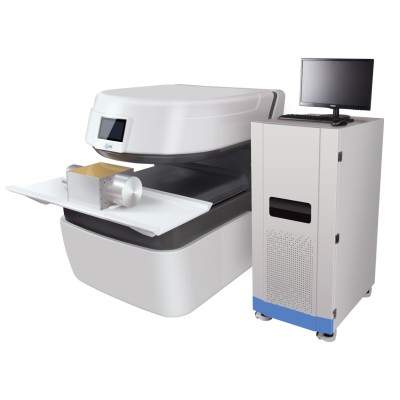
High-Temperature High-Pressure Scan-MRI 150 System

$175,000.00

0.5 Tesla permanent magnet MRI system with 150 mm bore for non-destructive imaging of materials under controlled temperature (-10°C to 110°C) and pressure (up to 20 MPa) conditions.

In stock and ready to ship
SKU: NMS-MR12-150H-I

The High-Temperature High-Pressure Scan-MRI 150 System is a specialized 0.5 Tesla permanent magnet MRI platform engineered for non-destructive imaging and NMR analysis of materials under controlled environmental conditions. The system operates across temperature ranges from -10°C to 110°C with ±0.1°C precision and pressures up to 20 MPa (200 bar) with ±0.01 MPa control accuracy, enabling in-situ studies of phase behavior, structural changes, and fluid dynamics in geological cores, polymers, and industrial materials.

Built around a 150 mm diameter bore accommodating samples from 10 mm to 150 mm diameter and up to 120 mm length, the system employs a 12 cm gradient set delivering 25 mT/m gradient strength with 60 T/m/s slew rate for high-resolution 2D and 3D spatial encoding. The RF system spans 1-60 MHz with up to 200 W transmit power, supporting standard pulse sequences including spin echo, CPMG, inversion recovery, and saturation recovery for comprehensive relaxometry and imaging protocols.

How It Works

The system operates on nuclear magnetic resonance principles where hydrogen nuclei in the sample align with the 0.5 Tesla permanent magnetic field. Radiofrequency pulses at the Larmor frequency (approximately 21.3 MHz for protons at 0.5T) excite the nuclear spins, and the subsequent relaxation signals are detected to generate T1 and T2 relaxation time maps that reflect local molecular environment and mobility.

Spatial encoding is achieved through the 12 cm gradient coil system that applies linear magnetic field variations up to 25 mT/m, enabling slice selection, phase encoding, and frequency encoding for 2D and 3D image reconstruction. The integrated temperature and pressure control systems maintain precise environmental conditions during data acquisition, with temperature regulation through resistive heating elements and pressure control via pneumatic or hydraulic systems connected to the sample chamber.

The wide RF frequency range (1-60 MHz) accommodates various nuclei beyond protons, including 13C and 23Na, while the high power capability (200 W) enables effective excitation of samples with short T2 relaxation times. Data processing employs Fourier transform algorithms to convert time-domain signals into frequency-domain spectra and spatial images, with T1 and T2 mapping protocols providing quantitative measurements of relaxation parameters that correlate with pore size distributions, fluid saturations, and molecular dynamics.

Features & Benefits

0.5 Tesla permanent magnet with 150 mm bore
Provides stable magnetic field without helium requirements while accommodating large sample geometries up to 150 mm diameter for whole-core analysis
Temperature control from -10°C to 110°C (±0.1°C accuracy)
Enables precise thermal cycling studies and simulation of reservoir conditions for investigating temperature-dependent phase behavior and reaction kinetics
Pressure capability up to 20 MPa with ±0.01 MPa control
Simulates deep subsurface conditions for realistic core analysis and high-pressure chemical process monitoring under controlled stress states
25 mT/m gradient strength with 60 T/m/s slew rate
Delivers high spatial resolution imaging and rapid gradient switching for advanced pulse sequences and diffusion measurements in heterogeneous samples
1-60 MHz RF frequency range with 200 W power
Supports multinuclear NMR experiments and effective excitation of samples with short relaxation times, expanding analytical capabilities beyond proton imaging
12 cm gradient set diameter
Optimizes gradient uniformity across the full sample volume while maintaining high gradient strength for detailed spatial encoding of large specimens
Sample accommodation from 10 mm to 150 mm diameter
Handles diverse sample sizes from small material specimens to full-diameter geological cores, maximizing experimental flexibility and throughput
Multiple pulse sequence capabilities
Provides comprehensive relaxometry options including T1, T2, and diffusion measurements through spin echo, CPMG, inversion recovery, and saturation recovery protocols

Brand

  • Greenwaves Scientific

Field of study

  • Biology
  • Chemical Engineering
  • Geology

Product Application

  • Environmental Research
  • Environmental Studies
  • Magnetic Resonance Imaging (MRI)
  • Production and Quality Control
  • Soil Study

Research Domain

  • Materials Science
  • Analytical Chemistry
  • Environmental Monitoring

Automation Level

  • semi-automated

Product Highlights

Feature This Product Category Context
Magnetic Field Strength 0.5 Tesla permanent magnet providing stable field without helium requirements Entry-level systems often use 0.2-0.35 Tesla fields with limited stability
Sample Bore Diameter 150 mm diameter bore accommodating samples up to full bore width Standard systems typically offer 50-100 mm bore diameters
Temperature Control Range -10°C to 110°C with ±0.1°C accuracy Basic systems often limited to ambient to 80°C with lower accuracy
Pressure Capability Up to 20 MPa (200 bar) with ±0.01 MPa control precision Many systems operate at atmospheric pressure only
Gradient Strength 25 mT/m maximum gradient with 60 T/m/s slew rate Lower-end systems typically provide 5-15 mT/m gradients
RF Frequency Range 1-60 MHz range with 200 W transmit power capability Basic systems often limited to proton frequency only

This system combines the spatial resolution advantages of higher magnetic field strength with the operational simplicity of permanent magnet technology. The 150 mm bore diameter and comprehensive environmental control capabilities distinguish it from standard benchtop systems, while the permanent magnet design offers cost and maintenance advantages over superconducting alternatives for materials research applications.

Applications & Use Cases

Petroleum Engineering
Core analysis of reservoir rock samples under simulated downhole conditions to study fluid flow patterns, enhanced oil recovery mechanisms, and pore structure evolution during CO2 flooding or water injection processes.
Materials Science
Characterization of polymer behavior and phase transitions under elevated temperature and pressure, including monitoring of cross-linking reactions, thermal degradation, and moisture uptake in composite materials.
Geophysics
Investigation of fluid migration in porous geological media, studying capillary pressure relationships, relative permeability curves, and multiphase flow behavior in carbonate and sandstone formations.
Chemical Engineering
Process monitoring of chemical reactions in heterogeneous catalysts, analyzing mass transfer limitations, pore blocking mechanisms, and reaction kinetics under realistic industrial operating conditions.
Environmental Engineering
Assessment of contaminant transport in soil and groundwater systems, including NAPL (non-aqueous phase liquid) migration studies and remediation effectiveness evaluation under varying temperature and pressure gradients.
Food Science
Analysis of moisture migration and structural changes in food products during thermal processing, including monitoring of phase transitions in fats, protein denaturation, and texture development under high-pressure treatment.

Practical Tips

Calibration

Perform gradient linearity verification using a grid phantom before each experimental series to ensure spatial encoding accuracy.

Gradient non-linearity can introduce systematic errors in quantitative imaging measurements and spatial registration.

Best Practices

Allow 30-60 minutes for temperature equilibration after changing setpoints before acquiring data.

Temperature gradients within samples can affect relaxation measurements and image quality until thermal equilibrium is reached.

Safety

Always verify pressure system integrity through leak testing before each high-pressure experiment.

Operating at 20 MPa requires careful attention to seal condition and fitting torque to prevent dangerous pressure releases.

Maintenance

Clean sample chambers thoroughly between different sample types to prevent cross-contamination.

Residual materials can affect subsequent measurements and may react with new samples under temperature and pressure conditions.

Data Quality

Optimize receiver gain settings for each sample type to maximize signal-to-noise ratio without saturation.

Proper gain setting ensures full dynamic range utilization and prevents digital clipping of high-amplitude signals.

Troubleshooting

Monitor RF power reflection during pulse sequences and adjust tuning/matching if reflection exceeds 5%.

High reflection indicates impedance mismatch that reduces excitation efficiency and can damage RF electronics.

Best Practices

Record environmental conditions (temperature, pressure, humidity) in experimental logs for each measurement session.

Environmental variations can affect sample properties and measurement reproducibility, particularly for long-duration studies.

Calibration

Use reference standards with known T1 and T2 values to validate relaxometry measurements monthly.

Regular validation with certified standards ensures quantitative accuracy of relaxation time measurements over time.

Setup & Operation Guide

  1. Installation and Site Preparation
    Position the >1,050 kg system on a reinforced floor capable of supporting the weight, ensuring adequate clearance for sample loading and maintenance access around the 150 mm bore opening.
  2. Environmental Control Connection
    Connect temperature control lines to the heating/cooling system and pressure control lines to the pneumatic/hydraulic pressure source, verifying all fittings are rated for 20 MPa operation.
  3. RF and Gradient Calibration
    Perform RF power calibration across the 1-60 MHz range and gradient linearity verification using standard phantoms to establish baseline performance parameters.
  4. Sample Chamber Preparation
    Install appropriate sample holders for your specimen geometry (10-150 mm diameter) and verify pressure seal integrity through leak testing at operating pressure.
  5. System Performance Validation
    Execute standard T1 and T2 measurement protocols using reference samples to confirm relaxation time accuracy and spatial resolution performance meet specifications.
  6. Environmental Parameter Testing
    Verify temperature stability (±0.1°C) and pressure control accuracy (±0.01 MPa) across the full operating ranges before conducting experimental measurements.
  7. Protocol Development
    Optimize pulse sequences (spin echo, CPMG, inversion recovery) for your specific sample types and establish data acquisition parameters for routine measurements.

What's in the Box

  • High-Temperature High-Pressure Scan-MRI 150 System main unit
  • Permanent magnet assembly with 0.5 Tesla field strength
  • 12 cm gradient coil set with control electronics
  • RF transmit/receive system (1-60 MHz, 200 W)
  • Temperature control system with heating/cooling elements
  • Pressure control system rated to 20 MPa
  • Sample chamber with pressure seals
  • Standard sample holders for various geometries (typical)
  • Control computer with acquisition software
  • System installation and operation manual
  • Safety documentation and operating procedures
  • Calibration certificates (typical)

Warranty & Support

ConductScience provides a comprehensive 1-year manufacturer warranty covering magnet assembly, gradient coils, RF electronics, and environmental control systems, with technical support including remote diagnostics and on-site service capabilities for this specialized research platform.

Compliance & Standards

ASTM D7171-16 Supports workflows for determining ultralow expansion of glass and glass-ceramic materials using digital length-measuring instruments under controlled temperature conditions.
ISO 12185-1:1996 Used in laboratories conducting petroleum product density measurements at elevated temperatures where thermal expansion characterization is required.
ASTM E1131-20 Employed in testing facilities performing compositional analysis by thermogravimetric methods where material behavior under controlled thermal conditions must be characterized.

Background Reading

The following papers provide general scientific background on measurement techniques relevant to this product category. They are not validation studies of this specific instrument.

[1] Deckers D, Janssen H (2024). Microscopic moisture localisation in unsaturated materials using nuclear magnetic resonance relaxometry. Building and Environment. DOI: 10.1177/17442591231219931
[2] Conte EE et al. (2025). NMR Relaxometry Across Time: From Early Insights to Emerging Directions. Magnetic Resonance in Chemistry. DOI: 10.1002/mrc.70002
[3] Zhang L et al. (2020). Advances in low-field nuclear magnetic resonance (NMR) technologies applied for characterization of pore space inside rocks: a critical review. Petroleum Science. DOI: 10.1007/s12182-020-00488-0
[4] Mitchell J et al. (2022). Dynamic NMR Relaxometry as a Simple Tool for Measuring Liquid Transfers and Characterizing Surface and Structure Evolution in Porous Media. Langmuir. DOI: 10.1021/acs.langmuir.2c01918
[5] Sun B, Duarte CA (2011). Visualization of CO2 and oil immiscible and miscible flow processes in porous media using NMR micro-imaging. Petroleum Science. DOI: 10.1007/s12182-011-0133-1
Q

What sample geometries can be accommodated in the 150 mm bore system?

A

The system accepts samples from 10 mm minimum diameter up to the full 150 mm bore diameter, with maximum sample length of 120 mm. This range covers small material specimens, standard geological core plugs, and full-diameter cores for comprehensive analysis.

Q

How does the permanent magnet design affect experimental protocols compared to superconducting systems?

A

The 0.5 Tesla permanent magnet eliminates helium requirements and provides excellent field stability without quench risks. While the field strength is lower than superconducting systems, it offers sufficient resolution for materials analysis with reduced operating costs and simplified maintenance.

Q

What temperature and pressure combinations can be achieved simultaneously?

A

The system operates across the full temperature range (-10°C to 110°C) at pressures up to 20 MPa simultaneously, with independent control of both parameters. This enables simulation of various geological and industrial conditions including deep reservoir environments.

Q

Which nuclei can be measured with the 1-60 MHz RF system?

A

At 0.5 Tesla, the system can measure protons (1H) at ~21 MHz, carbon-13 (13C) at ~5.3 MHz, sodium (23Na) at ~5.6 MHz, and other nuclei within the frequency range, enabling multinuclear NMR experiments for comprehensive materials characterization.

Q

What spatial resolution can be achieved with the 25 mT/m gradient system?

A

Spatial resolution depends on acquisition parameters and sample properties, but the gradient strength and 60 T/m/s slew rate capability enable high-resolution imaging suitable for pore-scale analysis and detailed structural characterization. Specific resolution values depend on experimental requirements and signal-to-noise considerations.

Q

How long are typical T1 and T2 measurement protocols?

A

Measurement times vary by pulse sequence and desired precision. Basic T1 measurements using inversion recovery typically require 10-30 minutes, while T2 measurements via CPMG can be completed in 1-5 minutes. Multi-slice imaging and comprehensive relaxometry mapping extend acquisition times accordingly.

Q

What maintenance requirements exist for the environmental control systems?

A

Regular calibration verification of temperature and pressure sensors, periodic inspection of seals and fittings rated for 20 MPa operation, and cleaning of sample chambers between experiments. The permanent magnet requires no maintenance, while RF electronics and gradient coils need annual performance verification.

Q

How does the system handle sample loading under pressure conditions?

A

Sample loading occurs at ambient conditions with subsequent pressurization through the integrated control system. Proper sample chamber design with rated pressure seals enables safe loading and pressurization to operating conditions while maintaining sample integrity and measurement accuracy.

Have a question about this product?

Need Expert Help?

CS
Our Science Team
Product Specialists
High-Temperature High-Pressure Scan-MRI 150 System
$175,000.00
Your Quote
No items in your quote yet.