Choose the microfluidic chip, pump, and setup for your experiment.
Start with your workflow, then choose the chip format, flow-control setup, accessories, and support needed to run it.
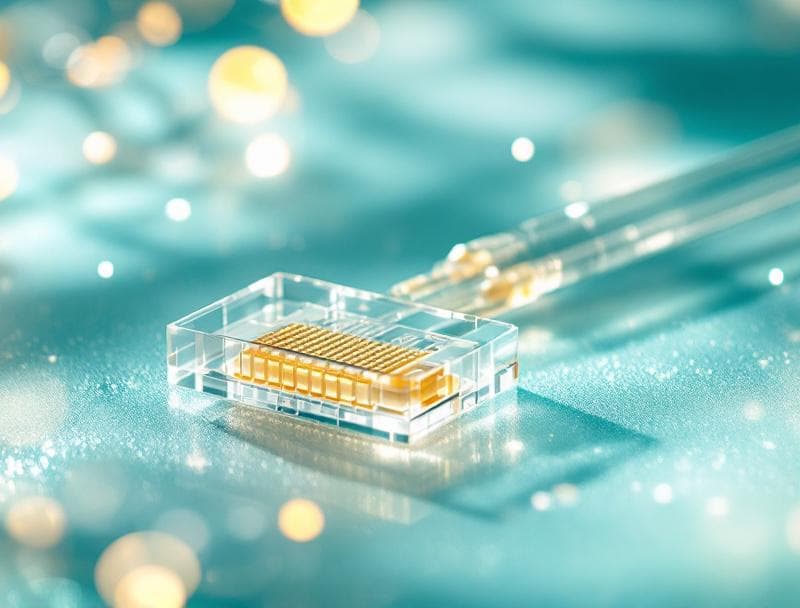
Chip and tubing reference
Transparent device, inlet path, and benchtop setup context.
Microchannel routing map
Workflow to setup path
Choose by application
Start with the experiment.
Pick the closest workflow and jump to a chip family, setup, and quote path.
Setup planning
A chip recommendation is incomplete without the setup around it.
Plan the chip, pump, tubing, holder, protocol, and quote path together so the full setup is clear before ordering.
Setup overview
Use this overview to keep the required components aligned from selection to quote.
| Setup Part | What the User Chooses | Route |
|---|---|---|
| Chip | Format, material, channel layout, ports, and optical path. | Open path |
| Flow control | Syringe pump, pressure pump, peristaltic pump, or existing instrument match. | Open path |
| Fluid path | Tubing, fittings, connectors, short fluid path, collection supplies. | Open path |
| Fabrication | Spin coating, bonding, hot plates, plasma treatment, and PDMS processing. | Open path |
| Protocol | Priming, flow-rate range, imaging, cleaning, and bubble prevention. | Open path |
| Quote path | Stock item, configured bundle, or custom technical review. | Open path |
Material decision
Compare materials like an engineering decision.
Material choice changes optical performance, solvent exposure, cell behavior, and fabrication path. Keep this as a real comparison table.
| Visual | Material | Best fit | Check before ordering | Decision note |
|---|---|---|---|---|
| PDMS | Cell culture, fast prototyping, optical microscopy, gas exchange. | Small molecule absorption, surface treatment, swelling, reuse expectations. | Often the first prototyping route for biology-focused chips. | |
| PMMA | Rigid polymer chips, teaching labs, disposable assays, lower-cost runs. | Solvent compatibility, bonding method, temperature exposure. | Useful when a rigid disposable format matters more than gas exchange. | |
| Glass | High optical clarity, solvent resistance, pressure tolerance, droplet work. | Cost, fragility, connector and holder requirements. | Strong default when imaging and chemistry both matter. | |
| Silicon / quartz | Thermal, optical, or chemically demanding specialty workflows. | Application-specific fabrication and quoting constraints. | Usually needs a technical review before ordering. | |
| Paper | Low-cost diagnostics, environmental testing, colorimetric field assays. | Whether the assay truly needs open porous flow vs closed channels. | Best for quick detection tests and field-style readouts. |
PDMS
- Best fit
- Cell culture, fast prototyping, optical microscopy, gas exchange.
- Check before ordering
- Small molecule absorption, surface treatment, swelling, reuse expectations.
- Decision note
- Often the first prototyping route for biology-focused chips.
PMMA
- Best fit
- Rigid polymer chips, teaching labs, disposable assays, lower-cost runs.
- Check before ordering
- Solvent compatibility, bonding method, temperature exposure.
- Decision note
- Useful when a rigid disposable format matters more than gas exchange.
Glass
- Best fit
- High optical clarity, solvent resistance, pressure tolerance, droplet work.
- Check before ordering
- Cost, fragility, connector and holder requirements.
- Decision note
- Strong default when imaging and chemistry both matter.
Silicon / quartz
- Best fit
- Thermal, optical, or chemically demanding specialty workflows.
- Check before ordering
- Application-specific fabrication and quoting constraints.
- Decision note
- Usually needs a technical review before ordering.
Paper
- Best fit
- Low-cost diagnostics, environmental testing, colorimetric field assays.
- Check before ordering
- Whether the assay truly needs open porous flow vs closed channels.
- Decision note
- Best for quick detection tests and field-style readouts.
Application notes
Application notes for common workflows.
Each note shows the workflow, products, difficulty, and checks before ordering.
Droplet generation starter workflow
Droplet chip, syringe or pressure pump, tubing, oil/surfactant review.
Starter setup available
PDMS cell culture perfusion workflow
PDMS chip, sterile tubing, bubble prevention, microscope holder.
Technical review recommended
8-channel drug screening gradient workflow
Gradient chip, multi-channel pump, connector plan, imaging setup.
Configuration support available
Choosing PDMS vs PMMA vs glass chips
Material comparison, solvent check, optical check, quote criteria.
Selection guide available
Custom review
Request technical review when a standard catalog setup is not enough.
Share the workflow details, materials, flow rates, and detection needs required for a custom chip or setup quote.
What we review
Next step