
Find research datasets worth reusing
Search datasets from major research repositories and use ShareScore to quickly assess how well each record supports discovery, access, and reuse.
480
datasets available to search
ShareScore release 0.9.0
Dataset results
480 results for “Lion”
LION Dataset
<p>The presented dataset consists of 198 digitised pages, from eight notepads of the manuscript collection of Swedish author Astrid Lindgren (1907 - 2002), written in the Swedish stenography system <em>Melin</em>. It covers portions of the first six chapters of her novel <em>The Brothers Lionheart</em> (1973), inspiring the name of the dataset, as well as excerpts from three other works by Lindgren.</p> <p>LION is the first of its kind in several regards. Firstly, it is the first dataset containing a portion of Astrid Lindgren's original drafts and handwriting. Secondly, it is the first to present text, written in the Swedish stenography system Melin. Finally, it is the first publicly available dataset, covering a substantial amount of handwritten lines in any kind of stenographic system.</p> <p>The repository contains page and line images, as well as annotations, in the form of bounding boxes and transliterations. Furthermore, data splittings (train, validation, test) are proposed.</p> <p> </p> <p><strong>This work is licensed under the Creative Commons Attribution-NonCommercial-NoDerivatives 4.0 International License. Please also see the included LICENSE file or http://creativecommons.org/licenses/by-nc-nd/4.0/ </strong></p>
Data from: Algal toxin impairs sea lion memory and hippocampal connectivity, with implications for strandings
Open the record for dataset details and reuse information.
Hyaenas and lions: how the largest African carnivores interact at carcasses
Open the record for dataset details and reuse information.
Data from: Social associations between California sea lions influence the use of a novel foraging ground
Open the record for dataset details and reuse information.
Data from: Development of MHC-linked microsatellite markers in the domestic cat and their use to evaluate MHC diversity in domestic cats, cheetahs and Gir lions.
Open the record for dataset details and reuse information.
Data from: Efficacy of spotlights and thermal cameras to detect lions, Panthera leo, and spotted hyenas, Crocuta crocuta, depends on species and management regime
Open the record for dataset details and reuse information.
Supplementary to "A stable foraging polymorphism buffers Galápagos sea lions against environmental change"
Open the record for dataset details and reuse information.
Data from: Crossing to safety: Dispersal, colonization and mate choice in evolutionarily distinct populations of Steller sea lions, Eumetopias jubatus.
Open the record for dataset details and reuse information.
Minimum habitat thresholds required for conserving mountain lion genetic diversity
Open the record for dataset details and reuse information.
Lion Chambers
Used this basic model of the Lion Chambers in Glasgow for a Unity project about the degradation of once loved buildings. The openings in the walls are where interactive displays were positioned in the Unity project. Source: Objaverse 1.0 / Sketchfab
Cluster investigation results from model-predicted mountain lion feeding sites and non-predicted sites in southwest Wyoming
<p class="MsoNormal">Global positioning system (GPS) receivers allow researchers to collect location data that provide information about fine-scale animal movements. For large carnivores, these data are routinely processed to identify clusters of GPS locations which are investigated to validate feeding sites, estimate prey species composition, and model the likelihood of predation events based on characteristics of GPS location data within clusters. Although developing predation models entails a high level of field effort, researchers are apprehensive in applying system-specific models to other systems both spatially and temporally. Our objectives were to apply and compare multiple predation models to predict and identify feeding events outside of the geographic areas where models were developed. Using our multi-model approach, we identified feeding sites and estimated kill rates and prey composition of mountain lions (<em>Puma concolor</em>) in southwest Wyoming, USA from 2017 to 2019. Our approach increased our field efficiency by reducing potential field site investigations by 63%. We provide results of estimated diet composition in our study area where mountain lion prey included relatively high proportions of pronghorn (12.3%) and smaller mammals, particularly coyotes (7.6%). We also provide a comparison of the predation models developed across unique ecoregions of North America, and how they performed when applied to our area. We believe a similar approach could be adopted for other large carnivore populations where multiple models have been developed to characterize feeding events.</p>
Something in the wind: The influence of wind speed and direction on African lion movement behaviour
<p>Olfaction is a key sense, enabling animals to locate forage, select mates, navigate their environment, and avoid predation. Wind is an important abiotic factor that modulates the strength of olfactory information detected by animals. In theory, when airflow is unidirectional, an animal can maximise the size of their olfactory search area and increase odour detection probability by moving crosswind. Given energetic costs inherent to activity and locomotion, behavioural search strategies that optimize the benefit-cost ratio should be advantageous. We tested whether African lions (Panthera leo) modify their movement directionality and distance according to wind speed and direction during hours of darkness when they are most likely to hunt mobile and elusive prey. We tracked 29 lions in southern Zimbabwe using GPS collars and deployed a weather station to collect detailed abiotic data. We found that when wind speeds increased lions were more likely to move crosswind. We also found that female lions, which tend to hunt more often than males, travelled farther when wind speeds were stronger. The results of our analysis suggest that lions adapt their movement behaviour according to wind speed and direction. We inferred that this was a behavioural decision to maximise the amount of olfactory information gained per unit of energy spent. Our findings not only offer one of the first detailed insights on large carnivore anemotaxis (movement direction relative to wind) but also make an important contribution towards understanding the influence of wind on predator ecology in general which remains understudied to date. Keywords: Panthera Leo, anemotaxis, wind, movement behaviour, olfaction</p>
Roman Lion And Ram Statue
Stone figure of a lion overpowering a ram. Date: 2nd to 3rd Century. Found at Kirkby Thore. Now located in British Museum. Photos taken November 2018 with Sony a6000 and processed in Agisoft Photoscan. https://www.britishmuseum.org/research/collection_online/collection_object_details.aspx?objectId=1362781&partId=1 Source: Objaverse 1.0 / Sketchfab
Lion's head decoration, St. Peter's, East Marton
This label stop in the form of a lion's head decorates the moulding over the tower arch at St Peter, East Marton. This model was produced for our Church Explorers programme of events and skills-sharing workshops, which promote the architectural and archaeological importance of church buildings in Yorkshire. We aim to encourage members of the public to visit and value these wonderful historic buildings. For more information and to sign up for the Church Explorers newsletter, visit https://churchexplorers.co.uk . Church Explorers is a partnership initiative led by York Archaeological Trust, Leeds Minster and the Borthwick Institute for Archives. Source: Objaverse 1.0 / Sketchfab
London Zoo Lion Head Statue
A photogrammetry scan of a lion head statue in the Lion enclosure (visitor side), London Zoo. The lion enclosure resembles Sasan Gir, in the Gir Forest. By William Timym: https://en.wikipedia.org/wiki/William_Timym Date: 1970s Presented to ZSL in 1976. 101 photos taken in July 2020 with a Sony a6000 and processed in Reality Capture. Source: Objaverse 1.0 / Sketchfab
Le Lion Bleu
Oeuvre monumentale (6 m de hauteur x 8 m de longueur x 3 m de largeur) en polyuréthane de teinte bleu-ciel due à Xavier Veilhan (1960-). Elle installée depuis 2005 sur la Place Stalingrad à Bordeaux (côté Est du Pont de Pierre) Source: Objaverse 1.0 / Sketchfab
SCAN / Botanical Garden Lion Statue
There are 2 lions near the music Conservatorium at Botanical. I scanned one of them. Source: Objaverse 1.0 / Sketchfab
The dying lion, Lucerne
The Lion Monument (Löwendenkmal) is located in [Lucerne, Switzerland](http://www.luzern.com/en/lion-monument). The monument commemorates the Swiss Guards who were massacred in 1792 during the French Revolution, when revolutionaries stormed the Tuileries Palace in Paris, France. The sculpture was designed by Danish sculptor Bertel Thorvaldsen, and finally hewn in 1820–1821 by Lukas Ahorn, in a former sandstone quarry near Lucerne. --- 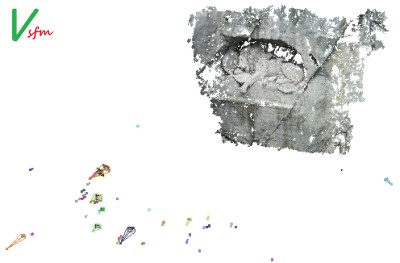 *3D photogrammetry reconstructed with VisualSFM* Source: Objaverse 1.0 / Sketchfab
Lion Statue - optimized
Based on [Löwe](https://sketchfab.com/3d-models/lowe-4522a4cdc1c14190bf1a8811fa27da32) by [noe-3d.at](https://sketchfab.com/www.noe-3d.at) made available under the CC0 Public Domain dedication. I used [rapidcompact.com](http://rapidcompact.com) optimize this excellent 3D scan, choosing default settings and a 3mb target filesize. Object info: > Upright sitting lion in front of the National Library Vienna. The lion made of brown sandstone from Horitz in the Czech Republic holds a heraldic cartouche with one paw. The four lions in front of the entrance were created by Fritz Zerritsch. Source: Objaverse 1.0 / Sketchfab
Lion sculpture
A scan of one of the British Embassy in Cairo's stone lions, found outside the entrance. This was scanned very quickly whilst waiting for colleagues at a reception held for the staff of the Egyptian Museum, Cairo and the @fitzwilliammuseum's team who were working together on the Egyptian coffins project. 72 photographs, Honor 10 mobile phone. Processed in Metashape standard at medium settings. Source: Objaverse 1.0 / Sketchfab
ScienceDex guides
Understand access before you commit
These curated guides explain access requirements, typical timelines, costs, and reuse considerations for widely used research datasets.
Allen Brain Atlas
Allen Brain Atlas is an Allen Institute collection of brain map atlases, datasets, APIs, and analysis tools covering mouse, human, and non-human primate brain resources.
Annotated Behaviour and Observability Dataset (ABODe)
ABODe is a University of Edinburgh DataShare dataset for behavior classification in group-housed mice using home-cage video, identities, bounding boxes, ground-plate positions, and annotator labels.
DANDI Archive for NWB datasets
DANDI is a BRAIN Initiative archive for publishing and sharing neurophysiology data, including electrophysiology, optophysiology, and behavioral data packaged as NWB and related standards.
International Brain Laboratory public data
The International Brain Laboratory public data releases expose standardized mouse decision-making experiments, including Neuropixels recordings, widefield calcium imaging, behavior, and session metadata accessed through the ONE API.
OpenNeuro
OpenNeuro is a free, open platform for sharing neuroimaging datasets, with public search, dataset pages, and download paths for web, S3, DataLad, and the OpenNeuro CLI.