
Find research datasets worth reusing
Search datasets from major research repositories and use ShareScore to quickly assess how well each record supports discovery, access, and reuse.
1,283
datasets available to search
ShareScore release 0.7.1
Dataset results
1,283 results for “Copying”
Data from: The fire ant social supergene is characterized by extensive gene and transposable element copy number variation
In the fire ant Solenopsis invicta, a supergene composed of ~600 genes and having two variants, SB and Sb, regulates colony social form. In single queen colonies all individuals carry only the SB allele, while in multiple queen colonies, some individuals carry the Sb allele. In this study we characterized genes with copy number variation between SB and Sb-carrying individuals. We showed extensive acquisition of gene duplicates in Sb genome, with some likely involved in polygyne-related phenotypes. We found 260 genes with differences in copy number between SB and Sb, of which 239 are in greater copy number in Sb. We observed TE accumulation on Sb, likely due to the accumulation of repetitive elements on the non-recombining chromosome. We found a weak correlation between TE copy number and differential expression, suggesting some TEs may still be proliferating in Sb, however many of the duplicated TEs were already silenced. Among the 115 non-TE genes with higher copy in Sb, enzymes responsible for cuticular hydrocarbon synthesis were highly represented. These include a desaturase and an elongase; both potentially responsible for differential queen odor and likely beneficial for polygyne ants. These genes seem to have translocated into the supergene from other chromosomes and proliferated by multiple duplication events. While the presence of transposable elements (TEs) in supergenes is well documented, little is known about duplication of non-TE genes and their possible adaptive role. Overall, our results suggest that gene duplications may be an important factor leading to monogyne and polygyne ant societies.
Data from: Allopolyploidy in the Wintergreen Group of tribe Gaultherieae (Ericaceae) inferred from low-copy nuclear genes
DNA sequence data from the low-copy nuclear genes waxy (GBSSI) and leafy were compared with plastid sequence data from prior studies to reconstruct phylogenetic relationships in the Wintergreen Group of tribe Gaultherieae (Ericaceae). We conducted phylogenetic analysis with 109 species that includes representatives of all 15 major clades previously diagnosed in the Wintergreen Group and that together span its circum-Pacific distribution. Results yielded two distinct homeologous copies of waxy for two of the clades, each in widely separated parts of the tree. It also yielded two copies of leafy for one of the clades; only one copy of leafy was found for the other clade, but it was placed in the same major clade as its waxy counterpart and well away from its placement in a prior plastid analysis. A combined four-locus (waxy, leafy, ITS, and plastid loci) phylogenetic analysis of all available relevant data placed the copies of each of the clades in two distinct positions in the phylogeny with strong overall statistical support. In combination with evidence from morphology, reproductive biology, and cytology, the results suggest that these clades arose through allopolyploid hybridization between lineages deep in the phylogeny but relatively close geographically. This finding confirms previous assumptions that hybridization plays an important role in the evolution of the Gaultherieae.
Copy of an Aztec knife
[1944.02.0034](https://collections.smvk.se/carlotta-em/web/object/1954960). kniv, kopia. Offerkniv, aztekisk. Copy of an [Aztec knife in the collections of the British Museum](https://www.britishmuseum.org/collection/object/E_Am-St-399). Published in Johann Friedrich Maximilian von Waldeck (1866) Ancient Monuments of Mexico. 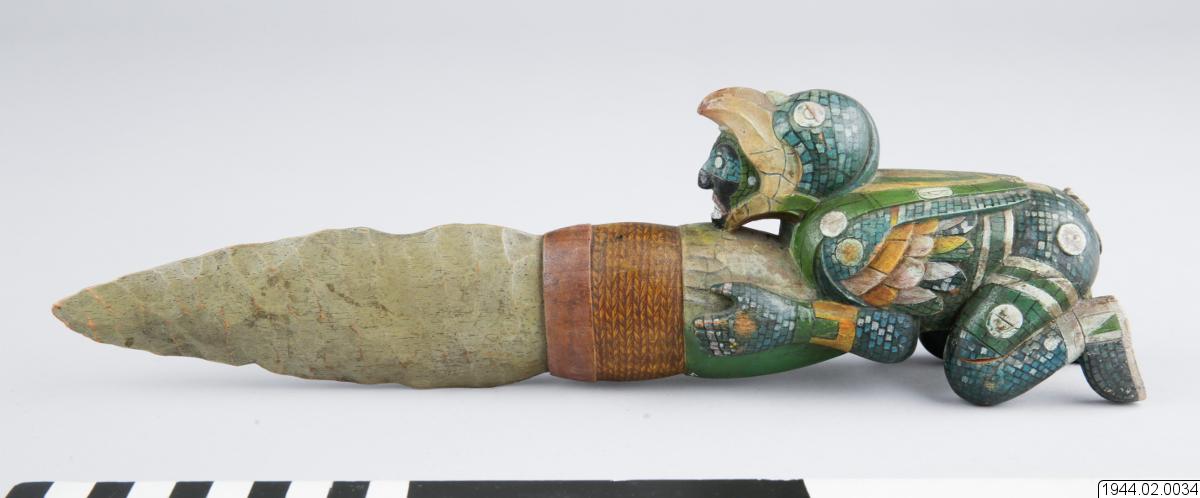 Source: Objaverse 1.0 / Sketchfab
Aphrodite Inv. 1914 n. 188 - copy
[To see our entire collection, check out our website!](https://www.digitalsculpture-uffizi.org/) **Identifiers** *Title/Name:* Aphrodite *Inventory:* Inv. 1914 n. 88 *Mansuelli:* I.54 **Characteristics** *Format:* Statue *Artist:* Unknown *Date:* Not in Mansuelli *Materials:* Strongly mottled white marble *Inscription:* n/a *Dimensions:* H 78 cm; W 52 cm **Paradata** *Camera:* Sony α6000 with Zeiss Touit 12 mm F/2.8 lens *Photographer:* Umair Malik *Reconstruction Software:* Lightroom, Photoscan, Meshmixer, ZBrush, Photoshop, Meshlab *Modeler:* Umair Malik *Studi e Restauri Publication:* n/a *Copyright 2017 – Ministero dei Beni e delle Attivita' Culturali e del Turismo – Gallerie degli Uffizi – Tutti i diritti riservati. All rights reserved.* Source: Objaverse 1.0 / Sketchfab
NanoPUZZLES list of evaluated references: Zenodo copy
<p>*If any corrections are required to this file, the latest version can be accessed via figshare.com: https://figshare.com/articles/NanoPUZZLES_list_of_evaluated_references/2015466*</p> <p>This file is a ZIP archive which contains a spreadsheet of evaluated references prepared within the NanoPUZZLES EU project [http://www.nanopuzzles.eu], along with a README file documenting this spreadsheet.</p> <p>Disclaimers:</p> <p>(1) this work has not undergone peer review</p> <p>(2) no endorsement by third parties should be inferred</p> <p>(3) *You are strongly advised to read the "Important Caveats" section of the README file.*</p> <p>In light of these key caveats, the annotations in this spreadsheet should only be taken to be indicative of the (meta)data availability corresponding to a given reference.</p> <p>The research leading to these results has received funding from the European Union Seventh Framework Programme (FP7/ 2007-2013) under grant agreement no. 309837 (NanoPUZZLES project).</p> <p> </p>
UCSC Xena Data Browser Copy Number Data - Genes (Thresholded)
<p>Downloaded by Gregory Way from the UCSC Xena data browser on 14 July 2017</p> <p>https://xenabrowser.net/datapages/?dataset=TCGA.PANCAN.sampleMap/Gistic2_CopyNumber_Gistic2_all_thresholded.by_genes&host=https://tcga.xenahubs.net</p>
Shared single copy genes are generally reliable for inferring phylogenetic relationships among polyploid taxa
<p>Polyploidy, or whole-genome duplication, is expected to confound the inference of species trees with phylogenetic methods for two reasons. First, the presence of retained duplicated genes requires the reconciliation of the inferred gene trees to a proposed species tree. Second, even if the analyses are restricted to shared single copy genes, the occurrence of reciprocal gene loss, where the surviving genes in different species are paralogs from the polyploidy rather than orthologs, will mean that such genes will not have evolved under the corresponding species tree and may not have gene trees that allow inference of the species tree. Here we analyze three different ancient polyploidy events, using synteny-based inferences of orthology and paralogy to infer gene trees from more than 17,000 sets of homologous genes. We find that the simple use of single copy genes from polyploid organisms provides reasonably robust phylogenetic signals, despite the presence of reciprocal gene losses. Such gene trees are also most often in accord with the inferred species relationships inferred from maximum likelihood models of gene loss after polyploidy: a completely distinct phylogenetic signal present in these genomes. As seen in other studies, however, we find that methods for inferring phylogenetic confidence yield high support values even in cases where the underlying data suggest meaningful conflict in the phylogenetic signals.</p>
ChromoPhyloGen: characterizing copy number alteration patterns in heterogeneous tumor cell populations at Single-Cell Resolution
<p>The human liver cancer cell line Huh7 was obtained from the American Type Culture Collection (ATCC). Huh7 cells were cultivated in Dulbecco's Modified Eagle Medium (DMEM, Gibco, C11995), supplemented with 1% penicillin/streptomycin (Gibco, 15140122), and 10% fetal bovine serum (FBS, Excell, FSP500). Huh7 cell line was maintained under a 95% O2 and 5% CO2 humidified atmosphere in an incubator at 37˚C. </p> <p>The scDNA-seq library was performed using the Chromium Single cell DNA Library & Gel Bead kit (10x Genomics, PN1000040) in combination with the Chromium instrument. The samples were processed on Chromium Single cell Chip C and D (10x Genomics, 1000022 and 1000042, respectively) according to the manufacturer's user guide and subsequently run on a thermocycler. The barcoded libraries were sequenced using the Novaseq 6000 300 cycle high-output flow cells.</p> <p>The scRNA-seq library was generated using the 10x Genomics Chromium Single Cell 3' & Gel Bead Kit v3 (10x Genomics, PN100075) in combination with the Chromium instrument. The samples were processed on Chromium Single cell Chip B (10x Genomics,1000154) according to the manufacturer's protocol and subsequently run on a thermocycler. The 3' gene expression libraries were sequenced using the Novaseq 6000 300 cycle high-output flow cells.</p> <p> </p>
Convergent evolution and predictability of gene copy numbers associated with diets in mammals
<p>Convergent evolution, the evolution of the same or similar phenotypes in phylogenetically independent lineages, is a widespread phenomenon in nature. If the genetic basis for convergent evolution is predictable to some extent, it may be possible to infer organismic phenotypes and adaptability based on genome sequence data. While repeated amino acid changes have been studied in association with convergent evolution, relatively little is known about the potential contribution of repeated gene copy number changes. In this study, we explore whether certain gene copy number changes are linked to diet shifts in mammals and assess if trophic ecology can be inferred from the copy numbers of a specific set of genes. Using 86 mammalian genome sequences, we identified several genes with higher copy numbers in herbivores, carnivores, and omnivores, even after phylogenetic corrections. We were able to confirm previous findings on genes such as amylase, olfactory receptor, and xenobiotic metabolism genes, and identify novel genes whose copy numbers correlate with dietary patterns. For example, omnivores exhibited higher copy numbers of genes encoding gene expression regulators. We also established a discriminant function based on the copy numbers of 13 genes that can help predict trophic ecology based on genome sequence data. These findings highlight a possible association between convergent evolution and repeated copy number changes in specific genes, suggesting the potential to develop a method for predicting animal ecology and adaptability from genome sequence data.</p>
Set of 4 597 baits designed in collaboration with RapidGenomics (Gainesville, Florida, USA) to capture the identified low‐ to single‐copy nuclear genes (LSCN).
<p>This dataset presents a set of 4,597 baits designed in collaboration with RapidGenomics (Gainesville, Florida, USA) to capture the identified low- to single-copy nuclear genes (LSCN) in our study. These baits were instrumental in our research on the evolutionary relationships of the Neotropical magnolias based on plastome and nuclear phylogenomics. The data provided are crucial for understanding the methodology and results of our study.</p>
Plaster Cast copy of a Tympanum (1852-1854)
**Victoria and Albert museum** Painted plaster cast by an unknown caster of a stone tympanum from the Prior's doorway of Ely Cathedral, Cambridge. Cast around 1852-4. Scanned with iPad pro lidar scanner Item information from V&A collection: https://collections.vam.ac.uk/item/O128095/copy-of-a-unknown/ Source: Objaverse 1.0 / Sketchfab
Copy of Aztec sun stone, Museo Nacioanal.
[1935.41.0016](https://collections.smvk.se/carlotta-em/web/object/1285703), lerplatta, kopia Lerplatta. Avbildning av "kalenderstenen" i Museo Nacioanal. Nedtill en utskjutande klack samt utrustad med ett hål för upphängning. The Aztec sun stone (Spanish: Piedra del Sol) is a late post-classic Mexica sculpture housed in the National Anthropology Museum in Mexico City, and is perhaps the most famous work of Mexica sculpture. It measures 358 centimetres (141 in) in diameter and 98 centimetres (39 in) thick, and weighs 24,590 kg (54,210 lb). Shortly after the Spanish conquest, the monolithic sculpture was buried in the Zócalo, the main square of Mexico City. It was rediscovered on 17 December 1790 during repairs on the Mexico City Cathedral. Following its rediscovery, the sun stone was mounted on an exterior wall of the cathedral, where it remained until 1885. 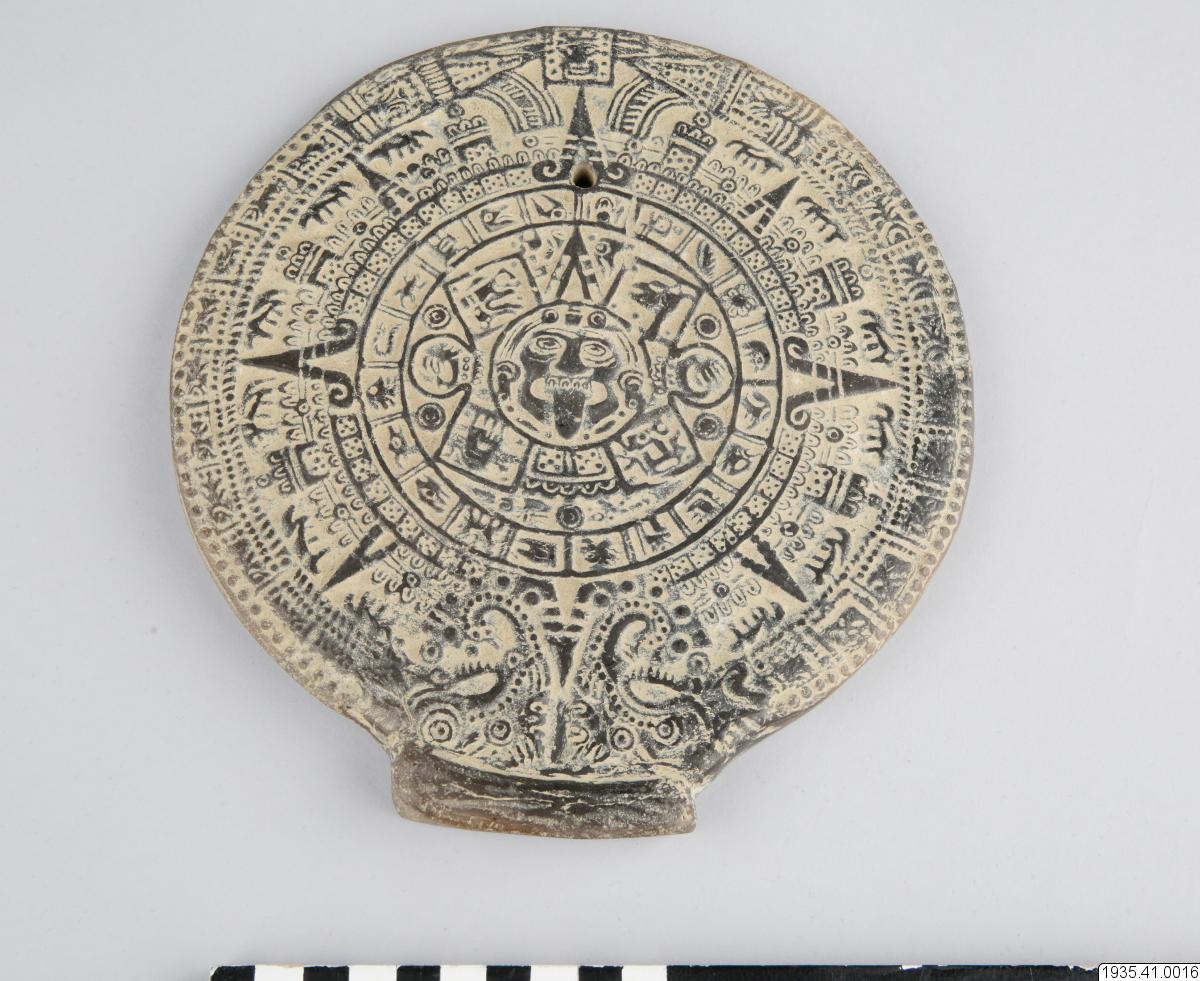 Source: Objaverse 1.0 / Sketchfab
Copy of quetzalcoatl sculpture
[1911.07.0002](https://collections.smvk.se/carlotta-em/web/object/1944515). Statyett. Gipsavgjutning, tonad. IV Ca. Orig.nr. 3729 (3763). Quetzalcouatl, Mexiko (Mexico). 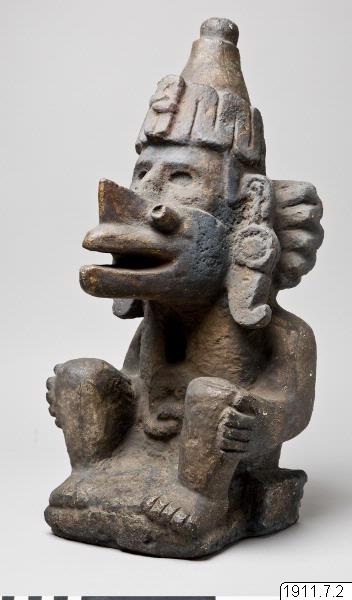 Source: Objaverse 1.0 / Sketchfab
Copy of Lidded box, tepetlacalli
[1939.32.0001](https://collections.smvk.se/carlotta-em/web/object/1770465), kista, gipsavgjutning Inventar: "Askkista. Gipsavgjutning från [original i Museum fuer Völkerkunde, Hamburg (Hackmacks samling)](https://markk-hamburg.de/en/objekte/lidded-box-decorated-with-reliefs-tepetlacalli/). Ursprung okänt, troligen Mexicodalen. Originalet är hugget ur grågrön sten och lock, som sluter till omkring lådans upphöjda inre kant. Formen är rektangulär med platt lock och botten. Alla större ytor äro försedda med reliefer. På lådans framsida bilden av en sittande figur med en hieroglyf som Seler tyder såsom tecken för 'den döde krigarens själ' (Seler Abb. 18). Motstående långsidas figur tyder Seler såsom Tepeyollotli, hålernas eller grottornas gud. Kortsidorna och bottens inre uppta datumtecken, som torde symbolisera nordens och sydens regioner. 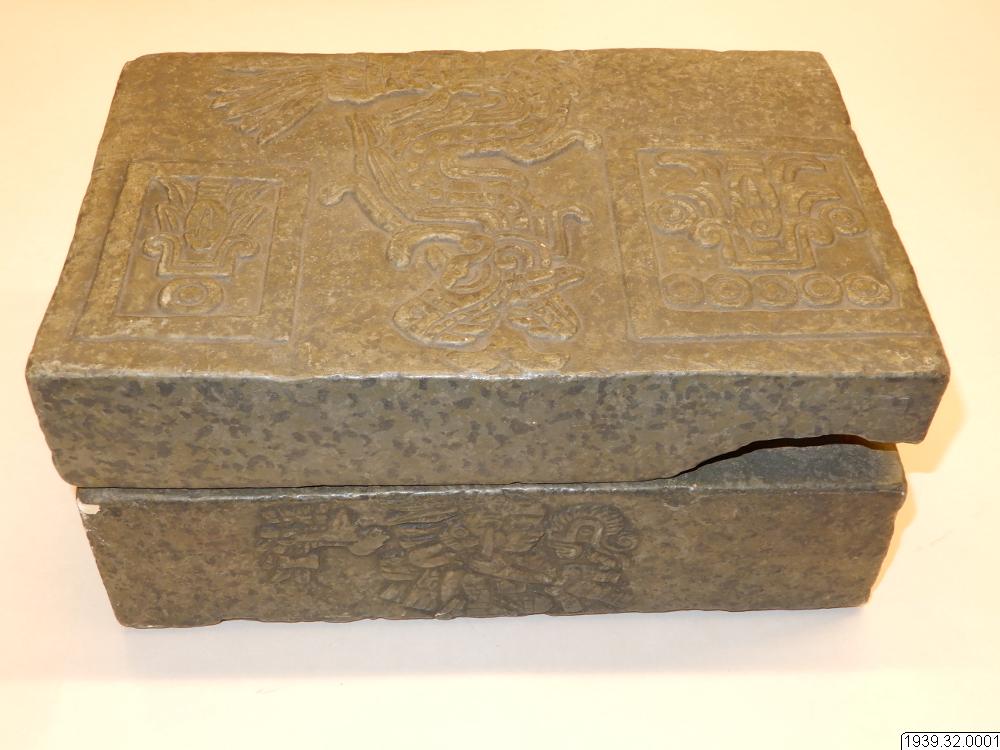 Source: Objaverse 1.0 / Sketchfab
Copy of Stone of Tizoc, miniature
[1936.06.0002](https://collections.smvk.se/carlotta-vkm/web/object/102937), offersten, modell, Miniatyrmodell. Miniatyrmodell av offersten. The Stone of Tizoc, Tizoc Stone or Sacrificial Stone is a large, round, carved Aztec stone. Because of a shallow, round depression carved in the center of the top surface, it may have been a cuauhxicalli or possibly a temalacatl. Richard Townsend maintains, however, that the depression was made in the 16th century for unknown purposes. 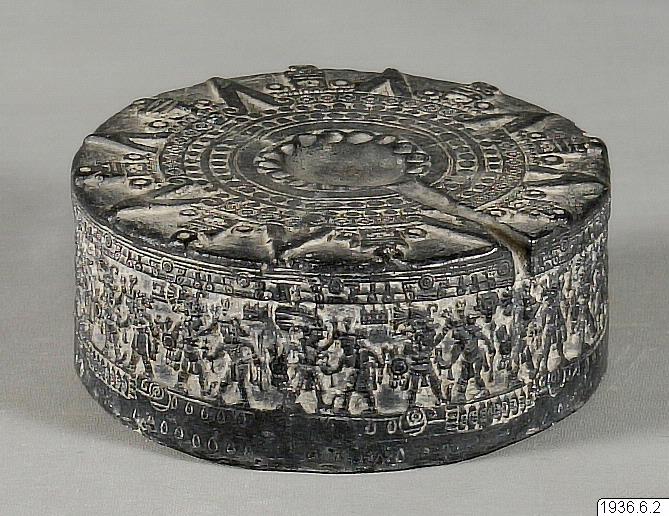 Source: Objaverse 1.0 / Sketchfab
Data from: Digital PCR quantification of ultrahigh ERBB2 copy number identifies poor breast cancer survival after trastuzumab
<p>HER2/ERBB2 evaluation is necessary for treatment decision-making in breast cancer (BC), however current methods have limitations and considerable variability exists. DNA copy number (CN) evaluation by droplet digital PCR (ddPCR) has complementary advantages for HER2/ERBB2 diagnostics. In this study, we developed a single-reaction multiplex ddPCR assay for determination of ERBB2 CN in reference to two control regions, CEP17 and a copy-number-stable region of chr. 2p13.1, validated CN estimations to clinical in situ hybridization (ISH) HER2 status, and investigated the association of ERBB2 CN with clinical outcomes. 909 primary BC tissues were evaluated and the area under the curve for concordance to HER2 status was 0.93 and 0.96 for ERBB2 CN using either CEP17 or 2p13.1 as reference, respectively. The accuracy of ddPCR ERBB2 CN was 93.7% and 94.1% in the training and validation groups, respectively. Positive and negative predictive value for the classic HER2 amplification and non-amplification groups was 97.2% and 94.8%, respectively. An identified biological "ultrahigh" ERBB2 ddPCR CN group had significantly worse survival within patients treated with adjuvant trastuzumab for both recurrence-free survival (hazard ratio, HR: 3.3; 95% CI 1.1–9.6; <em>p</em> = 0.031, multivariable Cox regression) and overall survival (HR: 3.6; 95% CI 1.1–12.6; <em>p</em> = 0.041). For validation using RNA-seq data as a surrogate, in a population-based SCAN-B cohort (NCT02306096) of 682 consecutive patients receiving adjuvant trastuzumab, the ultrahigh-ERBB2 mRNA group had significantly worse survival. Multiplex ddPCR is useful for ERBB2 CN estimation and ultrahigh ERBB2 may be a predictive factor for decreased long-term survival after trastuzumab treatment.</p>
Just another copy and paste? Comparing the security vulnerabilities of ChatGPT generated code and StackOverflow answers
<div>Supplemental material for the paper "Just another copy and paste? Comparing the security vulnerabilities of ChatGPT generated code and StackOverflow answers" published in DLSP 2024.</div> <div> <div> </div> </div>
Data from: Putative climate adaptation in American pikas (Ochotona princeps) is associated with copy number variation across environmental gradients
<p>Improved understanding of the genetic basis of adaptation to climate change is necessary for maintaining global biodiversity moving forward. Studies to date have largely focused on sequence variation, yet there is growing evidence that suggests that changes in genome structure may be an even more significant source of adaptive potential. The American pika (<em>Ochotona princeps</em>) is an alpine specialist that shows some evidence of adaptation to climate along elevational gradients, but previous work has been limited to single nucleotide polymorphism (SNP)-based analyses within a fraction of the species range. Here, we investigated the role of copy number variation underlying patterns of local adaptation in the American pika using genome-wide data previously collected across the entire species range. We identified 37-193 putative copy number variants (CNVs) associated with environmental variation (temperature, precipitation, solar radiation) within each of the six major American pika lineages, with patterns of divergence largely following elevational and latitudinal gradients. Genes associated (<em>n</em>=158) with independent annotations across lineages, variables, and/or CNVs had functions related to mitochondrial structure/function, immune response, hypoxia, olfaction, and DNA repair, some of which have been previously linked to putative high elevation and/or climate adaptation that may serve as important targets in future studies.</p>
CpAug: Refining Copy-Paste Augmentation for Speech Anti-Spoofing
<p>Conventional copy-paste augmentations generate new training instances by concatenating existing utterances to increase the amount of data for neural network training. However, the direct application of copy-paste augmentation for anti-spoofing is problematic. This paper refines the copy-paste augmentation for speech anti-spoofing, dubbed CpAug, to generate more training data with rich intra-class diversity. The CpAug employs two policies: concatenation to merge utterances with identical labels, and substitution to replace segments in an anchor utterance. Besides, considering the impacts of speakers and spoofing attack types, we craft four blending strategies for the CpAug. Furthermore, we explore how CpAug complements the Rawboost augmentation method. Experimental results reveal that the proposed CpAug significantly improves the performance of speech anti-spoofing. Particularly, CpAug with substitution policy leads to relative improvements of 43% and 38% on the ASVspoof’ 19LA and 21LA, respectively. Notably, the CpAug and Rawboost synergize effectively, achieving an EER of 2.91% on ASVspoof’ 21LA.</p>
LYCEUM: Learning to call copy number variants on low coverage ancient genomes
<p>Copy number variants (CNVs) are pivotal in driving phenotypic variation that facilitates species adaptation. They are significant contributors to various disorders, making ancient genomes crucial for uncovering the genetic origins of disease susceptibility across populations. However, detecting CNVs in ancient DNA (aDNA) samples poses substantial challenges due to several factors: (i) aDNA is often highly degraded; (ii) contamination from microbial DNA and DNA from closely related species introduce additional noise into sequencing data; and finally, (iii) the typically low coverage of aDNA renders accurate CNV detection particularly difficult. Conventional CNV calling algorithms, which are optimized for high coverage read-depth signals, underperform under such conditions. To address these limitations, we introduce LYCEUM, the first machine learning-based CNV caller for aDNA. To overcome challenges related to data quality and scarcity, we employ a two-step training strategy. First, the model is pre-trained on whole genome sequencing data from the 1000 Genomes Project, teaching it CNV-calling capabilities similar to conventional methods. Next, the model is fine-tuned using high- confidence CNV calls derived from only a few existing high-coverage aDNA samples. During this stage, the model adapts to making CNV calls based on the downsampled read depth signals of the same aDNA samples. LYCEUM achieves accurate detection of CNVs even in typically low-coverage ancient genomes. We also observe that the segmental deletion calls made by LYCEUM show correlation with the demographic history of the samples and exhibit patterns of negative selection inline with natural selection.</p>
ScienceDex guides
Understand access before you commit
These curated guides explain access requirements, typical timelines, costs, and reuse considerations for widely used research datasets.
Allen Brain Atlas
Allen Brain Atlas is an Allen Institute collection of brain map atlases, datasets, APIs, and analysis tools covering mouse, human, and non-human primate brain resources.
Annotated Behaviour and Observability Dataset (ABODe)
ABODe is a University of Edinburgh DataShare dataset for behavior classification in group-housed mice using home-cage video, identities, bounding boxes, ground-plate positions, and annotator labels.
DANDI Archive for NWB datasets
DANDI is a BRAIN Initiative archive for publishing and sharing neurophysiology data, including electrophysiology, optophysiology, and behavioral data packaged as NWB and related standards.
International Brain Laboratory public data
The International Brain Laboratory public data releases expose standardized mouse decision-making experiments, including Neuropixels recordings, widefield calcium imaging, behavior, and session metadata accessed through the ONE API.
OpenNeuro
OpenNeuro is a free, open platform for sharing neuroimaging datasets, with public search, dataset pages, and download paths for web, S3, DataLad, and the OpenNeuro CLI.