
Find research datasets worth reusing
Search datasets from major research repositories and use ShareScore to quickly assess how well each record supports discovery, access, and reuse.
95
datasets available to search
ShareScore release 0.7.1
Dataset results
95 results for “contests”
Data from: Stomatopods detect and assess achromatic cues in contests
Conspicuous, colorful displays are often used by animals to communicate within and between species. Previously, researchers have manipulated specific components of color signals (i.e., hue, total reflectance, and/or chroma) using paints, photographs, videos, or filters. However, these manipulations may not adequately mimic the spectrum of color signals outside the range of human perception. Thus, these methods are inappropriate for organisms with unconventional visual systems, such as stomatopods (mantis shrimp). Here, we describe a novel application of a femtosecond laser to increase total reflectance of the stomatopod meral spot, a distinct area on the raptorial appendage used in territorial contests. Ultrafast lasers provide a programmable way to precisely manipulate patch total reflectance of live stomatopods without causing collateral damage. We tested how experimentally increasing meral spot reflectance impacted receiver behavior during territorial contests. Contests in which receiver stomatopods faced an opponent with a lightened meral spot were shorter and receivers showed increased rates of agonistic behaviors. This result suggests that lighter meral spots indicate lower fighting ability; thus, receivers are more willing to engage in a contest. This research provides the first demonstration that stomatopods can detect and assess achromatic variation in contests. Furthermore, we demonstrate that ultrafast lasers provide a powerful tool to investigate achromatic signaling, particularly for organisms whose size, aquatic habitat, or visual system otherwise prevent realistic alterations to color signals (e.g., butterflies, jumping spiders, or decapod crustaceans). This study advances our knowledge about stomatopod visual communication and offers a valuable tool for future research.
The angle of attack: Rapping technique predicts skill in hermit crab contests
<p>Skill, the ability to perform a challenging behaviour well, has been shown to be an important determinant of success in a variety of contexts, including human sports, animal courtship and most recently, animal contests. Because skilful movement requires precise motor control, skill is assumed to be underpinned by traits that determine these abilities. However, while these traits determine an individual's potential to perform skilful movements (known as technique), this potential may not translate into skilful fighting due to interference from the opponent. Here, we investigate the relationship between technique and skill using the European hermit crab <i>Pagurus bernhardus</i>. By examining the spatial distribution of shell raps, we find that on average, technique exhibited during a "training" fight predicts the level of skill displayed in a real contest. However, our results also demonstrate substantial among-individual variation in the direction of change across the two fights, with some individuals exhibiting better technique than skill and others showing the opposite pattern. Finally, we find that winners, but not losers, progressively adapt their targeting of strikes when faced with a fully functional opponent. Our results indicate that skill is a combination of innate technique and the ability to adapt to an opponent's behaviour.</p>
Aircraft Painting Contest — Spitfire, Dunkirk
Based on "[Aircraft Painting Contest – Base](https://sketchfab.com/models/e1b4d01dbd7c42bb95c5a0f922747ac2)" by [Renafox](https://sketchfab.com/kryik1023), licensed under CC Attribution-ShareAlike. Scene is inspired by stunning Christopher Nolan's film Dunkirk. Music: Hans Zimmer — Supermarine Made for [Sketchfab Texturing Challenge: Spitfire](https://blog.sketchfab.com/sketchfab-texturing-challenge-spitfire/) 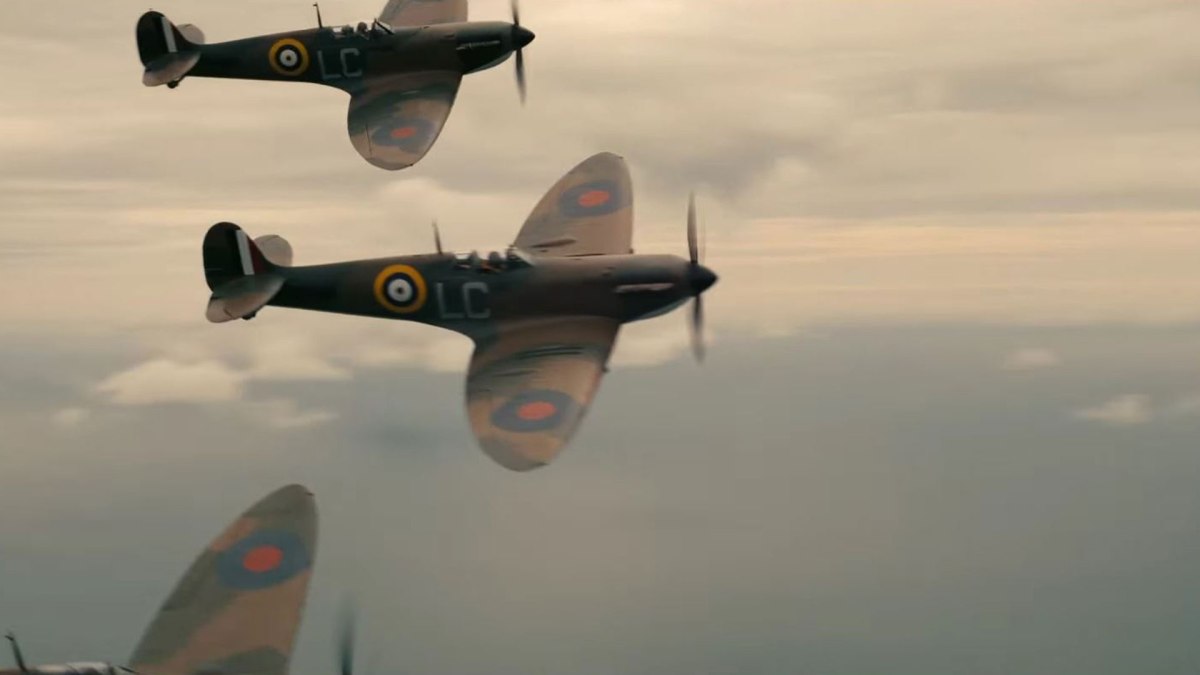  Source: Objaverse 1.0 / Sketchfab
Supplementary Data Table for Bell, Isaac and Katz-Rosene, Ryan "The Contested Futures of Just Transition in Canada's Energy Sector"
<p>This is the Supplementary Data Table for "The Contested Futures of Just Transition in Canada's Energy Sector," by Isaac Bell and Ryan Katz-Rosene, published in Studies In Political Economy.</p>
European Robotics League Consumer - Lisbon 2019 contest - FBM 2 - Navigation functionality
<p>Benchmark logs for the FBM2 benchmark: navigation functionality.</p> <p>ERL Consumer competition in Lisbon.</p>
European Robotics League Consumer - Lisbon 2019 contest - SocRob team's files for task benchmarks
<p>Internal log files of the robot used by SocRob's team (from Instituto Superior Técnico) for the 4 Task Benchmarks performed at the ERL Consumer Lisbon 2019 contest.</p>
Survishno 2023 contest data files
<p>This dataset has been collected in the frame of a signal processing contest held during the conference Survishno 2023 (Resonance conference, Toulouse, 2023).</p> <p>The zip file contains a high speed video (2000fps) of a Rolling Element Bearing, 23723 frames (800x800pix) </p> <p>The .mat file is a matlab export of time records at a sampling frequency of 51200 Hz. This file, used to establish the ground truth, was used for evaluating the contestant contributions. Of course this file was not provided before the contest.</p> <p>Track1 is the TTL signal of the optical probe pointing on the cage zebra tape (32 stripes)</p> <p>Track2 is the signal of an inductive sensor (bad quality - not to be used)</p> <p>Track3 is the signal from the accelerometer on the left-hand side of the video</p> <p>Track4 is the signal from the accelerometer on the right-hand side of the video</p> <p>Track5 is the camera output frame capture trigger (essential to synchronise with the video)</p> <p>Track6 is the TTL signal of the optical probe pointing on the shaft zebra tape (58 stripes)</p> <p>Track7 is the analog signal of the optical probe pointing on the cage zebra tape (Track1 is easier to play with) </p> <p> </p> <p> </p>
SIGMOD 2024 Programming Contest Datasets
<p>Our datasets, both released and evaluation set, are derived from the YFCC100M Dataset. Each dataset comprises vectors encoded from images using the CLIP model, which are then reduced to 100 dimensions using Principal Component Analysis (PCA). Additionally, categorical and timestamp attributes are selected from the metadata of the images. The categorical attribute is discretized into integers starting from 0, and the timestamp attribute is normalized into floats between 0 and 1.</p> <p>For each query, a query type is randomly selected from four possible types, denoted by the numbers 0 to 3. Then, we randomly choose two data points from dataset <strong>D</strong>, utilizing their categorical attribute (<strong>C</strong>) timestamp attribute (<strong>T</strong>), and vectors, to determine the values of the query. Specifically:</p> <ul> <li>Randomly sample two data points from <strong>D</strong>.</li> <li>Use the categorical value of the first data point as v for the equality predicate over the categorical attribute <strong>C</strong>.</li> <li>Use the timestamp attribute values of the two sampled data points for the range predicate. Designate l as the smaller timestamp value and r as the larger. The range predicate is thus defined as l≤<strong>T</strong>≤r.</li> <li>Use the vector of the first data point as the query vector.</li> <li>If the query type does not involve v, l, or r, their values are set to -1.</li> </ul> <p>We assure that at least 100 data points in <strong>D</strong> meet the query limit.</p> <h3>Dataset Structure</h3> <p>Dataset <strong>D</strong> is in a binary format, beginning with a 4-byte integer <em>num_vectors (uint32_t)</em> indicating the number of vectors. This is followed by data for each vector, stored consecutively, with each vector occupying <em>102 (2 + vector_num_dimension) x sizeof(float32)</em> bytes, summing up to <em>num_vectors x 102 (2 + vector_num_dimension) x sizeof(float32)</em> bytes in total. Specifically, for the 102 dimensions of each vector: the first dimension denotes the discretized categorical attribute <strong>C</strong> and the second dimension denotes the normalized timestamp attribute <strong>T</strong>. The rest 100 dimensions are the vector.</p> <h3>Query Set Structure</h3> <p>Query set <strong>Q</strong> is in a binary format, beginning with a 4-byte integer <em>num_queries (uint32_t)</em> indicating the number of queries. This is followed by data for each query, stored consecutively, with each query occupying <em>104 (4 + vector_num_dimension) x sizeof(float32)</em> bytes, summing up to <em>num_queries x 104 (4 + vector_num_dimension) x sizeof(float32)</em> bytes in total.</p> <p>The 104-dimensional representation for a query is organized as follows:</p> <ul> <li>The first dimension denotes query_type (takes values from 0, 1, 2, 3).</li> <li>The second dimension denotes the specific query value v for the categorical attribute (if not queried, takes -1).</li> <li>The third dimension denotes the specific query value l for the timestamp attribute (if not queried, takes -1).</li> <li>The fourth dimension denotes the specific query value r for the timestamp attribute (if not queried, takes -1).</li> <li>The rest 100 dimensions are the query vector.</li> </ul> <p>There are four types of queries, i.e., the <em>query_type</em> takes values from 0, 1, 2 and 3. The 4 types of queries correspond to:</p> <ul> <li>If <em>query_type=0</em>: Vector-only query, i.e., the conventional approximate nearest neighbor (ANN) search query.</li> <li>If <em>query_type=1</em>: Vector query with categorical attribute constraint, i.e., ANN search for data points satisfying <strong>C</strong>=v.</li> <li>If <em>query_type=2</em>: Vector query with timestamp attribute constraint, i.e., ANN search for data points satisfying l≤<strong>T</strong>≤r.</li> <li>If <em>query_type=3</em>: Vector query with both categorical and timestamp attribute constraints, i.e. ANN search for data points satisfying <strong>C</strong>=v and l≤<strong>T</strong>≤r.</li> </ul> <p>The predicate for the categorical attribute is an equality predicate, i.e., <strong>C</strong>=v. And the predicate for the timestamp attribute is a range predicate, i.e., l≤<strong>T</strong>≤r.</p> <p> </p> <p>Originally provided on https://dbgroup.cs.tsinghua.edu.cn/sigmod2024/task.shtml?content=datasets .</p>
Data from: Song rate as a signal of male aggressiveness during territorial contests in the wood warbler
Aggressive signaling is an important component in animal communication, as it provides an efficient mechanism for settling conflicts over resources between competitors. In songbirds, a number of singing behaviors have been proposed to be aggressive signals used in territory defense, including song rate. Although aggressive signaling in songbirds has received considerable research attention, adequate evidence for most putative aggressive signals is not available. In this study, we experimentally investigated whether the song rate of male wood warblers (Phylloscopus sibilatrix) is a signal of their aggressive intent in male-male interactions. We found that males responded differentially to simulated territorial intrusions depending on the song rate of an intruder. Moreover, males that continued to sing during territorial contests increased their song rates, and this behavior predicted the strength of aggressive escalation by the signaler. These results suggest that song rate is an aggressive signal during male-male interactions in the wood warbler. We also found high intra-individual repeatability in the strength of aggressive response to simulated intrusions, likely reflecting differences in personality (aggressiveness) or quality of male wood warblers. We conclude that changes in singing rate may be an efficient mechanism of signaling immediate shifts in motivation of signalers during territorial contests, especially in species that lack large repertoires or have simple songs.
ConPlag: a Dataset of Programming Contest Plagiarism in Java
<p>This package presents ConPlag, the first dataset of programming contest plagiarism in Java. To find the details about how to use the dataset and how to run tools on it, please refer to the README.</p>
Negative density-regulated contest performance promotes conflict resolution in a tree lizard
<p>This project includes the raw data of the research article 'Negative density-regulated contest performance promotes conflict resolution in a tree lizard' by Hsu et al.</p> <p>Data are in the file <code>negative-density-regulated-contest-performance.ods</code> (a OpenDocument spreadsheet). Download and open it by using spreadsheet software (e.g. Microsoft Office Excel, Libreoffice Calc)</p> <p>Sheet <code>covariates by population</code></p> <table> <thead> <tr> <th>Column</th> <th>Description</th> </tr> </thead> <tbody> <tr> <td>Site</td> <td>Lizard population</td> </tr> <tr> <td>log.female.over.male.ratio</td> <td>Natural logarithm of sex ratio (famel over male)</td> </tr> <tr> <td>n.injured</td> <td>Number of injured males</td> </tr> <tr> <td>n.not.injured</td> <td>Number of not injured males</td> </tr> <tr> <td>injury.ave</td> <td>Injury ratio</td> </tr> <tr> <td>selectDiff</td> <td>Standardized selection differential of male snout-vent length</td> </tr> <tr> <td>Comp.1</td> <td>1st principle component of habitat composition</td> </tr> <tr> <td>Comp.2</td> <td>2nd principle component of habitat composition</td> </tr> <tr> <td>Comp.3</td> <td>3rd principle component of habitat composition</td> </tr> <tr> <td>Comp.4</td> <td>4th principle component of habitat composition</td> </tr> <tr> <td>invSimpsonTrapAbundance</td> <td>Food items (inverse Simpson index) in item abundance from pitfall trap</td> </tr> <tr> <td>invSimpsonTrapWeight</td> <td>Food items (inverse Simpson index) in item dry mass from pitfall trap</td> </tr> <tr> <td>totalTrapWeight</td> <td>Total dry mass of food in pitfall trap (g)</td> </tr> <tr> <td>invSimpsonStomachAbundance</td> <td>Dietary breadth (inverse Simpson index) in abundance from stomach items</td> </tr> <tr> <td>invSimpsonStomachWeight</td> <td>Dietary breadth (inverse Simpson index) in dry mass from stomach items</td> </tr> <tr> <td>totalStomachWeight</td> <td>Total dry mass of items in stomach (g)</td> </tr> </tbody> </table> <p>Sheet <code>covariates by population and sex</code></p> <table> <thead> <tr> <th>Column</th> <th>Description</th> </tr> </thead> <tbody> <tr> <td>Site</td> <td>Lizard population</td> </tr> <tr> <td>Sex</td> <td>Sex</td> </tr> <tr> <td>density</td> <td>Number of lizard in 1250 m^2</td> </tr> </tbody> </table> <p>Sheet <code>stage fight</code></p> <table> <thead> <tr> <th>Column</th> <th>Description</th> </tr> </thead> <tbody> <tr> <td>Site</td> <td>Lizard population</td> </tr> <tr> <td>resident (SVL)</td> <td>Snout-vent length of resident lizard</td> </tr> <tr> <td>intruder (SVL)</td> <td>Snout-vent length of intruder lizard</td> </tr> <tr> <td>max.aggresive</td> <td>Resident highest agressive behavior</td> </tr> <tr> <td>is.R.win</td> <td>Resident as winner</td> </tr> <tr> <td>rScore</td> <td>Rank level of resident highest agressive behavior</td> </tr> </tbody> </table> <p>Sheet <code>bite force</code></p> <table> <thead> <tr> <th>Column</th> <th>Description</th> </tr> </thead> <tbody> <tr> <td>Site</td> <td>Lizard population</td> </tr> <tr> <td>Sex</td> <td>Sex</td> </tr> <tr> <td>Body weight</td> <td>Lizard body weight (g)</td> </tr> <tr> <td>Head length</td> <td>Lizard head length (mm)</td> </tr> <tr> <td>Head width</td> <td>Lizard head width (mm)</td> </tr> <tr> <td>Head height</td> <td>Lizard head height (mm)</td> </tr> <tr> <td>SVL</td> <td>Lizard snout-vent length (mm)</td> </tr> <tr> <td>Bite Force</td> <td>Lizard bite force (N)</td> </tr> </tbody> </table> <p>Abstract</p> <ol> <li>Territoriality is a behavioral adaptation resulting from intraspecific competition and reflects the strategy of how individuals share limited resources in the environment. As a consequence, territorial contests and levels of aggressiveness are strongly influenced by population density.</li> <li>The positive relationship between population density and the intensity of intraspecific competition may appear straightforward. However, empirical evidence regarding this association remains inconclusive. This ambiguity may be attributed to studies that have predominantly focused on specific fight-associated traits while overlooking the comprehensive assessment of multiple phenotypic characteristics.</li> <li>To examine the effects of population density and other ecological factors on the variation in fight behavior as well as fight-associated morphology and performance. We conducted population surveys and behavioral experiments using the Swinhoe’s tree lizard across eight populations.</li> <li>Our findings revealed that males from higher-density populations tended to engage in less intense fights and exhibited a weaker resident advantage in fights, which coincided with our findings on lower rates of injuries, weaker bite forces, and smaller body sizes (and vice versa). Male-specific plasticity in fight behavior, morphology, and performance along a density gradient suggests different evolutionary equilibria in territoriality influenced by local costs and benefits.</li> <li>Our study supports the significant role of negative density dependence as a fundamental regulator of eco-evolutionary dynamics. The observed phenotypic plasticity emphasizes the importance of ecological and social factors in shaping ontogenetic growth and life-history strategies. Our findings provide a basis for future investigations into pace-of-life syndromes and shed light on how phenotypic adaptation may shape population structure.</li> </ol>
Building Capacity and Promoting Smoking Cessation in the Community Via "Quit to Win" Contest 2016
ClinicalTrials.gov study NCT02804880. IPD Sharing: UNDECIDED. Countries: 1. Publications: 1.
Simple Physical Exercise With Instant Messaging Support for Smoking Via "Quit to Win" Contest 2022 (QTW2022)
ClinicalTrials.gov study NCT05430451. IPD Sharing: NO. Countries: 1. Publications: 1.
Mobile-based Positive Psychological Support for Smoking Cessation Via "Quit to Win" Contest 2021 (QTW 2021)
ClinicalTrials.gov study NCT04909320. IPD Sharing: NO. Countries: 1. Publications: 1.
Quit and Win Contests to Improve Smoking Cessation Among College Students
ClinicalTrials.gov study NCT01096108. IPD Sharing: Not stated. Countries: 1. Publications: 1.
Building Capacity and Promoting Smoking Cessation in the Community Via "Quit to Win" Contest 2018
ClinicalTrials.gov study NCT03565796. IPD Sharing: UNDECIDED. Countries: 1. Publications: 3.
Promoting Smoking Cessation in the Community Via "Quit to Win" Contest 2017
ClinicalTrials.gov study NCT03182790. IPD Sharing: UNDECIDED. Countries: 1. Publications: 2.
Building Capacity and Promoting Smoking Cessation in the Community Via "Quit to Win" Contest 2019
ClinicalTrials.gov study NCT03992742. IPD Sharing: NO. Countries: 1. Publications: 1.
COVID-19 Brief Advice and Chat-based Support for Smoking Cessation Via "Quit to Win" Contest 2020
ClinicalTrials.gov study NCT04399967. IPD Sharing: NO. Countries: 1. Publications: 1.
Behavioral variation in natural contests: integrating plasticity and personality
Open the record for dataset details and reuse information.
ScienceDex guides
Understand access before you commit
These curated guides explain access requirements, typical timelines, costs, and reuse considerations for widely used research datasets.
Allen Brain Atlas
Allen Brain Atlas is an Allen Institute collection of brain map atlases, datasets, APIs, and analysis tools covering mouse, human, and non-human primate brain resources.
Annotated Behaviour and Observability Dataset (ABODe)
ABODe is a University of Edinburgh DataShare dataset for behavior classification in group-housed mice using home-cage video, identities, bounding boxes, ground-plate positions, and annotator labels.
DANDI Archive for NWB datasets
DANDI is a BRAIN Initiative archive for publishing and sharing neurophysiology data, including electrophysiology, optophysiology, and behavioral data packaged as NWB and related standards.
International Brain Laboratory public data
The International Brain Laboratory public data releases expose standardized mouse decision-making experiments, including Neuropixels recordings, widefield calcium imaging, behavior, and session metadata accessed through the ONE API.
OpenNeuro
OpenNeuro is a free, open platform for sharing neuroimaging datasets, with public search, dataset pages, and download paths for web, S3, DataLad, and the OpenNeuro CLI.