
Find research datasets worth reusing
Search datasets from major research repositories and use ShareScore to quickly assess how well each record supports discovery, access, and reuse.
1,283
datasets available to search
ShareScore release 0.7.1
Dataset results
1,283 results for “Copying”
another copy of the first seven Parvas [IO Islamic 762] رزم نامه
<ul> <li><strong>[رزم نامه] Another copy of the <em>first seven</em> Parvas.</strong></li> <li><strong>This manuscript is now IO Islamic 762 in the India Office collections.</strong></li> <li><strong>[metadata:</strong> <a href="https://en.wikipedia.org/wiki/Carl_Hermann_Eth%C3%A9"><strong>Hermann Ethé</strong></a><strong><em>, </em></strong><a href="http://doi.org/10.5281/zenodo.1323681"><strong><em>Catalogue of Persian Manuscripts in the Library of the India Office,</em></strong> </a><a href="http://doi.org/10.5281/zenodo.1323681"><strong>2 vols. (Oxford: India Office, 1903): volume 1,</strong></a> <strong>number 1931 here with notations and hyperlinks]</strong>.</li> </ul> <p> </p> <p>Abû-alfaḍl’s preface on fol. 1a (in a rather incomplete or abridged form).</p> <p>Parva I, on fol. 5a; II, on fol. 101a; III, on fol. 121b; IV, on fol. 181a; V, on fol. 197a; VI, on fol. 229a; VII, on fol. 273a. The first six Parvas are copied in the sixteenth year of Muḥammadshâh’s reign (A.H. 1147=A.D. 1734, 1735), the first being dated the 19<sup>th</sup> Shawwâl, the second the 23<sup>rd</sup> of the same month, the third the 17<sup>th</sup> of Dhû-alka’dah, the fifth the 15<sup>th</sup> of Dhû-alḥijjah, the sixth the 27<sup>th</sup> of the same month (the fourth being without a special date); the seventh Parva is written in another hand in the twenty-fourth year of Muḥammadshâh’s reign (A. H. 1155=A.D. 1742). Worm-eaten throughout.</p> <p>No. 762 ff 384. 26 Shikasta, by two hands; size 10 5/8 in. by 5 ¾ in.</p>
The population genetics of adaptation through copy-number variation in a fungal plant pathogen
<p>Supplementary Tables S1-S8 for the manuscript "The population genetics of adaptation through copy-number variation in a fungal plant pathogen"</p>
Data from: Low-copy nuclear genes reveal new evidence of incongruence in relationships within Malvaceae s.l.
<p>The family Malvaceae s. l. is a clade that comprises nine subfamilies. Phylogenetic relationships among them are not completely resolved and are inconsistent among studies, probably due to low phylogenetic informativeness of conventional molecular markers. In the present study, we provide new phylogenetic information for Malvaceae s.l. derived from newly-designed group-specific nuclear markers. By mining transcriptome data from the One Thousand Plant Project (1KP) and publicly available genome information from cotton, cacao, and <i>Arabidopsis, </i>we designed a set of molecular markers of potentially single-or low-copy nuclear genes for Malvaceae s.l. Phylogenetic potential of these new loci was compared to previously applied conventional markers (i.e., plastid <i>trnK</i>-<i>matK</i> region and <i>rbcL</i> gene and the <a>nrDNA </a>ITS region) using the phylogenetic informativeness method. The results show that, when the mined nuclear regions are used in combination, it is possible to resolve relationships at different taxonomic levels within the phylogeny. However, incongruence among nuclear loci is frequent in the group, explaining the prevalence of unresolved phylogenetic relationships.</p>
Data from: Female fruit flies copy the acceptance, but not the rejection, of a mate
<p>Acceptance and avoidance can be socially transmitted, especially in the case of mate choice. When a <em>Drosophila melanogaster </em>female observes a conspecific female (called demonstrator female) choosing to mate with one of two males, the former female (called observer female) can memorize and copy the latter female's choice. Traditionally in mate-copying experiments, demonstrations provide two types of information to observer females, namely the acceptance (positive) of one male, and the rejection of the other male (negative). To disentangle the respective roles of positive and negative information in <em>Drosophila</em> mate copying, we performed experiments in which demonstrations provided only one type of information at a time. We found that positive information alone is sufficient to trigger mate copying. Observer females preferred males of phenotype A after watching a female mating with a male of phenotype A in the absence of any other male. Contrastingly, negative information alone (provided by a demonstrator female actively rejecting a male of phenotype B) did not affect future observer females' mate choice. These results suggest that the informative part of demonstrations in <em>Drosophila </em>mate-copying experiments lies mainly, if not exclusively, in the positive information provided by the copulation with a given male. We discuss the reasons for such a result and suggest that <em>Drosophila </em>females learn to prefer the successful males, implying that the underlying learning mechanisms may be shared with those of appetitive memory in non-social associative learning.</p>
Quantitative PCR from human genomic DNA: the determination of gene copy numbers for congenital adrenal hyperplasia and RCCX copy number variation
<p>The dataset is related a study in which we aimed to simultaneously assess the performance of 7 quantitative polymerase chain reaction (qPCR) assays for the gene copy number (GCN) determination of the genetic elements of RCCX copy number variation (CNV). A single laboratory method validations of duplex qPCR assays with hydrolysis probes on <em>CYP21A1P</em> and <em>CYP21A2</em> genes, which are responsible for congenital adrenal hyperplasia, were performed using 46 human genomic DNA samples. We also performed the verifications on 5 qPCR assays for the genetic elements of RCCX CNV such as <em>C4A</em> gene, <em>C4B</em>, gene, RCCX CNV breakpoint, HERV-K(C4) CNV deletion and insertion alleles. The dataset contains the data of genomic DNA samples, the raw quantification cycle values of all qPCR experiments, the peak heights and dosage quotient of multiplex ligation-dependent probe amplification (MLPA) experiments, and the detailed GCN results based on qPCR and MLPA. All other analyses are available in our publication under the same title.</p>
Data from: The effect of copy number hemiplasy on gene family evolution
<p>The evolution of gene families is complex, involving gene-level evolutionary events such as gene duplication, horizontal gene transfer, and gene loss (DTL), and other processes such as incomplete lineage sorting (ILS). Because of this, topological differences often exist between gene trees and species trees. A number of models have been recently developed to explain these discrepancies, the most realistic of which attempt to consider both gene-level events and ILS. When unified in a single model, the interaction between ILS and gene-level events can cause polymorphism in gene copy number, which we refer to as copy number hemiplasy (CNH).</p> <p>In this paper we extend the Wright-Fisher process to include duplications and losses over several species, and show that the probability of CNH for this process can be significant. We study how well two unified models --- MLMSC (MultiLocus MultiSpecies Coalescent), which models CNH, and DLCoal (Duplication, Loss, and Coalescence), which does not --- approximate the Wright-Fisher process with duplication and loss.</p> <p>We then study the effect of CNH on gene family evolution by comparing MLMSC and DLCoal. We generate comparable gene trees under both models, showing significant differences in various summary statistics; most importantly, CNH reduces the number of gene copies greatly. If this is not taken into account, the traditional method of estimating duplication rates (by counting the number of gene copies) becomes inaccurate. The simulated gene trees are also used for species tree inference with the summary methods ASTRAL and ASTRAL-Pro, demonstrating that their accuracy, based on CNH-unaware simulations calibrated on real data, may have been overestimated.}</p>
Grab mit 3 Knaben Detail - copy
Der Innere Neustädter Friedhof zählt zu den ältesten Friedhöfen Dresdens. Detail - Grab mit 3 Knaben Das Barockgrab, ist wie viele weiter Grabmäler nicht restauriert, somit kann der 3D Scan den Zustand 2021 dokumentieren. Source: Objaverse 1.0 / Sketchfab
Copy of Aztec god (Quetzalcoatl or Xolotl?)
[1949.03.0001](https://collections.smvk.se/carlotta-em/web/object/1203399) :: kopia, figur, avgjutning, skulptur Gjutning av mexikansk stenfigur. Originalfiguren finnes i Museum für Völkerkunde, Stuttgart. Den är förfärdigad av grönsten, förskriver sig från aztekisk tid och föreställer guden Quetzalcoatl. Detta blir emellertid först klart efter en ingående analys av de, symboler i hieroglyffigurer, som täcka den utsökt arbetade figuren. I sitt slag är den oöverträffad och hör till det bästa som bevarats av aztekisk religiös konst. Höjd 29,7, bredd 12,3 cm. Figuren har först presenterats av H. Fischer, "Eine altmexikanische Steinfigur" (Globus, LXXXV, 1904) och analyserats av Eduard Seler, "Das GrUnsteinidol des Stutt- garter Museums" (Gesammelte Abhandlungen, Band 3, sid. 392-40 Berlin 1908). Katalogen upprättad av doc. 949. 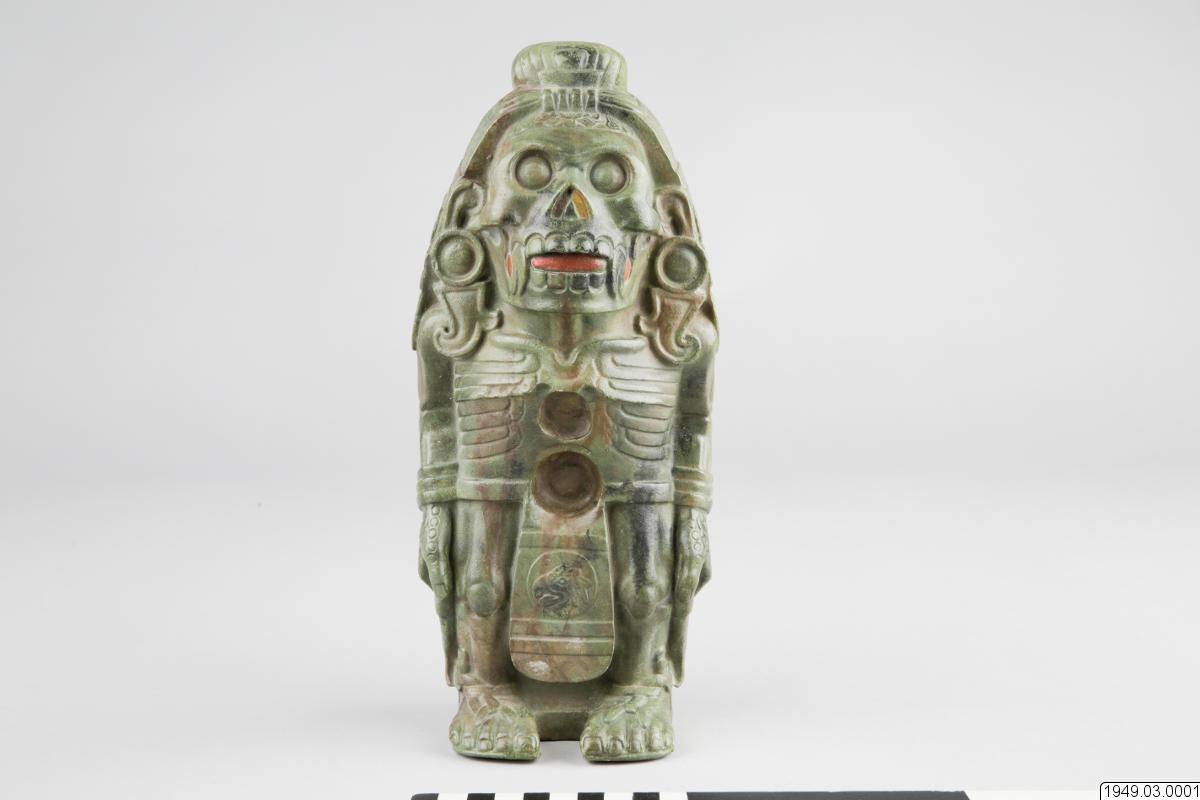 Source: Objaverse 1.0 / Sketchfab
Copy of box to Lidded box, tepetlacalli
[1939.32.0001](https://collections.smvk.se/carlotta-em/web/object/1770465), kista, gipsavgjutning Inventar: "Askkista. Gipsavgjutning från [original i Museum fuer Völkerkunde, Hamburg (Hackmacks samling)](https://markk-hamburg.de/en/objekte/lidded-box-decorated-with-reliefs-tepetlacalli/). Ursprung okänt, troligen Mexicodalen. Originalet är hugget ur grågrön sten och lock, som sluter till omkring lådans upphöjda inre kant. Formen är rektangulär med platt lock och botten. Alla större ytor äro försedda med reliefer. På lådans framsida bilden av en sittande figur med en hieroglyf som Seler tyder såsom tecken för 'den döde krigarens själ' (Seler Abb. 18). Motstående långsidas figur tyder Seler såsom Tepeyollotli, hålernas eller grottornas gud. Kortsidorna och bottens inre uppta datumtecken, som torde symbolisera nordens och sydens regioner. 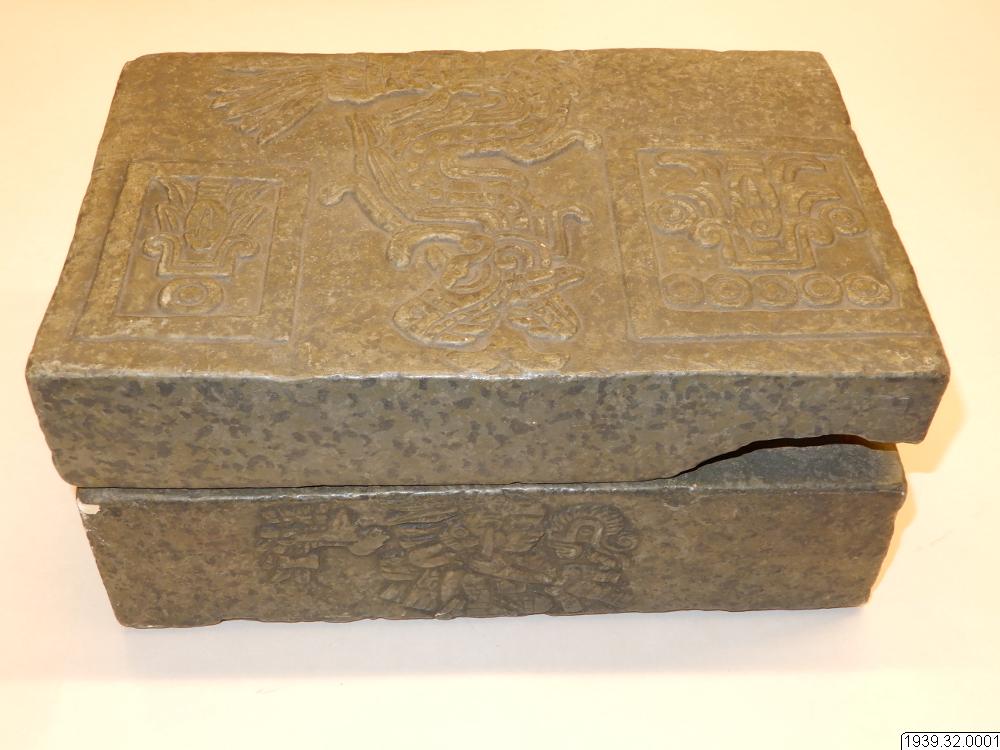 Source: Objaverse 1.0 / Sketchfab
Accumulation of gene copy number variations during the early phase of free-spawning abalone speciation
<p><span>The g</span><span>enetic basis of speciation in free-spawning marine invertebrates is poorly understood. Although gene copy number variations (GCNVs) as well as nucleotide variations possibly trigger the speciation of these organisms, empirical evidence for such </span><span>a hypothesis</span><span> is limited. In this study, we searched for genomic signatures of GCNVs that may contribute to the speciation of Western Pacific abalone species. Whole-genome sequencing data suggested the existence of significant amounts of GCNVs in closely related abalones, <em>Haliotis discus</em> and <em>H. madaka</em>, in the early phase of speciation. In addition, the degree of interspecies genetic differentiation in the genes where GCNVs were estimated was higher than </span><span>that </span><span>in other genes, suggesting that nucleotide divergence also accumulate</span><span>s in the genes with GCNVs.</span><span> GCNVs in some genes were also detected in other related abalone species, suggesting that these GCNVs are derived from both ancestral and <em>de novo</em> mutations.</span> <span>Our findings </span><span>suggest that GCNVs have been accumulated in </span><span>the early phase</span><span> of free-spawning abalone speciation.</span></p>
Dataset related to the article "Binary classification of copy number alteration profiles in liquid biopsy with potential clinical impact in advanced NSCLC"
<p>This record contains original data used in the article "Binary classification of copy number alteration profiles in liquid biopsy with potential clinical impact in advanced NSCLC" to develop a linear support vector machine (SVM) classifier to predict chromosomal instability. </p> <p>We retrospectively evaluated the results of plasma NGS analysis performed at our Institution by using the AVENIO ctDNA Expanded Kit, a panel of 77 genes, which detects the major classes of genetic alterations. Binary classification, into “stable” (SCP) or “unstable” (UCP) chromosomal profiles, was initially performed by visual inspection of individual CNV alteration profiles by two independent professionals of our group. Then we decided to implement a support vector machine (SVM) classifier to automatically classify CNV profiles as SCP or UCP, beyond operators’ experience. We considered the segmented log2 ratios (.cns) files provided by the CNV kit software and computed three features (Segments, Size, Chromosomes). An alteration (“occurrence of instability”) in the CNV profile was defined each time we found a DNA segment of any size with absolute value of the log2 copy ratio exceeding a fixed cut-off. Two different cut-off values on log2 copy ratio were examined: 0.1 and 0.2. Once the cut-off was defined, three features were considered as covariates in the SVM classifier: 1) number of altered segments (Segments), 2) total length of altered regions (Size) and 3) number of affected chromosomes (Chromosomes).</p> <p>The “dataset_0.1.txt” and “dataset_0.2.txt” files are the original data matrices obtained by considering a cut-off of 0.1 and 0.2, respectively, on the absolute value of the log2 copy ratio.</p> <p>Rows represent available samples in our study (n=177). Columns contain the following variables: anonymized sample IDs (Sample), the class, “stable” or “unstable”, as assigned by two independent professionals of our group (Class), the corresponding binary label (Label: 0 for “stable”, 1 for “unstable”), the three features used as covariates in the SVM classifier and computed as described above (Segments, Size, Chromosomes).</p> <p><br>For the detailed results of our work, please refer to the full article.</p>
Size-dependent Copy Number Analysis Data
<p>Data<strong> </strong>used for analysis described in <em><span>Pan-cancer copy number analysis identifies optimized size thresholds and co-occurrence models for individualized risk stratification</span></em></p> <p><strong>MeningiomaSegs.zip </strong>contains the generated copy number segmentation from the sesame pipeline for 565 meningioma samples used in this project</p> <p><strong>MeningiomaClinical.xlsx </strong>contains deidentified clinical outcomes and relevant molecular data for meningioma samples</p> <p><strong>blank_CNV_table.xlsx </strong>is a blank template loaded in several R scripts in this project</p> <p><strong>hg38.14_chrom_arms_manual.txt </strong>Details the starting and ending points of chromosome arms</p> <p><strong>sampleinventory_excluded.xlsx</strong> Lists the TCGA cancer types and how many samples have both copy number and clinical data after manual exclusion of other samples</p>
Copy number variation introduced by a massive mobile element facilitates global thermal adaptation in a fungal wheat pathogen - Supplementary Data files
<p>Supplementary Data file 3-4 included in the manuscript Copy number variation introduced by a massive mobile element facilitates global thermal adaptation in a fungal wheat pathogen. </p>
Data from: Evolutionary variation in gene conversion at the avian MHC is explained by fluctuating selection, gene copy numbers, and life history
<p>The Major Histocompatibility Complex (MHC) multigene family encodes key pathogen-recognition molecules of the vertebrate adaptive immune system. Hyper-polymorphism of MHC genes is <em>de novo</em> generated by point mutations, but new haplotypes may also arise by re-shuffling of existing variation through intra- and inter-locus gene conversion. Although the occurrence of gene conversion at the MHC has been known for decades, we still have limited understanding of its functional importance. Here, I took advantage of extensive genetic resources (~9000 sequences) to investigate a broad scale macroevolutionary patterns in gene conversion processes at the MHC across nearly 200 avian species. Gene conversion was found to constitute a universal mechanism in birds, as 83% of species showed footprints of gene conversion at either MHC class and 25% of all allelic variants were attributed to gene conversion. Gene conversion processes were stronger at MHC-II than MHC-I, but inter-specific variation at both MHC classes was explained by similar evolutionary scenarios, reflecting fluctuating selection towards different optima and drift. Gene conversion showed uneven phylogenetic distribution across birds and was driven by gene copy number variation, supporting significant role of inter-locus gene conversion processes in the evolution of the avian MHC. Finally, MHC gene conversion was stronger in species with fast life histories (high fecundity) and in long-distance migrants, likely reflecting variation in population sizes and host-pathogen coevolutionary dynamics. The results provide a robust comparative framework for understanding macroevolutionary variation in gene conversion at the avian MHC and reinforce important contribution of this mechanism to functional MHC diversity.</p>
Mutation frequency and copy number alterations determine prognosis and metastatic tropism in 60.000 clinical cancer samples
<p>The intricate interplay between somatic mutations and copy number alterations critically influences tumour evolution and patient prognosis. Traditional genomic studies often overlook this interplay by analysing these two biomarker types in isolation. We developed INCOMMON, a computational method to detect allele-specific copy number alterations from clinical targeted panels without matched normal, discover recurrent tumour-specific patterns of co-existing mutations and copy-number alterations, and stratify patients based on these composite genotypes for downstream analyses of survival, metastatic propensity and organotropism. The tool can be used as an open-source R package available at <a href="https://github.com/caravagnalab/INCOMMON">https://github.com/caravagnalab/INCOMMON</a>, and a shiny application available at <a href="https://ncalonaci.shinyapps.io/incommon/" target="_blank" rel="noopener">https://ncalonaci.shinyapps.io/incommon/</a>. This repository contains all the scripts that we used to analyse PCAWG, TCGA, MSK-MetTropism and AACR GENIE-Dfci data, and all the relevant results in the form of data tables.<strong></strong></p>
Mate-choice copying accelerates species range expansion
<p>Mate-choice copying is a type of social learning in which females can change their mate preference after observing the choice of others. This behaviour can potentially affect population evolution and ecology, namely through increased dispersal and reduced local adaptation. Here, we simulated the effects of mate-choice copying in populations expanding across an environmental gradient to understand whether it can accelerate or retard the expansion process. Two mate-choice copying strategies were used: when females target a single individual, and when females target similar individuals. We also simulated cases where the male trait singled out by females with mate-choice maps perfectly onto their genotype or is influenced by genotype-by-environment interactions. These rules have different effects on the results. When a trait is determined by genotype alone, populations where copier females target all similar males expand faster, and the number of potential copiers increases. However, when preference is determined by genotype-by-environment interactions, populations where copier females target a single male have higher dispersal and also expand faster, but the potential number of copiers decreases. The results show that mate-choice copying can accelerate the expansion process, although its adaptiveness depends on the information animals use in different contexts.</p>
Copy number variation heterogeneity & hierarchical cancer classifications
<p>This is the CNV data from progenetix on the NCIt morphology tree used in the study Copy number variation heterogeneity reveals biological inconsistency in hierarchical cancer classifications. The columns are separated by tabs, and the values indicate the max CNV value of the biosample on the corresponding bin (1MB) of the genome.</p>
Pangenome graph analysis reveals extensive effector copy-number variation in spinach downy mildew
<p>Data produced for the comparison of six <em>Peronospora effusa</em> isolates. For each isolate, we provide the genome assemblies, gene and repeat annotation, effector clustering, and gene variation. Additionally, we provide the repeat library that was used to annotate the transposable elements for each isolate and the pangenome graph.</p> <p>DOI: https://doi.org/10.1101/2024.05.30.596583 </p>
USDA PLANTS images cached copy (XML)
The PLANTS Database provides standardized information about the vascular plants, mosses, liverworts, hornworts, and lichens of the U.S. and its territories. It includes names, plant symbols, checklists, distributional data, species abstracts, characteristics, images, crop information, automated tools, onward Web links, and references. This information primarily promotes land conservation in the United States and its territories, but academic, educational, and general use is encouraged. PLANTS reduces government spending by minimizing duplication and making information exchange possible across agencies and disciplines. Data published on EOL by the PLANTS database include attribute data, images and descriptive text.<p></p><p></p>http://www.eol.org/content_partners/36/resources/37
USDA PLANTS text cached copy (XML)
The PLANTS Database provides standardized information about the vascular plants, mosses, liverworts, hornworts, and lichens of the U.S. and its territories. It includes names, plant symbols, checklists, distributional data, species abstracts, characteristics, images, crop information, automated tools, onward Web links, and references. This information primarily promotes land conservation in the United States and its territories, but academic, educational, and general use is encouraged. PLANTS reduces government spending by minimizing duplication and making information exchange possible across agencies and disciplines. Data published on EOL by the PLANTS database include attribute data, images and descriptive text.<p></p><p></p>http://www.eol.org/content_partners/36/resources/108
ScienceDex guides
Understand access before you commit
These curated guides explain access requirements, typical timelines, costs, and reuse considerations for widely used research datasets.
Allen Brain Atlas
Allen Brain Atlas is an Allen Institute collection of brain map atlases, datasets, APIs, and analysis tools covering mouse, human, and non-human primate brain resources.
Annotated Behaviour and Observability Dataset (ABODe)
ABODe is a University of Edinburgh DataShare dataset for behavior classification in group-housed mice using home-cage video, identities, bounding boxes, ground-plate positions, and annotator labels.
DANDI Archive for NWB datasets
DANDI is a BRAIN Initiative archive for publishing and sharing neurophysiology data, including electrophysiology, optophysiology, and behavioral data packaged as NWB and related standards.
International Brain Laboratory public data
The International Brain Laboratory public data releases expose standardized mouse decision-making experiments, including Neuropixels recordings, widefield calcium imaging, behavior, and session metadata accessed through the ONE API.
OpenNeuro
OpenNeuro is a free, open platform for sharing neuroimaging datasets, with public search, dataset pages, and download paths for web, S3, DataLad, and the OpenNeuro CLI.