
Find research datasets worth reusing
Search datasets from major research repositories and use ShareScore to quickly assess how well each record supports discovery, access, and reuse.
1,283
datasets available to search
ShareScore release 0.7.1
Dataset results
1,283 results for “Copying”
TEI-XML Encoding of two copies of 'Le dit des planetes' within Paris, Bibliothèque nationale de France, fonds français, 24432
<p>The text's verse form is marked through the use of <lg> and <l> elements.</p> <p>Labels, marginal notes, catchwords, highlighted sections, moments of damage, gaps in text, and blank spaces are marked using <label>, <note>, <fw>, <hi>, <damage>, <gap>, and <space> respectively.</p> <p>Within the text of the encoding, expansions of scribal abbreviation, additions and deletions by scribal or later hands, as well as editorial regularisations, corrections, suppressions and insertions have been encoded using the <expan>, <add>,<del>, <reg>, <corr>, <surplus>, and <supplied> elements respectively, alongside the unexpanded, unregularised and uncorrected version of the text, through the <abbr>, <orig>, and <sic> elements respectively. Where more than one variant of the same segment of text has been encoded, for example in cases of expanded abbreviation and regularisation, the variants have been contained within a <choice> tag. </p>
Replication Package for "Ensuring Open Source Integrity: The Intersection of Copy-Based Reuse and License Compliance"
<p>Replication Package for "Ensuring Open Source Integrity: The Intersection of Copy-Based Reuse and License Compliance"<br><br>Includes datasets, R and bash code.</p>
No evidence for single-copy immune-gene specific signals of selection in termites
<p>Selection pressures from pathogens appear to play an important role in shaping social evolution. Social behavior, in particular brood care, is associated with pathogen pressure in wood-dwelling "lower" termites. Yet, generally pathogen pressure is predicted to be low in wood-dwelling termite species that never leave the nest except for the mating flight. In comparison, pathogen pressure is predicted to be higher in species that leave the nest to forage, and thus constantly encounter a diversity of microbes from their environment. We hypothesized that such differences in predicted pathogen pressure are also reflected by differences in the intensity of natural selection on immune genes. We tested this hypothesis in a phylogenetic framework, analyzing rates of non-synonymous and synonymous substitutions on single-copy immune genes. Therefore, we leveraged recent genomic and transcriptomic data from eight termite species, representing wood-dwelling and foraging species as well as 14 additional species spanning the winged insects (Pterygota). Our results provide no evidence for a role of pathogen pressure in selection intensity on single-copy immune genes. Instead, we found evidence for a genome-wide pattern of relaxed selection in termites.</p>
Capturing single-copy nuclear genes, organellar genomes, and nuclear ribosomal DNA from deep genome skimming data for plant phylogenetics: A case study in Vitaceae
<p>With the decreasing cost and availability of many newly developed bioinformatics pipelines, next-generation sequencing (NGS) has revolutionized plant systematics in recent years. Genome skimming has been widely used to obtain high-copy fractions of the genomes, including plastomes, mitochondrial DNA (mtDNA), and nuclear ribosomal DNA (nrDNA). In this study, through simulations, we evaluated the optimal (minimum) sequencing depth and performance for recovering single-copy nuclear genes (SCNs) from genome skimming data, by subsampling genome resequencing data and generating 10 datasets with different sequencing coverage <i>in silico</i>. We tested the performance of four datasets (plastome, nrDNA, mtDNA, and SCNs) obtained from genome skimming based on phylogenetic analyses of the <i>Vitis</i> clade at the genus level and Vitaceae at the family level, respectively. Our results showed that optimal minimum sequencing depth for high-quality SCNs assembly via genome skimming was about 10× coverage. Without the steps of synthesizing baits and enrichment experiments, coupled with incredibly low sequencing costs, we showcase that deep genome skimming (DGS) is as effective for capturing large datasets of SCNs as the widely used Hyb-Seq approach, in addition to capturing plastomes, mtDNA, and entire nrDNA repeats. DGS may serve as an efficient and economical alternative and may be superior to the popular target enrichment/Hyb-Seq approach.</p>
Amaranthus palmeri EPSPS copy number and glyphosate resistance variation
<p>Gene copy number variation (CNV) has been increasingly associated with organismal responses to environmental stress, but we know little about the quantitative relation between CNV and phenotypic variation. In this study we quantify the relation between variation in <i>EPSPS</i> (5-enolpyruvylshikimate-3-phosphate synthase) copy number using digital drop PCR and variation in phenotypic glyphosate resistance in 22 populations of <i>Amaranthus palmeri</i> (Palmer Amaranth), a range-expanding agricultural weed. Overall, we detected a significant positive relation between population mean copy number and resistance. The majority of populations exhibited high glyphosate resistance yet maintained low-resistance individuals, resulting in bimodality in many populations. We also investigated threshold models for the relation between copy number and resistance, and found evidence for a threshold of ~15 <i>EPSPS</i> copies: there was a steep increase in resistance below the threshold, followed by a much shallower increase. Across 924 individuals, as copy number increases the range of variation in resistance decreases, yielding an increasing frequency of high phenotypic resistance individuals. Among populations <span>we detected a decline in variation (s.d.) as mean phenotypic resistance increased from moderate to high, consistent with the prediction that as phenotypic resistance increases in populations, stabilizing selection decreases variation in the trait. Our study demonstrates that populations of <i>A. palmeri</i> can harbour wide variation in <i>EPSPS</i> copy number and phenotypic glyphosate resistance, reflecting the history of, and template for future, resistance evolution.</span></p>
Data from: 2-D sex images elicit mate copying in fruit flies
<p><span>Although the environment is three-dimensional (3-D), humans are able to extract subtle information from two-dimensional (2-D) images, particularly in the domain of sex. However, whether animals with simpler nervous systems are capable of such information extraction remains to be demonstrated, as this ability would suggest a functional generalisation capacity. </span><span>Here, we performed mate-copying experiments in <em>Drosophila</em> <em>melanogaster</em> using 2-D artificial stimuli. Mate copying occurs when naïve females observe the mating success of potential mates and use that social information to build their own mating preference. By replacing live demonstrations with (i) photos or (ii) simplified images of copulating pairs, we found that even crudely simplified images of sexual intercourse still elicit mate copying, suggesting that <em>Drosophila</em> is able to extract sex-related information even from a degraded image. This new method </span><span>constitutes a powerful tool to further investigate mate copying in that species and sexual preferences in general.</span></p>
Data from: Higher evolutionary dynamics of gene copy number for Drosophila glue genes located near short repeat sequences
<p><strong>Background</strong></p> <p>During evolution, genes can experience duplications, losses, inversions and gene conversions. Why certain genes are more dynamic than others is poorly understood. Here we examine how several <em>Sgs</em> genes encoding glue proteins, which make up a bioadhesive that sticks the animal during metamorphosis, have evolved in <em>Drosophila</em> species.</p> <p><strong>Results</strong></p> <p>We examined high-quality genome assemblies of 24 <em>Drosophila</em> species to study the evolutionary dynamics of four glue genes that are present in <em>D. melanogaster</em> and are part of the same gene family <em>–</em> <em>Sgs1, Sgs3, Sgs7 and Sgs8 –</em> across approximately 30 millions of years. We annotated a total of 102 <em>Sgs</em> genes and grouped them into 4 subfamilies. We present here a new nomenclature for these <em>Sgs</em> genes based on protein sequence conservation, genomic location and presence/absence of internal repeats. Two types of glue genes were uncovered. The first category (<em>Sgs1, Sgs3x, Sgs3e</em>) showed a few gene losses but no duplication, no local inversion and no gene conversion. The second group (<em>Sgs3b, Sgs7, Sgs8</em>) exhibited multiple events of gene losses, gene duplications, local inversions and gene conversions. Our data suggest that the presence of short "new glue" genes near the genes of the latter group may have accelerated their dynamics.</p> <p><strong>Conclusions</strong></p> <p>Our comparative analysis suggests that the evolutionary dynamics of glue genes is influenced by genomic context. Our molecular, phylogenetic and comparative analysis of the four glue genes <em>Sgs1, Sgs3, Sgs7</em> and <em>Sgs8 </em>provides the foundation for investigating the role of the various glue genes during <em>Drosophila</em> life.</p>
A streamlined approach for fluorescence labelling of low copy-number plasmids for determination of conjugation frequency by flow cytometry
<p><span>Bacterial conjugation plays a major role in the dissemination of antibiotic resistance and virulence traits through horizontal transfer of plasmids. </span>Robust <span>measurement</span> of<span> the conjugation frequency of plasmids between bacterial strains and species </span>is therefore important <span>to understand the transfer dynamics </span>and epidemiology <span>of conjugative plasmids. In this study, we present a streamlined experimental approach for fluorescence labelling of low copy-number conjugative plasmids that allows plasmid transfer frequency during filter mating to be measured by flow cytometry. A blue fluorescence gene is inserted into a conjugative plasmid of interest using a simple homologous recombineering procedure. </span><span>A small non-conjugative plasmid, which carries a red fluorescence gene with a toxin-antitoxin system that functions as a plasmid stability module, is used to label the recipient bacterial strain. This offers the dual advantage of circumventing chromosomal modifications of recipient strains and ensuring that the red fluorescence gene-bearing plasmid can be stably maintained in recipient cells in an antibiotic-free environment during conjugation. A strong constitutive promoter allows the two fluorescence genes to be strongly and constitutively expressed from the plasmids, thus allowing flow cytometers to clearly distinguish between donor, recipient and transconjugant populations in a conjugation mix for monitoring conjugation frequencies more precisely over time. </span></p>
Single-copy orthologous genes used for Ricefish phylogeny
<p>Ortholog set</p> <p> We generated a reference set consisting of 8390 single-copy protein-coding genes derived from OrthoDB v.9.1 (Waterhouse et al., 2013) available for the following species: <em>Austrofundulus limnaeus, Centrocoris variegatus, Fundulus heteroclitus, Kryptolebias marmoratus, Nothobranchius furzeri, Oryzias latipes, O. melastigma, Poecilia formosa, P. latipinna ,P. mexicana, P. reticulata</em> and <em>Xiphophorus maculatus </em>(NCBI Accession numbers in Table S7). The hierarchical split was set to Actinopterygii (ID 7898). We used the script “make-ogs-corresponding.pl” to check for inconsistencies between the amino acid sequences and the corresponding nucleotide sequences and removed 96 problematic genes (Tab. S7). </p> <p>Identification of orthologs for transcripts and genome and alignment of single-copy genes</p> <p> Ortholog identification among 16 ricefish species and four outgroups (DS1, supplementary tables Tab. S1a) was carried out with Orthograph v0.7.1 (Petersen et al., 2017). Forward search for candidate transcript was left at default. Best reciprocal hit: Ortholog candidate genes needed at least one hit in either <em>O. latipes</em> or <em>O. melastigma </em>and we allowed concatenation of hits if they met the criteria and did not overlap. Max-blast-searches were set to 50, blast-max-hits were also set to 50. “U” in the amino acid sequences was changed to “X” to avoid issues in downstream analysis. The results of the orthology prediction were summarized for all species using a custom perl script coming with the orthograph package. Sequences of only those orthologs with all species present were aligned using MAFFT v7.221 with the L-INS-I algorithm on amino acid level (Katoh & Standley, 2013). 915 orthologs with outliers were identified according to Misof et al. 2014 and were subsequently removed from further analysis. We used the amino-acid alignments as blue print to generate corresponding nucleotide alignments with a modified version of Pal2Nal v14 (Misof et al., 2014; Suyama et al., 2006). To check each amino acid alignment for ambiguously aligned regions, we ran ALISCORE v2.0 with the maximal number of possible sequence selected pairs to analyze (-r) (Kück et al., 2010; Misof et al., 2014; Misof & Misof, 2009). Sites which needed masking were cut out using ALICUT v2.3 (Kück, 2009) from the amino acid alignments and correspondingly also from the nucleotide alignments. For further analyses we only proceeded with the data set on nucleotide level.</p>
Phylogenomics of mulberries (Morus, Moraceae) inferred from plastomes and single copy nuclear genes
<p><span>Mulberry (genus <em>Morus</em>), belonging to the order Rosales, family Moraceae, is an important woody plant due to its economic value in sericulture as well as for its nutritional benefits and medicinal values. However, the taxonomy and phylogeny of <em>Morus</em> remain challenging due to its wide geographical distribution, morphological plasticity, and interspecific hybridization. To better understand the evolutionary history of <em>Morus</em>, we combined plastomes and a large-scale nuclear gene to investigate their phylogenetic relationships in the present study. We assembled the plastomes and screened 211 single-copy nuclear genes from 14 <em>Morus</em> species and related taxa. The plastomes of <em>Morus</em> species were relatively conserved in terms of genome size, gene content and order, IR boundary and codon usage. Using nuclear data, we yielded completely identical topologies based on coalescent and concatenation methods, and multiple individuals of the same species were intraspecific monophyletic. The genus <em>Morus</em> was supported as a monophyly, and <em>M. notabilis</em> was recovered as the first diverging, and the two North American <em>Morus</em> species, <em>M. celtidifolia</em> and <em>M. rubra</em>, were sister to the other Asian species. However, the relationships of <em>Morus</em> based on plastomes were strongly incongruent with those from nuclear genes, and intraspecific non-monophyly was retrieved in the plastid phylogeny. Comparisons of nuclear and plastid phylogenies, and combining with the result of network inference, hybridization/introgression was regarded as the main cause of the discordance between nuclear and plastid phylogenies in the genus <em>Morus</em>. Overall, the robust phylogenetic relationships of <em>Morus</em> described here will be useful for genetic resources development of this economically important genus and exploitation of sericulture industry.</span></p>
Copy number variation introduced by a massive mobile element underpins global thermal adaptation in a fungal wheat pathogen - Supplementary Tables..
<p>Supplementary Tables S1 - S11 of the manuscript <strong>Copy number variation introduced by a massive mobile element underpins global thermal adaptation in a fungal wheat pathogen. </strong></p>
Copy of lid for lidded box, tepetlacalli
[1939.32.0001](https://collections.smvk.se/carlotta-em/web/object/1770465), kista, gipsavgjutning Inventar: "Askkista. Gipsavgjutning från [original i Museum fuer Völkerkunde, Hamburg (Hackmacks samling)](https://markk-hamburg.de/en/objekte/lidded-box-decorated-with-reliefs-tepetlacalli/). Ursprung okänt, troligen Mexicodalen. Originalet är hugget ur grågrön sten och lock, som sluter till omkring lådans upphöjda inre kant. Formen är rektangulär med platt lock och botten. Alla större ytor äro försedda med reliefer. På lådans framsida bilden av en sittande figur med en hieroglyf som Seler tyder såsom tecken för 'den döde krigarens själ' (Seler Abb. 18). Motstående långsidas figur tyder Seler såsom Tepeyollotli, hålernas eller grottornas gud. Kortsidorna och bottens inre uppta datumtecken, som torde symbolisera nordens och sydens regioner. 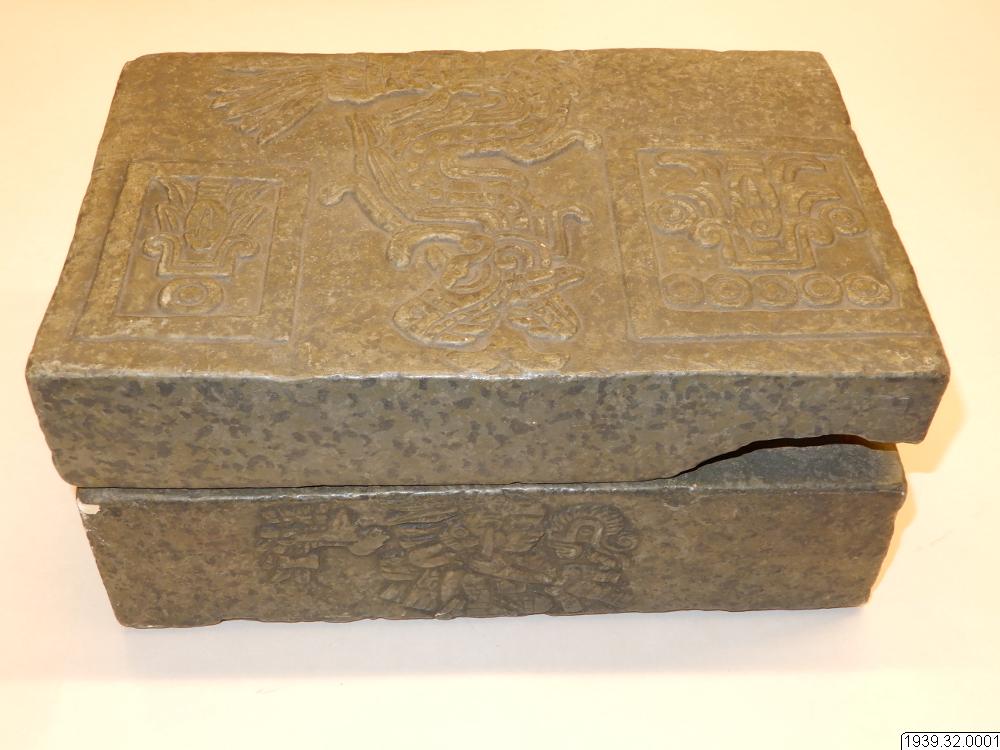 Source: Objaverse 1.0 / Sketchfab
David - Copy
artist: [Michelangelo di Lodovico Buonarroti Simoni](https://en.wikipedia.org/wiki/Michelangelo) metal cast copy of the iconic marble statue. Source: Objaverse 1.0 / Sketchfab
Körnerdenkmal Dresden - copy
Loschwitz (Körnerdenkmal), Stadt Dresden, Sachsen Wandfries am Körnerweg mit Darstellung von Szenen aus den Befreiungskriegen der Lützower Jäger. Rechts und links des Reliefs befindet sich je eine Standsteintafel mit Inschriften. Das Denkmal wurde 2005 restauriert und befindet sich bereits wieder in einem sehr schlechten Zustand und ist beschmiert. Source: Objaverse 1.0 / Sketchfab
Testing Trastuzumab and Pertuzumab in Patients With Higher Than Normal Copies of the HER2 Gene Found in Their Tumors (MATCH - Subprotocol J)
ClinicalTrials.gov study NCT06136897. IPD Sharing: YES. Countries: 1. Publications: 1.
Population genetic differentiation and evolutionary history in <em>Liriodendron</em> revealed by stress related single copy genes
Open the record for dataset details and reuse information.
A streamlined approach for fluorescence labelling of low copy-number plasmids for determination of conjugation frequency by flow cytometry
Open the record for dataset details and reuse information.
Data from: Putative climate adaptation in American pikas (Ochotona princeps) is associated with copy number variation across environmental gradients
Open the record for dataset details and reuse information.
Data from: Evolutionary variation in gene conversion at the avian MHC is explained by fluctuating selection, gene copy numbers, and life history
Open the record for dataset details and reuse information.
Data from: Allopolyploidy in the Wintergreen Group of tribe Gaultherieae (Ericaceae) inferred from low-copy nuclear genes
Open the record for dataset details and reuse information.
ScienceDex guides
Understand access before you commit
These curated guides explain access requirements, typical timelines, costs, and reuse considerations for widely used research datasets.
Allen Brain Atlas
Allen Brain Atlas is an Allen Institute collection of brain map atlases, datasets, APIs, and analysis tools covering mouse, human, and non-human primate brain resources.
Annotated Behaviour and Observability Dataset (ABODe)
ABODe is a University of Edinburgh DataShare dataset for behavior classification in group-housed mice using home-cage video, identities, bounding boxes, ground-plate positions, and annotator labels.
DANDI Archive for NWB datasets
DANDI is a BRAIN Initiative archive for publishing and sharing neurophysiology data, including electrophysiology, optophysiology, and behavioral data packaged as NWB and related standards.
International Brain Laboratory public data
The International Brain Laboratory public data releases expose standardized mouse decision-making experiments, including Neuropixels recordings, widefield calcium imaging, behavior, and session metadata accessed through the ONE API.
OpenNeuro
OpenNeuro is a free, open platform for sharing neuroimaging datasets, with public search, dataset pages, and download paths for web, S3, DataLad, and the OpenNeuro CLI.