
Find research datasets worth reusing
Search datasets from major research repositories and use ShareScore to quickly assess how well each record supports discovery, access, and reuse.
480
datasets available to search
ShareScore release 0.9.0
Dataset results
480 results for “Lion”
Magnetic Resonance Imaging Scan of the Brain of a Lion (Panthera leo)
<p>Magnetic Resonance Imaging Scan of the Brain of a Lion (<i>Panthera leo</i>) from http://braincatalogue.org/Lion</p>
Factors influencing space-use and kill distribution of sympatric lion prides in a semi-arid savanna landscape
<p>In this study, Global Positioning System collar data and logistic regression were used to investigate space-use and kill distribution among three lion prides at Malilangwe Wildlife Reserve, Zimbabwe. The R statistical platform was used to perform logistic regression analysis to determine the effects of the environmental variables on the outcome of each pride's ranging behaviour. <i>Presence/Kill probability </i>(presence or absence) was used as a response variable while<i> distance to water, shrub canopy volume</i>, <i>soil depth</i> and <i>clay content</i> were treated as fixed effects.</p>
Processed data for a Slocum ocean glider campaign in the Gulf of Lion, Mediterranean Sea, 2021
<p>The data set was measured in the Gulf of Lion by a Slocum glider in February 2021. It includes processed data from a CTD and a turbulence microstructure package.</p>
California Sea Lion Stranding Records from Quantifying the linkages between California sea lion (Zalophus californianus) strandings and particulate domoic acid concentrations at piers across Southern California
<p>Pacific Marine Mammal Center (PMMC) is a member of the West Coast Marine Mammal Stranding Network, which was established under the United States Marine Mammal Protection Act by the National Oceanic and Atmospheric Administration (NOAA) to respond to stranded marine mammals. PMMC rescues, rehabilitates, and releases sick and injured marine mammals along the Orange County coastline, which is approximately 68 km of the Southern California coastline (<strong>Figure 1</strong>). All marine mammal rescue and rehabilitation activities are conducted by PMMC under a Stranding Agreement with National Marine Fisheries Service/NOAA.</p> <p>Patient case records from 2015-2019 for California sea lions (hereafter, sea lions) were reviewed and collated for each animal’s case presentation including sex, age class, seizure activity, postictal signs, comatose, abortion, and whether the sea lion was diagnosed by the attending veterinarian with domoic acid intoxication following the behavioral diagnostic criteria outlined by Gulland et al., <a href="https://www.zotero.org/google-docs/?XUrLiy">(2002)</a>. Multiple veterinarians made diagnoses during the time series based on these criteria which may have introduced some variation in the diagnosis of domoic acid intoxication during the study period. Age classes were defined following Greig et al. <a href="https://www.zotero.org/google-docs/?DGqEGG">(2005)</a> using dentition, straight length, pregnancy status, and sexual dimorphism to classify a sea lion’s age class. The following demographic categories are included in this study: juvenile/subadult male, subadult female, adult male, and adult female. Younger sea lions in the pup and yearling age classes were excluded as sea lions within these age classes are generally the most common patients at the center and often strand due to malnutrition <a href="https://www.zotero.org/google-docs/?eTzjbp">(Bejarano et al., 2008a)</a>, and rarely present with acute or chronic domoic acid intoxication during blooms. Adult and subadult age classes are the most commonly affected by domoic acid intoxication <a href="https://www.zotero.org/google-docs/?6xP9cn">(Bejarano et al., 2008a)</a>. Only live sea lions that were rescued on the Orange County coastline, brought to PMMC's facility, and assessed by the attending veterinarian were included. Adult and subadult sea lions that died on the beach were excluded from the study cohort because an attending veterinarian could not assess clinical signs to diagnosis domoic acid intoxication prior to death.</p>
Beta-hydroxybutyrate ketone concentrations via ketometer and colorimetric assay in Steller sea lion whole blood and plasma
<p>We evaluated the Precision Xtra™ ketometer during a larger study categorizing free-ranging Steller sea lion (<em>Eumetopias jubatus</em>; SSL) pup fasting status, necessitating identification of plasma β-hydroxybutyrate concentrations ([β-HBA]) around a < and ≥0.3 mmol/L threshold. Whole blood samples mixed with sodium heparin (NaHep) or ethylenediaminetetraacetic acid liquid anticoagulants were tested <10 minutes after collection (n=14; triplicate technical replicates). Plasma (stored at -80°C, NaHep, <em>Thaw1</em>) measured via our laboratory's <em>Reference Assay </em>(Sigma Aldrich, St. Louis, MO, Kit #MAK041) served as the standard [β-HBA] for ketometer comparisons. Our observed β-HBA range (0.0–1.6 mmol/L), consistent with published [β-HBA] of free-ranging Otariid pups, represented the lower 20% of the ketometer's range (0.0–8.0 mmol/L). The maximal coefficient of variation (%CV) of ketometer technical replicates was 9.1% (NaHep, whole blood). The majority of ketometer technical replicate sets (84%, including all matrices, anticoagulants, and thawings) were identical (CV=0%). We found linear relationships and agreement of ketometer [β-HBA] between whole blood preserved with different anticoagulants and between whole blood and plasma (<em>Thaw1</em>) measurements. The ketometer produced results with linearity to the <em>Reference Assay</em> for both whole blood and plasma (<em>Thaw1</em>). We identified a non-linear relationship between plasma at <em>Thaw1</em> and <em>Thaw2</em> (tested four months apart, NaHep), as only samples with higher SSL [B-HBA] decreased in concentration, and all others remained the same. With respect to categorizing SSL pup fasting, the ketometer % Accuracy, %Sensitivity, and %Specificity for samples with <em>Reference Assay</em> β-HBA <0.2 and >0.4 mmol/L were 100%. We adopted a modified procedure: plasma samples with mean ketometer concentrations ±0.1 mmol/L of 0.3 mmol/L β-HBA were re-evaluated using the <em>Reference Assay</em>, improving measurement precision from tenths (ketometer) to thousandths (assay) mmol/L. The Precision Xtra™ ketometer was valuable to our application, over the range of [β-HBA] observed in SSL pup plasma and whole blood samples.</p>
Lion Statuette, c. 1200
11th-12th c. lion statuette in the collection of the Minneapolis Institute of Art. From the lion's description on artsmia.org: A 'testament to the sophisticated taste and refined techniques of Islamic goldwork in Spain.' More information here: http://collections.artsmia.org/art/19884/statuette-hispano-moorish Made with several hundred 20-megapixel photos; built in Photoscan. This is a low-resolution version of the object; contact permissions@artsmia.org for a higher-resolution version. Source: Objaverse 1.0 / Sketchfab
Lion's Mouth, EPCOT
On a recent birthday trip to Disney's EPCOT center I took a few pics of a faux Lion's Mouth in the Italy pavillion. Much of the Italy pavillion is modeled on St. Mark's square in Venice, replete with the Doge's palace and the two famous Venetian pillars. On the back side of the "palace," mostly hidden away, I found this Lion's Mouth, a tool used by the Venetian Republic for secret accusations and condemnations. The mouth would have been open to receive letters surreptitiously dropped in by anyone wishing to accuse anyone else of, well, just about anything. Source: Objaverse 1.0 / Sketchfab
Lion Scan
Stone carving detail from one of the buildings in the centre of Paris, France. Source: Objaverse 1.0 / Sketchfab
Lion of Venice
A imponent statue of Lion of Venice, founded in a little park in Padua. The back was little difficult to shot so i cut it out totally. Source: Objaverse 1.0 / Sketchfab
Guardian Lion, late 12th-early 13th century
Guardian Lion, late 12th-early 13th century From the object's description on [artsmia.org](http://https://collections.artsmia.org/art/6341/guardian-lion-khmer) *"One of the most distinct sculptural types developed by the ancient Cambodians is the guardian lion. Considered protectors of the Buddhist teachings, pairs of lion images were often placed flanking temple doors and monumental stairways. Their sculpted remnants are still evident in several of the temple remains at Angkor as well as ancient Khmer sites in Thailand like Lopburi. Lions were not native to Cambodia and, from the beginning, Khmer artists depicted them as rather fantastic stylized beasts. The lion here is of the Bayon style, with its mouth wide open and lips drawn back like a grin. The massive chest is covered by a decorative mane and the posture is rigid befitting a temple guardian."* More information about the object here: https://collections.artsmia.org/art/6341/guardian-lion-khmer Source: Objaverse 1.0 / Sketchfab
MH 1910.2.C.B Ancient Roman Lamp With Lions
Culture: Roman Title: Lamp with lions Materials: Earthenware with red glaze Measurements: Overall: 1 1/8 in x 3 1/4 in x 3 3/16 in; 2.9 cm x 8.3 cm x 8.1 cm Accession Number: MH 1910.2.C.B View this object on the [Collections Database](https://museums.fivecolleges.edu/detail.php?t=objects&type=ext&id_number=MH+1910.2.C.B). Photographs and photogrammetry by Laura Shea (Digital Collections Coordinator and Museum Photographer), Mount Holyoke College Art Museum; Copyright info: Contact the Mount Holyoke College Art Museum South Hadley, Massachusetts, USA 01075 413-538-2245 http://www.mtholyoke.edu/artmuseum/ The Mount Holyoke College Art Museum is dedicated to teaching and learning; therefore, we value your feedback and welcome any scholarly observations. Please feel free to contact us if you would like to learn more about the objects you see here or to request 3D models of other objects in our collections. Source: Objaverse 1.0 / Sketchfab
Bostock Lion Memorial
A marble memorial to the Bostock family who were late 19th / early 20th Century menagerists, toruing Europe with their animal show. Located in Abney Park, Stoke Newington. "The final resting place of one of the great showmen from the turn of the 20th century, "The Animal King" Frank C Bostock. By the time of his death in 1912, Frank's wildly popular menageries had toured all over Europe and America.": https://flickeringlamps.com/2014/08/11/the-menagerists-memorial/ 171 photos taken in July 2020 with a Sony a6000 and processed in Reality Capture. Source: Objaverse 1.0 / Sketchfab
Guardian Lion from Nereid Monument
Sculpture located in British Museum in London. Made by Oskar Kubrak. Source: Objaverse 1.0 / Sketchfab
Old Chinese Guardian Lion
Located at Taiwan Confucian Temple, Tainan. Built in the 1600s, this is a very old and weathered Guardian Lion (or 'Foo Dog'). Source: Objaverse 1.0 / Sketchfab
The royal Lion Hunt of Ashurbanipal
he royal Lion Hunt of Ashurbanipal is depicted on a set of gypsum reliefs from the North Palace of Nineveh. They are widely regarded as "the supreme masterpieces of Assyrian art". They show a formalized ritual "hunt" by King Ashurbanipal (reigned 668 – c. 631/627 BC) in an arena, where captured Asian lions were released from cages for the king to slaughter with arrows, spears, or his sword. They were made about 645–635 BC, and originally formed different sequences placed around the palace. Source: Objaverse 1.0 / Sketchfab
Les Lions Du Pont Mayou
Un des lions du pont Mayou à Bayonne A Bayonne, le dernier ouvrage sur la Nive avant la confluence avec l'Adour est le pont Mayou ou Majour. A l'origine en charpente, mais victime des crues de la Nive, il sera remplacé par un ouvrage en pierre en 1857. Il sera élargi en 1914 pour le passage du tramway. On observe sur la plinthe des lions l'inscription « ETCHEVERRY BAYONNE 1857 », et au bas des garde-fous « FONDERIE SARTHOU FILS BAYONNE », ainsi que « ALBERT DURAND FONDERIE DE MOUSSEROLLES » sur la main courante. Ce pont possède des balustrades en fonte, ornées de lions couchés dos à dos, en fonte eux aussi (longueur d'environ 1 m). Ils servaient autrefois d'ancrage à des candélabres aujourd'hui malheureusement disparus et dont la base (située au-dessus des lions) a été comblée de ciment La photogrammétrie n'a été réalisée que sur une moitié de lion, l'autre étant hors d'atteinte car du côté Nive. Un opération "Miror" avec Meshmixer a permis sa reconstitution. Source: Objaverse 1.0 / Sketchfab
Lion Wooden
This is a 3D model based on the carved lion made in Mombasa, which can be found here: https://www.inventoriesprogramme.org/explore under the IIP Object Number: 30475. It is part of a student project I did about stolen artefacts from Kenya. Source: Objaverse 1.0 / Sketchfab
Crab Park Lion Low
Low res test of one of the Chinese Lions standing guard on the road down to Crab Park on the Vancouver water front. Just a test while I figure out this photogrammetry thing! Source: Objaverse 1.0 / Sketchfab
Lion Guardian at Ukhimath Temple
This lion guardian is to the right of the entrance to the Panch Kedar shrine at the Ukhimath Temple, in Uttarakhand, India. The sculpture was resting on the shrine wall so its back could not be fully scanned. It was 3D scanned with permission using a Structure scanner attached to an iPad Mini 4. Source: Objaverse 1.0 / Sketchfab
Seated Lion
A 3D scan of a scultupre Seated Lion by Antoine-Louis Barye / Alexis Rudier Fondeur (Paris) 1848. Found by the entrance of Ny Carlsberg Glyptotek in Copenhagen. 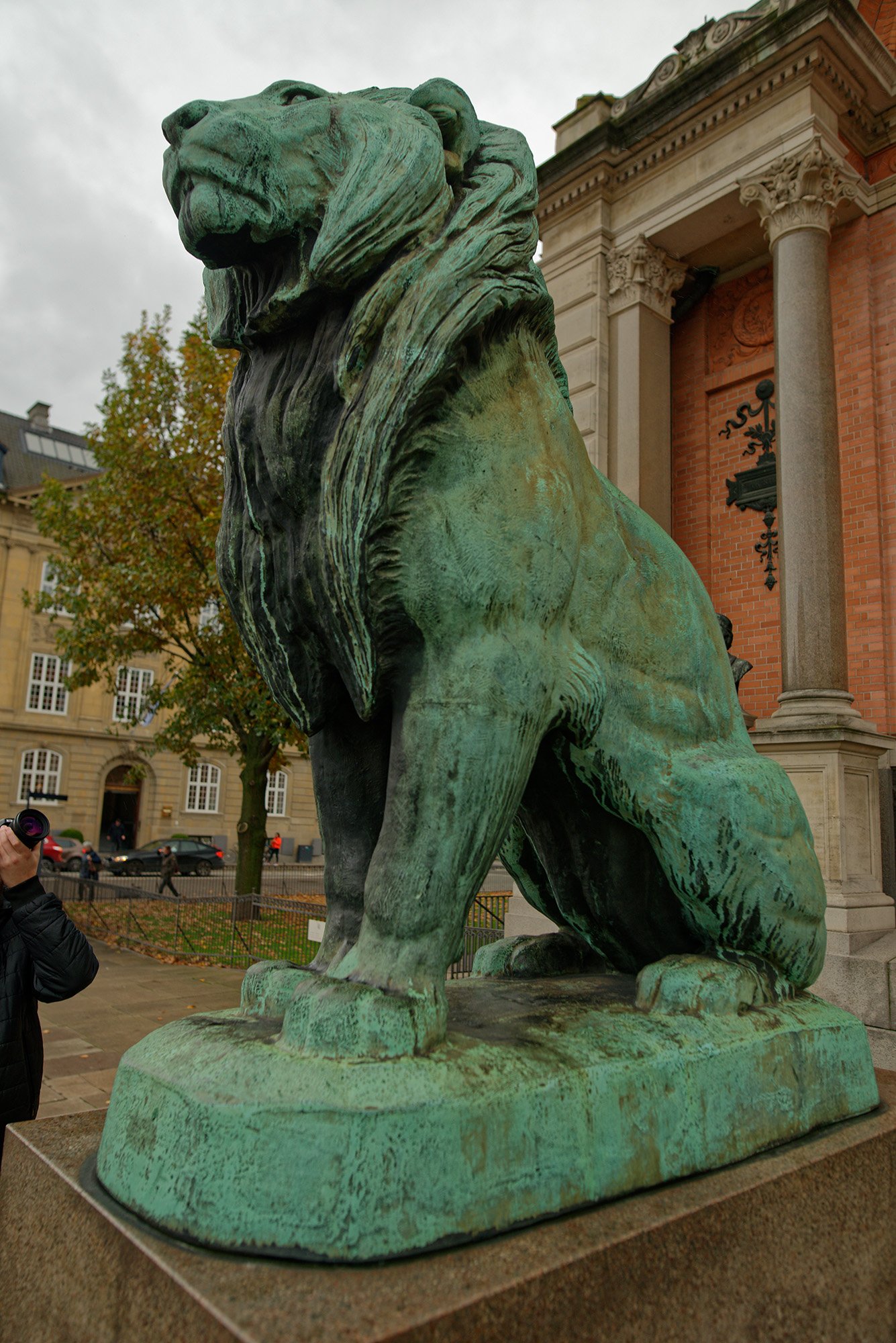 Source: Objaverse 1.0 / Sketchfab
ScienceDex guides
Understand access before you commit
These curated guides explain access requirements, typical timelines, costs, and reuse considerations for widely used research datasets.
Allen Brain Atlas
Allen Brain Atlas is an Allen Institute collection of brain map atlases, datasets, APIs, and analysis tools covering mouse, human, and non-human primate brain resources.
Annotated Behaviour and Observability Dataset (ABODe)
ABODe is a University of Edinburgh DataShare dataset for behavior classification in group-housed mice using home-cage video, identities, bounding boxes, ground-plate positions, and annotator labels.
DANDI Archive for NWB datasets
DANDI is a BRAIN Initiative archive for publishing and sharing neurophysiology data, including electrophysiology, optophysiology, and behavioral data packaged as NWB and related standards.
International Brain Laboratory public data
The International Brain Laboratory public data releases expose standardized mouse decision-making experiments, including Neuropixels recordings, widefield calcium imaging, behavior, and session metadata accessed through the ONE API.
OpenNeuro
OpenNeuro is a free, open platform for sharing neuroimaging datasets, with public search, dataset pages, and download paths for web, S3, DataLad, and the OpenNeuro CLI.