
Find research datasets worth reusing
Search datasets from major research repositories and use ShareScore to quickly assess how well each record supports discovery, access, and reuse.
6,170
datasets available to search
ShareScore release 0.9.0
Dataset results
6,170 results for “european”
AI results complementing the Annual Report on surveillance for Avian Influenza in poultry and wild birds in Member States of the European Union - Denmark
<p>This dataset contains the results of the EU co-funded surveillance activities conducted in 2019, which consisted of:</p> <ul> <li>Serological surveys to monitor the circulation of AIV subtypes H5 and H7 in poultry (active surveillance). These surveys should preferentially target poultry species or production systems with increased risk for introduction of avian influenza (AI).</li> <li>Passive surveillance aiming at the virological detection of AI in wild birds found dead or moribund.</li> </ul>
AI results complementing the Annual Report on surveillance for Avian Influenza in poultry and wild birds in Member States of the European Union - Austria
<p>This dataset contains the results of the EU co-funded surveillance activities conducted in 2019, which consisted of:</p> <ul> <li>Serological surveys to monitor the circulation of AIV subtypes H5 and H7 in poultry (active surveillance). These surveys should preferentially target poultry species or production systems with increased risk for introduction of avian influenza (AI).</li> <li>Passive surveillance aiming at the virological detection of AI in wild birds found dead or moribund.</li> </ul>
Determinants of Airbnb prices in European cities: A spatial econometrics approach (Supplementary Material)
<p>This repository contains supplementary materials for the article:</p> <p><strong>Determinants of Airbnb prices in European cities: A spatial econometrics approach</strong></p> <p><strong>(</strong>DOI<strong>: </strong><a href="https://doi.org/10.1016/j.tourman.2021.104319">https://doi.org/10.1016/j.tourman.2021.104319</a>)</p> <p>The materials include the used datasets and Python scripts for spatial regression models.</p> <p><strong>Datasets</strong></p> <p>For each city two files are provided: data for weekday and weekend offers</p> <p>The columns are as following:</p> <ul> <li>realSum: the full price of accommodation for two people and two nights in EUR</li> <li>room_type: the type of the accommodation </li> <li>room_shared: dummy variable for shared rooms</li> <li>room_private: dummy variable for private rooms</li> <li>person_capacity: the maximum number of guests </li> <li>host_is_superhost: dummy variable for superhost status</li> <li>multi: dummy variable if the listing belongs to hosts with 2-4 offers</li> <li>biz: dummy variable if the listing belongs to hosts with more than 4 offers</li> <li>cleanliness_rating: cleanliness rating</li> <li>guest_satisfaction_overall: overall rating of the listing</li> <li>bedrooms: number of bedrooms (0 for studios)</li> <li>dist: distance from city centre in km</li> <li>metro_dist: distance from nearest metro station in km</li> <li>attr_index: attraction index of the listing location</li> <li>attr_index_norm: normalised attraction index (0-100)</li> <li>rest_index: restaurant index of the listing location</li> <li>attr_index_norm: normalised restaurant index (0-100)</li> <li>lng: longitude of the listing location</li> <li>lat: latitude of the listing location</li> </ul> <p><strong>Programming Scripts</strong></p> <p>In this repository you will find a script for spatial regressions in Python using PySAL (models_robust.py).</p> <p>The codes cover the following regression models:</p> <ul> <li>OLS</li> <li>SLX (lagged_x)</li> <li>SAR (lagged_y)</li> <li>SDM (lagged_x_y)</li> <li>SEM (lagged_e)</li> <li>SDEM (lagged_e_x)</li> </ul> <p>Main parameters:</p> <ul> <li>cities - list of cities from the dataset to be included in the analysis</li> <li>Robust=False: calculate the OLS, SLX, SAR and SDM regressions with W (weight matrix) based on 10 closest neighbours</li> <li>Robust=True: calculate all regression models with different specifications of W</li> <li>direct_indirect=True: calculate the direct and indirect effects (based on Golgher, A. B., & Voss, P. R. (2016). How to Interpret the Coefficients of Spatial Models: Spillovers, Direct and Indirect Effects. Spatial Demography (Vol. 4). https://doi.org/10.1007/s40980-015-0016-y)</li> </ul> <p>Key functions:</p> <ul> <li>create_weights - defines the W specification</li> <li>write_stats - calculates's Moran's I and Geary's C</li> <li>direct - calculates the direct effect of the variable</li> <li>indirect - calculates the indirect effect</li> <li>coord - sets the coordinate refence system (CRS) appropriate to the analysed city</li> <li>total_results calculates the regressions</li> <li>the coordinates are projected from GPS (epsg:4326) to the local CRS (km_lat, km_lon)</li> <li>all regressions are saved as formatted txt table</li> <li>the results can be also saved as csv table</li> </ul> <p> </p> <p> </p> <p> </p> <p> </p> <p> </p>
Data for publication "COVID-19 lockdowns highlight a risk of increasing ozone pollution in European urban areas"
<p>Data to accompany the "COVID-19 lockdowns highlight a risk of increasing ozone pollution in European urban areas" paper published in Atmospheric Chemistry and Physics. This repository contains metadata for the ambient air quality and surface meteorological sites used for the analysis.</p> <p>The observations have not been included due to licencing issues, but can be shared by reasonable request to the author. </p> <p>All files are .csv files, with UTF-8 encoding, and are self describing.</p> <p> </p>
Closure of the 8th European Summer University
<p>Closure of the 8th European Summer University</p>
FIG. 6 in Trophic position of some Late Devonian-Carboniferous (Mississippian) conodonts revealed on carbon organic matter isotope signatures: a case study of the East European basin
FIG. 6. — Bivariate plot for bulk carbonate δ13Cand conodont δ13Cvalues. carb org
FIG. 4 in Trophic position of some Late Devonian-Carboniferous (Mississippian) conodonts revealed on carbon organic matter isotope signatures: a case study of the East European basin
FIG. 4. — Organic carbon isotope compositions of conodonts measured in the study.
Impact of Clean Energy on CO2 Emissions and Economic Growth within the Phases of Renewables Diffusion in Selected European Countries
<p>This study explores the impact of clean energy and non-renewable energy consumption on CO<sub>2</sub> emissions and economic growth within two phases (formative and expansion) of renewable energy diffusion for three selected countries (France, Spain, and Sweden). The vector autoregression (VAR) model is estimated on the basis of annual data disaggregated into quarterly data. The Granger causality results reveal distinctive differences in the causality patterns across countries and two phases of renewables diffusion. Clean energy consumption contributes to a decline of emissions more clearly in the expansion phase in France and Spain. However, this effect seems to be counteracted by the increases in emissions due to economic growth and non-renewable energy consumption. Therefore, clean energy consumption has not yet led to a decoupling of economic growth from emissions in France and Spain; in contrast, the findings for Sweden evidence such a decoupling due to the neutrality between economic growth and emissions. Generally, the findings show that despite the enormous growth of renewables and active mitigation policies, CO<sub>2</sub> emissions have not substantially decreased in selected countries or globally. Focused and coordinated policy action, not only at the EU level but also globally, is urgently needed to overhaul existing fossil-fuel economies into low-carbon economies and ultimately meet the relevant climate targets.</p>
Data from: Evidence-based restoration of freshwater biodiversity after mining: Experience from Central European spoil heaps
<p>Supplementary datasets for <strong>Kolar et al. (in press) Evidence-based restoration of freshwater biodiversity after mining: Experience from Central European spoil heaps. <em>Journal of Applied Ecology.</em></strong></p> <p>All related information can be found in the cited paper.</p> <p>When using the dataset for anything, cite the Kolar et al. <em>Journal of Applied Ecology </em>paper.</p> <p>For additional information, refer the paper or write to robert.tropek@gmail.com and kolarvojta@seznam.cz </p>
Data from: Taxonomic and functional turnover are decoupled in European peat bogs
In peatland ecosystems, plant communities mediate a globally significant carbon store. The effects of global environmental change on plant assemblages are expected to be a factor in determining how ecosystem functions such as carbon uptake will respond. Using vegetation data from 56 Sphagnum-dominated peat bogs across Europe, we show that in these ecosystems plant species aggregate into two major clusters that are each defined by shared response to environmental conditions. Across environmental gradients, we find significant taxonomic turnover in both clusters. However, functional identity and functional redundancy of the community as a whole remain unchanged. This strongly suggests that in peat bogs, species turnover across environmental gradients is restricted to functionally similar species. Our results demonstrate that plant taxonomic and functional turnover are decoupled, which may allow these peat bogs to maintain ecosystem functioning when subject to future environmental change.
Data from: Genetic polymorphism in Chondrilla (Asteraceae) in the South of European Russia and the nature of Chondrilla juncea L.
<p>We studied genetic diversity in 54 populations of nine species of the genus Chondrilla (C. acantholepis, C. ambigua, C. brevirostris, C. canescens, C. graminea, C. juncea, C. laticoronata, C. latifolia, and C. pauciflora) from SE European Russia and the neighboring territories of NW Kazakhstan. Analyses of the trnT–trnF region of plastid DNA and the internal transcribed spacer of ribosomal DNA (ITS1–5.8S–ITS2) using Statistical Parsimony, Maximum Likelihood and Neighbor Net methods revealed two major evolutionary lineages roughly corresponding to two subgenera traditionally recognized within Chondrilla in the region. Within the first evolutionary lineage (subgenus Brachyrhynchus) sexual diploid C. ambigua and its putatively hybrid apomictic derivatives C. brevirostris, C. laticoronata and C. pauciflora can be recognized. Their identity is confirmed by analyses of ISSR markers. The second evolutionary lineage (subgenus Chondrilla) is comprised comprises by C. juncea, C. acantholepis, C. canescens, C. graminea, and C. latifolia in European Russia. Analyses of morphological variability and the genealogy of plastid and nuclear markers genealogy favor their treatment as a single species C. juncea.</p> <div class="yj6qo"> </div> <div class="adL"> </div>
Data from: Emergence patterns of novelty in European vegetation assemblages over the past 15,000 years
Plant communities are not stable over time and biological novelty is predicted to emerge due to climate change, the introduction of exotic species and land-use change. However, the rate at which this novelty may arise over longer time periods has so far received little attention. We reconstruct the emergence of novelty in Europe for a set of baseline conditions over the past 15 000 years to assess past rates of emergence and investigate underlying causes. The emergence of novelty is baseline specific and, during the early-Holocene, was mitigated by the rapid spread of plant taxa. Although novelty generally increases as a function of time, climate and human-induced landscape changes contributed to a non-linear post-glacial trajectory of novelty with jumps corresponding to periods of rapid changes. Emergence of novelty accelerated during the past 1000 years. Historical cultural landscapes experienced a faster novelty development due to the contribution from anthropogenic land-cover changes.
Data from: Physiological predictors of reproductive performance in the European Starling (Sturnus vulgaris)
Background: It is widely assumed that variation in fitness components has a physiological basis that might underlie selection on trade-offs, but the mechanisms driving decreased survival and future fecundity remain elusive. Here, we assessed whether physiological variables are related to workload ability or immediate fitness consequences and if they mediate future survival or reproductive success. We used data on 13 physiological variables measured in 93 female European starlings (Sturnus vulgaris) at two breeding stages (incubation, chick-rearing), for first-and second-broods over two years (152 observations). Results: There was little co-variation among the physiological variables, either in incubating or chick-rearing birds, but some systematic physiological differences between the two stages. Chick-rearing birds had lower hematocrit and plasma creatine kinase but higher hemoglobin, triglyceride and uric acid levels. Only plasma corticosterone was repeatable between incubation and chick-rearing. We assessed relationships between incubation or chick-rearing physiology and measures of workload, current productivity, future fecundity or survival in a univariate manner, and found very few significant relationships. Thus, we next explored the utility of multivariate analysis (principal components analysis, Mahalanobis distance) to account for potentially complex physiological integration, but still found no clear associations. Conclusions: This implies either that a) birds maintained physiological variables within a homeostatic range that did not affect their performance, b) there are relatively few links between physiology and performance, or, more likely, c) that the complexity of these relationships exceeds our ability to measure it. Variability in ecological context may complicate the relationship between physiology and behavior. We thus urge caution regarding the over-interpretation of isolated significant findings, based on single traits in single years, in the literature.
Data from: Marine protected areas rescue a sexually selected trait in European lobster
Marine protected areas (MPAs) are increasingly implemented worldwide to maintain and restore depleted populations. However, despite our knowledge on the myriad of positive responses to protection, there are few empirical studies on the ability to conserve species' mating patterns and secondary sexual traits. In male European lobsters (Homarus gammarus), the size of claws relative to body size correlates positively with male mating success and is presumably under sexual selection. At the same time, an intensive trap fishery exerts selection against large claws in males. MPAs could therefore be expected to resolve these conflicting selective pressures and preserve males with large claws. We explored this hypothesis by contrasting claw size of males and females in three pairs of MPAs and nearby fished areas in Southern Norway. By finding that male lobsters have up to 8 % larger claws inside MPAs compared to similarly sized males in fished areas, our study provides evidence that MPAs rescue a secondary sexual trait. Recovery from harvest selection acting on claws is the most likely explanation, however, the higher abundance of lobster inside MPAs does not rule out a plastic response on claw size due to increased competition. Regardless of the underlying cause, our study demonstrates (1) the value of protected areas as a management tool for mitigating fishery-induced evolution, and (2) that MPAs help maintaining the scope for sexual selection in populations with vulnerable life-histories and complex mating system.
Dataset of the European Light Microscopy Initiative 2019 Core Facility Large Survey
<p>In occasion of the 2019 ELMI meeting held in Brno, Czech Republic the organizers of the Core Facility day (Laurent Gelman, Marco Marcello, Roland Nitschke, Laure Plantard, Stefan Terjung) launched a Large Core Facility Survey.<br> This repository contains the screenshots of the original survey, a formatted list of questions, and the anonymised data from this survey, a total of 226 responses from 25 countries distributed over 5 continents. Results are subdivided in 5 Areas, Staff, Finances, Equipment, Quality control, IT and Data Management.</p>
Data from: Mid-winter temperatures, not spring temperatures, predict breeding phenology in the European starling Sturnus vulgaris
In many species, empirical data suggest that temperatures less than 1 month before breeding strongly influence laying date, consistent with predictions that short lag times between cue and response are more reliable, decreasing the chance of mismatch with prey. Here we show in European starlings (Sturnus vulgaris) that mid-winter temperature ca 50–90 days before laying (8 January–22 February) strongly (r2 = 0.89) predicts annual variation in laying date. Mid-winter temperature also correlated highly with relative clutch size: birds laid later, but laid larger clutches, in years when mid-winter temperatures were lower. Despite a high degree of breeding synchrony (mean laying date 5–13 April = ±4 days; 80% of nests laid within 4.8 days within year), European starlings show strong date-dependent variation in clutch size and productivity, but this appears to be mediated by a different temporal mechanism for integration of supplemental cue (temperature) information. We suggest the relationship between mid-winter temperature and breeding phenology might be indirect with both components correlating with a third factor: temperature-dependent development of the starling's insect (tipulid) prey. Mid-winter temperatures might set the trajectory of growth and final biomass of tipulid larvae, with this temperature cue providing starlings with information on breeding season prey availability (though exactly how remains unknown).
Data from: Genomic survey provides insights on the evolutionary changes during invasive European expansion of the mosquitofish (Gambusia holbrooki)
Biological invasions rank among the main global threats for biodiversity. The Eastern mosquitofish (Gambusia holbrooki) is considered one of the 100 world worst invasive species due to its high adaptation capability to new environments. Using the restriction-site-associated DNA tags (RADtags), introduced European locations were compared against native US mosquitofish populations to analyse genomic changes that occurred during invasive process of European locations. After filtering, 7724 RADtags containing only one SNP were retained for population studies. Comparative genomics indicated that 186 of these RADtags matched sequences in the transcriptome of Xyphophorus maculatus, the most closely related genome available. Genomic analyses showed that invasive populations show high reductions in diversity. Further, analyses of population structuring based on these data are concordant with previous analyses based on microsatellites. It is concluded that during the invasion process genetic drift was the main evolutionary force affecting patterns of diversity and population structure. While recognizing that positive selection could be masked by the strong drift during founder events, adaptive processes were evidenced in a reduced number of RADtags (<2%), with only one of these in a putative coding region. Surprisingly, balancing selection was detected in several coding RADtags, suggesting that the preservation of polymorphism in specific genes could be more important than the average population diversity for the population maintenance at any location, particularly for the survival of introduced populations.
Data from: A multivariate study of differentiating characters between three European species of the genus Lasiochernes Beier, 1932 (Pseudoscorpiones, Chernetidae)
Morphological variation in three rarely collected European species of the genus Lasiochernes Beier, 1932 is thoroughly examined in the present study. Detailed descriptions of previously ignored morphological characters of L. cretonatus Henderickx, 1998, L. jonicus (Beier, 1929) and L. pilosus (Ellingsen, 1910) are presented. The female of L. cretonatus and the nymphs of L. pilosus are described for the first time. Multivariate morphometric techniques (principal coordinate analysis and discriminant analyses) were employed to confirm morphological differentiation of the three Lasiochernes species and to identify the most reliable characters for their separation. The usefulness of particular body parts for species identification was evaluated. An identification key for the females of the Lasiochernes species studied is provided. Geographic distribution and habitat preferences of the three species are summarized.
Seasonal release from competition explains partial migration in European moose
Partial migration, whereby a proportion of a population migrates between distinct seasonal ranges, is common throughout the animal kingdom. However, studies linking existing theoretical models of migration probability, with empirical data are lacking. The competitive release hypothesis for partial migration predicts that due to density-dependent habitat selection, the proportion of migrants increases as the relative quality and size of the seasonal range increases, but decreases with increasing migration cost and population density. To test this prediction, we developed a quantitative framework to predict the proportion of migrants, using empirical data from 545 individually GPS-marked moose (Alces alces) from across Fennoscandia, spanning latitudes of 56° to 68°N. Moose contracted their ranges to common and spatially limited winter areas (typically at lower elevation), but expanded them during summer due to an increase in suitable habitat (at highland ranges). As predicted from our model, a better and larger highland range relative to the lowland range corresponded to a higher proportion of migrants in an area. Quantitative predictions coupling the balance of habitat availability of seasonal ranges with the probability of migrating in a large herbivore is a necessary step towards an enhanced understanding of the mechanisms underlying migration at the population level.
European Buildings Asset Pack 1
A collection of buildings that I modeled for Google Earth about 10 years ago. Now free on Sketchfab. 😉 Please note that these models have a lot of seperate textures and the UVs are a mess - so probably not well suited for usage in games. Check out my other packs as well: [European Buildings Asset Pack 2](https://skfb.ly/oqnFt) 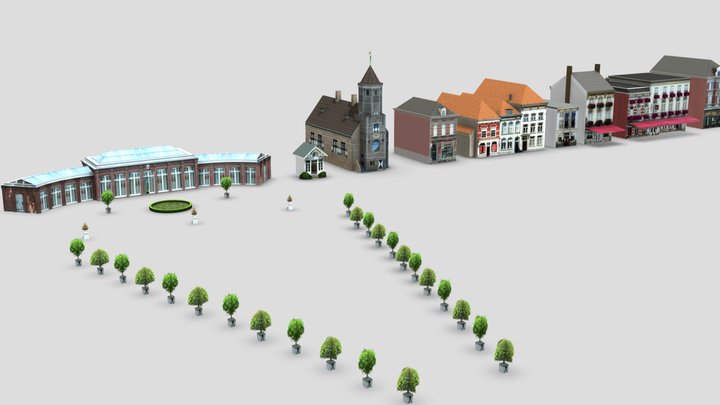 [European Buildings Asset Pack 3](https://skfb.ly/oqpIA) 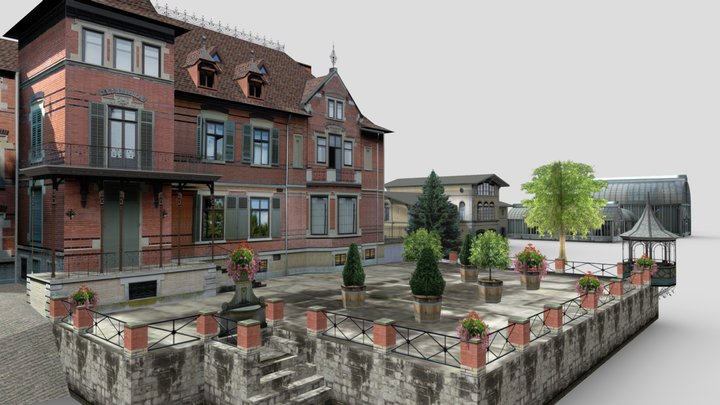 [European Buildings Asset Pack 4](https://skfb.ly/otYCG) 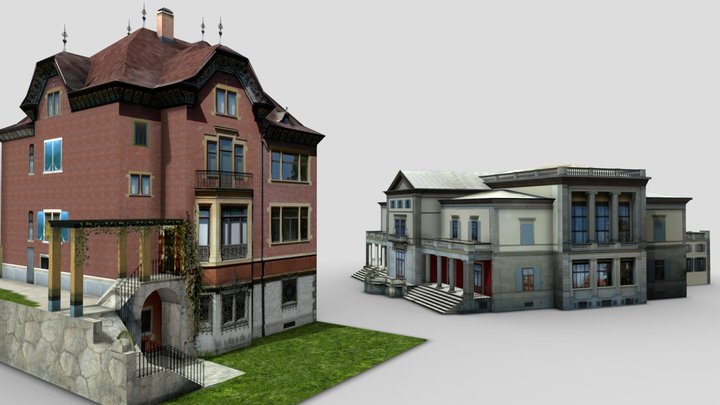 Source: Objaverse 1.0 / Sketchfab
ScienceDex guides
Understand access before you commit
These curated guides explain access requirements, typical timelines, costs, and reuse considerations for widely used research datasets.
Allen Brain Atlas
Allen Brain Atlas is an Allen Institute collection of brain map atlases, datasets, APIs, and analysis tools covering mouse, human, and non-human primate brain resources.
Annotated Behaviour and Observability Dataset (ABODe)
ABODe is a University of Edinburgh DataShare dataset for behavior classification in group-housed mice using home-cage video, identities, bounding boxes, ground-plate positions, and annotator labels.
DANDI Archive for NWB datasets
DANDI is a BRAIN Initiative archive for publishing and sharing neurophysiology data, including electrophysiology, optophysiology, and behavioral data packaged as NWB and related standards.
International Brain Laboratory public data
The International Brain Laboratory public data releases expose standardized mouse decision-making experiments, including Neuropixels recordings, widefield calcium imaging, behavior, and session metadata accessed through the ONE API.
OpenNeuro
OpenNeuro is a free, open platform for sharing neuroimaging datasets, with public search, dataset pages, and download paths for web, S3, DataLad, and the OpenNeuro CLI.