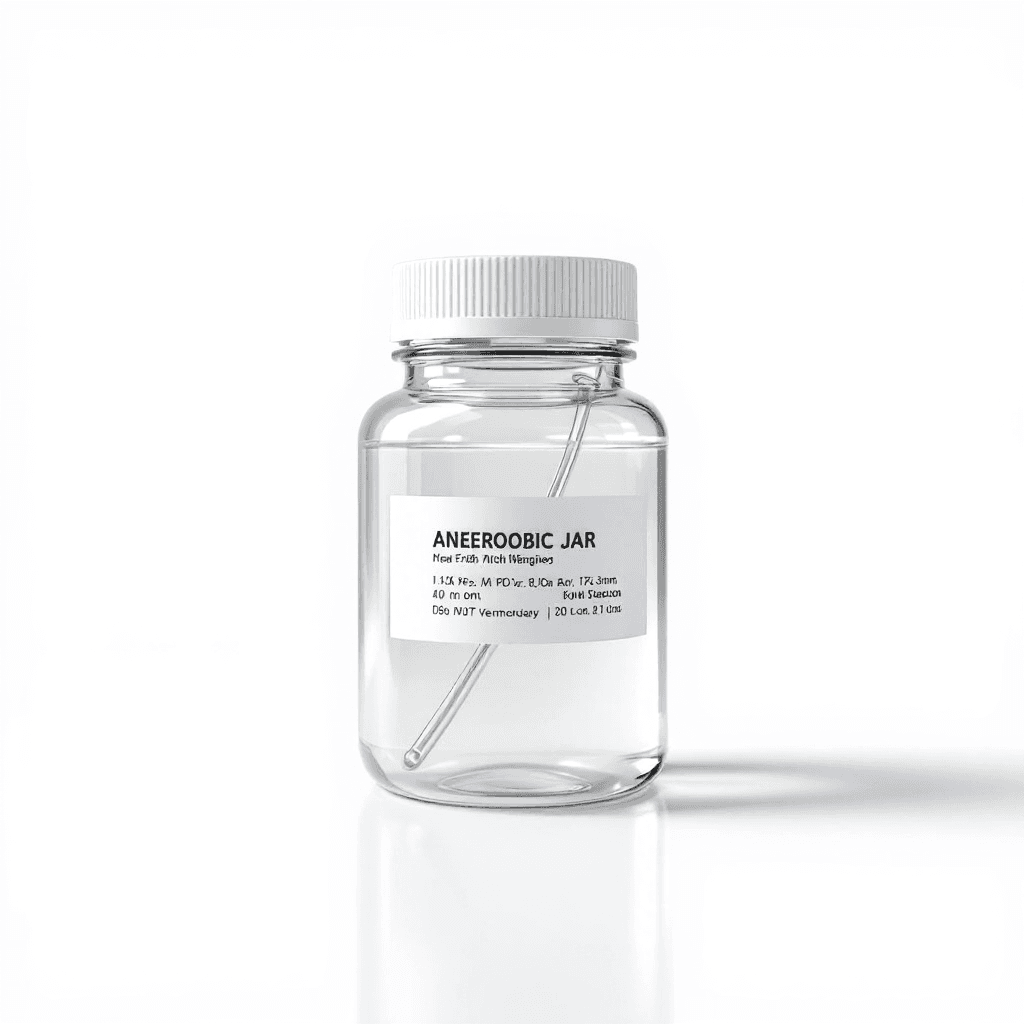
Anaerobic Jar
Laboratory vessel system for creating controlled anaerobic environments to cultivate oxygen-sensitive microorganisms in various petri dish configurations.
| Automation Level | manual |
| Petri Dish Holder | Package Size(W*D*H) |
| BK-AJH015 | 1 stack of 6 dishes(ф9~10cm) |
| 15R | 245*215*295mm |
| BK-AJH025 | 1 stack of 12 dishes(ф9~10cm) |
| 25R | 245*215*395mm |
The Anaerobic Jar provides controlled oxygen-free environments for cultivating obligate and facultative anaerobic microorganisms. This laboratory vessel accommodates various petri dish configurations, from single stacks of 6 dishes to multiple stacks of 12 dishes, enabling flexible culture capacity based on experimental requirements.
Multiple model variants support different throughput needs, with package dimensions ranging from compact 245×215×295mm units for smaller laboratories to larger 370×370×470mm systems for high-volume microbiology workflows. The system creates and maintains anaerobic conditions necessary for studying bacteria that require oxygen-free environments for growth and metabolism.
How It Works
The anaerobic jar creates oxygen-free environments through chemical or physical oxygen removal systems. Gas-generating sachets or catalyst systems consume residual oxygen within the sealed chamber, while indicator systems monitor the establishment and maintenance of anaerobic conditions. The controlled atmosphere enables obligate anaerobes to grow without oxygen toxicity.
Multiple petri dish holders accommodate different experimental scales and throughput requirements. The sealed environment prevents atmospheric oxygen infiltration while allowing controlled gas exchange through specialized valving or catalyst systems. Temperature regulation occurs through standard laboratory incubation, with the jar maintaining anaerobic conditions throughout the culture period.
Features & Benefits
Automation Level
- manual
Petri Dish Holder
- Package Size(W*D*H)
BK-AJH015
- 1 stack of 6 dishes(ф9~10cm)
15R
- 245*215*295mm
BK-AJH025
- 1 stack of 12 dishes(ф9~10cm)
25R
- 245*215*395mm
BK-AJH035
- 1 stack of 18 dishes(ф9cm)
15/25R
- 245*215*495mm
BK-AJH050
- 3 stacks of 6 dishes(ф9cm)
3/15R
- 370*370*370mm
BK-AJH070
- 3 stacks of 8 dishes(ф9cm)
BK-AJH100
- 3 stacks of 12 dishes(ф9cm)
3/25R
- 370*370*470mm
BK-AJG015
- 1 stack of 6 dishes(ф9~10cm)
BK-AJG025
- 1 stack of 12 dishes(ф9~10cm)
Brand
- ConductScience
Research Domain
- Clinical Diagnostics
- Environmental Monitoring
- Food Science
- Industrial Hygiene
- Microbiology
- Pharmaceutical QC
Weight
- 7.28 lbs
Dimensions
- L: 11.61 in
- W: 9.65 in
- H: 8.46 in
Comparison Guide
| Feature | This Product | Typical Alternative | Advantage |
|---|---|---|---|
| Dish Capacity Range | 6 to 36 petri dishes across multiple model variants | Fixed capacity systems often accommodate single stack configurations only | Enables laboratories to select optimal capacity for specific throughput requirements without overinvesting in unused capacity. |
| Package Size Options | Compact 245×215×295mm to larger 370×370×470mm configurations | Standard sizes may not optimize laboratory space utilization | Multiple size options accommodate different incubator dimensions and laboratory space constraints. |
| Stackable Dish Arrangement | Single and multi-stack configurations up to 3 stacks of 12 dishes | Single-layer arrangements limit throughput efficiency | Maximizes culture capacity within given jar dimensions while maintaining proper gas circulation. |
| Petri Dish Compatibility | Standard 9-10cm diameter dish accommodation | Some systems require proprietary culture vessels | Works with existing laboratory petri dish inventory without requiring specialized culture media preparation. |
The anaerobic jar system provides flexible capacity scaling from research to clinical laboratory applications. Multiple model variants accommodate different throughput requirements while maintaining compatibility with standard petri dishes and laboratory incubation equipment.
Practical Tips
Pre-reduce culture media when possible and minimize air exposure during plate inoculation to improve anaerobe recovery.
Why: Oxygen exposure during sample preparation can damage oxygen-sensitive microorganisms before anaerobic conditions are established.
Inspect and lubricate gasket seals regularly with appropriate sealant to prevent oxygen infiltration.
Why: Compromised seals allow atmospheric oxygen to enter the jar, inhibiting obligate anaerobe growth.
Use anaerobic indicator strips in each jar cycle to verify oxygen removal and maintenance of anaerobic conditions.
Why: Visual confirmation ensures proper anaerobic environment establishment before assuming successful culture conditions.
Handle gas-generating sachets according to manufacturer instructions and avoid exposure to moisture before use.
Why: Premature activation of gas generation systems can create pressure buildup and reduce effectiveness during culture incubation.
Record gas generation system lot numbers and expiration dates to track culture condition reliability.
Why: Expired or defective gas generation systems may not achieve complete oxygen removal, affecting culture results.
If anaerobic indicators do not show proper color change, check jar seal integrity and gas generation system activation.
Why: Failed oxygen removal typically results from inadequate sealing or inactive gas generation components rather than culture media issues.
Setup Guide
What’s in the Box
- Anaerobic jar chamber (typical)
- Petri dish holder assemblies
- Sealing gasket and hardware (typical)
- Anaerobic indicator strips (typical)
- User operation manual (typical)
Warranty
ConductScience provides a one-year manufacturer warranty covering defects in materials and workmanship, with technical support for proper operation and maintenance procedures.
Compliance
References
Background reading relevant to this product:
What gas generation systems are compatible with these anaerobic jars?
Consult product datasheet for specific gas generation system compatibility. Most anaerobic jars accommodate standard commercial gas-generating sachets or catalyst-based oxygen removal systems designed for laboratory culture applications.
How long do anaerobic conditions remain stable in sealed jars?
Anaerobic condition maintenance depends on jar seal integrity, gas generation system capacity, and incubation temperature. Typical systems maintain oxygen-free environments for 48-72 hours with proper sealing and appropriate gas generation capacity.
Can these jars accommodate both agar plates and broth culture tubes?
The dish holder configurations are specifically designed for 9-10cm petri dishes. For mixed culture vessel applications, consult product specifications to determine if holder modifications or alternative configurations are available.
What incubation temperatures are supported with these jar systems?
The jar materials and sealing systems accommodate standard laboratory incubation temperatures up to 37-45°C. Verify specific temperature ratings and gasket compatibility for high-temperature anaerobic culture applications.
How do I monitor anaerobic conditions during extended incubations?
Anaerobic indicator strips or methylene blue indicators placed inside the jar provide visual confirmation of oxygen removal and maintenance of anaerobic conditions without opening the sealed chamber.
What maintenance is required between culture cycles?
Clean jar interior and dish holders with appropriate disinfectants, inspect and replace gaskets as needed, and verify proper seal integrity before each use to maintain reliable anaerobic conditions.
Have a question about this product?
Accessories
Enhance your setup with compatible accessories
Replacement Parts & Consumables
Upgrade Options
Related Products

