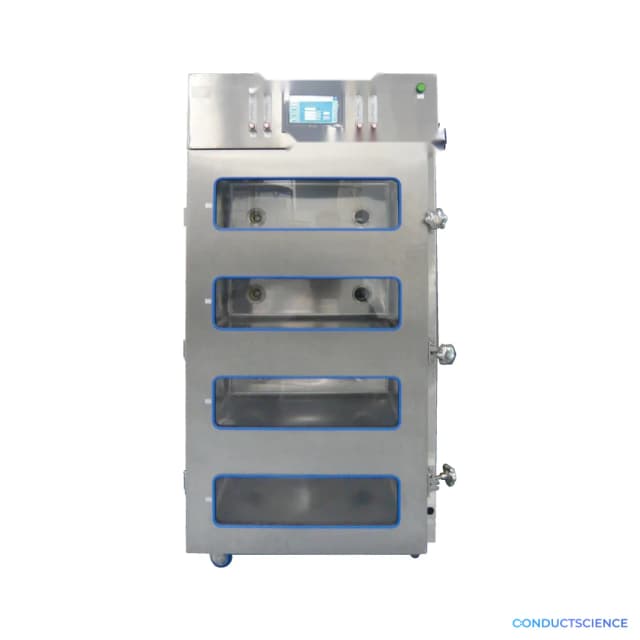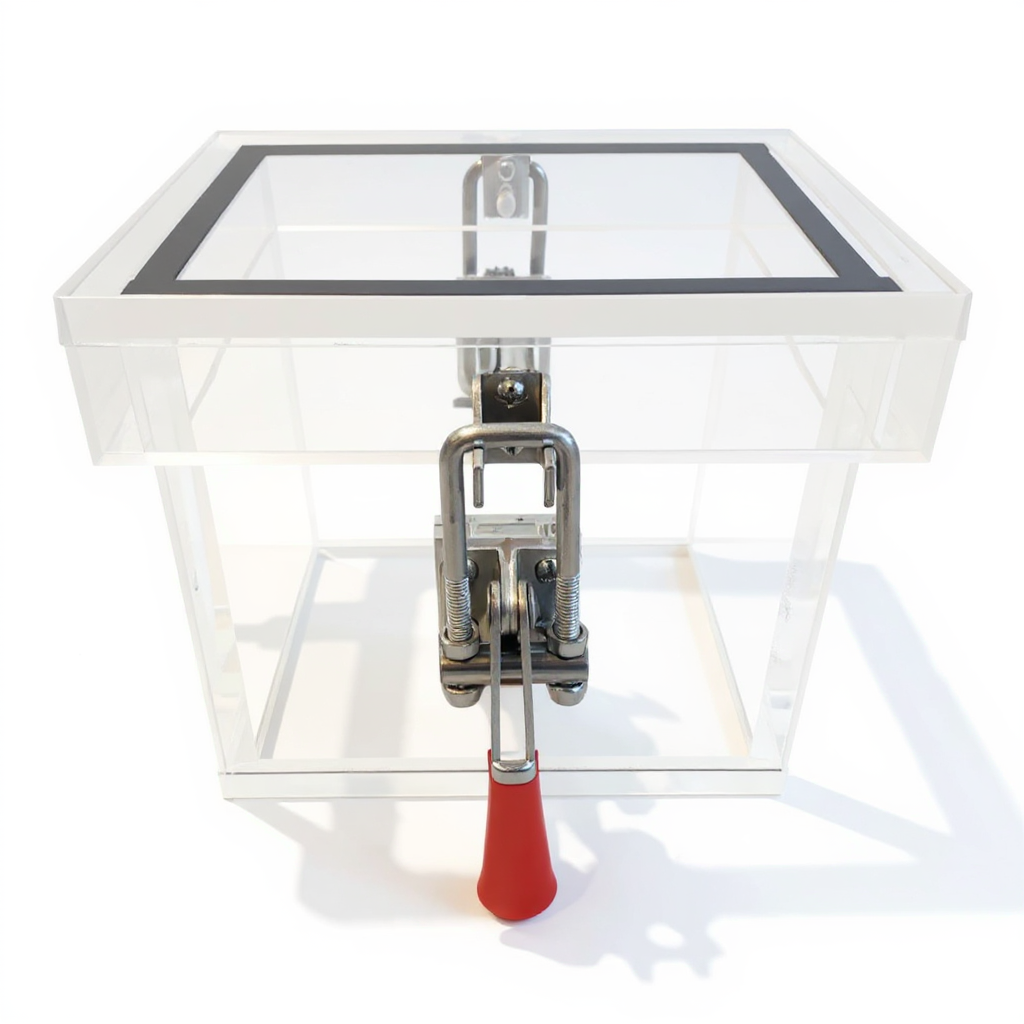
Euthanasia Chamber/Containment System
Air-tight CO2 euthanasia chamber system for humane termination of laboratory animals, available in multiple sizes from mice to rabbits with specialized gas fittings and containment design.

Louise Corscadden, PhD
Director of Science · ConductScience
Ask Louise about Euthanasia Chamber/Containment System fit, setup, configuration, or quote prep.
Already working with us? Sign in to connect this with My Scientist.
Key Specifications
Full details →- Model fit
- Rabbit, Mouse, Rat, Guinea pig
- SKU family
- CS-EUTH1A/1B/2A/2A-2/4/5/6
- Shipping box
- 4.72 x 4.72 x 3.94 cm
- Ordering
- Online checkout and quote request available
- Category
- Euthanasia & Containment
- Build notes
- Air-tight
The Euthanasia Chamber/Containment System provides a controlled environment for humane CO2 euthanasia of laboratory animals in research settings. The system features a two-piece air-tight chamber design with specialized fittings for standard CO2 gas tubes, enabling researchers to perform euthanasia procedures following established animal welfare protocols.
Available in multiple configurations ranging from 1.43L to 104.87L chamber volumes, the system accommodates various species from mice to rabbits up to 4000g. Selected models feature dual-compartment designs for processing multiple animals while maintaining proper containment and gas distribution. The chambers support research workflows requiring terminal endpoints in neuroscience, pharmacology, toxicology, and other life science applications.
How It Works
The euthanasia chamber operates through controlled CO2 displacement of chamber atmosphere, inducing rapid unconsciousness through hypercapnic narcosis. CO2 gas enters through specialized fittings and gradually displaces oxygen within the air-tight containment system, causing animals to lose consciousness within 1-3 minutes before respiratory arrest occurs.
The two-piece chamber design with lid ensures proper gas containment while allowing visual monitoring during the procedure. Gas flow rates and chamber volumes are matched to species size and metabolic requirements, with larger chambers accommodating rabbits up to 4000g and smaller units optimized for mice and rats. Dual-compartment models enable simultaneous processing while maintaining individual containment.
The system supports standard CO2 gas cylinders through dedicated fittings, allowing controlled gas delivery without requiring specialized regulators or flow meters beyond those typically available in research facilities.
Features & Benefits
Euthanasia Method
- CO2 inhalation
Gas Type
- CO2
Chamber Design
- Two-piece chamber
Lid Type
- Lid design
Gas Fittings
- Specialized fittings for standard CO2 gas tubes
Compartments
- 1 or 2 compartments (varies by model)
Weight Capacity Ranges
- up to 300g, up to 350g, up to 500g, up to 2000g, up to 4000g
Automation Level
- manual
Material
- Air-tight
Research Domain
- Aging Research
- Behavioral Pharmacology
- Cancer Research
- Cardiovascular Research
- Cell Biology
- Developmental Biology
- Neurodegeneration
- Neuroscience
- Toxicology
Species
- Rabbit
- Mouse
- Rat
- Guinea pig
Shipping weight
- 0.68 lb
Shipping box
- L: 4.72 cm
- W: 4.72 cm
- H: 3.94 cm
| Feature | This Product | Typical Alternative | Advantage |
|---|---|---|---|
| Chamber Volume Range | 1.43L to 104.87L across seven models | Limited size options, often requiring custom fabrication for larger species | Enables researchers to select appropriately sized chambers for optimal gas exchange kinetics across different species |
| Weight Capacity | Up to 4000g maximum capacity | Many systems limited to rodents under 1000g | Accommodates large rabbit models commonly used in cardiovascular and metabolic research applications |
| Dual-Compartment Option | CS-EUTH2A-2 model with two separate compartments | Single-compartment designs requiring sequential processing | Increases throughput for studies requiring multiple animal endpoints while maintaining individual containment |
| Gas Connection System | Specialized fittings for standard CO2 gas tubes | Generic fittings requiring additional adapters | Direct connection to laboratory CO2 supplies without custom plumbing or adapter hardware |
The system provides comprehensive size coverage from mice to large rabbits with specialized gas fittings and optional dual-compartment processing. Chamber volumes are optimized for species-specific requirements while maintaining consistent containment and gas distribution characteristics.
| Model | SKU | Listed price | Status | Shipping box |
|---|---|---|---|---|
| CS-EUTH1A | CS-EUTH1A | $345.00 | Available | 16 x 13 x 16 cm |
| CS-EUTH1B | CS-EUTH1B | $398.00 | Available | 30 x 14 x 22 cm |
| CS-EUTH2A-2 | CS-EUTH2A-2 | $980.00 | Available | 72 x 23 x 23 cm |
| CS-EUTH2A | CS-EUTH2A | $480.00 | Available | 36 x 19 x 23 cm |
| CS-EUTH4 | CS-EUTH4 | $980.00 | Available | 66 x 40 x 50 cm |
| CS-EUTH5 | CS-EUTH5 | $1,100.00 | Available | 93 x 50 x 50 cm |
| CS-EUTH3 | CS-EUTH3 | $980.00 | Available | 53 x 27 x 27 cm |
| CS-EUTH6 | CS-EUTH6 | $1,890.00 | Available | 132 x 66 x 27 cm |
Practical Tips
Test CO2 flow rate with flowmeter before each use session to ensure consistent gas delivery.
Why: Proper flow rate ensures humane procedure timing and prevents prolonged distress from insufficient CO2 concentration.
Inspect lid seals and gas fittings monthly for wear or damage that could compromise containment.
Why: Damaged seals allow CO2 escape and reduce chamber efficiency while creating safety hazards for personnel.
Pre-charge chamber with CO2 for 30 seconds before animal placement to minimize induction time.
Why: Initial CO2 concentration reduces the time to unconsciousness and improves animal welfare during the procedure.
Operate chambers in well-ventilated areas with CO2 monitoring to prevent personnel exposure.
Why: CO2 accumulation in work areas can cause drowsiness or unconsciousness in laboratory personnel.
If animals show prolonged response times, check for lid seal leakage or insufficient gas flow rate.
Why: Proper containment and gas delivery are critical for humane and effective euthanasia procedures.
Record exact procedure duration and gas flow rates for protocol documentation and IACUC reporting.
Why: Consistent documentation supports protocol compliance and enables procedure optimization across studies.
Setup Guide
What’s in the Box
- Euthanasia chamber (two-piece construction)
- Lid with secure closure mechanism
- CO2 gas fitting with connection hardware
- User manual with protocol guidelines
- Safety and operation instructions (typical)
Warranty
ConductScience provides a standard one-year manufacturer warranty covering defects in materials and workmanship, with technical support for proper setup and operation procedures.
Compliance
What CO2 flow rate should be used for different species?
Flow rates typically range from 10-30% of chamber volume per minute, with specific rates depending on species metabolic rate and institutional protocol requirements. Consult your IACUC-approved protocol for exact specifications.
Can multiple animals be processed simultaneously?
The CS-EUTH2A-2 model features dual compartments for simultaneous processing of two animals. Single-compartment models should be used for one animal at a time to ensure proper gas distribution.
How do I verify complete euthanasia has occurred?
Monitor for cessation of respiratory movement through the transparent chamber walls. Continue CO2 flow for the duration specified in your protocol and confirm absence of heartbeat before animal removal.
What gas cylinder connections are compatible?
Chambers include specialized fittings for standard laboratory CO2 gas tubes. Most installations connect to existing laboratory CO2 supplies through appropriate tubing and regulators.
How should the chamber be cleaned between uses?
Clean chambers with appropriate disinfectant between animals according to your facility's biosafety protocols. Ensure complete drying before next use to prevent contamination.
What is the maximum animal size for each model?
Models accommodate animals from mice (CS-EUTH1A) up to 4000g rabbits (CS-EUTH5), with intermediate models supporting rats and guinea pigs up to 350-500g depending on configuration.
Have a question about this product?
Have a question? Just ask.
Send it over and we'll email you a personalized answer — no call, no scheduling.
Prefer to talk it through?
Upgrade Options
Related Products