
T Maze
- Mar 2026 Verified All current specifications independently verified
- May 2023 Spec 3 configuration options verified for availability and pricing
- Mar 2022 Spec Verified application protocols for neuroscience, learning and memory research
- Jun 2020 Review Comprehensive documentation verified u2014 setup guidance, specifications, and application notes
- Sep 2018 Review Product imagery verified u2014 4 images with detailed views
- Dec 2016 Spec Technical specifications verified u2014 Available Modifications, Maze Variations, Guillotine Doors and 10 total parameters
- Sep 2014 Verified Product specifications published and verified for T Maze
 by MazeEngineers

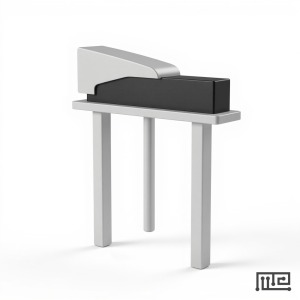
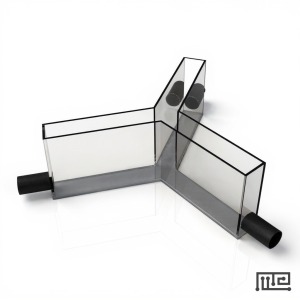
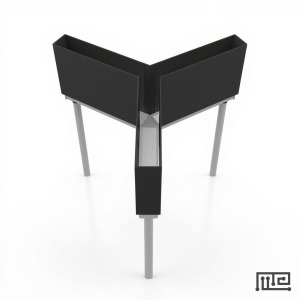
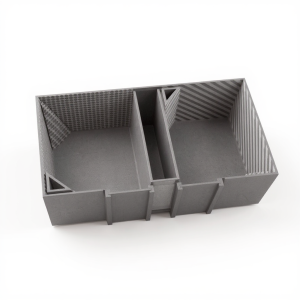
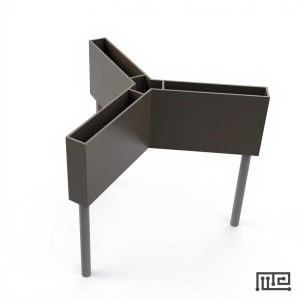
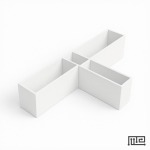
The T-Maze is a fundamental behavioral testing apparatus designed for assessing spatial learning, working memory, and decision-making processes in rodents. This classic maze configuration consists of a central stem leading to two perpendicular arms, creating the characteristic T-shape that allows researchers to evaluate spontaneous alternation behavior, delayed alternation tasks, and choice discrimination learning.
Constructed from odor-free acrylic with clean ethanol compatibility, the apparatus is available in three size configurations optimized for different rodent species. The maze supports multiple experimental paradigms including spatial navigation testing, reward-based learning protocols, and memory assessment tasks commonly employed in neurobehavioral research and cognitive phenotyping studies.
How It Works
The T-Maze operates on the principle of spatial choice behavior, exploiting rodents' natural tendency for spontaneous alternation. In the most basic paradigm, animals are placed in the stem of the maze and allowed to choose between the two arms. Normal rodents exhibit approximately 60-80% alternation behavior, meaning they tend to enter the arm opposite to their previous choice on successive trials.
The maze can be configured for multiple experimental paradigms. In delayed alternation tasks, animals are first forced into one arm, then after a delay period, given free access to both arms. Working memory is assessed by measuring the animal's ability to remember the previously visited arm and choose the alternate arm. Reward-based protocols place food or water reinforcement in specific arms to assess learning acquisition and retention.
Data collection typically involves recording arm entry sequences, latency to make choices, and time spent in each arm. The apparatus supports both manual observation and automated tracking when integrated with video monitoring systems or photobeam detection arrays.
Features & Benefits
Available Modifications
- ['Food Wells', 'Doors/Divider', 'Light Cues', 'Backlights', 'Stand', 'H Maze', 'Escape Tubes', 'Housing']
Maze Variations
- ['Elevated T-Maze', 'Water T-Maze', 'Multiple T-Maze', 'Aquatic T-Maze', 'Vertical T-Maze', 'Continuous Angled T-Maze', 'Two Problem T-Maze']
Guillotine Doors
- available for confined start area
Arm Configurations
- enclosed start arm with open goal arms or fully enclosed
Escape Platform
- available for water-based models
Behavioral Construct
- Spatial Working Memory
- Spontaneous Alternation
- Choice Behavior
- Spatial Learning
- Decision Making
- Memory Retention
Automation Level
- manual
Species
- Mouse
- Rat
Research Domain
- Addiction Research
- Aging Research
- Anxiety and Depression
- Behavioral Pharmacology
- Learning and Memory
- Neurodegeneration
- Neuroscience
Weight
- 15.0 lbs
Dimensions
- 117.0 × 66.0 × 10.0 cm
Product Highlights
| Feature | This Product | Category Context |
|---|---|---|
| Species Size Options | Three distinct size configurations (Mouse small, Mouse, Rat) with species-appropriate scaling | Many models offer single-size construction requiring adaptation for different species |
| Modification Compatibility | Extensive modification options including food wells, doors, light cues, backlights, and housing systems | Basic models often have limited modification capabilities |
| Construction Material | Odor-free acrylic with 70% ethanol compatibility and optical clarity | Some alternatives use wood, metal, or lower-grade plastics with potential odor retention |
| Arm Configuration Options | Multiple arm configurations from enclosed start with open goals to fully enclosed designs | Fixed configuration models limit experimental flexibility |
| Central Partition System | Optional central partition with 10 cm corridor width modification | Many designs lack controlled start area options |
The T-Maze distinguishes itself through comprehensive size scaling across rodent species, extensive modification compatibility, and specialized features for controlled behavioral assessment. The acrylic construction and optional partition systems support both basic alternation protocols and complex temporal discrimination paradigms.
Applications & Use Cases
Practical Tips
Validate spontaneous alternation rates with control subjects before experimental use, targeting 60-80% alternation in healthy animals.
Baseline validation ensures apparatus configuration produces expected behavioral responses before introducing experimental variables.
Inspect acrylic panels weekly for stress cracks or scratches that could create visual artifacts or compromise structural integrity.
Early detection prevents apparatus failure during experiments and maintains consistent visual conditions across testing sessions.
Maintain consistent environmental lighting and minimize external visual cues that could bias arm choice selection.
Spatial choice behavior should reflect internal navigation processes rather than external environmental asymmetries.
If alternation rates consistently fall below 50%, evaluate for systematic biases such as lighting gradients, odor trails, or apparatus positioning.
Below-chance performance typically indicates environmental factors overwhelming natural alternation tendencies rather than cognitive impairment.
Record arm entry sequences, choice latencies, and time spent in each zone to capture comprehensive behavioral profiles beyond simple choice measures.
Additional parameters provide insight into decision confidence, exploration patterns, and potential anxiety-related factors affecting choice behavior.
Allow complete ethanol evaporation between cleaning and animal placement to prevent respiratory irritation and behavioral artifacts.
Residual ethanol vapors can cause avoidance behaviors and stress responses that confound spatial choice measurements.
Implement counterbalanced apparatus orientation across subjects to control for potential directional biases in the testing environment.
Systematic rotation helps distinguish genuine spatial memory effects from environmental asymmetries that could influence arm preferences.
Establish clear arm entry criteria (e.g., all four paws past arm threshold) and apply consistently across all trials and subjects.
Standardized entry definitions prevent scoring variability and ensure reliable measurement of choice behavior across experimental sessions.
Setup & Operation Guide
-
Unpack and InspectRemove maze components from packaging and inspect acrylic panels for damage or stress cracks that could affect structural integrity.
-
Assembly ConfigurationAssemble the T-maze according to species requirements, ensuring proper alignment of stem and arm sections with secure panel connections.
-
Optional ModificationsInstall any requested modifications such as food wells, guillotine doors, or central partitions according to experimental protocol requirements.
-
Surface PreparationClean all surfaces with 70% ethanol and allow complete drying to eliminate residual odors that could influence animal behavior.
-
Environmental SetupPosition maze in testing room with consistent lighting and minimal external visual cues that could bias arm choice behavior.
-
Baseline ValidationConduct preliminary testing with control animals to verify spontaneous alternation rates fall within expected ranges before experimental use.
-
Protocol ImplementationBegin experimental sessions following established habituation periods and inter-trial cleaning protocols to maintain consistent testing conditions.
What's in the Box
- T-Maze apparatus (assembled or flat-pack depending on configuration)
- Acrylic wall panels and base sections
- Assembly hardware and connection elements (typical)
- Cleaning and maintenance instructions (typical)
- Protocol reference guide (typical)
Warranty & Support
ConductScience provides a standard one-year manufacturer warranty covering material defects and workmanship issues. Technical support includes protocol consultation and troubleshooting assistance for experimental setup optimization.
Compliance & Standards
Background Reading
The following papers provide general scientific background on measurement techniques relevant to this product category. They are not validation studies of this specific instrument.
What is the typical spontaneous alternation rate in normal rodents?
Healthy adult rodents typically exhibit 60-80% spontaneous alternation behavior in T-maze paradigms, with rates below 60% potentially indicating hippocampal dysfunction or working memory impairment.
How should inter-trial intervals be managed to prevent olfactory cueing?
Clean all maze surfaces with 70% ethanol between trials and allow 30-60 seconds drying time. Consider rotating multiple maze units or implementing longer inter-trial intervals for scent-sensitive protocols.
Can the maze accommodate both spatial and non-spatial discrimination tasks?
Yes, the apparatus supports spatial paradigms using arm position as the relevant cue, as well as non-spatial tasks using visual, tactile, or olfactory cues placed within the arms.
What modifications are recommended for delayed alternation protocols?
Guillotine doors and central partition modifications enable controlled trial timing and prevent premature choice responses during delay periods ranging from seconds to minutes.
How does wall height affect behavioral expression across species?
The 20 cm walls for mice and 30 cm walls for rats prevent escape while allowing natural rearing behavior, which can provide additional behavioral measures of exploration and anxiety.
Is the apparatus compatible with automated tracking systems?
The clear acrylic construction and standardized dimensions support integration with video tracking software, photobeam arrays, or RFID detection systems for automated data collection.
What factors influence choice behavior beyond spatial memory?
Environmental lighting gradients, apparatus orientation, external visual cues, handling stress, and individual subject factors like age, strain, and previous experience can all influence arm selection patterns.
What is the T-Maze?
The T-Maze is a simple two-choice behavioral apparatus shaped like the letter T, used to assess spatial memory, learning, and decision-making in rodents through forced-choice alternation tasks.
How does the T-Maze work?
Rodents start in the stem of the T and choose between the left or right goal arm. In rewarded alternation, animals learn to alternate choices to receive a food reward. Correct alternation percentage measures working memory performance.
What research applications use the T-Maze?
The T-Maze is used in prefrontal cortex research, working memory studies, and reward-based learning paradigms. It is commonly applied in schizophrenia models, ADHD research, and pharmacological studies of cognition.
Have a question about this product?
Accessories
Enhance your setup with compatible accessories
Frequently Bought Together