
Find research datasets worth reusing
Search datasets from major research repositories and use ShareScore to quickly assess how well each record supports discovery, access, and reuse.
1,034
datasets available to search
ShareScore release 0.9.0
Dataset results
1,034 results for “Empirical”
(DATA) Adsorption Behavior of Greenhouse Gases on Carbon Nanobelts: A Semi-Empirical Tight-Binding Approach for Environmental Application
<ul> <li>Input structures.</li> <li>Scripts to generate some inputs.</li> <li>Script to run all the calculations.</li> <li>Scripts to run analysis.</li> <li>Molecular dynamics trajectories (in PDB and TRJ formats)</li> <li>Molecular dynamics animations (in MP4 format)</li> </ul>
Dataset of the Paper "Empirical Insight of Quantum Software Programming on Q&A Platform"
<p>This dataset comprises all questions from Stack Exchange, including Stack Overflow, Quantum Computing, Code Review, and Software Engineering. It is designed for conducting an empirical study on quantum software programming within Q&A platforms.</p> <p> </p> <p>• <strong>so.csv</strong>: Questions from Stack Overflow, including the following fields:</p> <p>Id, AcceptedAnswerId, CreationDate, Score, ViewCount, Body, Title, Tags, AnswerCount, CommentCount, FavoriteCount, ClosedDate</p> <p>• <strong>se.csv</strong>: Questions from Software Engineering, including the following fields:</p> <p>Id, AcceptedAnswerId, CreationDate, Score, ViewCount, Body, Title, Tags, AnswerCount, CommentCount, FavoriteCount, ClosedDate</p> <p>• <strong>qc.csv</strong>: Questions from Quantum Computing Stack Exchange, including the following fields:</p> <p>Id, AcceptedAnswerId, CreationDate, Score, ViewCount, Body, Title, Tags, AnswerCount, CommentCount, FavoriteCount, ClosedDate</p> <p>• <strong>cr.csv</strong>: Questions from Code Review Stack Exchange, including the following fields:</p> <p>Id, AcceptedAnswerId, CreationDate, Score, ViewCount, Body, Title, Tags, AnswerCount, CommentCount, FavoriteCount, ClosedDate</p> <p>• <strong>code.ipynb</strong>: Source code that provides data preprocessing, merging, and LDA modeling for topic distribution. It also includes visualizations for topic trends, topic distribution, and evaluations of popularity and difficulty, along with their corresponding visualizations. Also, estimation of quantum programming-related topics, and coding process.</p>
Replication package for the paper :The Relationship Between Different Python Argument-Passing Mechanisms and Fixes: An Empirical Study
<p><strong>Abstract:</strong></p> <p>Modern programming languages, such as Python, have introduced a variety of constructs and syntactical elements to make software development more efficient and concise. Examples include lambda functions, comprehension collections, or mechanisms to facilitate the passing of arguments to a function. While many of such constructs may, in principle, be beneficial for developers, recent studies have shown that certain programming constructs may affect program understanding and even induce more fixes than other changes. <br>This paper studies the effect of different Python argument-passing mechanisms to investigate their relationship with code proneness to be fixed. Specifically, we study the fix-proneness for what concerns function definitions and invocations. This is done by analyzing the evolutionary history of 200 Python projects, for a total of about 3M functions and 12M call sites. While there are varying effects for what concerns parameter declaration mechanisms, we found evidence that keyword-based argument passing is less defect-prone than positional argument passing, and this is not affected by size-related confounding factors.</p>
Dataset of the paper: "How do Hugging Face Models Document Datasets, Bias, and Licenses? An Empirical Study"
<p>This replication package contains datasets and scripts related to the paper: "*How do Hugging Face Models Document Datasets, Bias, and Licenses? An Empirical Study*"</p><p> </p><p>## Root directory</p><p>- `statistics.r`: R script used to compute the correlation between usage and downloads, and the RQ1/RQ2 inter-rater agreements</p><p>- `modelsInfo.zip`: zip file containing all the downloaded model cards (in JSON format)</p><p>- `script`: directory containing all the scripts used to collect and process data. For further details, see README file inside the script directory.</p><p> </p><p>## Dataset</p><p>- `Dataset/Dataset_HF-models-list.csv`: list of HF models analyzed</p><p>- `Dataset/Dataset_github-prj-list.txt`: list of GitHub projects using the *transformers* library</p><p>- `Dataset/Dataset_github-Prj_model-Used.csv`: contains usage pairs: project, model</p><p>- `Dataset/Dataset_prj-num-models-reused.csv`: number of models used by each GitHub project</p><p>- `Dataset/Dataset_model-download_num-prj_correlation.csv` contains, for each model used by GitHub projects: the name, the task, the number of reusing projects, and the number of downloads</p><p> </p><p> </p><p>## RQ1</p><p>- `RQ1/RQ1_dataset-list.txt`: list of HF datasets</p><p>- `RQ1/RQ1_datasetSample.csv`: sample set of models used for the manual analysis of datasets</p><p>- `RQ1/RQ1_analyzeDatasetTags.py`: Python script to analyze model tags for the presence of datasets. it requires to unzip the `modelsInfo.zip` in a directory with the same name (`modelsInfo`) at the root of the replication package folder. Produces the output to stdout. To redirect in a file fo be analyzed by the `RQ2/countDataset.py` script</p><p>- `RQ1/RQ1_countDataset.py`: given the output of `RQ2/analyzeDatasetTags.py` (passed as argument) produces, for each model, a list of Booleans indicating whether (i) the model only declares HF datasets, (ii) the model only declares external datasets, (iii) the model declares both, and (iv) the model is part of the sample for the manual analysis</p><p>- `RQ1/RQ1_datasetTags.csv`: output of `RQ2/analyzeDatasetTags.py`</p><p>- `RQ1/RQ1_dataset_usage_count.csv`: output of `RQ2/countDataset.py`</p><p> </p><p> </p><p>## RQ2</p><p>- `RQ2/tableBias.pdf`: table detailing the number of occurrences of different types of bias by model Task</p><p>- `RQ2/RQ2_bias_classification_sheet.csv`: results of the manual labeling</p><p>- `RQ2/RQ2_isBiased.csv`: file to compute the inter-rater agreement of whether or not a model documents Bias</p><p>- `RQ2/RQ2_biasAgrLabels.csv`: file to compute the inter-rater agreement related to bias categories</p><p>- `RQ2/RQ2_final_bias_categories_with_levels.csv`: for each model in the sample, this file lists (i) the bias leaf category, (ii) the first-level category, and (iii) the intermediate category</p><p> </p><p> </p><p>## RQ3</p><p>- `RQ3/RQ3_LicenseValidation.csv`: manual validation of a sample of licenses</p><p>- `RQ3/RQ3_{NETWORK-RESTRICTIVE|RESTRICTIVE|WEAK-RESTRICTIVE|PERMISSIVE}-license-list.txt`: lists of licenses with different permissiveness</p><p>- `RQ3/RQ3_prjs_license.csv`: for each project linked to models, among other fields it indicates the license tag and name</p><p>- `RQ3/RQ3_models_license.csv`: for each model, indicates among other pieces of info, whether the model has a license, and if yes what kind of license</p><p>- `RQ3/RQ3_model-prj-license_contingency_table.csv`: usage contingency table between projects' licenses (columns) and models' licenses (rows)</p><p>- `RQ3/RQ3_models_prjs_licenses_with_type.csv`: pairs project-model, with their respective licenses and permissiveness level</p><p> </p><p>## scripts</p><p>Contains the scripts used to mine Hugging Face and GitHub. Details are in the enclosed README</p><p> </p>
Dataset for the Paper: Issues and Their Causes in WebAssembly Applications: An Empirical Study
<p>This dataset accompanies the paper titled 'Issues and Their Causes in WebAssembly Applications: An Empirical Study.' The dataset is stored in a Microsoft Excel file, which comprises multiple worksheets. A brief description of each worksheet is provided below.</p><p>(1) The '<strong>Selected Systems</strong>' worksheet contains information on the 12 chosen open-source WebAssembly applications, along with the URL for each application.</p><p>(2) The '<strong>GitHub-Raw Data</strong>' worksheet contains information on the initially retrieved 6,667 issues, including the titles, links, and statuses of each individual issue discussion.</p><p>(3) The '<strong>SOF-Raw Data</strong>' worksheet contains information on the initially retrieved 6,667 questions and answers, including the details of each question and answer, respective links, and associated tags.</p><p>(4) The '<strong>GitHubData Random Selected</strong>' worksheet contains a list of issues randomly selected from the initial pool of 6,667 issues, as well as extracted data from the discussions associated with these randomly selected issues.</p><p>(5) The '<strong>GitHub-(Issues, Causes)</strong>' worksheet contains the initial codes categorizing the types of issues and causes.</p><p>(6) The '<strong>SOF (Issues, Causes)</strong>' worksheet contains information gleaned from a randomly selected subset of 354 Stack Overflow posts. This information includes the title and body of each question, the associated link, tags, as well as key points for types of issues and causes.</p><p>(7) The '<strong>Combine (Git and SOF) Data</strong>' worksheet contains the compiled issues and causes extracted from both GitHub and Stack Overflow.</p><p>(8) The <strong>'Issue Taxonomy</strong>' worksheet contains a comprehensive issue taxonomy, which is organized into 9 categories, 20 subcategories, and 132 specific types of issues.</p><p>(9) The '<strong>Cause Taxonomy</strong>' worksheet contains a comprehensive cause taxonomy, which is organized into 10 categories, 35 subcategories, and 283 specific types of causes.</p>
Dataset: Parallel Empirical Evaluations: Resilience Despite Concurrency
Open the record for dataset details and reuse information.
Lorica Segmentata of the latest period of Empire
My 3D project made in Maya 2020 and textured in Substance Painter. This is a part of the project called "The Fall of Roman Empire". Rendered in Arnold. Source: Objaverse 1.0 / Sketchfab
The Fall of the Roman Empire
This is a part of the project called "The Fall of the Roman Empire" made in Maya 2020. Textures made in Substance Painter. Rendered in Arnold. Source: Objaverse 1.0 / Sketchfab
National emblem of the Austrian Empire
National emblem of the Austrian Empire from a pharmacy in Sanok Time of creation: 2nd half of the 19th century https://muzea.malopolska.pl/en/objects-list/2713 Museum: The Museum of Pharmacy at the Jagiellonian University Medical College in Kraków Inventory number: KGZ 5199 Digitalisation: RDW MIC, Virtual Małopolska project Source: Objaverse 1.0 / Sketchfab
Empire State Building
The Empire State Building is a 102-story Art Deco skyscraper in Midtown Manhattan in New York City, United States. It was designed by Shreve, Lamb & Harmon and built from 1930 to 1931. Its name is derived from "Empire State", the nickname of the state of New York. The building has a roof height of 1,250 feet (380 m) and stands a total of 1,454 feet (443.2 m) tall, including its antenna. Kindly support me on [Patreon](http:///www.patreon.com/HUSSEN?fan_landing=true) and [Artsation](http://www.artstation.com/mohamedhussien1) I really need your support to continue. 😁 Source: Objaverse 1.0 / Sketchfab
Persian Empire Immortals - Persepolis Carvings
A Sculpture of an Achaemenid soldier, typically found in [Apadana](https://en.wikipedia.org/wiki/Apadana) at [Persepolis](https://en.wikipedia.org/wiki/Persepolis). 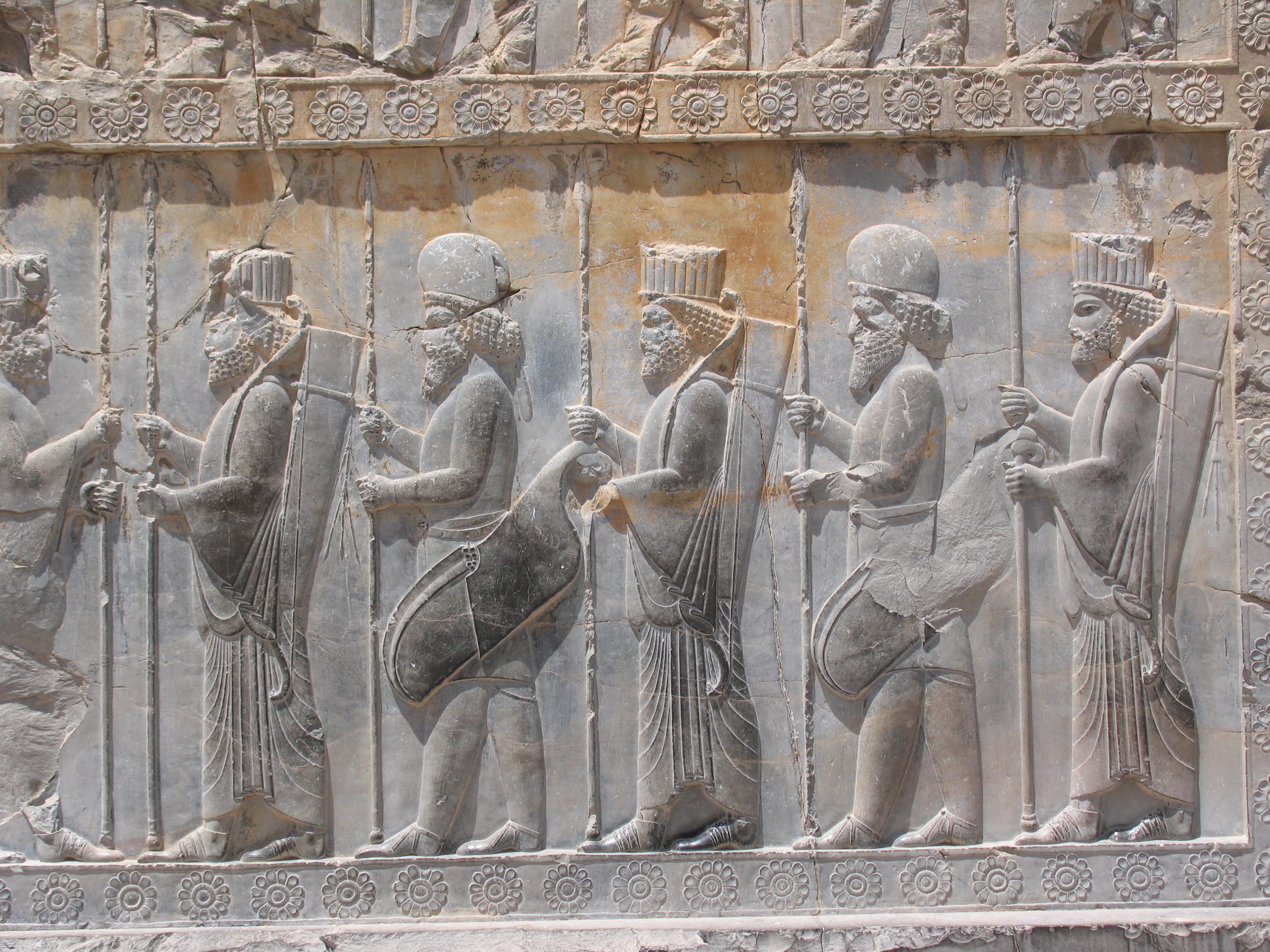 Source: Objaverse 1.0 / Sketchfab
Replication Package for "Benefits and pitfalls of token-level SZZ: An empirical study on OSS projects"
<p>Replication Package for "Benefits and pitfalls of token-level SZZ: An empirical study on OSS projects"</p><p>All materials are licensed under the MIT License (see LICENSE file). </p>
Empirical data and model simulations of the effect of repeated hurricanes on soil carbon dynamics in a humid tropical forest
<p>Increasing hurricane frequency and intensity with climate change is likely to affect soil organic carbon (C) stocks in tropical forests. We examined the cycling of C between soil pools and with depth at the Luquillo Experimental Forest in Puerto Rico in soils over a 30-year period that spanned repeated hurricanes. We used a non-linear matrix model of soil C pools and fluxes ("soilR") and constrained the parameters with soil and litter survey data. Soil chemistry and stable and radiocarbon isotopes were measured from three soil depths across a topographic gradient in 1988 and 2018. Our results suggest that pulses and subsequent reduction of inputs caused by severe hurricanes in 1989, 1998, and two in 2017 led to faster mean transit times and younger mean ages of soil C in the particulate, occluded, and mineral-associated soil organic matter pools at 0–10 cm and 35–60 cm depths relative to a modeled control soil with constant inputs over the thirty years. Between 1988 and 2018, the occluded C stock increased, and d<sup>13</sup>C in all pools decreased, while changes in particulate and mineral-associated C were undetectable. The differences between 1988 and 2018 suggest that hurricane disturbance results in a dilution of the occluded light C pool with an influx of young, debris-deposited C, and possible microbial scavenging of old and young C in the particulate and mineral-associated pools. These effects led to a younger total soil C pool with faster mean transit times. Our results suggest that increasing frequency of intense hurricanes will speed up rates of C cycling in tropical forests, and eventually lead to net losses of C from tropical forest soils.</p>
Artifact for "Inside Bug Report Templates: An Empirical Study on Bug Report Templates in Open-Source Software"
<p>This is the artifact for the paper "Inside Bug Report Templates: An Empirical Study on Bug Report Templates in Open-Source Software".</p> <p><strong>What the artifact does:</strong><br>1) a questionnaire that we used for our online survey (PDF);<br>2) the valid responses of our online survey (CSV).</p> <p>3) the code of preprocessing (.py).</p> <p>4) the dataset of preprocessing and labeling (CSV).</p>
Extra-P Version Used for Noise-Resilient Empirical Performance Modeling with Deep Neural Networks
<p>This is the Extra-P source code that was used for the analysis and evaluation of the IPDPS 2021 paper "Noise-Resilient Empirical Performance Modeling with Deep Neural Networks". It also contains the checkpoints and saved models for the DNN part of the adaptive modeler as well as the gathered synthetic evaluation data.</p>
On the Need to Monitor Continuous Integration Practices: An Empirical Study
<p>This repository contains all the artifacts and data related to the <strong>On the Need to Monitor Continuous Integration Practices: An Empirical Study</strong>. The folder structure and their entailments are as follows:</p> <ul> <li><strong>data</strong>: Contains .sql files with the dataset collected during the study, which includes all project information retrieved from GitHub. A README.txt file inside the folder explains how to restore the dataset.</li> <li><strong>document_analysis</strong>: Includes the analysis files for specific research questions: <ul> <li>RQ1 subdirectory: Contains the pull request (PR) comments dataset and an Excel file with the analysis data for Research Question 1.</li> <li>RQ3 subdirectory: Contains documentation from CI services and third-party tools analyzed in Research Question 3, along with an Excel file summarizing the analysis data.</li> </ul> </li> <li><strong>scripts</strong>: Provides the R scripts used for data analysis and chart generation.</li> <li><strong>survey</strong>: Includes the collected survey responses and a template of the survey sent to developers.</li> </ul> <p><br>The total size of the repository when decompressed is approximately <strong>8.14 GB</strong>.</p>
Replication package for "An Empirical Evaluation of Static, Dynamic, and Hybrid Slicing of WebAssembly Binaries"
<p>This is the replication package that accompanies the paper "An Empirical Evaluation of Static, Dynamic, and Hybrid Slicing of WebAssembly Binaries".</p> <p>It is structured as follows.</p> <p> - RQs.py is the script that generates the data that is included in the paper. For each research question, it generates statistics and plots.<br> - The .csv files and nok.txt are used by RQs.py. They contain the raw size and timing data for each slice. The headers of the .csv files indicate what each column represents.<br> - `sqlite-slices.csv` contains the raw data for RQ8, which is contained in the paper<br> - The .tar.gz files contain the source and the slices generated by each slicer, namely:<br> - `static_slices.tar.gz` contains the slices generated by CsE, the static slicer. For example, the file `static_slices/adpcm/adpcm_ah1_254_expr/static_adpcm.wat.slice` is the slice of the adpcm program taken with respect to the variable `ah1` at line `254` of the original `.c` program.<br> - `slice.tar.gz` contains slices from the dynamic slicers:<br> - slice-sce - the SCE slices<br> - slice-ces - the CES slices<br> - slice-cse - the CSE slices<br> - slice-sces - the SCES slices<br> - slice-cses - the CsES slices<br> - `src.tar.gz` includes the unsliced `C` and `wasm` source<br> - `bc.support.tar.gz` includes the complete `bc` source code <br> - `sqlite.tar.gz` contains the slices of RQ8, each in a directory named after the slicer used. For example, the file `sqlite/CES/avg.wat` contains the CES slice for the `avg` slicing criterion.<br> <br>In order to regenerate the data and plots that are in the paper, you should simply run:</p> <p>```<br>python RQs.py<br>```</p>
COVID-19 evidence syntheses with artificial intelligence: an empirical study of systematic reviews
<p><strong>Objectives</strong>: A rapidly developing scenario like a pandemic requires the prompt production of high-quality systematic reviews, which can be automated using artificial intelligence (AI) techniques. We evaluated the application of AI tools in COVID-19 evidence syntheses.</p> <p><strong>Study design</strong>: After prospective registration of the review protocol, we automated the download of all open-access COVID-19 systematic reviews in the COVID-19 Living Overview of Evidence database, indexed them for AI-related keywords, and located those that used AI tools. We compared their journals' JCR Impact Factor, citations per month, screening workloads, completion times (from pre-registration to preprint or submission to a journal) and AMSTAR-2 methodology assessments (maximum score 13 points) with a set of publication date matched control reviews without AI.</p> <p><strong>Results</strong>: Of the 3999 COVID-19 reviews, 28 (0.7%, 95% CI 0.47-1.03%) made use of AI. On average, compared to controls (n=64), AI reviews were published in journals with higher Impact Factors (median 8.9 vs 3.5, P<0.001), and screened more abstracts per author (302.2 vs 140.3, P=0.009) and per included study (189.0 vs 365.8, P<0.001) while inspecting less full texts per author (5.3 vs 14.0, P=0.005). No differences were found in citation counts (0.5 vs 0.6, P=0.600), inspected full texts per included study (3.8 vs 3.4, P=0.481), completion times (74.0 vs 123.0, P=0.205) or AMSTAR-2 (7.5 vs 6.3, P=0.119).</p> <p><strong>Conclusion</strong>: AI was an underutilized tool in COVID-19 systematic reviews. Its usage, compared to reviews without AI, was associated with more efficient screening of literature and higher publication impact. There is scope for the application of AI in automating systematic reviews.</p>
LNT Model is not an "Assumption": Re-Analysis of Epidemiological Data Empirically Supports LNT
<p><em>Introduction:</em> In “Keeping ICRP Recommendations Fit for Purpose”[1], LNT model is described as “LNT is the most appropriate evidence-based assumption to use for radiological protection purposes (p.10).” According to our critical literature survey on radiological epidemiology[2], some limitations were identified: (1) aggregation of individual level data, (2) model formulation, (3) model estimation, (4) model selection, (5) results interpretation. In this paper we focus (4) model selection and demonstrate LNT was the best model.</p> <p><em>Data and Method:</em> Using “Life Span Study Report 14. Cancer and non-cancer disease mortality data, 1950-2003 [3]”, solid cancer mortality was re-analyzed. In addition to the L, Q, LQ, hadn searched threshold model, kinked–at-2Gy model that assumes LQ for less than 2Gy and L for larger than 2 Gy, and Linear model with threshold as a parameter were estimated. Following [3], Poisson regression model was applied and model fit was compared with AIC and BIC.</p> <p><em>Results</em>: Among estimated models, Linear (BIC=18317.9) and grid search threshold at 20mSv (BIC=18318.1) was selected as the best models. Directly estimated threshold was -23.2 mSv and it was statistically insignificant (z=-0.087,p>0.1). Model fit of kinked-at-2Gy was poorer than these models (BIC=18321.2).</p> <p><em>Conclusion:</em> Based on these results, we can conclude LNT model is the best model for a-bomb survivor solid cancer mortality. According to our literature survey, LNT is supported Description of LNT model in “Keeping ICRP Recommendations Fit for Purpose” should be modified accordingly: “LNT is the scientifically supported model, it is reasonable LNT to use for radiological protection purposes.”</p>
Master Thesis Replication Package for: Empirical Scalability Evaluation of Hopping Window Aggregation Methods in Distributed Stream Processing
<p>Master Thesis Replication Package for: Empirical Scalability Evaluation of Hopping Window Aggregation Methods in Distributed Stream Processing</p> <p>A detailed description can be found in the <em>README.md</em>.</p>
ScienceDex guides
Understand access before you commit
These curated guides explain access requirements, typical timelines, costs, and reuse considerations for widely used research datasets.
Allen Brain Atlas
Allen Brain Atlas is an Allen Institute collection of brain map atlases, datasets, APIs, and analysis tools covering mouse, human, and non-human primate brain resources.
Annotated Behaviour and Observability Dataset (ABODe)
ABODe is a University of Edinburgh DataShare dataset for behavior classification in group-housed mice using home-cage video, identities, bounding boxes, ground-plate positions, and annotator labels.
DANDI Archive for NWB datasets
DANDI is a BRAIN Initiative archive for publishing and sharing neurophysiology data, including electrophysiology, optophysiology, and behavioral data packaged as NWB and related standards.
International Brain Laboratory public data
The International Brain Laboratory public data releases expose standardized mouse decision-making experiments, including Neuropixels recordings, widefield calcium imaging, behavior, and session metadata accessed through the ONE API.
OpenNeuro
OpenNeuro is a free, open platform for sharing neuroimaging datasets, with public search, dataset pages, and download paths for web, S3, DataLad, and the OpenNeuro CLI.