
Find research datasets worth reusing
Search datasets from major research repositories and use ShareScore to quickly assess how well each record supports discovery, access, and reuse.
449
datasets available to search
ShareScore release 0.9.0
Dataset results
449 results for “capital”
Distribution. Papua New Guinea (recorded only at the lower Strickland River in Western Province and Port Moresby in National Capital District) and NE coast of Australia from Cape York Peninsula to Keppel Bay, also on Moa, Possession, and Albany Is in Torres Strait (possibly also on other islands in this area) and Magnetic I and other coastal islands of Queensland. It might have a larger distribution along S coast ofNew Guinea. in Emballonuridae
Distribution. Papua New Guinea (recorded only at the lower Strickland River in Western Province and Port Moresby in National Capital District) and NE coast of Australia from Cape York Peninsula to Keppel Bay, also on Moa, Possession, and Albany Is in Torres Strait (possibly also on other islands in this area) and Magnetic I and other coastal islands of Queensland. It might have a larger distribution along S coast ofNew Guinea.
Capital use matrices
<p>Matrices describing the total use of capital goods by industries in MEur, in industry (pxi) and product classification (pxp). Details on compilation procedure is described in:</p> <p>Södersten, Carl-Johan H., Richard Wood, and Edgar G. Hertwich. "Endogenizing capital in MRIO models: the implications for consumption-based accounting." <em>Environmental science & technology</em> 52.22 (2018): 13250-13259</p> <p>The capital flows stem from the consumption of capital (CFC) from EXIOBASE3, and have been benchmarked to CFC measures from the World Bank, as described in:</p> <p>Södersten, Carl-Johan, Richard Wood, and Thomas Wiedmann. "The capital load of global material footprints." <em>Resources, Conservation and Recycling</em> 158 (2020): 104811.</p>
Wolves choose ambushing locations to counter and capitalize on the sensory abilities of their prey
<p>Wolves (<i>Canis lupus</i>) are primarily cursorial predators, but they use ambush strategies to hunt beavers (<i>Castor canadensis</i>). Terrestrial beaver activity is predictable because beavers use well-defined, conspicuous habitat features repeatedly. Thus, studying where wolves wait-in-ambush for beavers provides a unique opportunity to understand how predators choose ambush locations in relation to prey activity. We searched 11,817 clusters of GPS-locations from wolves in the Greater Voyageurs Ecosystem, Minnesota, USA and documented 748 ambushing sites and 214 instances where wolves killed beavers. Wolves chose ambush locations: 1) with olfactory concealment to avoid detection from the highly-developed olfactory senses of beavers, and 2) close (generally <5 m) to beaver habitat features to take advantage of beavers' inability to visually detect motionless predators. Our work describes in detail the ambush strategies wolves use to hunt beavers, and continues to overturn the traditional notion that wolves rely solely on cursorial hunting strategies. We also demonstrate that ambush predators can anticipate the movements and behavior of their prey due to a fundamental understanding of their prey's sensory abilities. Wolves therefore, and likely ambush predators in general, appear capable of simultaneously accounting for abiotic and biotic factors when choosing ambush locations, ultimately allowing them to counter the defenses and exploit the sensory deficiencies of their prey.</p>
Data from: Effect of management on natural capital stocks underlying ecosystem service provision: a 'provider group' approach
Land management practices directly impact on the occurrence and condition of natural capital stocks, which can be measured using species diversity and abundance metrics. Species identity and abundance drive ecosystem service supply, either through effects of local diversity and/or through the presence of service providing species. However, the influence of management practices on the provision of ecosystem services is not adequately understood. We grouped grassland plant species into six groups according to desirable attributes (palatability and nutritional value to livestock; medicinal or aromatic compounds; nectar production; pollen production; nitrogen fixation; and endemic and red listed species), which we recognise as ecosystem service 'provider groups', and tested the influence of three land management practices (abandonment of mowing, grazing, and mowing) on diversity and abundance within these groups in upland temperate grasslands of Transylvania (Romania). All three management practices favoured at least one provider group, but hay making in upland grasslands favoured more provider groups than abandonment of mowing or grazing. The effects of management on diversity and abundance within several provider groups diverged from the effects on overall species diversity and abundance. Management, through changes in species composition, favours certain provider groups, and hence ecosystem services, over others. The provider group approach is more useful than overall species diversity metrics for assessing the provision of ecosystem services from landscapes and can be used to inform the development of agri-environment schemes and conservation policies aimed at meeting priorities for ecosystem service provision.
Data from: Social capital predicts corruption risk in towns
Corruption is a social plague: gains accrue to small groups, while its costs are borne by everyone. Significant variation in its level between and within countries suggests a relationship between social structure and the prevalence of corruption, yet, large-scale empirical studies thereof have been missing due to lack of data. In this paper, we relate the structural characteristics of social capital of settlements with corruption in their local governments. Using datasets from Hungary, we quantify corruption risk by suppressed competition and lack of transparency in the settlement's awarded public contracts. We characterize social capital using social network data from a popular online platform. Controlling for social, economic and political factors, we find that settlements with fragmented social networks, indicating an excess of bonding social capital has higher corruption risk, and settlements with more diverse external connectivity, suggesting a surplus of bridging social capital is less exposed to corruption. We interpret fragmentation as fostering in-group favouritism and conformity, which increase corruption, while diversity facilitates impartiality in public life and stifles corruption.
Data from: Plasma mammalian leptin analogue predicts reproductive phenology, but not reproductive output in a capital-income breeding seaduck
To invest in energetically demanding life history stages, individuals require a substantial amount of resources. Physiological traits, particularly those related to energetics, can be useful for examining variation in life history decisions and trade-offs because they result from individual responses to environmental variation. Leptin is a protein hormone found in mammals that is proportional to the amount of endogenous fat stores within an individual. Recently, researchers have confirmed that a mammalian leptin analogue (MLA), based on the mammalian sequence of leptin, is present with associated receptors and proteins in avian species, with an inhibitory effect on foraging and body mass gain at high circulating levels. While MLA has been both quantified and manipulated in avian species, little is currently known regarding whether plasma MLA in wild-living species and individuals is associated with key reproductive decisions. We quantified plasma MLA in wild, Arctic-nesting female common eiders (Somateria mollissima) at arrival on the breeding grounds and followed them to determine subsequent breeding propensity, and reproductive phenology, investment, and success. Common eiders are capital-income breeding birds that require the accumulation of substantial fat stores to initiate laying and successfully complete incubation. We found that females with lower plasma MLA initiated breeding earlier and in a shorter period of time. However, we found no links between plasma MLA levels and breeding propensity, clutch size or reproductive success. Although little is still known about plasma MLA, based on the current study and due to its role in influencing foraging behaviours and condition gain, it appears to be closely linked to reproductive timing and is therefore likely to underlie trade-offs surrounding life history decisions.
Amudim Capital 010117
Model of a capital from the synagogue of Kh. Amudim Source: Objaverse 1.0 / Sketchfab
Carrick-on- Suir - Capital 1
A doorway capital from the franciscian abbey of Carrick-on-Suir Source: Objaverse 1.0 / Sketchfab
Low poly Capital Building
Low poly Capital Building made in maya it has obj file only Source: Objaverse 1.0 / Sketchfab
San Frediano Capital
3D model of a capital in San Frediano church, Pisa. All processing done with Photoscan Source: Objaverse 1.0 / Sketchfab
Leight Door Capital
https://www.crsbi.ac.uk/view-item?i=13820&WINID=1595852919072 Source: Objaverse 1.0 / Sketchfab
Capital, Pieve di Santa Maria a Lamula-Arcidosso
Romanesque capital with knight . Pieve di Santa Maria a Lamula (Arcidosso, Grosseto, Tuscany, Italy) is a distinctly Romanesque church in the lowlands between Arcidosso and Montelaterone. While the facade was added in the 20th century, the original church dates back to 837. On either side of the altar are 12th century stone columns topped with bas-reliefs of men riding horses and animals. At the beginning of the ninth century, the parish church of Santa Maria a Lamulas was a branch of the Abbey of San Salvatore al Monte Amiata. The word Lamulas is a medieval latin word for pond, and the church was built near the village of Lamule, a medieval settlement for which no trace remains. In 1264 the troops of Siena invaded the area and set fire to the church. The church was rebuilt, as stated in an inscription inside the temple for "the work of Carlo Paganuccio" who was the King Charles of Anjou, which he received from the Pope the investiture of the Kingdom of Sicily in 1265. Processed in Reality Capture Source: Objaverse 1.0 / Sketchfab
Kilmacdoagh Capital
Captial of Medieval Church Kilmacdoagh. Source: Objaverse 1.0 / Sketchfab
FIGURE 4. Capitate hydroids. a in Additions to the hydroids (Cnidaria, Hydrozoa) of the Bay of Fundy, northeastern North America, with a checklist of species reported from the region
FIGURE 4. Capitate hydroids. a, Tubularia acadiae, hydranth with female gonophores, ROMIZ B629. Scale equals 5 mm. b, Coryne pusilla, part of colony with two hydranths, SNM HYD-000455. Scale equals 0.5 mm. c, Sarsia lovenii, hydranth with male gonophore, ROMIZ B3096. Scale equals 0.5 mm. d, Sarsia lovenii, hydranth with female gonophore, ROMIZ B3106. Scale equals 0.5 mm. e, Zanclea implexa, long pedicel with hydranth, SNM HYD-000493. Scale equals 0.25 mm. f, Zanclea implexa, short pedicel with hydranth and developing medusa bud, SNM HYD-001058. Scale equals 0.25 mm.
A COMPARATIVE STUDY OF WORKING CAPITAL MANAGEMENT OF DABUR INDIA AND MARICO
<p>Working capital is the life blood of any business. The management of <br>Working Capital is one of the most important and challenging aspect of the overall <br>financial management. Only more effective and efficient management of working<br>capital can ensure survival of a business enterprise. Working Capital Management is<br>concerned with the management of the Current Assets and Current Liabilities and <br>the interrelation that exists between them. The purpose of this study is to <br>investigate the impact of working capital management on profitability, liquidity & <br>risk on the Dabur India & Marico. The data has been collected from secondary <br>sources and various statistical tools like average, Spearman’s coefficient of<br>correlation and accounting technique such as ratio are used in this study. The <br>study reveals that there is a positive relationship between profitability and risk as <br>well as negative relationship between liquidity and profitability.</p>
Limestone capital
**Experimental scan, object in very close proximity to corner of a gallery wall (inches). Will try to improve this with a different camera.** Limestone capital from a column, perhaps part of a funeral or votive stele; narrow circular base decorated with mouldings (a flat fillet separating two rounded mouldings above and below, separated by a carinated band: the upper fillet has an incised zig-zag); the stele splays outwards as it rises: two rows of superimposed acanthus leaves, the outer row has rounded tips, the inner row with angular tips; the stele is topped with another set of mouldings, repeating the round and flat patter as on the base; socket in the lower end presumably for attachment to a pillar; traces of red and black paint revealed during cleaning. Height: 54 centimetres Diameter: 29 centimetres (abacus) COL: [GAA65528](http://www.britishmuseum.org/research/collection_online/collection_object_details.aspx?partId=1&objectId=406295) Source: Objaverse 1.0 / Sketchfab
Medieval Capital of the Church of El Salvador
Medieval capital of the thirteenth century belonging to the Portico de Santiago, in the parish church of El Salvador (Cifuentes, Spain). The scene of the Annunciation is represented in which the angel Gabriel announces to the Virgin Mary that she is going to be the mother of Jesus. Her name is written on the head of Mary and the same happens on the head of the angel Gabriel. In addition, the angel Gabriel carries in her hands an inscription that says "ave maria gracia plena" (Hail Mary, full of grace). The upper part of the capital is decorated with lily flowers. Source: Objaverse 1.0 / Sketchfab
Capital - Madinat al-Zahra' - MET
Marble, ca. 960. Spanish, Andalusia. Madinat al-Zahra', near Cordoba. [The Cloisters Collection, 1925 (25.120.308)](shorturl.at/bsFSY), MET New York. 'Abd al-Rahman III, the self-proclaimed caliph of the Islamic lands of southern Spain, commissioned a great palace-city in 936 (324 A.H. by the Islamic calendar). Called Madinat al-Zahra' ("shining city" in arabic), UNESCO World Heritage Site, it was located near his capital at Cordoba and included residences, reception halls, mosque, marquets, gardens, etc. The extraordinary carving of this capital has transformed the solid marble surface into something lacy and intricate. Madinat al-Zahra' was destroyed by Berbers from North Africa in 1010. Sculpture from the site was reused in medieval churches and secular buildings in Spain and France. Reception hall of Abd ar-Rahman III at Madinat al-Zahra': 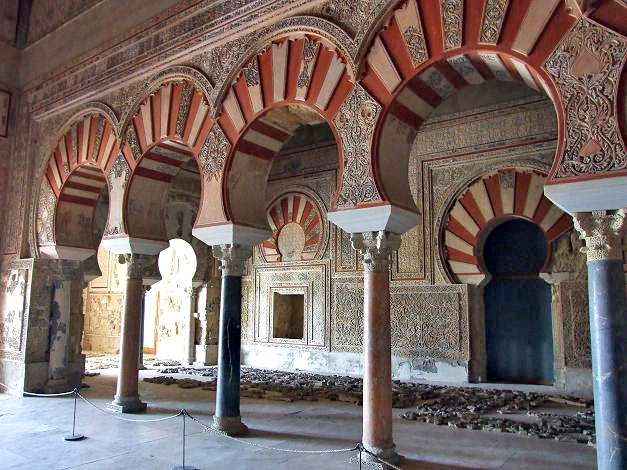 Can't register the back side due to its position near the wall. Source: Objaverse 1.0 / Sketchfab
Replication package for: "Structural Change, Elite Capitalism, and the Emergence of Labor Emancipation"
<p>Replication package for "Structural Change, Elite Capitalism, and the Emergence of Labor Emancipation" (Review of Economic Studies) by Quamrul H. Ashraf, Francesco Cinnirella, Oded Galor, Boris Gershman, and Erik Hornung. This package contains data and code for reproducing the tables and figures in the article and its online appendix. Detailed instructions for accessing the raw data are also provided.</p>
Mindfulness, Psychological Capital, Soft Skills, and Refugees' Psychological Wellbeing
<p>The data concerns the role of positive psychological attributes in the wellbeing of refugees in the context of a less developed country in Africa</p>
ScienceDex guides
Understand access before you commit
These curated guides explain access requirements, typical timelines, costs, and reuse considerations for widely used research datasets.
Allen Brain Atlas
Allen Brain Atlas is an Allen Institute collection of brain map atlases, datasets, APIs, and analysis tools covering mouse, human, and non-human primate brain resources.
Annotated Behaviour and Observability Dataset (ABODe)
ABODe is a University of Edinburgh DataShare dataset for behavior classification in group-housed mice using home-cage video, identities, bounding boxes, ground-plate positions, and annotator labels.
DANDI Archive for NWB datasets
DANDI is a BRAIN Initiative archive for publishing and sharing neurophysiology data, including electrophysiology, optophysiology, and behavioral data packaged as NWB and related standards.
International Brain Laboratory public data
The International Brain Laboratory public data releases expose standardized mouse decision-making experiments, including Neuropixels recordings, widefield calcium imaging, behavior, and session metadata accessed through the ONE API.
OpenNeuro
OpenNeuro is a free, open platform for sharing neuroimaging datasets, with public search, dataset pages, and download paths for web, S3, DataLad, and the OpenNeuro CLI.