
Find research datasets worth reusing
Search datasets from major research repositories and use ShareScore to quickly assess how well each record supports discovery, access, and reuse.
359
datasets available to search
ShareScore release 0.9.0
Dataset results
359 results for “packing”
Dataset for New Results on Tripod Packings
<p>The files contain tripod packings obtained in the study "P.R.J. Östergård & A. Pöllänen, New results on tripod packings". More specifically, they prove the lower bounds in Table 5 of the paper. The two files contain sets of orbit representatives of codes and explicit packings in matrix form. For each type of symmetry, the results presented are for <span class="math-tex">\(n = 3,4,\ldots\)</span>. Codewords are of the form <span class="math-tex">\((x,y,z)\)</span>, where <span class="math-tex">\(x,y,z \in \{0,1,\ldots ,n-1\}\)</span>. The symmetries are</p> <ul> <li><span class="math-tex">\(r(x,y,z) = (z,x,y)\)</span>,</li> <li><span class="math-tex">\(p(x,y,z) = (y,x,z)\)</span>,</li> <li><span class="math-tex">\(o(x,y,z) = (n-1-x,n-1-y,n-1-z)\)</span>.</li> </ul> <p> </p>
Data and R-code on a cross-sectional study of factors associated with lameness in dairy cows housed in freestall and compost-bedded pack dairy farms in southern Brazil
<p>The data correspond to a cross-sectional study designed to investigate factors associated with lameness in dairy cows on intensive farms in southern Brazil.<br> Farms: 38 freestall and 12 compost-bedded pack visited once in 2016. All lactating cows (n = 13,716) were examined and body condition score (BCS) and gait score were assessed. Additionally, some variables were collected through inspection of facilities and using data from an interview with farmers on routine herd management practices.<br> Additional information is provided in the published paper ("Factors associated with lameness prevalence in lactating cows housed in freestall and compost-bedded pack dairy farms in southern Brazil" https://doi.org/10.1016/j.prevetmed.2019.104773)</p>
Instances for the two-dimensional heterogeneous vector bin packing problem
<p>The dataset consist of 56 instances for the two-dimensional heterogeneous vector bin packing problem.</p> <p>Six small instances with 10, 11, 12, 13,<br> 15 and 20 items, as well as 50 randomly generated<br> large instances were considered. Weights and<br> volumes of items were randomly uniformly chosen<br> integer values from [1;15] tons and [1;25]m<sup>3</sup>,<br> respectively. The set of large instances had 5 instances<br> with each of the following numbers of<br> items: 50, 70, 100, 120, 150, 200, 350, 500, 750<br> and 1000.</p> <p>File structure:</p> <p>- number of items</p> <p>- weights of items</p> <p>- volumes of items</p>
Text-fig. 4. Scanning electron microscope (SEM) images of megaspores with possible affinities to Selaginellales; Torres Vedras locality, Portugal. a, b) Hughesisporites galericulatus, lateral view of megaspore (a) with almost smooth surface and spore wall of thin elements forming a dense reticulum (b); c) Trileites sp., proximal view of megaspore with almost smooth surface and raised trilete mark; d–f) Rugotriletes sp., proximal (e) and lateral (f) views of megaspores showing coarsely reticulate-rugulate surface ornamentation and prominent gula around the trilete mark and compact perforate spore wall (d); g, h) Erlansonisporites sp., distal (g) and lateral (h) views of megaspores showing coarsely reticulate-rugulate surface and fibrous spore wall; i, j) Striatriletes sp. 1, megaspore in oblique proximal view (i) showing raised laesurae and irregular striate-rugulate surface, and detail of spore wall (j) showing dense packing of sculptural elements; k, l) Striatriletes sp. 2, megaspore in proximal view (k) showing trilete mark, striate-rugulate surface, and detail of spore wall (l) composed of loosely packed fibers; m) Striatriletes sp. 3, megaspore in proximal view showing raised trilete mark and striate-rugulate surface; n, o) Verrutriletes sp., megaspore in oblique proximal view (n) showing short laesurae of the trilete mark, and the dense verrucate surface (o); p) Megaspore sp. 1, oblique proximal view showing in The Early Cretaceous Mesofossil Flora Of Torres Vedras (Ne Of Forte Da Forca), Portugal: A Palaeofloristic Analysis Of An Early Angiosperm Community
Text-fig. 4. Scanning electron microscope (SEM) images of megaspores with possible affinities to Selaginellales; Torres Vedras locality, Portugal. a, b) Hughesisporites galericulatus, lateral view of megaspore (a) with almost smooth surface and spore wall of thin elements forming a dense reticulum (b); c) Trileites sp., proximal view of megaspore with almost smooth surface and raised trilete mark; d–f) Rugotriletes sp., proximal (e) and lateral (f) views of megaspores showing coarsely reticulate-rugulate surface ornamentation and prominent gula around the trilete mark and compact perforate spore wall (d); g, h) Erlansonisporites sp., distal (g) and lateral (h) views of megaspores showing coarsely reticulate-rugulate surface and fibrous spore wall; i, j) Striatriletes sp. 1, megaspore in oblique proximal view (i) showing raised laesurae and irregular striate-rugulate surface, and detail of spore wall (j) showing dense packing of sculptural elements; k, l) Striatriletes sp. 2, megaspore in proximal view (k) showing trilete mark, striate-rugulate surface, and detail of spore wall (l) composed of loosely packed fibers; m) Striatriletes sp. 3, megaspore in proximal view showing raised trilete mark and striate-rugulate surface; n, o) Verrutriletes sp., megaspore in oblique proximal view (n) showing short laesurae of the trilete mark, and the dense verrucate surface (o); p) Megaspore sp. 1, oblique proximal view showing
Text-fig. 43. Synchrotron radiation X-ray tomographic microscopy SRXTM images of "Tricarpellate flower sp. 2"; Catefica locality, Portugal. a) Lateral view of floral structure (volume rendering) showing the apical projection of the carpels and the semiinferior organization; b) Apical view of floral structure (volume rendering) showing the triangular shape of the hypanthial rim, the tricarpellate ovary with a single apical style; note that one locule is fully developed while the other two are collapsed; note also slits of unknown nature in the corners of the triangular hypanthial rim (arrows); c) Transverse section (orthoslice xy0712) close to the floral apex showing the locule of the one fully developed carpel with ovules borne along ventral placentae; note amorphous substance (asterisk) associated with the developing ovules that fills part of the locule space; d) Longitudinal section (orthoslice xz0858) through the locule of the one fully developed carpel showing the semi-inferior organization and ovules arranged along the full length of the carpel; note amorphous substance (asterisk) associated with the developing ovules that fills part of the locule space; e) Tangential longitudinal section (orthoslice yz1019) through the one fully developed locule, showing the densely packed ovules and the amorphous substance (asterisk) with which they are associated. Specimen, Catefica 50-S174901 (a–e). Scale bars = 300 Μm (a–e). in The Early Cretaceous Mesofossil Flora Of Catefica, Portugal: Angiosperms
Text-fig. 43. Synchrotron radiation X-ray tomographic microscopy SRXTM images of "Tricarpellate flower sp. 2"; Catefica locality, Portugal. a) Lateral view of floral structure (volume rendering) showing the apical projection of the carpels and the semiinferior organization; b) Apical view of floral structure (volume rendering) showing the triangular shape of the hypanthial rim, the tricarpellate ovary with a single apical style; note that one locule is fully developed while the other two are collapsed; note also slits of unknown nature in the corners of the triangular hypanthial rim (arrows); c) Transverse section (orthoslice xy0712) close to the floral apex showing the locule of the one fully developed carpel with ovules borne along ventral placentae; note amorphous substance (asterisk) associated with the developing ovules that fills part of the locule space; d) Longitudinal section (orthoslice xz0858) through the locule of the one fully developed carpel showing the semi-inferior organization and ovules arranged along the full length of the carpel; note amorphous substance (asterisk) associated with the developing ovules that fills part of the locule space; e) Tangential longitudinal section (orthoslice yz1019) through the one fully developed locule, showing the densely packed ovules and the amorphous substance (asterisk) with which they are associated. Specimen, Catefica 50-S174901 (a–e). Scale bars = 300 Μm (a–e).
Text-fig. 40. Scanning electron microscope (SEM) images of "Pollen clump with tricolpate pollen sp. 4"; Catefica locality, Portugal. a) Pollen clump, probably an anther fragment with one kind of pollen grain; b) Detail of pollen clump showing densely packed pollen all of the same kind; c) Pollen grains in equatorial (left) and polar (right) views showing the coarse reticulum in the mesocolpium regions, the striate-reticulate tectum over the polar regions, and the microreticulate to foveolate tectum along the aperture margins; d) Detail of pollen wall showing smooth muri supported by long, densely-spaced columellae; e) Detail of broken pollen wall showing long, densely-spaced columellae detached from the thick foot layer. Specimen, Catefica 50-S170386 (a–e). Scale bars = 600 Μm (a), 20 Μm (b), 6 Μm (c), 1.5 Μm (d, e). in The Early Cretaceous Mesofossil Flora Of Catefica, Portugal: Angiosperms
Text-fig. 40. Scanning electron microscope (SEM) images of "Pollen clump with tricolpate pollen sp. 4"; Catefica locality, Portugal. a) Pollen clump, probably an anther fragment with one kind of pollen grain; b) Detail of pollen clump showing densely packed pollen all of the same kind; c) Pollen grains in equatorial (left) and polar (right) views showing the coarse reticulum in the mesocolpium regions, the striate-reticulate tectum over the polar regions, and the microreticulate to foveolate tectum along the aperture margins; d) Detail of pollen wall showing smooth muri supported by long, densely-spaced columellae; e) Detail of broken pollen wall showing long, densely-spaced columellae detached from the thick foot layer. Specimen, Catefica 50-S170386 (a–e). Scale bars = 600 Μm (a), 20 Μm (b), 6 Μm (c), 1.5 Μm (d, e).
Text-fig. 13. Scanning electron microscope (SEM) images of "Staminate inflorescence fragment with Clavatipollenites-type pollen sp. 4"; Catefica locality, Portugal. a) Fragment of stamen whorl from staminate inflorescence showing several closely packed, almost sessile stamens that lack a well-developed filament; b, c) Distal and proximal views of pollen grains showing poorly defined aperture with verrucate aperture membrane; d) Detail of pollen wall showing the semitectate-reticulate tectum and long, scattered columellae supporting the narrow muri with finely verrucate supratectal ornamentation. Specimen, Catefica 49-S107782 (a–d). Scale bars = 600 Μm (a), 6 Μm (b, c), 1.5 Μm (d). in The Early Cretaceous Mesofossil Flora Of Catefica, Portugal: Angiosperms
Text-fig. 13. Scanning electron microscope (SEM) images of "Staminate inflorescence fragment with Clavatipollenites-type pollen sp. 4"; Catefica locality, Portugal. a) Fragment of stamen whorl from staminate inflorescence showing several closely packed, almost sessile stamens that lack a well-developed filament; b, c) Distal and proximal views of pollen grains showing poorly defined aperture with verrucate aperture membrane; d) Detail of pollen wall showing the semitectate-reticulate tectum and long, scattered columellae supporting the narrow muri with finely verrucate supratectal ornamentation. Specimen, Catefica 49-S107782 (a–d). Scale bars = 600 Μm (a), 6 Μm (b, c), 1.5 Μm (d).
Coordinates of the packing configurations of arXiv:2212.12287 [cs.CG]
<p>We provide the cartesian coordinates of the packing configurations in regular polygons obtained in https://doi.org/10.48550/arXiv.2212.12287</p> <table summary="Additional metadata"> <tbody> <tr> <td> </td> <td> </td> </tr> </tbody> </table>
Spatiotemporal dissolution of calcite grain column packs
<p>The binarized reference data from time-lapse high-resolution X-ray CT imaging of live flow experiments and effluent pH and TDS logs are stored here. Data post-processing and analysis were conducted using a commercial software Avizo - details if which are described in the methods and results sections of the companion manuscript.</p>
Detailed experimental results for VNS-based matheuristics for the two dimensional vector bin packing problem
<p>This dataset is a result of the research: Đorđe Stakić, Tatjana Davidović, Ana Anokić, Dragan Urošević "VNS-based matheuristics for the two dimensional vector bin packing problem", SYM-OP-IS, 2023.</p>
The upper bounds for the number of bins and the total number of variables before and after reducing for the two dimensional vector bin packing problem
<p>The upper bounds for the number of bins and the total number of variables before and after reducing for the two dimensional vector bin packing problem, This dataset is a result of the research: Đorđe Stakić, Tatjana Davidović, Ana Anokić, Dragan Urošević "VNS-based matheuristics for the two dimensional vector bin packing problem", SYM-OP-IS, 2023.</p>
"I was on vacation in Mala, living in a self-catering holiday cottage, together with my girlfriend (we're together for 11 years now), recovering from a heavy workload in the second half of 2008. We were sitting outside, probably sipping a beer, when we heard the sound of bells approaching. Stepping on the stones that enclose the little forecourt of the cottage, we could just see the goat herd being driven by. Idashed for my R09 (recording equipment) to get that impression – but too slowly too late, it seemed, the herd had disappeared and with it the sound. When Iwas about to pack my R09 again the sound appeared to come back, so Idashed down the driveway, just in time to see the herd pass, and then Ifollowed it a couple of hundred meters, walking behind the herd, trying not to breathe or make stepping sounds, eventually, when dogs started barking and a car approached from behind, I stopped and let the goats go on, the car passes, honks ... and Icut the recording and walk back to the cottage." [Peter/ptroxler]13 in Collecting Sounds. Online Sharing of Field Recordings as Cultural Practice
"I was on vacation in Mala, living in a self-catering holiday cottage, together with my girlfriend (we're together for 11 years now), recovering from a heavy workload in the second half of 2008. We were sitting outside, probably sipping a beer, when we heard the sound of bells approaching. Stepping on the stones that enclose the little forecourt of the cottage, we could just see the goat herd being driven by. Idashed for my R09 (recording equipment) to get that impression – but too slowly too late, it seemed, the herd had disappeared and with it the sound. When Iwas about to pack my R09 again the sound appeared to come back, so Idashed down the driveway, just in time to see the herd pass, and then Ifollowed it a couple of hundred meters, walking behind the herd, trying not to breathe or make stepping sounds, eventually, when dogs started barking and a car approached from behind, I stopped and let the goats go on, the car passes, honks ... and Icut the recording and walk back to the cottage." [Peter/ptroxler]13
A Toroidal Zr70 Oxysulfate Cluster and Its Diverse Packing Structures
<p>Supplementary material: Syntheses, XRD, TGA, SEM, PXRD</p>
Mature chromatin packing domains persist after RAD21 depletion in 3D
Open the record for dataset details and reuse information.
Data from: Niche packing, but not niche expansion, explains the co-occurrence of hummingbirds-visited plants
Open the record for dataset details and reuse information.
Sponge-like rigid structures in frictional granular packings
<p>We show how rigidity emerges in experiments of sheared two-dimensional frictional granular materials by using generalizations of two methods for identifying rigid structures. Both approaches, the force-based dynamical matrix and the topology-based rigidity percolation, agree with each other and identify similar rigid structures. As the system becomes jammed, at a critical contact number z = 2.4±0.1, a rigid backbone interspersed with floppy, particle-filled holes of a broad range of sizes emerges, creating a sponge-like morphology. While the pressure within rigid structures always exceeds the pressure outside the rigid structures, they are not identified with the force chains of shear jamming. These findings highlight the need to focus on mechanical stability arising through arch structures and hinges at the mesoscale.</p>
Pack de Postes
Postes de todos os tipos para melhoras o seu cenário de jogo em 3D feito no Maya. Source: Objaverse 1.0 / Sketchfab
European Buildings Asset Pack 1
A collection of buildings that I modeled for Google Earth about 10 years ago. Now free on Sketchfab. 😉 Please note that these models have a lot of seperate textures and the UVs are a mess - so probably not well suited for usage in games. Check out my other packs as well: [European Buildings Asset Pack 2](https://skfb.ly/oqnFt) 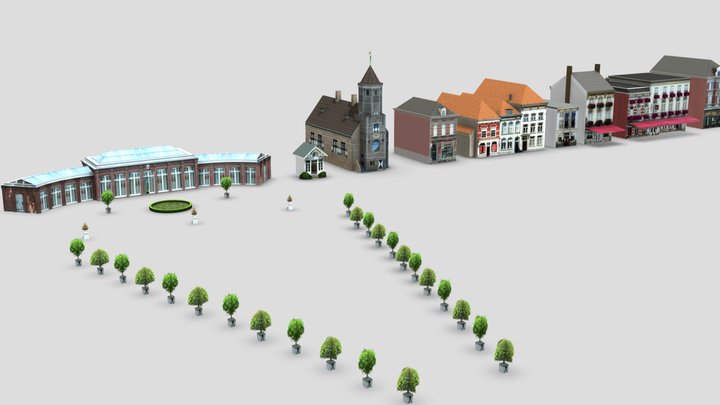 [European Buildings Asset Pack 3](https://skfb.ly/oqpIA) 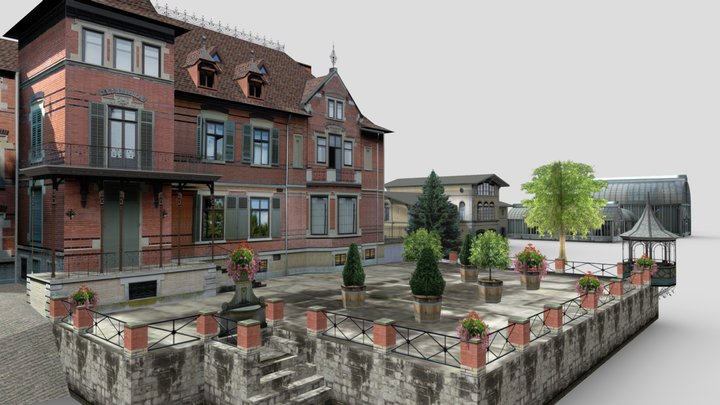 [European Buildings Asset Pack 4](https://skfb.ly/otYCG) 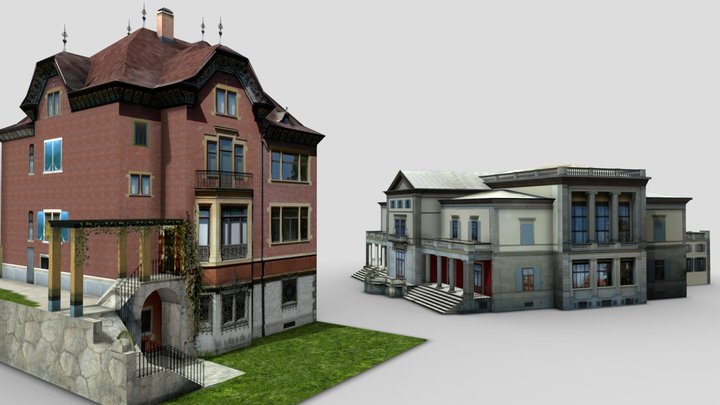 Source: Objaverse 1.0 / Sketchfab
Zbrush Alpha Pack Rock Set3 Free
Zbrush Alpha Pack_Rock Set3 (Free) - resolution: 2K - file format: png - compatible with Zbrush Hi guys, i just released a set of zbrush alpha rock set which i use in my own work. There will be total 3 set. Its free!!! so just grab it!! There could prove useful if u work on ground, mountain or rocky model. You can use these alphas for whatever you want with no limits. If you want to share to anyone without having to contact me, you can share the link of this page. Thank you and have fun sculpting, cheers!! Source: Objaverse 1.0 / Sketchfab
Low poly medieval weapons free pack
Medieval weapons pack includes 2 shields, a sword, a slinger, a dagger, a bow with a quiver and arrows, and an ax Source: Objaverse 1.0 / Sketchfab
ScienceDex guides
Understand access before you commit
These curated guides explain access requirements, typical timelines, costs, and reuse considerations for widely used research datasets.
Allen Brain Atlas
Allen Brain Atlas is an Allen Institute collection of brain map atlases, datasets, APIs, and analysis tools covering mouse, human, and non-human primate brain resources.
Annotated Behaviour and Observability Dataset (ABODe)
ABODe is a University of Edinburgh DataShare dataset for behavior classification in group-housed mice using home-cage video, identities, bounding boxes, ground-plate positions, and annotator labels.
DANDI Archive for NWB datasets
DANDI is a BRAIN Initiative archive for publishing and sharing neurophysiology data, including electrophysiology, optophysiology, and behavioral data packaged as NWB and related standards.
International Brain Laboratory public data
The International Brain Laboratory public data releases expose standardized mouse decision-making experiments, including Neuropixels recordings, widefield calcium imaging, behavior, and session metadata accessed through the ONE API.
OpenNeuro
OpenNeuro is a free, open platform for sharing neuroimaging datasets, with public search, dataset pages, and download paths for web, S3, DataLad, and the OpenNeuro CLI.