
Find research datasets worth reusing
Search datasets from major research repositories and use ShareScore to quickly assess how well each record supports discovery, access, and reuse.
4,489
datasets available to search
ShareScore release 0.9.0
Dataset results
4,489 results for “transitivity”
Fig. 10 in A new Centromochlus Kner, 1858 (Siluriformes: Auchenipteridae: Centromochlinae) from the transition between Amazon floodplain and Guiana shield, Brazil
Fig. 10. Distribution of Centromochlus orca. Green star represents type locality.
Fig. 9 in A new Centromochlus Kner, 1858 (Siluriformes: Auchenipteridae: Centromochlinae) from the transition between Amazon floodplain and Guiana shield, Brazil
Fig. 9. Centromochlus orca, new species, just after capture. Photo by H. Lazzarotto.
miR-145-5p mimic inhibits bone metastasis of prostate cancer via the regulation of epithelial mesenchymal transition
<p><strong>Background.</strong> The bone is the most common site of distant metastasis in prostate cancer. However, treatments for the bone metastasis of prostate cancer remain unsatisfactory. MicroRNAs (miRNAs) are small noncoding RNAs that play a variety of critical roles in tumor development and progression. Studies have confirmed that miRNA mimics could regulate the response to therapy in many cancers. <strong>Methods.</strong> In this study, a set of forty-four miRNAs were reduced in prostate cancer patients with bone metastases by high-throughput sequencing analysis. Wound healing and transwell assays and western blotting analysis were used to explore the role of miRNA mimic in prostate cancer bone metastasis.<strong> Results.</strong> These mimics of down-regulated miRNAs may be able to cure prostate cancer bone metastasis, including hsa-miR-221-3p, hsa-miR-222-3p, hsa-miR-133a-3p, hsa-miR-222-5p, hsa-miR-204-3p, hsa-miR-145-5p, hsa-miR-3681-5p, hsa-miR-184, hsa-miR-144-3p, hsa-miR-204-5p, and hsa-miR-221-5p. To further investigate the role of these miRNA mimics on prostate cancer bone metastasis, miR-145-5p was randomly selected for validation. Bioinformatics analysis showed that miR-145-5p target genes significantly affected TGF-beta signaling pathway. Wound healing and transwell assays and western blotting analysis revealed that miR-145-5p mimic inhibited proliferation, migration and invasion. Importantly, miR-145-5p mimic increased the expression of E-cadherin and reduced the expression of matrix metalloproteinase 2 and 9. These results revealed that miR-145-5p mimic mediated epithelial mesenchymal transition. Meanwhile, miR-145-5p mimic enhanced the level of caspase 9, which is an important promoter of apoptosis. These results indicate that miR-145-5p mimic could inhibit the progress of prostate cancer bone metastasis via regulation of epithelial mesenchymal transition. In addition, miR-145-5p mimic could induce the apoptosis of prostate cancer cells with bone metastases. In summary, the miR-145-5p mimic is expected to become a novel strategy for the treatment of tumor metastasis.</p>
Data from: Demography and adaptation promoting evolutionary transitions in a mammalian genus that diversified during the Pleistocene
<p>Species that evolved in temperate regions during the Pleistocene experienced periods of extreme climatic transitions. Consequent population fragmentation and dynamics had the potential to generate small, isolated populations where the influence of genetic drift would be expected to be strong. We use comparative genomics to assess the evolutionary influence of historical demographics and natural selection through a series of transitions associated with the formation of the genus <i>Capreolus</i>, speciation within this genus during the Quaternary and during divergence among European roe deer (<i>C. capreolus</i>) populations. Our analyses were facilitated by the generation of a new high-coverage reference genome for the Siberian roe deer (<i>Capreolus pygargus</i>). We find progressive reductions in effective population size (<i>Ne</i>), despite very large census sizes in modern <i>C. capreolus</i> populations and show that low <i>Ne</i> has impacted the <i>C. capreolus</i> genome, reducing diversity and increasing linkage disequilibrium. Even so, we find evidence for natural selection shared among <i>C. capreolus</i> populations, including a population that has been through a severe bottleneck. During each period of transition there is evidence for selection, including at loci associated with diapause (delayed embryonic development), a phenotype restricted to this genus among the even-toed ungulates. Together these data allow us to assess expectations for the origin and diversification of a mammalian genus during a period of extreme environmental change.</p>
Habitat transitions alter the adaptive landscape and shape phenotypic evolution in needlefishes (Belonidae)
<p class="Normal1">Habitat occupancy can have a profound influence on macroevolutionary dynamics, and a switch in major habitat type may alter the evolutionary trajectory of a lineage. In this study we investigate how evolutionary transitions between marine and freshwater habitats affect macroevolutionary adaptive landscapes, using needlefishes (Belonidae) as a model system. We examined the evolution of body shape and size in marine and freshwater needlefishes and tested for phenotypic change in response to transitions between habitats. Using micro-computed tomographic (µCT) scanning and geometric morphometrics, we quantified body shape, size, and vertebral counts of 31 belonid species. We then examined the pattern and tempo of body shape and size evolution using phylogenetic comparative methods. Our results show that transitions from marine to freshwater habitats have altered the adaptive landscape for needlefishes and expanded morphospace relative to marine taxa. We provide further evidence that freshwater taxa attain reduced sizes either through dwarfism (as inferred from axial skeletal reduction) or developmental truncation (as inferred from axial skeletal loss). We propose that transitions to freshwater habitats produce morphological novelty in response to novel prey resources and changes in locomotor demands. We find that repeated invasions of different habitats have prompted predictable changes in morphology.</p>
Data from: Response to persistent er stress in plants: a multiphasic process that transitions cells from prosurvival activities to cell death
The unfolded protein response (UPR) is a highly conserved response that protects plants from adverse environmental conditions. The UPR is elicited by endoplasmic reticulum (ER) stress, in which unfolded and misfolded proteins accumulate within the ER. Here, we induced the UPR in maize (Zea mays) seedlings to characterize the molecular events that occur over time during persistent ER stress. We found that a multiphasic program of gene expression was interwoven among other cellular events, including the induction of autophagy. One of the earliest phases involved the degradation by regulated IRE1-dependent RNA degradation (RIDD) of RNA transcripts derived from a family of peroxidase genes. RIDD resulted from the activation of ZmIRE1 for promiscuous ribonuclease activity that attacks the mRNAs of secreted proteins. This was followed by an upsurge in expression of the canonical UPR genes indirectly driven by ZmIRE1 due to its splicing of Zmbzip60 to make an active transcription factor that directly upregulates many of the UPR genes. At the peak of UPR gene expression, a global wave of alternative RNA processing led to the production of many aberrant UPR gene transcripts, likely tempering the ER stress response. During later stages of ER stress, ZmIRE1's activity declined as did the expression of survival modulating genes, Bax inhibitor1 and Bcl-2-associated athanogene7, amidst a rising tide of cell death. Thus, in response to persistent ER stress, maize seedlings embark on a course of gene expression and cellular events progressing from adaptive responses to cell death.
Exploring dynamical phase transitions with a Cavity-QED platform
<p>Atom-light interactions in optical cavities provide a platform for investigating many-body quantum physics in controlled environments. In particular, they have been proposed for the realization of collective quantum spin models with tunable long-range interactions. Besides the investigation of the rich steady-state phases that can arise due to the interplay between atom-light interactions and dissipation from the cavity, one opportunity offered by these systems is the study of out-of-equilibrium dynamical phases of matter precluded from existence at equilibrium . Moreover, these phases can display intriguing universal behaviors akin to standard equilibrium phase transitions. Here, we report the observation of distinct dynamical phases of matter in a nearly unitary implementation of the collective XY spin model with transverse and longitudinal fields simulated via an ensemble of ∼10<sup>6</sup> <sup>88</sup>Sr atoms. The unique properties of our cavity-QED platform allow us to probe thedependence of the associated dynamical phase transitions on parameter space, system size and initial state. In the spirit of quantum simulation our observations can be linked to similar dynamical phases featured in a range of related scystems, including the Josephson effect in superfluid helium , coupled atomic and solid-state polariton condensates, with complementary types of control including the magnitude and sign of Hamiltonian parameters. Moreover, our system offers potential for the generation of metrologically useful entangled states in optical transitions, which can enable real metrological gains via quantum enhancement in state-of-the-art atomic clocks.</p>
Data from: Spatial transitions in tree cover are associated with soil hydrology, but not with grass biomass, fire frequency, or herbivore biomass in Serengeti savannahs
1. Although there is a well-known association between tree cover and soil texture in savannahs, the hydrological drivers of tree cover variation have not been systematically explored, particularly in parallel with factors such as fire, herbivory, and tree-grass interactions. The relationship between hydrological factors and tree cover is important for resolving the relative contribution of bottom-up vs. top-down factors in structuring savannah vegetation. 2. We quantified soil moisture dynamics across eight 1-km transects spanning tree cover gradients from open to woody savannah in Serengeti National Park in Tanzania using soil moisture sensors coupled with dataloggers. We mapped tree cover at two spatial scales through supervised classification of high-resolution satellite imagery. We simultaneously produced water retention curves in open and woody habitats within each transect to compare soil hydrological properties and to convert volumetric water content (θ) from dataloggers to plant-available water over the course of an annual cycle. We also quantified grass biomass at 100 locations per transect, estimated fire frequency from MODIS satellite data, and quantified herbivore occupancy with paired camera traps situated in open and woody habitats within each transect. 3. We found a positive relationship between tree cover and soil moisture drainage rate, and found that open habitats had more negative water potentials than woody habitats for a given value of θ. In contrast, we found no evidence for a consistent relationship between grass biomass or fire frequency and tree cover. We found evidence for higher browser occupancy in woody than open habitats, but no habitat effects on herbivores as a group (browsers plus grazers), suggesting that herbivory is unlikely to be the dominant factor explaining variation in tree cover. 4. Our results suggest that variation in tree cover is partly driven by hydrological (edaphic) factors unrelated to fire, herbivory, tree-grass interactions or mean annual precipitation at these spatial scales in Serengeti. We contrast our findings with previous work attributing tree cover shifts in Serengeti to precipitation gradients.
Nonperturbative phi4 potentials: Phase transitions and light horizons
<p>Data underlying figures in paper "Nonperturbative phi4 potentials: Phase transitions and light horizons". The data are generated by, and can be plotted with, python programs in https://github.com/seanYuanSHI/Phi4</p> <p>This work was performed under the auspices of the U.S. Department of Energy by Lawrence Livermore National Laboratory under Contract DE-AC52-07NA27344 and was supported by the Lawrence Fellowship through LLNL-LDRD Program under Project No. 19-ERD-038.</p> <p>This data set is released under LLNL-MI-823772.</p>
Gurley Burt Solar Transit - Circa 1907
My graduation work for XYZ School. Without description, just look at this beautiful theodolite :) Based on The Gurley Light Mountain Solar Transit 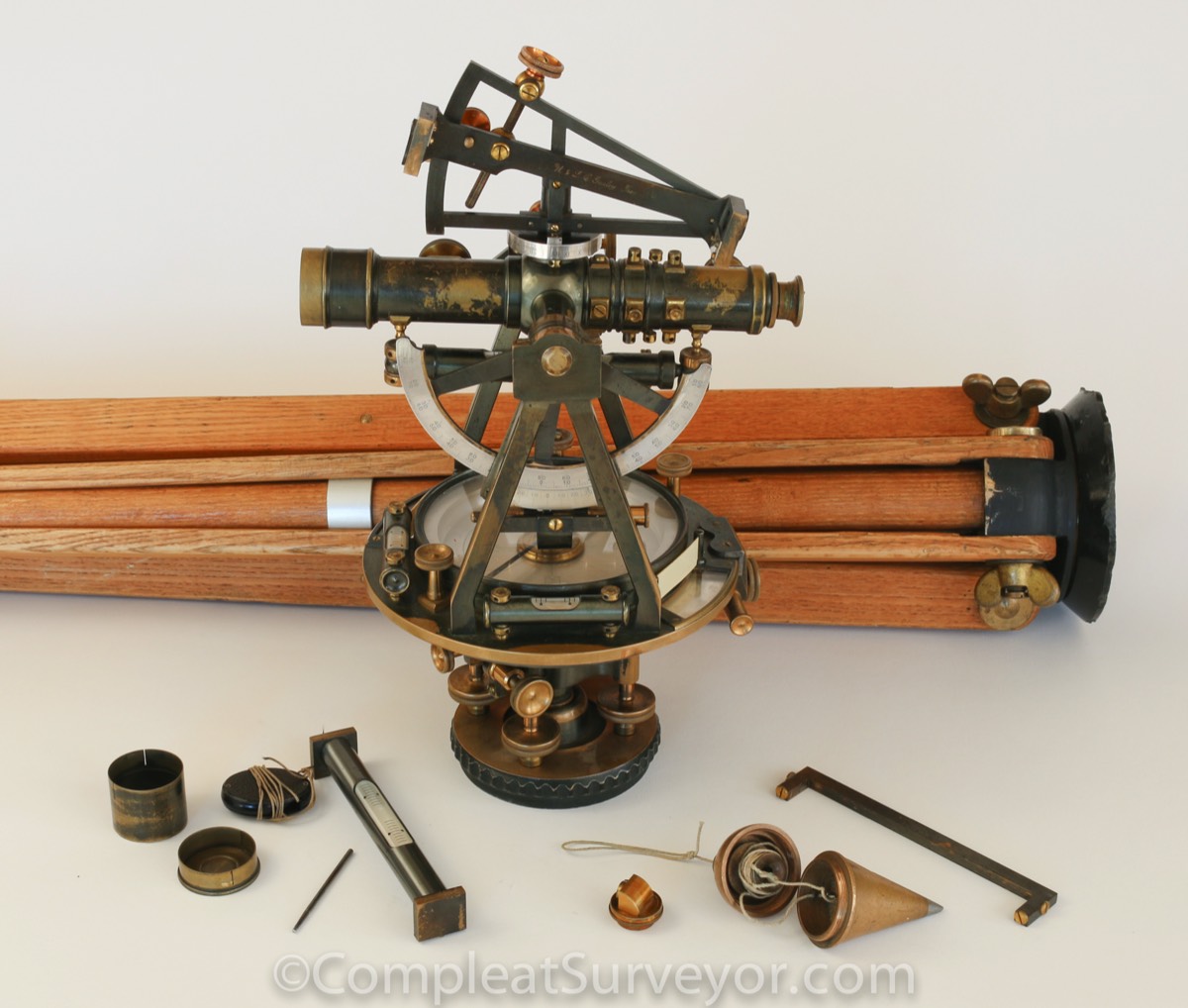 [Link to see more on compleatsurveyor](http://www.compleatsurveyor.com/1907GurleyST/GurleySolarTransit.html) Modeled in Blender, baked in Marmoset, textures in Substance painter Work on ArtStation https://www.artstation.com/artwork/v2y3GA Source: Objaverse 1.0 / Sketchfab
Supporting data for: A linear response, DFT+U study of trends in the oxygen evolution activity of transition metal rutile dioxides
<p>This directory contains all of the finished calculations required for fully analysis of the paper "A linear response, DFT+U study of trends in the oxygen evolution activity of transition metal rutile dioxides" by Zhongnan Xu, Jan Rossmeisl, and John R Kitchin. To use this repository, download the supporting information file and run the scripts present in either 'supporting-information.pdf' or 'supporting-information.org'.</p> <p>The is the release of the supporting data before the first submission to the first journal.</p>
Data for Properties of Kinetic Transition Networks for Atomic Clusters and Glassy Solids
<p>Databases of minima and transition states for Morse clusters, in two and three dimensions at a variety of ranges.</p>
Role of Dzyaloshinskii-Moriya interaction for magnetism in transition-metal chains at Pt step edges
<p>PDF images (incorporated data in the pdf files)</p>
The FORTH-TRACE dataset for human activity recognition of simple activities and postural transitions using a Body Area Network
<p>The dataset is collected from 15 participants wearing 5 Shimmer wearable sensor nodes on the locations listed in Table 1. The participants performed a series of 16 activities (7 basic and 9 postural transitions), listed in Table 2.</p> <p>The captured signals are the following:</p> <ul> <li>3-axis accelerometer</li> <li>3-axis gyroscope</li> <li>3-axis magnetometer</li> </ul> <p>The sampling rate of the devices is set to 51.2 Hz.</p> <p>DATASET FILES</p> <p>The dataset contains the following files:</p> <ul> <li>partX/partXdev1.csv</li> <li>partX/partXdev2.csv</li> <li>partX/partXdev3.csv</li> <li>partX/partXdev4.csv</li> <li>partX/partXdev5.csv</li> </ul> <p>Where X corresponds to the participant ID, and numbers 1-5 to the device IDs indicated in Table 1.</p> <p>Each .csv file has the following format:</p> <ul> <li>Column1: Device ID</li> <li>Column2: accelerometer x</li> <li>Column3: accelerometer y</li> <li>Column4: accelerometer z</li> <li>Column5: gyroscope x</li> <li>Column6: gyroscope y</li> <li>Column7: gyroscope z</li> <li>Column8: magnetometer x</li> <li>Column9: magnetometer y</li> <li>Column10: magnetometer z</li> <li>Column11: Timestamp</li> <li>Column12: Activity Label</li> </ul> <p>Table 1: LOCATIONS</p> <ol> <li>Left Wrist</li> <li>Right Wrist</li> <li>Torso</li> <li>Right Thigh</li> <li>Left Ankle</li> </ol> <p>Table 2: ACTIVITY LABELS</p> <p>(Arrows (->) indicate transitions between activities)</p> <ol> <li>stand</li> <li>sit</li> <li>sit and talk</li> <li>walk</li> <li>walk and talk</li> <li>climb stairs (up/down)</li> <li>climb stairs (up/down) and talk</li> <li>stand -> sit</li> <li>sit -> stand</li> <li>stand -> sit and talk</li> <li>sit and talk -> stand</li> <li>stand -> walk</li> <li>walk -> stand</li> <li>stand -> climb stairs (up/down), stand -> climb stairs (up/down) and talk</li> <li>climb stairs (up/down) -> walk</li> <li>climb stairs (up/down) and talk -> walk and talk</li> </ol>
Unraveling the Complex Features of the Seismic Scatterers in the Mid-Lower Mantle through Phase Transition of (Al, H)-Bearing Stishovite
<p>Dataset from the paper "Unraveling the Complex Features of the Seismic Scatterers in the Mid-Lower Mantle through Phase Transition of (Al, H)-Bearing Stishovite"</p>
Multi-omics reveals the attenuation of metabolic cardiomyopathy in mice by extracts from Clausena0 lansium (Lour.) by transiting gastrointestinal microbiota to an alternative homeostasis
<p>The raw data for MS "<strong>Multi-omics reveals the attenuation of metabolic cardiomyopathy in mice by extracts from </strong><i><strong>Clausena0 lansium</strong></i><strong> (Lour.) by transiting gastrointestinal microbiota to an alternative homeostasis".</strong></p>
Hydrogen Transport Between Layers of Transition Metal-Dichalcogenides
<p><strong>Abstract</strong></p><p>Hydrogen is a crucial source of green energy and has been extensively studied for its potential usage in fuel cells. The advent of two-dimensional crystals (2DCs) has taken hydrogen research to new heights, enabling it to tunnel through layers of 2DCs or be transported within voids between the layers, as demonstrated in recent experiments by Geim's group. In this study, we investigate how the composition and stacking of transition-metal dichalcogenide (TMDC) layers influence the transport and self-diffusion coefficients (D) of hydrogen atoms using well-tempered metadynamics simulations. Our findings show that modifying either the transition metal or the chalcogen atoms significantly affects the free energy barriers (∆F) and, consequently, the self-diffusion of hydrogen atoms between the 2DC layers. In the H^h_h polytype (2H stacking), MoSe2 exhibits the lowest ∆F, while WS2 has the highest, resulting in the largest D for the former system. Additionally, hydrogen atoms inside the R^M_h (or 3R) polytype encounter more than twice lower energy barriers and, thus, much higher diffusivity compared to those within the most stable H^h_h stacking. These findings are particularly significant when investigating twisted layers or homo- or heterostructures, as different stacking areas may dominate over others, potentially leading to directional transport and interesting materials for ion or atom sieving.</p><p>https://doi.org/10.48550/arXiv.2308.03418</p><p> </p><p><strong>Overview</strong></p><p>This repository contains calculation files, optimized structures, plots, and Excel files for studies of H diffusion within vdW crystals. A general guide is written here and also in the README.txt file. The repository classifies based on material type and each material has a specific README.txt file that contains more detailed information. Calculation towards self-diffusion coefficients for each step of each material follows:<br> </p><ol><li>Cell optimization of the pristine material: To optimize lattice constants and structural parameters.</li><li>Single H atom site tests. To find a favorable H location within vdW crystals to initialize dynamic calculations.</li><li>Molecular dynamics. Pre-optimization of thermal equilibrium before performing metadynamics calculations.</li><li>Well-tempered Metadynamics simulations: to get a free-energy surface and ultimately; to get a ∆F to calculate D.</li><li>The final FES is plotted, and the calculation of the self-diffusion coefficients is noted down in the Excel file.</li></ol><p> </p><p><strong>Acknowledgment</strong></p><p>This research was supported by the Deutsche Forschungsgemeinschaft (projects GRK 2721/1 and SFB 1415). The authors acknowledge the high-performance computing center of ZIH Dresden, the Leipzig University Computing Centre, and the Paderborn Center for Parallel Computing (PC2 ) for computational resources. The authors thank Prof. Thomas Heine for fruitful discussions.</p>
TCLBCat: A Changing-Look (Transition) Blazars Catalog
<p>A Changing-Look (Transition) Blazars Catalog (CLB Catalog)</p>
Reproducibility of "Diffusion-based Generative AI for Exploring Transition States from 2D Molecular Graphs"
<p>This file is the source data to ensure reproducibility of the paper "Diffusion-based Generative AI for Exploring Transition States from 2D Molecular Graphs". It contains the logs and results of all DFT calculations associated with transition states generated using the model proposed in the paper. It also includes code to reproduce the core findings of the paper, which can be done by running reproduce.sh. To accurately reproduce the results of the paper, use the v1.0.0 virtual environment from "https://github.com/seonghann/tsdiff".</p>
Raw Data and Codes for the Article "Ultrafast and persistent photoinduced phase transition at room temperature monitored by streaming powder diffraction"
<p>Dataset for the article "Ultrafast and persistent photoinduced phase transition at room temperature monitored by streaming powder diffraction", containing:</p><ul><li>The data and the codes used to generate the figures</li><li>The raw data used for the study, and the codes to analyze it, from raw diffraction images to refinement parameters</li></ul>
ScienceDex guides
Understand access before you commit
These curated guides explain access requirements, typical timelines, costs, and reuse considerations for widely used research datasets.
Allen Brain Atlas
Allen Brain Atlas is an Allen Institute collection of brain map atlases, datasets, APIs, and analysis tools covering mouse, human, and non-human primate brain resources.
Annotated Behaviour and Observability Dataset (ABODe)
ABODe is a University of Edinburgh DataShare dataset for behavior classification in group-housed mice using home-cage video, identities, bounding boxes, ground-plate positions, and annotator labels.
DANDI Archive for NWB datasets
DANDI is a BRAIN Initiative archive for publishing and sharing neurophysiology data, including electrophysiology, optophysiology, and behavioral data packaged as NWB and related standards.
International Brain Laboratory public data
The International Brain Laboratory public data releases expose standardized mouse decision-making experiments, including Neuropixels recordings, widefield calcium imaging, behavior, and session metadata accessed through the ONE API.
OpenNeuro
OpenNeuro is a free, open platform for sharing neuroimaging datasets, with public search, dataset pages, and download paths for web, S3, DataLad, and the OpenNeuro CLI.