
Find research datasets worth reusing
Search datasets from major research repositories and use ShareScore to quickly assess how well each record supports discovery, access, and reuse.
223
datasets available to search
ShareScore release 0.9.0
Dataset results
223 results for “218”
FIGURE 218 in Taxonomic Revision of the Spider Genus Actinopus Perty, 1833 (Araneae, Mygalomorphae, Actinopodidae)
FIGURE 218. Actinopus trinotatus Mello-Leit"o, 1938, holotype, female: A–F IBSP 103431: A. Abdomen, dorsal; B. Carapace, dorsal; C. Sternum, ventral; D. Cheliceral teeth, ventral; E. Rastellum, dorsal; F. Rastellum, ventral. Scales lines: B: 1 mm, D: 0.5 mm.
FIGURE 218 in A taxonomic revision of the spider genus Pseudopoda Jäger, 2000 (Araneae: Sparassidae) from East, South and Southeast Asia
FIGURE 218. Pseudopoda schwendingeri Jäger, 2001, A–B Male habitus (A. dorsal; B. ventral); C–D Female habitus (C. dorsal; D. ventral). Scale bars: A–D: 2 mm.
Amanoa gracillima W.J. Hayden from Colombia collected by F. Toro, E. Alvarez, A. Camargo. #218
<p><strong>File Name</strong>: <span>TOLI-25773-ZAR-05-261.jpg</span></p> <p><strong>CÓDIGO FOTO</strong>: <span>TOLI-25773-ZAR-05-261-</span></p> <p><strong>Fotografía</strong>: <span>SI</span></p> <p><strong>Nº TOLI</strong>: <span>TOLI-25773</span></p> <p><strong>PARCELA</strong>: <span>ZAR-05</span></p> <p><strong>CÓDIGO</strong>: <span>261</span></p> <p><strong>Nº COLECTA</strong>: <span>218</span></p> <p><strong>NUEVOS COLECTORES</strong>: <span>Alejandro Camargo, Felipe Toro & Esteban Alvarez</span></p> <p><strong>COLECTORES</strong>: <span>F. Toro, E. Alvarez, A. Camargo.</span></p> <p><strong>Nº MUESTRAS MONTADAS</strong>: <span>2</span></p> <p><strong>Homologación</strong>: <span>No homologado</span></p> <p><strong>Nueva fecha del evento </strong>: <span>30/11/2018.</span></p> <p><strong>Fecha del evento</strong>: <span>27/04/2019.</span></p> <p><strong>Proyecto </strong>: <span>Recursos Botánicos Disponibles en Línea (BRAVO) para la flora Colombiana</span></p> <p><strong>Continente</strong>: <span>SA</span></p> <p><strong>Pais</strong>: <span>Colombia</span></p> <p><strong>Estado/Provincia</strong>: <span>Amazonas</span></p> <p><strong>Municipio</strong>: <span>Leticia</span></p> <p><strong>Localidad</strong>: <span>Resguardo Indígena Ticuna-Huitoto Km 6-11.</span></p> <p><strong>Elevación minima en metros</strong>: <span>200</span></p> <p><strong>Elevación maxima en metros</strong>: <span>300</span></p> <p><strong>Latitud</strong>: <span>-4.004</span></p> <p><strong>Longitud original</strong>: <span>-69.896</span></p> <p><strong>datum geodésico</strong>: <span>WGS 84</span></p> <p><strong>Latitud decimal</strong>: <span>-4.004</span></p> <p><strong>Longitud decimal</strong>: <span>-69.896</span></p> <p><strong>Identificado por</strong>: <span>Diego Suescún </span></p> <p><strong>Fecha de identificación</strong>: <span>15/02/2019.</span></p> <p><strong>Familia antigua</strong>: <span>Euphorbiaceae</span></p> <p><strong>Especie antigua</strong>: <span>Amanoa gracillima W.J. Hayden</span></p> <p><strong>Nombre cientifico</strong>: <span>Amanoa gracillima W.J. Hayden</span></p> <p><strong>Reino</strong>: <span>Plantae</span></p> <p><strong>Filo</strong>: <span>Magnoliophyta</span></p> <p><strong>Clase</strong>: <span>Equisetopsida</span></p> <p><strong>Orden</strong>: <span>Malpighiales</span></p> <p><strong>Familia nueva</strong>: <span>Phyllanthaceae</span></p> <p><strong>Género nuevo</strong>: <span>Amanoa </span></p> <p><strong>especie nueva</strong>: <span>gracillima</span></p> <p><strong>Autoría del nombre científico</strong>: <span>W.J. Hayden</span></p> <p><strong></strong>: <span>Phyllanthaceae</span></p> <p><strong>genero herbario</strong>: <span>Amanoa</span></p> <p><strong>especie herbario</strong>: <span>gracillima</span></p> <p><strong>Especie de herbario para TNRS</strong>: <span>Amanoa gracillima</span></p> <p><strong>Especie corregida herbario y desde TNRS</strong>: <span>Amanoa gracillima</span></p> <p><strong>Familia corregida desde TNRS</strong>: <span>Phyllanthaceae</span></p> <p><strong></strong>: <span>4775</span></p>
Day 218: XIV century altar - 1scanaday
Scanned with Scenario and the iPhone (https://apps.apple.com/us/app/scenario-play-with-reality/id1590029370) - Capture 3D models, build 3D scenes and connect with other creators, all from your phone. Altar in the old roman church of St Christopher, [La Couvertoirade](https://www.google.com/maps?q=La+Couvertoirade&source=lmns&bih=725&biw=1440&hl=en&sa=X&ved=2ahUKEwjluIOy-_XxAhXEwoUKHY_zBFwQ_AUoAXoECAEQAQ), Larzac, France. 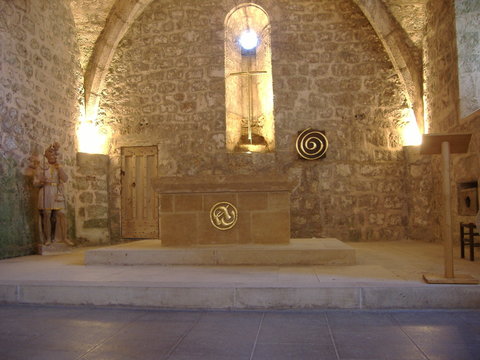 This was captured with very low light conditions (inside a roman church...) Please feel free to follow my collections of daily scans ([link](https://skfb.ly/6YuwK)) as well as my scans in San Francisco, Paris, or in the catacombs ([link](https://sketchfab.com/edemaistre/collections)). Follow me on [Twitter](https://twitter.com/emmanuel_2m)  Source: Objaverse 1.0 / Sketchfab
Scholastic Theology [IO Bijapur 218] Annotations on شرح المواقف [fragments]
<ul> <li><strong>Scholastic Theology.</strong></li> <li><strong>This manuscript is now IO Bijapur 218 </strong><strong>in the India Office collections.</strong></li> <li><strong>[metadata:</strong><a href="https://de.wikipedia.org/wiki/Otto_Loth"> <strong>Otto Loth, </strong></a><strong><em><a href="http://doi.org/10.5281/zenodo.3923636">A Catalogue of the Arabic Manuscripts in the Library of the India Office</a></em>, (volume 1), no. 449 here with further notations and hyperlinks]</strong>.</li> </ul> <p>449.</p> <p>B 218, 219. Size 10<sup>1/2</sup> in. by 6<sup>1/4</sup> in.; foll. 275. Nineteen lines in a page.</p> <p>Two fragments of the Annotations on the شرح المواقف by ‘<a href="http://www.worldcat.org/identities/lccn-n86140758/">ABD AL-ḤAKÎM b. Shams al-dîn SIYÂLKÛTÎ</a>, (d. about A.H. 1060). Cf. Ḥ. Kh. vi. 241. The author wrote these annotations while reading the book with his son ‘Abdallah Labîb.<sup>2</sup></p> <p>The first fragment contains the commencement of the work, with the preface, which begins as follows:</p> <p>اللهم لک الحمد حمدا یوافی نعمک....و بعد فهذه فوائد بل فرائد علقتها علی شرح المواقف لسیّد المدققین و افضل المحققین عند قراءة قرة العین لهذا الغریب عبدالله الملقب باللبیب تذکرة للاحباب و تحفة للاصحاب و عدّة لیوم الحساب و انا الفقیر المتمسک بالحبل المتین عبد الحکیم بن شیخ شمس الدین الخ</p> <p>It breaks off on fol. 102<em>v</em>., soon after the commencement of Book (موقف) II.</p> <p>The second fragment begins with the words (fol. 103<em>v</em>.) الذهنی و اثبات احکامه, from the third مقصد of the first مرصد of Book II., and extends to the end of the same book.</p> <p>Well written in Nasta’liḳ. Injured by insects.</p> <p>Cat. 225, vii. 3.</p> <p> </p> <p><sup>1</sup> The statement of Ḥ. Kh. vi. 239 is incorrect.</p> <p><sup>2</sup> See above, nos. <a href="https://doi.org/10.5281/zenodo.4487411">113</a> and <a href="https://doi.org/10.5281/zenodo.4736773">327</a>.</p> <p>[Bijapur Collection]</p> <p> </p>
FIGURE 218 in Survey of Linyphiidae (Arachnida: Araneae) spiders from Yunnan, China
FIGURE 218. Nasoona crucifera (Thorell, 1895). A, B Epigyne, ventral view C Vulva, dorsal view.
Coweeta site, stations Site 118, low elevation pine-oakSite 218, low elevation cove hardwood; Site 318, low elevation mixed oak; Site 427, high elevation mixed oak; Site 527, high elevation northern hardwood, study of soil temperature at 20 cm depth (mean) in units of celsius on a monthly timescale
The EcoTrends project was established in 2004 by Dr. Debra Peters (Jornada Basin LTER, USDA-ARS Jornada Experimental Range) and Dr. Ariel Lugo (Luquillo LTER, USDA-FS Luquillo Experimental Forest) to support the collection and analysis of long-term ecological datasets. The project is a large synthesis effort focused on improving the accessibility and use of long-term data. At present, there are ~50 state and federally funded research sites that are participating and contributing to the EcoTrends project, including all 26 Long-Term Ecological Research (LTER) sites and sites funded by the USDA Agriculture Research Service (ARS), USDA Forest Service, US Department of Energy, US Geological Survey (USGS) and numerous universities. Data from the EcoTrends project are available through an exploratory web portal (http://www.ecotrends.info). This web portal enables the continuation of data compilation and accessibility by users through an interactive web application. Ongoing data compilation is updated through both manual and automatic processing as part of the LTER Provenance Aware Synthesis Tracking Architecture (PASTA). The web portal is a collaboration between the Jornada LTER and the LTER Network Office. The following dataset from Coweeta (CWT) contains soil temperature at 20 cm depth (mean) measurements in celsius units and were aggregated to a monthly timescale.
Coweeta site, stations Site 118, low elevation pine-oakSite 218, low elevation cove hardwood; Site 318, low elevation mixed oak; Site 427, high elevation mixed oak; Site 527, high elevation northern hardwood, study of soil temperature at 20 cm depth (mean) in units of celsius on a yearly timescale
The EcoTrends project was established in 2004 by Dr. Debra Peters (Jornada Basin LTER, USDA-ARS Jornada Experimental Range) and Dr. Ariel Lugo (Luquillo LTER, USDA-FS Luquillo Experimental Forest) to support the collection and analysis of long-term ecological datasets. The project is a large synthesis effort focused on improving the accessibility and use of long-term data. At present, there are ~50 state and federally funded research sites that are participating and contributing to the EcoTrends project, including all 26 Long-Term Ecological Research (LTER) sites and sites funded by the USDA Agriculture Research Service (ARS), USDA Forest Service, US Department of Energy, US Geological Survey (USGS) and numerous universities. Data from the EcoTrends project are available through an exploratory web portal (http://www.ecotrends.info). This web portal enables the continuation of data compilation and accessibility by users through an interactive web application. Ongoing data compilation is updated through both manual and automatic processing as part of the LTER Provenance Aware Synthesis Tracking Architecture (PASTA). The web portal is a collaboration between the Jornada LTER and the LTER Network Office. The following dataset from Coweeta (CWT) contains soil temperature at 20 cm depth (mean) measurements in celsius units and were aggregated to a yearly timescale.
Coweeta site, stations Site 118, low elevation pine-oakSite 218, low elevation cove hardwood; Site 318, low elevation mixed oak; Site 427, high elevation mixed oak; Site 527, high elevation northern hardwood, study of soil temperature at 50 cm depth (mean) in units of celsius on a monthly timescale
The EcoTrends project was established in 2004 by Dr. Debra Peters (Jornada Basin LTER, USDA-ARS Jornada Experimental Range) and Dr. Ariel Lugo (Luquillo LTER, USDA-FS Luquillo Experimental Forest) to support the collection and analysis of long-term ecological datasets. The project is a large synthesis effort focused on improving the accessibility and use of long-term data. At present, there are ~50 state and federally funded research sites that are participating and contributing to the EcoTrends project, including all 26 Long-Term Ecological Research (LTER) sites and sites funded by the USDA Agriculture Research Service (ARS), USDA Forest Service, US Department of Energy, US Geological Survey (USGS) and numerous universities. Data from the EcoTrends project are available through an exploratory web portal (http://www.ecotrends.info). This web portal enables the continuation of data compilation and accessibility by users through an interactive web application. Ongoing data compilation is updated through both manual and automatic processing as part of the LTER Provenance Aware Synthesis Tracking Architecture (PASTA). The web portal is a collaboration between the Jornada LTER and the LTER Network Office. The following dataset from Coweeta (CWT) contains soil temperature at 50 cm depth (mean) measurements in celsius units and were aggregated to a monthly timescale.
Coweeta site, stations Site 118, low elevation pine-oakSite 218, low elevation cove hardwood; Site 318, low elevation mixed oak; Site 427, high elevation mixed oak; Site 527, high elevation northern hardwood, study of soil temperature at 50 cm depth (mean) in units of celsius on a yearly timescale
The EcoTrends project was established in 2004 by Dr. Debra Peters (Jornada Basin LTER, USDA-ARS Jornada Experimental Range) and Dr. Ariel Lugo (Luquillo LTER, USDA-FS Luquillo Experimental Forest) to support the collection and analysis of long-term ecological datasets. The project is a large synthesis effort focused on improving the accessibility and use of long-term data. At present, there are ~50 state and federally funded research sites that are participating and contributing to the EcoTrends project, including all 26 Long-Term Ecological Research (LTER) sites and sites funded by the USDA Agriculture Research Service (ARS), USDA Forest Service, US Department of Energy, US Geological Survey (USGS) and numerous universities. Data from the EcoTrends project are available through an exploratory web portal (http://www.ecotrends.info). This web portal enables the continuation of data compilation and accessibility by users through an interactive web application. Ongoing data compilation is updated through both manual and automatic processing as part of the LTER Provenance Aware Synthesis Tracking Architecture (PASTA). The web portal is a collaboration between the Jornada LTER and the LTER Network Office. The following dataset from Coweeta (CWT) contains soil temperature at 50 cm depth (mean) measurements in celsius units and were aggregated to a yearly timescale.
Coweeta site, stations Site 118, low elevation pine-oakSite 218, low elevation cove hardwood; Site 318, low elevation mixed oak; Site 427, high elevation mixed oak; Site 527, high elevation northern hardwood, study of soil temperature at 5 cm depth (mean) in units of celsius on a monthly timescale
The EcoTrends project was established in 2004 by Dr. Debra Peters (Jornada Basin LTER, USDA-ARS Jornada Experimental Range) and Dr. Ariel Lugo (Luquillo LTER, USDA-FS Luquillo Experimental Forest) to support the collection and analysis of long-term ecological datasets. The project is a large synthesis effort focused on improving the accessibility and use of long-term data. At present, there are ~50 state and federally funded research sites that are participating and contributing to the EcoTrends project, including all 26 Long-Term Ecological Research (LTER) sites and sites funded by the USDA Agriculture Research Service (ARS), USDA Forest Service, US Department of Energy, US Geological Survey (USGS) and numerous universities. Data from the EcoTrends project are available through an exploratory web portal (http://www.ecotrends.info). This web portal enables the continuation of data compilation and accessibility by users through an interactive web application. Ongoing data compilation is updated through both manual and automatic processing as part of the LTER Provenance Aware Synthesis Tracking Architecture (PASTA). The web portal is a collaboration between the Jornada LTER and the LTER Network Office. The following dataset from Coweeta (CWT) contains soil temperature at 5 cm depth (mean) measurements in celsius units and were aggregated to a monthly timescale.
Coweeta site, stations Site 118, low elevation pine-oakSite 218, low elevation cove hardwood; Site 318, low elevation mixed oak; Site 427, high elevation mixed oak; Site 527, high elevation northern hardwood, study of soil temperature at 5 cm depth (mean) in units of celsius on a yearly timescale
The EcoTrends project was established in 2004 by Dr. Debra Peters (Jornada Basin LTER, USDA-ARS Jornada Experimental Range) and Dr. Ariel Lugo (Luquillo LTER, USDA-FS Luquillo Experimental Forest) to support the collection and analysis of long-term ecological datasets. The project is a large synthesis effort focused on improving the accessibility and use of long-term data. At present, there are ~50 state and federally funded research sites that are participating and contributing to the EcoTrends project, including all 26 Long-Term Ecological Research (LTER) sites and sites funded by the USDA Agriculture Research Service (ARS), USDA Forest Service, US Department of Energy, US Geological Survey (USGS) and numerous universities. Data from the EcoTrends project are available through an exploratory web portal (http://www.ecotrends.info). This web portal enables the continuation of data compilation and accessibility by users through an interactive web application. Ongoing data compilation is updated through both manual and automatic processing as part of the LTER Provenance Aware Synthesis Tracking Architecture (PASTA). The web portal is a collaboration between the Jornada LTER and the LTER Network Office. The following dataset from Coweeta (CWT) contains soil temperature at 5 cm depth (mean) measurements in celsius units and were aggregated to a yearly timescale.
Coweeta site, station Site 218, low elevation cove hardwood, study of soil temperature at 20 cm depth (mean) in units of celsius on a monthly timescale
The EcoTrends project was established in 2004 by Dr. Debra Peters (Jornada Basin LTER, USDA-ARS Jornada Experimental Range) and Dr. Ariel Lugo (Luquillo LTER, USDA-FS Luquillo Experimental Forest) to support the collection and analysis of long-term ecological datasets. The project is a large synthesis effort focused on improving the accessibility and use of long-term data. At present, there are ~50 state and federally funded research sites that are participating and contributing to the EcoTrends project, including all 26 Long-Term Ecological Research (LTER) sites and sites funded by the USDA Agriculture Research Service (ARS), USDA Forest Service, US Department of Energy, US Geological Survey (USGS) and numerous universities. Data from the EcoTrends project are available through an exploratory web portal (http://www.ecotrends.info). This web portal enables the continuation of data compilation and accessibility by users through an interactive web application. Ongoing data compilation is updated through both manual and automatic processing as part of the LTER Provenance Aware Synthesis Tracking Architecture (PASTA). The web portal is a collaboration between the Jornada LTER and the LTER Network Office. The following dataset from Coweeta (CWT) contains soil temperature at 20 cm depth (mean) measurements in celsius units and were aggregated to a monthly timescale.
Coweeta site, station Site 218, low elevation cove hardwood, study of soil temperature at 20 cm depth (mean) in units of celsius on a yearly timescale
The EcoTrends project was established in 2004 by Dr. Debra Peters (Jornada Basin LTER, USDA-ARS Jornada Experimental Range) and Dr. Ariel Lugo (Luquillo LTER, USDA-FS Luquillo Experimental Forest) to support the collection and analysis of long-term ecological datasets. The project is a large synthesis effort focused on improving the accessibility and use of long-term data. At present, there are ~50 state and federally funded research sites that are participating and contributing to the EcoTrends project, including all 26 Long-Term Ecological Research (LTER) sites and sites funded by the USDA Agriculture Research Service (ARS), USDA Forest Service, US Department of Energy, US Geological Survey (USGS) and numerous universities. Data from the EcoTrends project are available through an exploratory web portal (http://www.ecotrends.info). This web portal enables the continuation of data compilation and accessibility by users through an interactive web application. Ongoing data compilation is updated through both manual and automatic processing as part of the LTER Provenance Aware Synthesis Tracking Architecture (PASTA). The web portal is a collaboration between the Jornada LTER and the LTER Network Office. The following dataset from Coweeta (CWT) contains soil temperature at 20 cm depth (mean) measurements in celsius units and were aggregated to a yearly timescale.
Coweeta site, station Site 218, low elevation cove hardwood, study of soil temperature at 50 cm depth (mean) in units of celsius on a monthly timescale
The EcoTrends project was established in 2004 by Dr. Debra Peters (Jornada Basin LTER, USDA-ARS Jornada Experimental Range) and Dr. Ariel Lugo (Luquillo LTER, USDA-FS Luquillo Experimental Forest) to support the collection and analysis of long-term ecological datasets. The project is a large synthesis effort focused on improving the accessibility and use of long-term data. At present, there are ~50 state and federally funded research sites that are participating and contributing to the EcoTrends project, including all 26 Long-Term Ecological Research (LTER) sites and sites funded by the USDA Agriculture Research Service (ARS), USDA Forest Service, US Department of Energy, US Geological Survey (USGS) and numerous universities. Data from the EcoTrends project are available through an exploratory web portal (http://www.ecotrends.info). This web portal enables the continuation of data compilation and accessibility by users through an interactive web application. Ongoing data compilation is updated through both manual and automatic processing as part of the LTER Provenance Aware Synthesis Tracking Architecture (PASTA). The web portal is a collaboration between the Jornada LTER and the LTER Network Office. The following dataset from Coweeta (CWT) contains soil temperature at 50 cm depth (mean) measurements in celsius units and were aggregated to a monthly timescale.
Coweeta site, station Site 218, low elevation cove hardwood, study of soil temperature at 50 cm depth (mean) in units of celsius on a yearly timescale
The EcoTrends project was established in 2004 by Dr. Debra Peters (Jornada Basin LTER, USDA-ARS Jornada Experimental Range) and Dr. Ariel Lugo (Luquillo LTER, USDA-FS Luquillo Experimental Forest) to support the collection and analysis of long-term ecological datasets. The project is a large synthesis effort focused on improving the accessibility and use of long-term data. At present, there are ~50 state and federally funded research sites that are participating and contributing to the EcoTrends project, including all 26 Long-Term Ecological Research (LTER) sites and sites funded by the USDA Agriculture Research Service (ARS), USDA Forest Service, US Department of Energy, US Geological Survey (USGS) and numerous universities. Data from the EcoTrends project are available through an exploratory web portal (http://www.ecotrends.info). This web portal enables the continuation of data compilation and accessibility by users through an interactive web application. Ongoing data compilation is updated through both manual and automatic processing as part of the LTER Provenance Aware Synthesis Tracking Architecture (PASTA). The web portal is a collaboration between the Jornada LTER and the LTER Network Office. The following dataset from Coweeta (CWT) contains soil temperature at 50 cm depth (mean) measurements in celsius units and were aggregated to a yearly timescale.
Coweeta site, station Site 218, low elevation cove hardwood, study of soil temperature at 5 cm depth (mean) in units of celsius on a monthly timescale
The EcoTrends project was established in 2004 by Dr. Debra Peters (Jornada Basin LTER, USDA-ARS Jornada Experimental Range) and Dr. Ariel Lugo (Luquillo LTER, USDA-FS Luquillo Experimental Forest) to support the collection and analysis of long-term ecological datasets. The project is a large synthesis effort focused on improving the accessibility and use of long-term data. At present, there are ~50 state and federally funded research sites that are participating and contributing to the EcoTrends project, including all 26 Long-Term Ecological Research (LTER) sites and sites funded by the USDA Agriculture Research Service (ARS), USDA Forest Service, US Department of Energy, US Geological Survey (USGS) and numerous universities. Data from the EcoTrends project are available through an exploratory web portal (http://www.ecotrends.info). This web portal enables the continuation of data compilation and accessibility by users through an interactive web application. Ongoing data compilation is updated through both manual and automatic processing as part of the LTER Provenance Aware Synthesis Tracking Architecture (PASTA). The web portal is a collaboration between the Jornada LTER and the LTER Network Office. The following dataset from Coweeta (CWT) contains soil temperature at 5 cm depth (mean) measurements in celsius units and were aggregated to a monthly timescale.
Coweeta site, station Site 218, low elevation cove hardwood, study of soil temperature at 5 cm depth (mean) in units of celsius on a yearly timescale
The EcoTrends project was established in 2004 by Dr. Debra Peters (Jornada Basin LTER, USDA-ARS Jornada Experimental Range) and Dr. Ariel Lugo (Luquillo LTER, USDA-FS Luquillo Experimental Forest) to support the collection and analysis of long-term ecological datasets. The project is a large synthesis effort focused on improving the accessibility and use of long-term data. At present, there are ~50 state and federally funded research sites that are participating and contributing to the EcoTrends project, including all 26 Long-Term Ecological Research (LTER) sites and sites funded by the USDA Agriculture Research Service (ARS), USDA Forest Service, US Department of Energy, US Geological Survey (USGS) and numerous universities. Data from the EcoTrends project are available through an exploratory web portal (http://www.ecotrends.info). This web portal enables the continuation of data compilation and accessibility by users through an interactive web application. Ongoing data compilation is updated through both manual and automatic processing as part of the LTER Provenance Aware Synthesis Tracking Architecture (PASTA). The web portal is a collaboration between the Jornada LTER and the LTER Network Office. The following dataset from Coweeta (CWT) contains soil temperature at 5 cm depth (mean) measurements in celsius units and were aggregated to a yearly timescale.
FIGURES 213–218. Megaselia mahabadensis n in Twenty one new species of Megaselia Rondani (Diptera: Phoridae) from Iran
FIGURES 213–218. Megaselia mahabadensis n. sp. male. 213, right face of hypopygium; 214, front tarsus; 215, front basitarsus; 216, hind femur to basitarsus; 217, wing, 218, base of wing. Scale bars 20 μm.
IO Islamic 218. Ta'rîkh-i-Shîrshâhî, History of the Life and Reign of Sulṭân Shîrshâh Sûr of Dihlî
<p>IO Islamic 218. Ta’rîkh-i-Shîrshâhî, History of the Life and Reign of Sulṭân Shîrshâh Sûr of Dihlî</p>
ScienceDex guides
Understand access before you commit
These curated guides explain access requirements, typical timelines, costs, and reuse considerations for widely used research datasets.
Allen Brain Atlas
Allen Brain Atlas is an Allen Institute collection of brain map atlases, datasets, APIs, and analysis tools covering mouse, human, and non-human primate brain resources.
Annotated Behaviour and Observability Dataset (ABODe)
ABODe is a University of Edinburgh DataShare dataset for behavior classification in group-housed mice using home-cage video, identities, bounding boxes, ground-plate positions, and annotator labels.
DANDI Archive for NWB datasets
DANDI is a BRAIN Initiative archive for publishing and sharing neurophysiology data, including electrophysiology, optophysiology, and behavioral data packaged as NWB and related standards.
International Brain Laboratory public data
The International Brain Laboratory public data releases expose standardized mouse decision-making experiments, including Neuropixels recordings, widefield calcium imaging, behavior, and session metadata accessed through the ONE API.
OpenNeuro
OpenNeuro is a free, open platform for sharing neuroimaging datasets, with public search, dataset pages, and download paths for web, S3, DataLad, and the OpenNeuro CLI.