
Find research datasets worth reusing
Search datasets from major research repositories and use ShareScore to quickly assess how well each record supports discovery, access, and reuse.
360
datasets available to search
ShareScore release 0.9.0
Dataset results
360 results for “Cements”
Dataset for "Impact of C-S-H seeding on hydration and strength of slag blended cement"
<p>The data come along with the publication "Impact of C-S-H seeding on hydration and strength of slag blended cement" submitted to Cement and Concrete Research. 2022</p> <p>The file 00_mixdesign.csv contains the indexing and the labels, the same as Table 5 from the manuscript.</p> <p>Units of the values are not always specified in the dataset, but can be found in the manuscript.</p> <p>To understand the structure and labels of the dataset, please refer to the paper. </p> <p>April. 2022<br> Xuerun Li, Julien Bizzozero and Christoph Hesse<br> BASF Construction Additives GmbH, Dr-Albert-Frank-Strasse 32, 83308 Trostberg, Germany</p>
Rietveld quantitative phase analysis of Oil Well Cement: in situ hydration study at 150 bars and 150ºC
<p>Raw data for: Rietveld Quantitative Phase Analysis of Oil Well Cement: In Situ Hydration Study at 150 Bars and 150 °C;</p> <p>doi: <a href="https://doi.org/10.3390/ma12121897">https://doi.org/10.3390/ma12121897</a></p> <p>Oil well cements are multimineral materials that hydrate under high pressure and temperature. Its overall reactivity at early ages is studied by a number of techniques including the consistometer. However, for a proper understanding of the performances of these cements in the field, the reactivity of every component, at the field conditions, must be analysed. So far, <em>in situ</em> high energy synchrotron powder diffraction studies of hydrating oil well cement pastes have been carried out but the quality of the data was not appropriated for Rietveld quantitative phase analyses. Therefore, the phase reactivities were followed by the inspection of the evolution of non-overlapped diffraction peaks. Very recently, we have developed a new cell specially designed to rotate under high pressure and temperature. Here, this spinning capillary cell is used to <em>in situ</em> study the hydration of a commercial oil well cement paste at 150 bars and 150 ºC. The powder diffraction data have been analysed by the Rietveld method to quantitatively determine the reactivities of each component phase. The reaction degree of alite was 90% after 7 hours and that of belite was 42% at 14 hours. These analyses are accurate as the <em>in situ</em> measured crystalline portlandite content at the end of the experiment, 12.9 wt%, compares relatively well with the value determined <em>ex situ</em> by thermal analysis, 14.0 wt%. The crystalline calcium silicates forming at 150 bars and 150 ºC are also discussed.</p>
Cement Bonsai Pot
"In 1946 when the Japanese community began to return to Watsonville from the internment camps of World War II, not only was it a time to begin to reconstruct their lives, but also, for those who were bonsai enthusiasts, it was a time to rekindle their practice in the ancient art of bonsai..... New bonsai trees were started from the planting of seed, or from cuttings, or from grafted material taken from all types of plants, such as fruit trees, maple trees, pines, junipers, etc. Flowering plants like azaleas and camellias were very popular for bonsai, as well.... The cement pots were used [from the period after internment] up to the time the Watsonville Bonsai Club was formed in 1968. By that time the financial situation of the Japanese community began to improve immensely and the traditional, but still expensive, bonsai pots were now able to be obtained." -Don White, 2015 In the collections of the Santa Cruz Museum of Art and History Source: Objaverse 1.0 / Sketchfab
Cement Roadblock
An ordinary, swedish roadblock. Lowpoly so it works well in videogames. 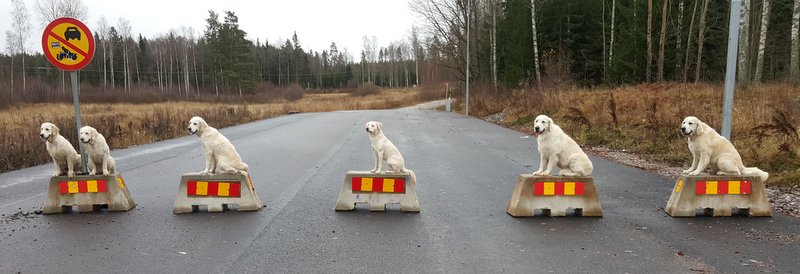  Source: Objaverse 1.0 / Sketchfab
Cement Buddha Photoscan
Enjoy this photoscan of a small cement buddha that has been keeping watch in my backyard. Future me will be photo scanning it again, after time and weather have added more character to it. Equipment ----------------- Canon EOS M2, Asahi Super-Takumar 50mm f1.4 M42 Mount Lens, Fotodiox M42 to EF Mount Adapter, Metabones EF - EOS-M Mount Speed Booster Ultra 0.71x Process ------------ The object was captured on a turntable in front of a green screen. In total 104 photos were taken in Canon Raw format, or CR2. The CR2 files were color corrected and keyed in Adobe AfterEffects 2022 using the Camera Raw tool and the AE native plugins Keylight 1.2 and the Advanced Spill Suppressor. From AfterEffects I exported a PNG sequence with RGB and Alpha, which was processed in AliceVision Meshroom using the default node structure. I cleaned up the mesh and texture in Blender 3.1 Source: Objaverse 1.0 / Sketchfab
Code from: The climate benefits from cement carbonation are being overestimated
<p>Achieving rapid decarbonization in the cement industry is essential for meeting climate targets. However, oversimplifying the impact of direct air capture via cement carbonation has hindered setting realistic pathways to meet the desired outcomes of net-zero objectives. Our study outlines the global scale of cement carbonation and its influence on long-term climate impact, including code and data for reproducing our results. This research underscores the significance of the dynamic effects of emissions and carbon uptake on climate change, as well as the variability in expected carbonation due to different model parameters, offering a critical assessment of carbonation's role in cement industry decarbonization strategies.</p>
Dataset for "X-ray near-field ptychographic nanoimaging of cement pastes" paper
<p>Dataset for paper (doi:) with the abstract: "The hydration processes of Portland cements (PC) and blends are complicated as there are many components with great heterogeneity at different length scales. Thus, 3D nanoimaging techniques with high spatial resolution and scanning large fields of view are needed. Here, synchrotron X-ray near-field ptychographic tomography is used to investigate four pastes within 0.2 mm thick capillaries: PC with CaCl2, PC hydration enhanced by C-S-H nucleation seeding, PC partly substituted with metakaolin, and PC partly substituted with metakaolin and limestone. Data analysis emphasis has been placed on the characterisation of amorphous components: (i) C-S-H and C-A-S-H gels; (ii) iron aluminium siliceous hydrogarnets; (iii) metakaolin; and (iv) aluminium carboaluminate, AFm-like. Synchrotron ptychotomography yields electron density and absorption coefficient tomograms and the resulting bivariate plots are instrumental for characterising these amorphous components. The attained spatial resolution, ~220 nm, with very good contrast allowed us to determine nanofeatures including mass densities and spatial distributions of amorphous components. For instance, the C-S-H gel mass density differences between the two type of accelerated pastes are detailed."</p>
Alite-Belite-Ye'elimite cements: effect of dopants on the clinker composition and properties
<p><strong>ABSTRACT:</strong> Clinkers with alite-belite-ye´elimite (ABY) are considered as eco-friendly cements. Clinkering (2 Kg) of two types of ABY clinkers was optimized: standard-ABY, with CaF<sub>2</sub> and ZnO as dopants (32.6 wt% alite, 30.4 wt% b-belite and 15.6 wt% ye'elimite) and αABY, with CaF<sub>2</sub>, ZnO, B<sub>2</sub>O<sub>3</sub>, Na<sub>2</sub>O (14.4 wt% alite, 37.1 wt% b-belite, 18.5 wt% α'<sub>H</sub>-belite and 7.5 wt% ye'elimite). Zn and F were mainly incorporated in alite and ferrite, while S sulfur was mostly incorporated into Fluor-ellestadite, ye’elimite and, in lower percentages, in belite and ferrite, determined by EDS semi-quantitative. The effect of dopants on the hydration of the cement mortars has been tested. Thus, standard-ABY develops 29.9 MPa compressive strengths at 1 day while αABY does 16.8 MPa, mainly due to the higher amount of alite of the former. The presence of α’<sub>H</sub>-belite in αABY increases mechanical strengths at 28 days of hydration from 44.7 MPa of standard-ABY to 74.9 MPa.</p>
Ptychographic X-ray computed tomography data for three Portland cement pastes
<p>Mortars and concretes are ubiquitous materials with very complex hierarchical microstructures. To fully understand their main properties and to decrease their CO<sub>2</sub> footprints, a sound description of their (spatially-resolved) mineralogy is compulsory. Developing this knowledge is very challenging as about half of the volume of hydrated cement is a nanocrystalline component, calcium-silicate-hydrate (C-S-H gel). Furthermore, other poorly crystalline phases (e.g. iron-siliceous hydrogarnet or silica oxide) may coexist which are even more difficult to characterise. Traditional spatially-resolved techniques like electron microscopies involve complex sample preparation steps that often lead to artefacts (e.g. dehydration and microstructural changes). Here, we have used synchrotron ptychographic tomography for obtaining spatially-resolved information on three unaltered representative samples: neat Portland paste, Portland-calcite and Portland-fly ash blend pastes with spatial resolution below 100 nm in samples of up to 5×10<sup>4</sup> mm<sup>3</sup> of volume. For the neat Portland paste, the ptychotomographic study gave densities of 2.11 and 2.52 gcm<sup>-3</sup> and contents of 41.1 and 6.4 vol% for nanocrystalline C-S-H gel and poorly crystalline iron-siliceous hydrogarnet, respectively. Furthermore, the spatially-resolved volumetric mass density information has allowed to characterise inner product and outer product C-S-H gels. The average density of inner product C-S-H is smaller than that of outer product and its variability larger. Full characterisation of the pastes, including segmentation of the different components, is reported and the contents are compared with the results obtained by thermodynamical modelling.</p> <p> </p> <p> </p> <p> </p> <p>Ptychographic X-ray computed tomography provides 3D electron mass density and attenuation coefficient distributions of unaltered cement pastes with an isotropic resolution below 100 nm. This imaging technique allows quantitatively distinguishing between different components with very similar absorption contrast.</p> <p>Samples were measured at the cSAXS beamline: i) a neat Portland Cement (PC); ii) a PC-CC blend: 80 wt% of PC and 20 wt% of CaCO<sub>3</sub>, and iii) a PC-FA blend: 70 wt% of PC and 30 wt% of fly ash. The main aim of this study is to have a better insight of the microstructure of the amorphous/nanocrystalline gels with submicrometer spatial resolution. It is worth noting that it is possible to determine the gel mass density and water content within the attained 3D resolution (about 100 nm).</p> <p>Here, we focused on the spatial distribution of the different components and in the variation of the electron density values which are very related to the mass density values. Special attention is paid to the density values of the amorphous (or nanocrystalline) components. The electron and mass density values of the C-S-H gel for three pastes are thoroughly analyzed. The density values range from 2.05-2.10 g·cm<sup>-3</sup> for high density C-S-H gel for neat PC and PC-CC pastes to 1.80 g<sup>.</sup>cm<sup>-3</sup> for low density C-S-H gel in PC-FA paste. The density value of poorly crystalline iron-siliceous hydrogarnet component, r=2.52 g·cm<sup>-3</sup>, has also been determined.</p> <p>A summary of our ongoing research focused on the analyses of cement pastes by synchrotron PXCT is reported and discussed.</p> <p> </p> <p> </p> <p> </p> <p><strong>PC sample:</strong></p> <p>tomo_beta_S02536_to_S03341_Hann_freqscl_0.35_0xxx</p> <p>tomo_delta_S02536_to_S03341_Hann_freqscl_1.00_0xxx</p> <p> </p> <p><strong>PC-CC sample:</strong></p> <p>tomo_beta_S04692_to_S06001_Hann_freqscl_0.35_0xxx</p> <p>tomo_delta_S04692_to_S06001_Hann_freqscl_1.00_0xxx</p> <p> </p> <p><strong>PC-FA sample:</strong></p> <p>tomo_beta_S03351_to_S04661_Hann_freqscl_0.35_0xxx</p> <p>tomo_delta_S03351_to_S04661_Hann_freqscl_1.00_0xxx</p> <p> </p> <p> </p>
Isothermal calorimetry data of seawater-mixed cement pastes produced with binary and ternary blended binder composition with fly ash, slag, metakaolin, and limestone
<p>The following file consists of data and its metadata from the published article Rathnarajan et al., (2024) Comprehensive evaluation of early-age hydration and compressive strength development in seawater-mixed binary and ternary cementitious systems published in Archives of Civil and Mechanical Engineering. </p> <p>Metadata file: metadata_calorimetry.xlsx consists of the details of file name, operator of equipment, test starting to completion time, number of hours, and notation of the mix-IDs according to the paper. </p> <p>In 11 data files in xlsx format, the heat flow and cumulative heat generated up to 7 days for the various binder combinations produced with CEM I, fly ash, metakaolin, slag, and limestone are presented. Along with that normalized heat flow and normalized cumulative heat with respec to time up to 7 days were included. The following are the data file names in .xlsx format included along with this zip file. </p> <p>P1-P8.xlsx<br>P9-P14.xlsx<br>P15-P18.xlsx<br>P19-P24.xlsx<br>P25-28.xlsx<br>P29-30-43-46.xlsx<br>P33_34-P39-41.xlsx<br>P47-P52.xlsx<br>P53-P58.xlsx<br>P59-P64.xlsx<br>P65-P70.xlsx</p> <p>The following files can be accessed with the pacakge Microsoft excel and data can be used for further analysis. </p>
Dataset: Stability of hemicarbonate under cement paste-like conditions
<p>Data, and scripts (analysis, plots) to go with the publication:</p> <p><br> Stability of hemicarbonate under cement paste-like conditions<br> Fabien Georget (a,1,∗), Barbara Lothenbach (b) , William Wilson (a,c) , Franco Zunino (a) Karen L. Scrivener (a)</p> <p>a: aboratory of Construction Materials, LMC, EPFL-STI-IMX, Station 12, CH-1015<br> Lausanne, Switzerland<br> b: Empa, Concrete & Asphalt Laboratory, Dübendorf, Switzerland<br> c: Sherbrooke University, Sherbrooke, Quebec, Canada</p> <p>1: current address: Institute of Building Materials Research, RWTH Aachen, Aachen, Germany</p> <p>* corresponding author</p> <p>To be submitted to Cement and Concrete Research</p> <p> </p>
Three-dimensional dataset of hydrating cement paste (CEM I Ladce, 273 m^2/kg Blaine, w/c=0.50) in TIFF format
<p>A detailed description of this dataset can be found in <a href="https://doi.org/10.1016/j.dib.2023.108903">https://doi.org/10.1016/j.dib.2023.108903</a><a href="https://doi.org/10.1016/j.dib.2023.108903">.</a></p> <p>This dataset contains a collection of digitized three-dimensional hardened cement paste microstructures obtained from X-ray micro-computed tomography, screened after approx. 1, 2, 3, 4, 7, 14, and 28 days of elapsed hydration at 20˚C in saturated conditions. Each paste specimen had a cylindrical shape (with a diameter of ~1 mm) and was screened at a designated time (as specified in the file name, e.g. “t23hrs”=23 hours of elapsed hydration) and finally saved as an uncompressed and unprocessed *.tif greyscale image data file in 16-bit image depth (as unsigned integers) using a little-endian byte sequence.</p> <p>The dataset contains two sets of images:</p> <p>- “full-sized” digital images stored in a three-dimensional voxel-based matrix with a fixed size of 1100x1100x1100 voxels, denoted as “CEM_I_Ladce_*” in the file name; each file size amounts to ~2.5 GB and contains the whole screened specimen with a variable voxel size in the range 1.0913 − 1.1174 µm depending on the particular specimen (as specified in the file name, e.g. “1d1174um”=1.1174 µm/voxel)</p> <p>- smaller image subvolumes, denoted as Region Of Interest (ROI), extracted from the interior of the full-sized specimen from an arbitrary location, and denoted as “filteredROI_*” in the file name; this cropped ROI has a cubic shape and stores a three-dimensional voxel-based matrix with a fixed size of 500x500x500 µm<sup>3</sup> constituted by a variable voxel count (given the fluctuating voxel size for each specimen, see above). Both the exact voxel count (i.e. three-dimensional matrix dimensions) and voxel size are further specified in each file name. A sequence of imaging filters was sequentially applied to this ROI to further enhance the contrast among the different microstructural phases, see <a href="https://doi.org/10.1016/j.cemconcomp.2022.104798">10.1016/j.cemconcomp.2022.104798</a> for details.</p> <p>Note that the same dataset stored in *raw format is available from <a href="https://doi.org/10.5281/zenodo.7193819">https://doi.org/10.5281/zenodo.7193819</a></p>
Three-dimensional dataset of hydrating cement paste (CEM I Ladce, 273 m^2/kg Blaine, w/c=0.35) in TIFF format
<p>A detailed description of this dataset can be found in <a href="https://doi.org/10.1016/j.dib.2023.108903">https://doi.org/10.1016/j.dib.2023.108903</a><a href="https://doi.org/10.1016/j.dib.2023.108903">.</a></p> <p>This dataset contains a collection of digitized three-dimensional hardened cement paste microstructures obtained from X-ray micro-computed tomography, screened after approx. 1, 2, 3, 4, 7, 14, and 28 days of elapsed hydration at 20˚C in saturated conditions. Each paste specimen had a cylindrical shape (with a diameter of ~1 mm) and was screened at a designated time (as specified in the file name, e.g. “t23hrs”=23 hours of elapsed hydration) and finally saved as an uncompressed and unprocessed *.tif greyscale image data file in 16-bit image depth (as unsigned integers) using a little-endian byte sequence.</p> <p>The dataset contains two sets of images:</p> <p>- “full-sized” digital images stored in a three-dimensional voxel-based matrix with a fixed size of 1100x1100x1100 voxels, denoted as “CEM_I_Ladce_*” in the file name; each file size amounts to ~2.5 GB and contains the whole screened specimen with a variable voxel size in the range 1.0913 − 1.1174 µm depending on the particular specimen (as specified in the file name, e.g. “1d1174um”=1.1174 µm/voxel)</p> <p>- smaller image subvolumes, denoted as Region Of Interest (ROI), extracted from the interior of the full-sized specimen from an arbitrary location, and denoted as “filteredROI_*” in the file name; this cropped ROI has a cubic shape and stores a three-dimensional voxel-based matrix with a fixed size of 500x500x500 µm<sup>3</sup> constituted by a variable voxel count (given the fluctuating voxel size for each specimen, see above). Both the exact voxel count (i.e. three-dimensional matrix dimensions) and voxel size are further specified in each file name. A sequence of imaging filters was sequentially applied to this ROI to further enhance the contrast among the different microstructural phases, see <a href="https://doi.org/10.1016/j.cemconcomp.2022.104798">10.1016/j.cemconcomp.2022.104798</a> for details.</p> <p>Note that the same dataset stored in *raw format is available from <a href="https://doi.org/10.5281/zenodo.7193808">https://doi.org/10.5281/zenodo.7193808</a></p>
Three-dimensional dataset of hydrating cement paste (CEM I Ladce, 391 m^2/kg Blaine, w/c=0.50) in TIFF format
<p>A detailed description of this dataset can be found in <a href="https://doi.org/10.1016/j.dib.2023.108903">https://doi.org/10.1016/j.dib.2023.108903</a><a href="https://doi.org/10.1016/j.dib.2023.108903">.</a></p> <p>This dataset contains a collection of digitized three-dimensional hardened cement paste microstructures obtained from X-ray micro-computed tomography, screened after approx. 1, 2, 3, 4, 7, 14, and 28 days of elapsed hydration at 20˚C in saturated conditions. Each paste specimen had a cylindrical shape (with a diameter of ~1 mm) and was screened at a designated time (as specified in the file name, e.g. “t23hrs”=23 hours of elapsed hydration) and finally saved as an uncompressed and unprocessed *.tif greyscale image data file in 16-bit image depth (as unsigned integers) using a little-endian byte sequence.</p> <p>The dataset contains two sets of images:</p> <p>- “full-sized” digital images stored in a three-dimensional voxel-based matrix with a fixed size of 1100x1100x1100 voxels, denoted as “CEM_I_Ladce_*” in the file name; each file size amounts to ~2.5 GB and contains the whole screened specimen with a variable voxel size in the range 1.0913 − 1.1174 µm depending on the particular specimen (as specified in the file name, e.g. “1d1174um”=1.1174 µm/voxel)</p> <p>- smaller image subvolumes, denoted as Region Of Interest (ROI), extracted from the interior of the full-sized specimen from an arbitrary location, and denoted as “filteredROI_*” in the file name; this cropped ROI has a cubic shape and stores a three-dimensional voxel-based matrix with a fixed size of 500x500x500 µm<sup>3</sup> constituted by a variable voxel count (given the fluctuating voxel size for each specimen, see above). Both the exact voxel count (i.e. three-dimensional matrix dimensions) and voxel size are further specified in each file name. A sequence of imaging filters was sequentially applied to this ROI to further enhance the contrast among the different microstructural phases, see <a href="https://doi.org/10.1016/j.cemconcomp.2022.104798">10.1016/j.cemconcomp.2022.104798</a> for details.</p> <p>Note that the same dataset stored in *raw format is available from <a href="https://doi.org/10.5281/zenodo.7193798">https://doi.org/10.5281/zenodo.7193798</a></p>
Global carbon uptake of cement carbonization accounts 1930-2021
<p>This dataset is associated with the publication on ESSD, with the same title.</p> <p>It includes four sections including the model inputs of the estimation models, the simulation results of global CO<sub>2</sub> emission and uptake by year, the variables and ranges considered in the uncertainty analyses of the uptake estimation and the corresponding confidence intervals from the analyses. </p> <p>For detailed explanations of these datasets, one should should refer to the original manuscript.</p>
Dataset for " 4D nanoimaging of early age cement hydration " Nature Communications paper
<p>Abstract of the Nature Communications paper (<span>doi: </span><a href="https://doi.org/10.1038/s41467-023-38380-1" target="_blank" rel="noopener"><span>https://doi.org/10.1038/s41467-023-38380-1</span></a>) from this dataset is: "Despite a century of research, our understanding of cement dissolution and precipitation processes at early ages is very limited. This is due to the lack of methods that can image these processes with enough spatial resolution, contrast and field of view. Here, we adapt near-field ptychographic nanotomography to in situ visualise the hydration of commercial Portland cement in a record-thick capillary. At 19h, porous C-S-H gel shell, thickness of 500 nm, covers every alite grain enclosing a water gap. The spatial dissolution rate of small alite grains in the acceleration period, ∼100 nm/h, is approximately four times faster than that of large alite grains in the deceleration stage, ∼25 nm/h. Etch-pit development has also been mapped out. This work is complemented by laboratory and synchrotron microtomographies, allowing to measure the particle size distributions with time. 4D nanoimaging will allow mechanistically study dissolution-precipitation processes including the roles of accelerators and superplasticizers. "</p>
The "Torre dei forni" of the Saceba cement plant in the "Gole della Breggia" park. ITA captions.
<p>Video describing how the "Torre dei forni" building, as part of the Saceba cement plant in the "Gole della Breggia" park, worked to produce the cement. The video is produced in the framework of the Interreg IT-CH INSUBRIPARKS project. Captions in Italian.</p>
Evolution of the Saceba cement plant in the "Gole della Breggia" park. ITA captions
<p>Video describing the evolution of the Saceba cement plant in the "Gole della Breggia" park. The video is produced in the framework of the Interreg IT-CH INSUBRIPARKS project. Captions in Italian</p>
Evolution of the Saceba cement plant in the "Gole della Breggia" park.
<p>Video describing the evolution of the Saceba cement plant in the "Gole della Breggia" park. <br> The video is produced in the framework of the Interreg IT-CH INSUBRIPARKS project.<br> </p>
The "Torre dei forni" of the Saceba cement plant in the "Gole della Breggia" park.
<p>Video describing how the "Torre dei forni" building, as part of the Saceba cement plant in the "Gole della Breggia" park, worked to produce the cement. The video is produced in the framework of the Interreg IT-CH INSUBRIPARKS project.</p>
ScienceDex guides
Understand access before you commit
These curated guides explain access requirements, typical timelines, costs, and reuse considerations for widely used research datasets.
Allen Brain Atlas
Allen Brain Atlas is an Allen Institute collection of brain map atlases, datasets, APIs, and analysis tools covering mouse, human, and non-human primate brain resources.
Annotated Behaviour and Observability Dataset (ABODe)
ABODe is a University of Edinburgh DataShare dataset for behavior classification in group-housed mice using home-cage video, identities, bounding boxes, ground-plate positions, and annotator labels.
DANDI Archive for NWB datasets
DANDI is a BRAIN Initiative archive for publishing and sharing neurophysiology data, including electrophysiology, optophysiology, and behavioral data packaged as NWB and related standards.
International Brain Laboratory public data
The International Brain Laboratory public data releases expose standardized mouse decision-making experiments, including Neuropixels recordings, widefield calcium imaging, behavior, and session metadata accessed through the ONE API.
OpenNeuro
OpenNeuro is a free, open platform for sharing neuroimaging datasets, with public search, dataset pages, and download paths for web, S3, DataLad, and the OpenNeuro CLI.