
Find research datasets worth reusing
Search datasets from major research repositories and use ShareScore to quickly assess how well each record supports discovery, access, and reuse.
2,442
datasets available to search
ShareScore release 0.9.0
Dataset results
2,442 results for “wound”
Gunshot wound to a human skull
GSW on historical specimen - possibly musket trauma. Model extracted from clinical CT data. Shows entrance and exit wounds. Source: Objaverse 1.0 / Sketchfab
Drosophila melanogaster wounding in the wild
<p>Wounding occurs across multicellular organisms, and it can result from intra- and interspecific interactions. Depending upon the severity, wounds could affect host mobility and reproduction, with ecological consequences, e.g., on competitive interactions and predator-prey dynamics. Wounds are also entry points for pathogens, and infections may in turn reduce host fitness. An immune response is activated upon wounding, which results in the deposition of the brown-black pigment melanin in insects. Despite the abundance of immunity studies in the lab and the potential ecological and evolutionary implications of wounding, the prevalence of wounding in wild-collected insects is rarely systematically explored. Our aim was to investigate the prevalence and potential causes of wounds in a wild-collected insect. For this we chose flies from the Drosophilidae family, a group of abundant insects in the wild that includes the frequently used lab model <em>Drosophila melanogaster</em>. From systematic collections of female and male flies over three seasons and locations, we found that 31% of <em>D. melanogaster</em> were wounded or damaged in some way. The abdomen was more frequently wounded than other body parts, and females were more likely to have melanised patches particularly on the ventral abdomen, compared to males. Encapsulated parasitoid egg frequency was just under ten percent. Moreover, just under one percent of Drosophilidae species had mites attached to their body, the majority of which also caused wounds. Wounding is prevalent in <em>D. melanogaster</em>, and as such it is likely to exert selection pressure on host immunity for two reasons: on a rapid and efficient wound repair, and on responding efficiently to opportunistic infections. Wounding is thus expected to be an important driver of immune system evolution and to affect individual fitness and population dynamics.</p>
HHIP's Dynamic Role in Epithelial Wound Healing Reveals a Potential Mechanism of COPD Susceptibility - Supplementary File 2
<p>This is a collection of files necessary to reproduce a subset of the results discussed in the manuscript entilted <em>HHIP’s Dynamic Role in Epithelial Wound Healing Reveals a Potential Mechanism of COPD Susceptibility</em> by Deritei et al. (currently available on bioRxiv: <a href="https://www.biorxiv.org/content/10.1101/2024.09.05.611545v2.abstract">https://www.biorxiv.org/content/10.1101/2024.09.05.611545v2.abstract</a>).</p> <p>Files are read by the <em>dynmod</em> software (<a href="https://github.com/Ravasz-Regan-Group/dynmod">https://github.com/Ravasz-Regan-Group/dynmod</a>) to simulate the large Boolean model’s behaviors. These include the model in .dmms format (as well as .BooleanNet and .SBML formats, namely COPD_EMT_CellCycle_Apoptosis.dmms, COPD_EMT_CellCycle_Apoptosis_Fine.booleannet, the “in silico protocol” files for reproducing all figures (COPD_Figures.vex), re-running the validation experiments (Validation_Table_COPD_EMT_CellCycle_Apoptosis.vex) and running a python script that performs all validation statistical tests, generating a results list and regenerating Supplementary File 3 (Large Model Validation Script.py, ST5 - Large model validation.csv).</p> <p>The _EXP folder contains exported figures necessary for generating the main manuscript Figure 4 and Supplementary Figures 3,4 and 5.</p> <p> </p>
Overexpression of VEGF in dermal fibroblast cells accelerates the angiogenesis and wound healing function: in vitro and in vivo studies
<p>Human dermal fibroblasts (Hu02) were transfected by pcDNA3.1(-)-VEGF vector. Following selecting fibroblast cells with hygromycin, recombinant cells were investigated in terms of VEGF expression by quantifying method. We used Real-Time PCR assay to quantitate gene expression of vascular endothelial growth factor from manipulated cells and represented VEGF overexpression.</p> <p>Reverse transcription was performed from 1 μg of total RNA transcribed to complementary DNA (cDNA) through 1 μL of random hexamer primer. The reactions were incubated at 70°C for 5 minutes. After that, 5X RT-buffer, dNTP, and RT-enzyme were added, and the mixtures were incubated at 42°C for 60 minutes and 70°C for 10 minutes. Reverse transcription was performed from 500 ng total RNA using the RT2 First Strand Kit (SA Biosciences). Quantitative real-time PCR was performed (Ampliqon, Denmark) with 40 cycles at 95 oC for 15 seconds and 60 oC for 60 seconds.</p> <p>The normalization and all the data analysis were performed according to RESR and Graph pad-Prism 8 software.<br> For the normalization, it uses the housekeeping gene: β-Actin.<br> Target gene signals normalized to housekeeping genes; 2^-deltaCt, where deltaCt = (Ct_Target − Ct_HKG)].<br> </p>
Wounded Amazon
Wounded Amazon, Rome, 150 A.D., Marble, Nye Carlsberg Glyptotek (Copenhagen, Denmark). Made with Memento Beta (now ReMake) from AutoDesk. The amazon has a sword cut under her right arm, from which blood is trickling. It is said that famous Greek artist competed for the honour of executing a statue of a wounded Amazon for the Temple of Artemis at Ephesos. For more updates, please follow @GeoffreyMarchal on Twitter. Source: Objaverse 1.0 / Sketchfab
Mighty wounded tree
Follow us on [instagram](https://www.instagram.com/kanistra_studio/) 👍🏻 #NatureAndCivChallenge [📍 59.9143315,30.3073272](https://goo.gl/maps/m3HsyciBVcWFmuZFA) **Not every grate gets to be in prison** Old poplar in the city of St. Petersburg in Russia grows through the fence. How the tree sprouted in this way remains a mystery. He is clearly more than a dozen years old, and the fence, judging by its appearance, is relatively new. Source: Objaverse 1.0 / Sketchfab
Data from: Sustained intestinal epithelial monolayer wound closure after transient application of a FAK-activating small molecule
<p>M64HCl, which has drug-like properties, is a water-soluble Focal Adhesion Kinase (FAK) activator that promotes murine mucosal healing after ischemic or NSAID-induced injury. Since M64HCl has a short plasma half-life in vivo (less than two hours), it has been administered as a continuous infusion with osmotic minipumps in previous animal studies. However, the effects of more transient exposure to M64HCl on monolayer wound closure remained unclear. Herein, we compared the effects of shorter M64HCl treatment in vitro to continuous treatment for 24 hours on monolayer wound closure. We then investigated how long FAK activation and downstream ERK1/2 activation persist after two hours of M64HCl treatment in Caco-2 cells. M64HCl concentrations immediately after washing measured by mass spectrometry confirmed that M64HCl had been completely removed from the medium while intracellular concentrations had been reduced by 95%.<strong> </strong>Three-hour and four-hour<strong> </strong>M64HCl (100 nM) treatment promoted epithelial sheet migration over 24 hours similar to continuous 24-hour exposure. 100nM M64HCl did not increase cell number. Exposing cells twice with 2-hr exposures of M64HCl during a 24-hour period had a similar effect. Both FAK inhibitor PF-573228 (10 µM) and ERK kinase (MEK) inhibitor PD98059 (20 µM) reduced basal wound closure in the absence of M64HCl, and each completely prevented any stimulation of wound closure by M64HCl. Rho kinase inhibitor Y-27632 (20 µM) stimulated Caco-2 monolayer wound closure but no further increase was seen with M64HCl in the presence of Y-27632. M64HCl (100 nM) treatment for 3 hours stimulated Rho kinase activity. M64HCl decreased F-actin in Caco-2 cells. Furthermore, a two-hour treatment with M64HCl (100 nM) stimulated sustained FAK activation and ERK1/2 activation for up to 16 and hours 24 hours, respectively. These results suggest that transient M64HCl treatment promotes prolonged intestinal epithelial monolayer wound closure by stimulating sustained activation of the FAK/ERK1/2 pathway. Such molecules may be useful to promote gastrointestinal mucosal repair even with a relatively short half-life.</p>
Characteristics of wound dressing developed within the MEDILIGHT project
<p>The data set contains details on characteristics of wound dressing developed by URGO within the H2020 funded project MEDILIGHT.</p>
Figure. Experimental groups. in Effect of dual growth factor administration on oxidative markers during acute stage wound healing in rats
Figure. Experimental groups.
The efficacy of hemoglobin spray in wound management: a systematic review and network meta-analysis of comparative studies
<p>Dataset</p>
Table 5. Results of calculation of the percentage of wound healing analysis of variance (ANOVA) one way with SPSS 23.00
<p>Table 5. Results of calculation of the percentage of wound healing analysis of variance (ANOVA) one way with SPSS 23.00</p>
Table 4. The average percentage of wound healing on day 5, 10 And 15 of the control, comparison and 10% of subfraction ethyl acetate ointment from Meniran leaves
<p>Table 4. The average percentage of wound healing on day 5, 10 And 15 of the control, comparison and 10% of subfraction ethyl acetate ointment from Meniran leaves</p>
Effects of acute and chronic corticosterone treatments in the American Bullfrog wound healing
<p>Glucocorticoid (GC) release is triggered by adverse stimuli that activate hypothalamus-pituitary-adrenal/interrenal (HPA/I) axis. Glucocorticoids may enhance or suppress immune functions depending on the level of elevation. In this study, we investigated the effects of transient and chronic increases of CORT on the wound healing of the American bullfrog. Frogs were submitted to a daily transdermal hormonal application that acutely elevated CORT plasma levels, or vehicle as a control. Other frogs were surgically implanted with a silastic tube filled with CORT that resulted in chronic elevation of CORT plasma levels or received empty implants as a control. A dermal biopsy was performed to create a wound and was photographed every 3 days. Individuals treated with transdermal CORT started healing faster than their control 32 days after the biopsy. Frogs that received CORT implants tended to heal slower than control subjects. Plasma bacterial killing ability (BKA) was not affected by treatment, which reinforces the constitutive nature of this innate immune trait. By the end of the experiment, frogs from the acute CORT treatment had smaller wounds compared to those receiving the CORT-filled implants, highlighting the differential effects of acute (immunoenhancing) and chronic (immunosuppressive) elevation of CORT plasma levels.</p>
The Raw Data Of wound healing percentage on day 5, 10 and 15 of the control, comparison and 10% of subfraction ethyl acetate ointment from meniran leaves
<p>The Raw Data Of wound healing percentage on day 5, 10 and 15 of the control, comparison and 10% of subfraction ethyl acetate ointment from meniran leaves</p>
Wound Healing and Fluorescence Analyzes of Theranekron D6 AppliedAML-12 and HepG2 cells
<p>This file includes original jpeg files of wound closure area calculation of AML-12 and HepG2 cells and fluorescence microscopy photos of TD6 applied AML-12 and HepG2 cells uniquely.</p>
Data on wound cord impressions in Neolithic pottery from Latvia (Dviete, Munči, Nainiekste, Riņņukalns)
<p>Full dataset for 37 sample sherds from a published study of wound cord decoration on Middle Neolithic (4th mill. BC) pottery from Latvia, together with reflectance transformation images.</p> <p>Prepared as part of the Latvian Council of Science project “Skills in synergy, crafts in context: an integrated study of eastern Baltic Stone Age technologies” (lzp-2021/1-0119).</p>
Thermal refuge use and parasitism: spatiotemporal variation in anchor worm and lamprey wounds on Klamath redband trout
<p>Climate warming is increasing maximum temperatures during summer, such that they more frequently exceed the thermal tolerances of ectotherms, particularly cold-water fishes. One way that species can avoid thermal stress is by moving to thermal refuge habitats. Thermal refuges remain suitably cool during summer and are often complementary to foraging, spawning, and rearing habitats. Although the benefits associated with the thermal aspects of refuges are well studied, much less is known about potential costs associated with non-thermal aspects. For example, crowding of cold-water fishes into seasonal refuge habitats could increase parasite loads and cause declines in fitness. We assessed lamprey and anchor worm parasitism in Upper Klamath Lake where adfluvial redband trout (<em>Oncorhynchus</em> <em>mykiss</em> <em>newberii</em>) move to thermal refuge habitats during summer. We sampled trout in Upper Klamath Lake during spring and in adjacent thermal refuge habitats during summer. We also evaluated survival as a function of lamprey wounding using motion-sensing radio tags. There was a 4-fold decline in the number of lamprey wounds on trout upon the onset of thermal refuge use. In contrast, cases of severe anchor worm (≥20 sores) increased 3-fold during thermal refuge use. Survival in thermal refuge was not different for lamprey-wounded trout compared to trout that migrated to thermal refuge without lamprey wounds. We found that both parasites were absent in a lotic population of redband trout downstream that lacked access to thermal refuge. Thus, the effects of seasonal refuge use on parasite load varied depending on the parasite taxon considered and local habitat conditions implying that managers will likely require empirical data for focal habitats and taxa to understand how parasitism affects thermal refuge use.</p>
"Wounded Amazon"
This is a scan of the statue at the Museo Histórico Municipal de Écija, but there are several variations at museums across the world: http://penelope.uchicago.edu/~grout/encyclopaedia_romana/greece/paganism/amazons.html Copies and variants of this statue can be found at the Met Museum in New York, the Musei Capitolini and the Vatican Museum in Rome, at the Pushkin State Museum, the Staatliche Antikensammlungen in Munich, the Pergamon Museum in Berlin and many other museums. Source: Objaverse 1.0 / Sketchfab
Wounded Amazon
Wounded Amazon, Rome, 150 A.D., Marble In Greek art, the Amazons, a mythical race of warrior women from Asia Minor, were often depicted battling such heroes as Herakles, Achilles, and Theseus. This statue represents a refugee from battle who has lost her weapons and bleeds from a wound under her right breast. Her chiton is unfastened at one shoulder and belted at the waist with a makeshift bit of bridle from her horse. Despite her plight, her face shows no sign of pain or fatigue. She leans lightly on a pillar at her left and rests her right arm gracefully on her head in a gesture often used to denote sleep or death. Such emotional restraint was characteristic of classical art of the second half of the fifth century B.C. 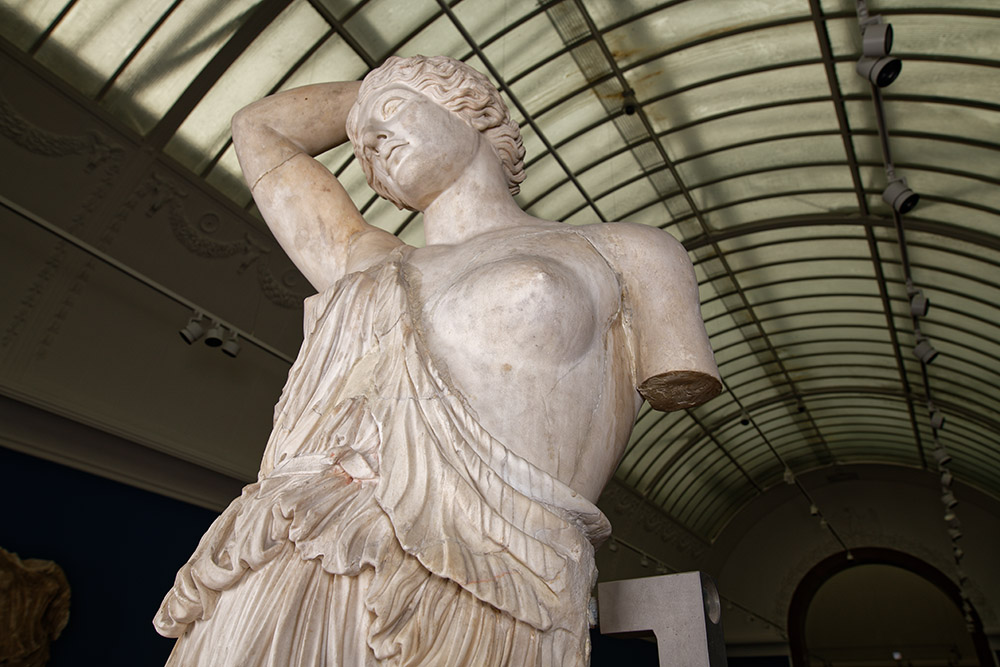 Source: Objaverse 1.0 / Sketchfab
The Relationship of Hemoglobin A1c and Diabetic Wound Healing
ClinicalTrials.gov study NCT01350102. IPD Sharing: NO. Countries: 1. Publications: 20.
ScienceDex guides
Understand access before you commit
These curated guides explain access requirements, typical timelines, costs, and reuse considerations for widely used research datasets.
Allen Brain Atlas
Allen Brain Atlas is an Allen Institute collection of brain map atlases, datasets, APIs, and analysis tools covering mouse, human, and non-human primate brain resources.
Annotated Behaviour and Observability Dataset (ABODe)
ABODe is a University of Edinburgh DataShare dataset for behavior classification in group-housed mice using home-cage video, identities, bounding boxes, ground-plate positions, and annotator labels.
DANDI Archive for NWB datasets
DANDI is a BRAIN Initiative archive for publishing and sharing neurophysiology data, including electrophysiology, optophysiology, and behavioral data packaged as NWB and related standards.
International Brain Laboratory public data
The International Brain Laboratory public data releases expose standardized mouse decision-making experiments, including Neuropixels recordings, widefield calcium imaging, behavior, and session metadata accessed through the ONE API.
OpenNeuro
OpenNeuro is a free, open platform for sharing neuroimaging datasets, with public search, dataset pages, and download paths for web, S3, DataLad, and the OpenNeuro CLI.