
Find research datasets worth reusing
Search datasets from major research repositories and use ShareScore to quickly assess how well each record supports discovery, access, and reuse.
4,347
datasets available to search
ShareScore release 0.9.0
Dataset results
4,347 results for “tools”
Glottis Analysis Tools - Deep Neural Networks
<p>Netron Overview Diagrams of Deep Neural Networks (DNNs) shipped with Glottis Analysis Tools (GAT) 2020.</p>
Outline data for Aterian tanged tools from North African collections
<p>Thresholded photographs of Aterian tanged tools from various collections, each accompanied by its extracted outline in text format.</p>
bachelor-thesis: Rapid Review - Identified Tools to Support SLR Including Features and Supported Stages
<p>This item presents the identified tools to support SLR and the supported stages and features of these tools.</p>
bachelor-thesis: Rapid Review - SLR Tools and their Characteristics
<p>This item contains releveant artefacts for the conducted Rapid Review. Therefore it includes the set of included papers and the tools to support SLR presented in a tabular form with tool characteristics.</p>
The Impact of Tool Configuration Spaces on the Evaluation of Configurable Taint Analysis for Android
<p>The data accompanying our ISSTA'2021 submission, <em>Rethinking Android Taint Analysis Evaluations: A Study of the Impact of Tool Configuration Spaces</em></p> <p> </p> <p>Structure:</p> <p><em>results</em>: contains the raw results output by AQL for the runs on Fossdroid and Google Play. Note that we wrote DroidBench results directly to CSV, so there are no "raw" results for them. Instead, see the summaries package. The collection of APKs for both datasets are also in this package.</p> <p><em>summaries</em>: contains CSV summaries of the three replications of our experiments on all three datasets (including examples of Amandroid's nondetermism on non-default configurations).</p> <p><em>datasets</em>: contains our FossDroid classified results and justifications. Please see the README.md in that package for more information.</p> <p><em>diagrams: </em>contains the graphs detailing the FlowDroid and DroidSafe configuration spaces, including their partial orders and disablement relationships.</p> <p><em>violations</em>: contains the records of violations of our partial orders.</p>
Excel mapping tools for 2020 zoonoses data reporting
<p>The main objective of the mapping tools is to provide a simple and useable platform for Member states and other reporting countries to map their country-specific standard terminology to that used by EFSA and to enable the production of an XML file for the submission of sample or aggregated-based zoonoses monitoring data via the Data Collection Framework (DCF).</p> <p>The catalogues and the specific hierarchy of each data model (AMR, ESBL, PRV, FBO, AP, DS and SSD2 for <em>Echinococcus multilocularis</em>) are already inserted into each of the specific mapping tool. Specific Excel mapping tools corresponding to each of the seven data models are available.</p> <p>Dynamic or manual version of the tool can be chosen for the first six data models.</p> <p>The Emulti_SSD2_tool can be used to report sample-based results of <em>Echinococcus multilocularis</em> under the Commission Delegated Regulation (EU) 2018/772.</p>
Chemical variations in Quercus pollen as a tool for taxonomic identification: implications for long-term ecological and biogeographical research
<p><strong>Aim</strong> </p> <p>Fossil pollen is an important tool for understanding biogeographic patterns in the past, but the taxonomic resolution of the fossil-pollen record may be limited to genus or even family level. Chemical analysis of pollen grains has the potential to increase the taxonomic resolution of pollen, but present-day chemical variability is poorly understood. This study aims to investigate whether a phylogenetic signal is present in the chemical variations of <em>Quercus</em> L. pollen and to assess the prospects of chemical techniques for identification in biogeographic research.</p> <p><strong>Location</strong> </p> <p>Portugal</p> <p><strong>Taxon</strong> </p> <p>Six taxa (five species, one subspecies) of <em>Quercus</em> L., <em>Q. faginea, Q. robur, Q. robur</em> ssp. <em>estremadurensis, Q. coccifera, Q. rotundifolia</em> and <em>Q. suber</em> belonging to three sections: <em>Cerris, Ilex</em>, and <em>Quercus</em> (<a href="https://www.biorxiv.org/content/10.1101/761148v2#ref-13">Denk, Grimm, Manos, Deng, & Hipp, 2017</a>)</p> <p><strong>Methods</strong> </p> <p>We collected pollen samples from 297 individual <em>Quercus</em> trees across a 4° (∼450 km) latitudinal gradient and determined chemical differences using Fourier-transform infrared spectroscopy (FTIR). We used canonical powered partial least-squares regression (CPPLS) and discriminant analysis to describe within- and between-species chemical variability.</p> <p><strong>Results</strong> </p> <p>We find clear differences in the FTIR spectra from <em>Quercus</em> pollen at the section level (<em>Cerris</em>: ∼98%; <em>Ilex</em>: ∼100%; <em>Quercus</em>: ∼97%). Successful discrimination is based on spectral signals related to lipids and sporopollenins. However, discrimination of species within individual <em>Quercus</em> sections is more difficult: overall, species recall is ∼76% and species misidentifications within sections lie between 18% and 31% of the test-set.</p> <p><strong>Main Conclusions</strong> </p> <p>Our results demonstrate that subgenus level differentiation of <em>Quercus</em> pollen is possible using FTIR methods, with successful classification at the section level. This indicates that operator-independent FTIR approaches can surpass traditional morphological techniques using the light microscope. Our results have implications both for providing new insights into past colonisation pathways of <em>Quercus</em>, and likewise for forecasting future responses to climate change. However, before FTIR techniques can be applied more broadly across palaeoecology and biogeography, our results also highlight a number of research challenges that still need to be addressed, including developing sporopollenin-specific taxonomic discriminators and determining a more complete understanding of the effects of environmental variation on pollen-chemical signatures in <em>Quercus</em>.</p>
Figure 1 in Conservation Units as a protection tool for social wasps in Minas Gerais state, Brazil
Figure 1. Geographic location of the sampled Conservation Units in the Minas Gerais state, southeastern Brazil, where social wasp inventories were carried out so far (maps at the top, Conservation Units are represented by the red points numbered from 1 to 14). The table on the right shows data of species richness and exclusive occurrence in each Conservation Unit. Aerial view of the Conservation Unit areas (satellite images 1-14). The numbers of map, table, and satellite images are corresponding.
Data from: DNA barcoding identifies cryptic animal tool materials
<p>Some animals fashion tools and other constructions out of plant materials to aid foraging, reproduction, self-maintenance, and protection. The choice of raw materials can affect the structure and mechanical properties of the resulting artefacts, with significant fitness consequences. Documenting animals' material preferences is challenging, however, as manufacture behaviour is often difficult to observe directly, and materials may be processed so heavily that they lack identifying features. Here, we use DNA barcoding techniques to identify, from just a few recovered tool specimens, the plant species New Caledonian crows (<em>Corvus moneduloides</em>) use for crafting elaborate hooked stick tools in one of our long-term study populations. The method succeeded where extensive fieldwork using conventional approaches had failed, including targeted observations, radio-tracking, bird-mounted video-cameras, and behavioural experiments with wild and temporarily captive subjects. We believe that DNA barcoding will prove useful for investigating many other tool and construction behaviours, helping to unlock significant research potential across a wide range of study systems.</p>
FS1196 Sinagua Hand Tool Artifact
This axe head was found in the Red Rock District of the Coconino Forest north of Sedona Arizona. This is a preliminary model with a refined version planned for the near future. The item was made from a piece of dark basalt. Additional information about the Red Rock District of the Coconino Forest can be found at the following web sites http://www.sedonaredrocktrails.org/ http://www.fs.usda.gov/recmain/coconino/recreation Information about volunteer opportunities in the Coconino Forest including the creation of the 3D models and other projects can be found at http://www.friendsoftheforestsedona.org/ Source: Objaverse 1.0 / Sketchfab
Tool for Pyro-Engraving
Collection and item number: Faye Moyer Collection, #235 Origin: Nigeria, between 1931 and 1964 Size: 12 3/8"H x 1 1/4"W Media: Metal and wood Note: The metal end of this tool is placed in a fire until hot enough to burn a line into an object, such as a gourd. This item was 3D scanned using a [Creaform Go Scan 20.](https://onlineresourcesinc.com/products/academia-20/) Source: Objaverse 1.0 / Sketchfab
Ancient Tool
Sculpted prehistorical stone used as a weapon or a tool. Inspired by actual cores, this model is purely invented. Source: Objaverse 1.0 / Sketchfab
Stone Tool Debitage
Material ID Pending. Model by Emma Dietrich This model was made using RealityCapture software by Capturing Reality. Source: Objaverse 1.0 / Sketchfab
Tools of the Sawing scans with iPhone12 Pro
Sawing was the most serious form of capital punishment, and was applied only to the murder of the master. They were exposed for two days and then crucified after one day of torture. [Meiji University Museum](https://www.meiji.ac.jp/cip/english/institute/facilities/museum.html) 1-1 Kanda-Surugadai, Chiyoda-ku, Tokyo 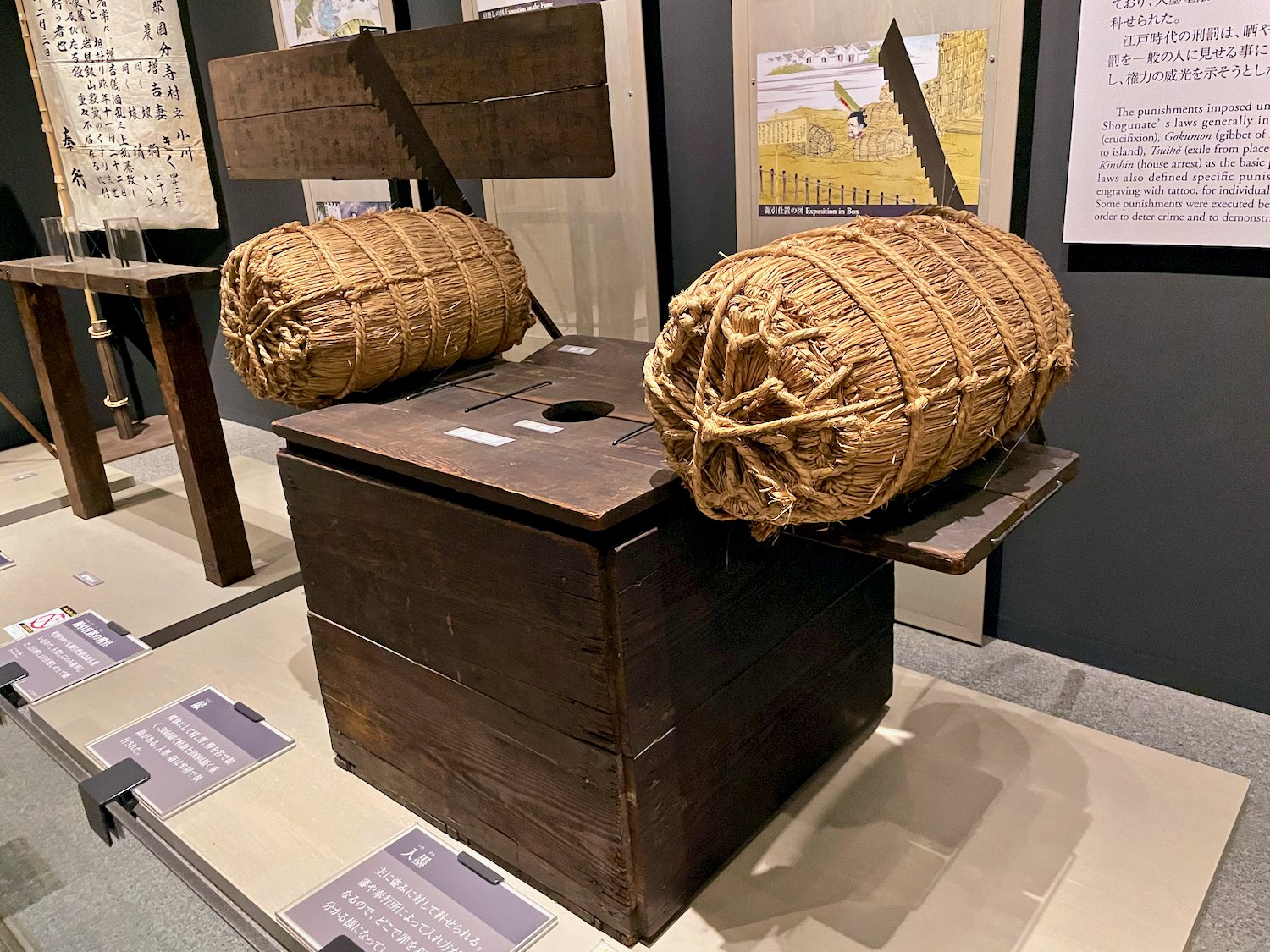 Source: Objaverse 1.0 / Sketchfab
Tool for maize shucking – t'ipina
ID no.: 54208/MEK Museum: The Seweryn Udziela Ethnographic Museum in Kraków https://muzea.malopolska.pl/en/objects-list/1518 Digitalisation: RDW MIC, Virtual Małopolska project Source: Objaverse 1.0 / Sketchfab
Ancient Stone Tool
4000年前につくられた縄文石器である。 くびれのあるタイプは、技術のある人でないと、作ることができない。私はこれをネットオークションで格安で落札した。そのため出土した場所などからは切り離されており、資料的価値はないが、たしかに4000年前の縄文時代につくられたものなのである。 It is a Jomon stone tool made 4,000 years ago. Only a skilled person could have made this type with a neck. I bought it at a low price on an Internet auction. The stoneware has no documentary value because it has been separated from the place where it was excavated, but it was certainly made 4,000 years ago during the Jomon period. Source: Objaverse 1.0 / Sketchfab
OLAF, Open Library of Affective Foods: A tool to investigate the emotional impact of food in adolescents
<p>The Open Library of Affective Foods (OLAF) is a set of original food pictures created to reliably select food pictures based on the emotions they prompt, as indicated by affective ratings of valence, arousal, and dominance and by an additional food craving scale. OLAF images were designed to allow simultaneous use with affective images from the International Affective Picture System (IAPS), which is a well-known instrument to investigate emotional reactions in the laboratory. The ultimate goal of the OLAF is to contribute to understanding how food is emotionally processed in healthy individuals and in patients who suffer from eating and weight-related disorders.</p> <p>The present normative data, which was based on a large sample of an adolescent population, indicate that when viewing affective non-food IAPS images, valence, arousal, and dominance ratings were in line with expected patterns based on previous emotion research. Moreover, when viewing food pictures, affective and food craving ratings were consistent with research on food cue processing. As a whole, the data supported the methodological and theoretical reliability of the OLAF ratings, therefore providing researchers with a standardized tool to reliably investigate the emotional and motivational significance of food.</p>
Supplementary Material for Frontiers Plant Genetics and Genomics 'Novel R tools for analysis of genome-wide population genetic data with emphasis on clonality'
<p>Authors</p> <p>Zhian N. Kamvar, Jonah C. Brooks, and Niklaus J. Grünwald</p>
The Software Sustainability Institute's Collaborations Workshop 2015 (CW15) attendees computational tools word-cloud
<p>Word cloud representing the computational tools used by those attending the Software Sustainability Institute's Collaborations Workshop 2015 (CW15).</p> <p>For more information see www.software.ac.uk/cw15</p> <p>Please note there is an ERROR in the diagram for some reason wordle.net did not pickup 'R' in the dataset - http://dx.doi.org/10.5281/zenodo.19828 - i.e. the usage of R in research software in the people who attended CW15 is not represented in this diagram.</p>
Filling the Gap: A Tool to Automate Parameter Estimation for Software Performance Models
<p>The data part of this release support the results <br /> presented in the paper <br /> "Filling the Gap: A Tool to Automate Parameter Estimation<br /> for Software Performance Models", by W. Wang, J. F. Perez, and G. Casale, accepted <br /> to QUDOS workshop 2015. </p>
ScienceDex guides
Understand access before you commit
These curated guides explain access requirements, typical timelines, costs, and reuse considerations for widely used research datasets.
Allen Brain Atlas
Allen Brain Atlas is an Allen Institute collection of brain map atlases, datasets, APIs, and analysis tools covering mouse, human, and non-human primate brain resources.
Annotated Behaviour and Observability Dataset (ABODe)
ABODe is a University of Edinburgh DataShare dataset for behavior classification in group-housed mice using home-cage video, identities, bounding boxes, ground-plate positions, and annotator labels.
DANDI Archive for NWB datasets
DANDI is a BRAIN Initiative archive for publishing and sharing neurophysiology data, including electrophysiology, optophysiology, and behavioral data packaged as NWB and related standards.
International Brain Laboratory public data
The International Brain Laboratory public data releases expose standardized mouse decision-making experiments, including Neuropixels recordings, widefield calcium imaging, behavior, and session metadata accessed through the ONE API.
OpenNeuro
OpenNeuro is a free, open platform for sharing neuroimaging datasets, with public search, dataset pages, and download paths for web, S3, DataLad, and the OpenNeuro CLI.