
Find research datasets worth reusing
Search datasets from major research repositories and use ShareScore to quickly assess how well each record supports discovery, access, and reuse.
138
datasets available to search
ShareScore release 0.9.0
Dataset results
138 results for “cliffs”
Crowd-sourced SfM: Best practices for high resolution monitoring of coastal cliffs and bluffs
Open the record for dataset details and reuse information.
Data from: Parasites favor intermediate nestling masses and brood sizes in cliff swallows
Open the record for dataset details and reuse information.
Climbing route development affects cliff vascular plants more than subsequent climbing: A guide to evidence-based conservation management to regulate climbing
Open the record for dataset details and reuse information.
High-resolution images of 2023's bird cliffs at Skúgvoy, Faroe Islands
Open the record for dataset details and reuse information.
eDNA metabarcoding reveals high soil fungal diversity and variation in community composition among Spanish cliffs
Open the record for dataset details and reuse information.
McMurdo Dry Valleys Garwood Ice Cliff Meteorological Station Measurements, 2012-
   As part of the Long Term Ecological Research in the McMurdo Dry Valleys of Antarctica, meteorological data was collected from various locations throughout Beacon, Taylor, Wright and Victoria Valleys. These files contain data for the Garwood Ice Cliff meteorology  station. This station reported data for about a year, during 2011. On January 10, 2012 the station was being transferred to the custody of the MCM LTER program by Joe Levy (UT), completing of the handover on the Austral summer of 2014. The GAFM station was moved ~5 m from its original site in 2013 (out of the stream bed).     The Garwood ice cliff met station ceased operations in 2013.   Â
McMurdo Dry Valleys Garwood Ice Cliff Meteorological Station Daily Averages, 2012-
As part of the Long Term Ecological Research in the McMurdo Dry Valleys of Antarctica, meteorological data was collected from various locations throughout Beacon, Taylor, Wright and Victoria Valleys. These files contain data for the Garwood Ice Cliff meteorology station. This station reported data for about a year, during 2011. On January 10, 2012 the station was being transferred to the custody of the MCM LTER program by Joe Levy (UT), completing of the handover on the Austral summer of 2014. The GAFM station was moved ~5 m from its original site in 2013 (out of the stream bed).
The cost of ectoparasitism in cliff swallows declines over 35 years
<p>Host-parasite dynamics often vary over time, brought about by changes in the parasite's virulence or the host's ability to resist or tolerate the parasite. Although virulence evolution in microparasites is well studied, we know little about temporal change in the pathogenicity of macroparasites such as blood-feeding insects. Using data collected over 35 years, we report a reduction in pathogenicity of the hematophagous swallow bug (<i>Cimex vicarius</i>) on its cliff swallow (<i>Petrochelidon pyrrhonota</i>) host. Relative to experimentally fumigated, parasite-free nests, the negative effects of bugs on nestling swallow body mass and survival were less in the later years of the study than in the earlier years, and the negative relationship between nestling body mass and bug abundance became weaker over time. The survival of adult birds exposed to swallow bugs increased throughout the study, while survival of birds from parasite-free nests decreased over time. Swallow bug abundance per nest, bug body size, and bug age ratios did not change during the study. Between-colony transmission of bugs shifted toward greater immigration into smaller colonies than in earlier studies, but there was no net change in transmission. Cliff swallows did not reduce their exposure to bugs over time by being more likely to avoid infested nest or colony sites. Parents increased the number of food deliveries to their offspring over time in the presence of parasites, but the total amount of food delivered was unchanged. The reduced cost of swallow bug ectoparasitism does not seem related to changes in parasite narrow-sense virulence, the host's avoidance of parasites, the presence of alternative hosts for bugs, or climate-driven phenological mismatches. The results probably reflect the cliff swallow's evolving of greater tolerance to swallow bugs, brought about by the bird's shift from natural cliff nesting sites to artificial structures that may harbor more bugs than natural cliffs. This study shows that hosts can respond relatively rapidly to high levels of parasitism, and provides support for models that suggest the evolution of tolerance should be expected in some host-parasite systems. </p>
Breeding success of Eleonora's falcon in Cyprus revisited using survey techniques for cliff-nesting species
<p>The global breeding population of Eleonora's Falcon (Falco eleonorae) is distributed from the Canary Islands in the west, across the Mediterranean Sea, to Cyprus in the east. The remoteness of nesting colonies, which are predominantly lo- cated on sea cliffs and islets, renders breeding success estimation a challenging task, requiring a composite approach to assess each of the breeding stages. Early estimates of the breeding success of Eleonora's Falcon suggested that the Akrotiri colony in Cyprus had the lowest breeding success among all the colonies throughout the species' breeding range, at a level seemingly unsustainable, suggesting the colony might have been in danger of gradual extinction. Here we use a diversity of survey methods including boat, ground, and aerial surveys, with the incorporation of photog- raphy and photogrammetry, to reassess the breeding success and the effect of nest characteristics on the Eleonora's Falcon breeding population in Cyprus. During a 6-yr study, we found that Cyprus hosts ~138 ± 8 breeding pairs and that breeding success equals 1.54 ± 0.85 fledglings per breeding pair, and thus is considerably higher than previous es- timates. In addition, by analyzing temporal variation in breeding and nest characteristics, we found that early breeding and reuse of nests positively influence breeding success, but physical nest characteristics have a limited effect on colony productivity. The range of survey methods employed, as well as the array of photography techniques utilized, enhanced the efficiency and accuracy of this study, allowing us to overcome the challenge of inaccessibility of nesting cliffs.</p>
Classification of Binding Modes for Kinase-Inhibitor Complex Structures, 3D Activity Cliffs Formed by Kinase Inhibitors, and Structural Analogues of 3D-Cliff Compounds
<p>The classification of crystallographic binding modes is provided for 884 kinase-inhibitor complex structures that were assembled from PDB. In addition, a total of 105 three-dimensional activity cliffs formed by 3D kinase inhibitors are listed. Their corresponding potency information is also given. Furthermore, the 2D structural analogues of 3D cliff-forming inhibitors were identified from ChEMBL database, on the basis of matched molecular pairs. These analogs and their activity information are also provided.</p>
Data sets of MMP-cliffs, SAR transfer series and RECAP-MMPs
<p>A new and up-to-date version of three MMP-based data sets derived from compounds included in the latest release of ChEMBL is presented. These data sets include activity cliffs, structure-activity relationship (SAR) transfer series, and second generation MMPs based upon retrosynthetic rules. The structural data and information are provided in eight different files comprising the three data sets of MMP-cliffs (two files), SAR transfer series (four files), and RECAP-MMPs (two files). All MMP-cliffs, SAR transfer series with approximate or regular potency progression, and RECAP-MMPs are provided in canonical SMILES representation on a per-target basis separately for the Ki and IC50 subsets. The corresponding files are clearly designated.</p>
Knowledge base of two- and three-dimensional activity cliffs
<p>The result of up-to-date surveys and systematic analyses of 2D-cliffs including clusters, 3D-cliffs, and extensions of 3D-cliffs is made freely available in four separate data files. These files contain the list of 2D-cliffs and cliff clusters, 3D-cliffs, 3D-cliff-MMPs, and superpositions of complex X-ray structures and 3D ligands for selected targets. The data organization and information is detailed in <em>README.doc</em>.</p> <p> </p>
FIGURE 1. Baccharis scopulorum. A in Baccharis scopulorum, a new species of section Caulopterae (Asteraceae: Astereae) from rocky cliffs of southern Brazil
FIGURE 1. Baccharis scopulorum. A. Habit (Schneider 1333, ICN). B. Representative leaves (Schneider 1331, 1332, ICN). C. Staminate capitulum (Schneider 1333, ICN). D. Pistillate capitulum (Schneider 1326, ICN). E. Phyllaries of pistillate capitulum (Schneider 1326, ICN). F. Staminate floret (pappus removed) (Schneider 1333, ICN). G. Corolla and style of pistillate floret (Schneider 1326, ICN). H. Cypsela with pappus (Schneider 1326, ICN).
FIGURE 3. Baccharis scopulorum. A in Baccharis scopulorum, a new species of section Caulopterae (Asteraceae: Astereae) from rocky cliffs of southern Brazil
FIGURE 3. Baccharis scopulorum. A. Habitat on cliffs of bare rock outcrops. B. Habit. C. Staminate capitulum. D. Pistillate capitulum. E. Cypsela in SEM. C. Schneider 1333 (ICN). D–E. Schneider 1326 (ICN). Scale bars B. 5 cm. C–D. 1 mm. E. 200 µm.
Shiju-Dan Buddha cliff statues(japan)
# Shiju(40)-Dan Buddha cliff statues(japan) # 四十担摩崖仏 Production year: 1707 (Hoei 4th year) <br> 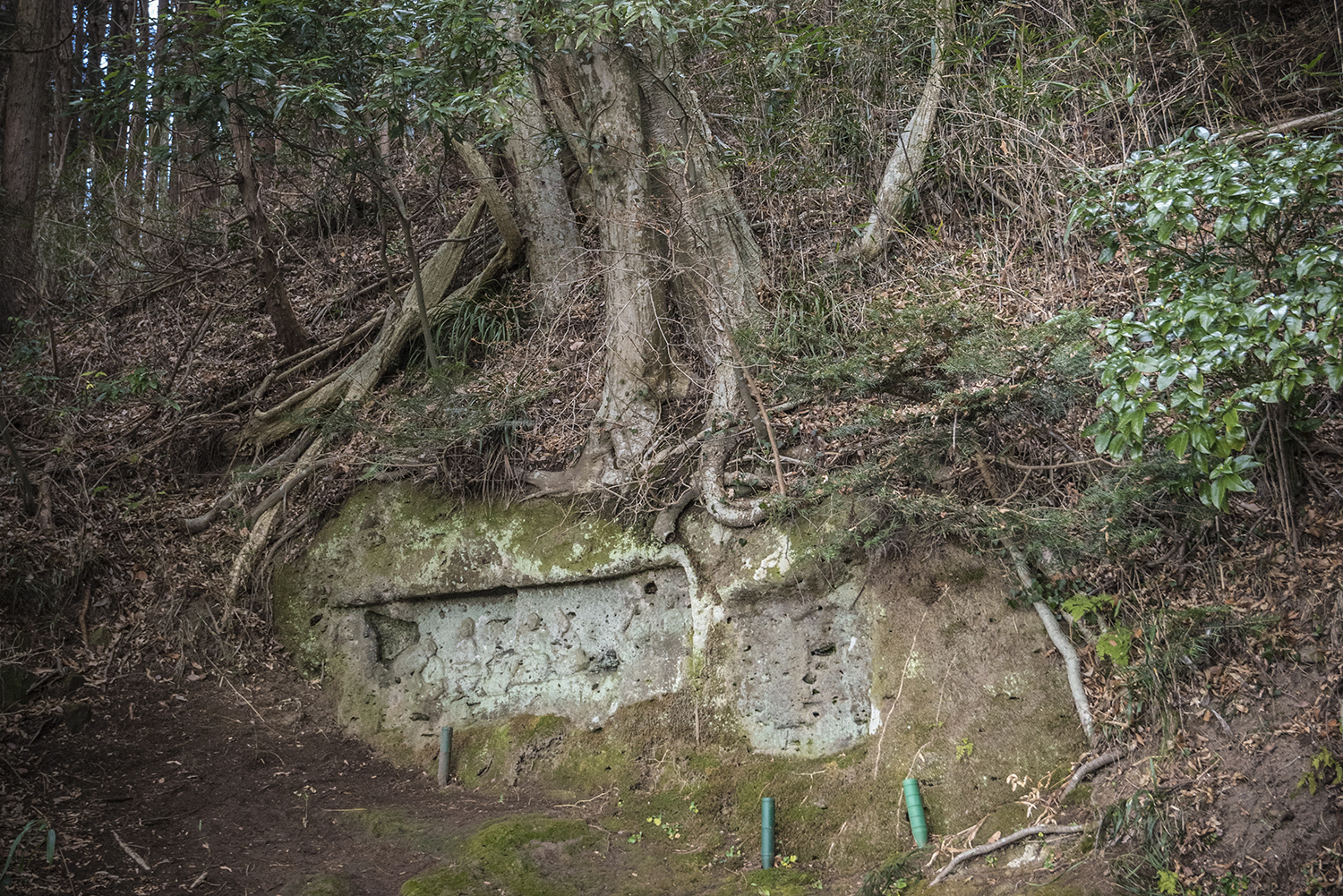 <br> Photogrammetry from 262 photos taken with D750 in Jan. 2020 Address is Sukagawa City, Fukushima Prefecture,Japan (福島県須賀川市舘ヶ岡字四十担) GoogleMap: https://goo.gl/maps/ek9Mpph4PLUxRQ8r9 【参考】ふくしまの摩崖仏 Source: Objaverse 1.0 / Sketchfab
Social foraging and the associated benefits of group-living in Cliff Swallows decrease over 40 years
<p>Animals that feed socially can sometimes better locate prey, often by transferring information about food that is patchy, dense, and temporally and spatially unpredictable. Information transfer is a potential benefit of living in breeding colonies where unsuccessful foragers can more readily locate successful ones and thereby improve feeding efficiency. Most studies on social foraging have been short-term, and how long-term environmental change affects both foraging strategies and the associated benefits of coloniality is generally unknown. In the colonial Cliff Swallow (<em>Petrochelidon</em> <em>pyrrhonota</em>), we examined how social foraging, information transfer, and feeding ecology changed over a 40-year period in western Nebraska. Relative to the 1980's, Cliff Swallows in 2016–2022 were more likely to forage solitarily or in smaller groups, spent less time foraging, were more successful as solitaries, fed in more variable locations, and engaged less in information transfer at the colony site. The total mass of insects brought back to nestlings per parental visit declined over the study. The diversity of insect families captured increased over time, and some insect taxa dropped out of the diet, although the three most common insect families remained the same among the decades. Nestling Cliff Swallow body mass at 10 days of age and the number of nestlings surviving per nest declined more sharply with colony size in 2015–2022 than in 1984–1991 at sites where the confounding effects of ectoparasites were removed. Adult body mass during provisioning of nestlings was lower in more recent years, but the change did not vary with colony size. The reason(s) for the reduction in social foraging and information transfer over time are unclear, but the consequence is that colonial nesting may no longer offer the same fitness advantages for Cliff Swallows as in the 1980's. The results illustrate flexibility of foraging behavior and dynamic shifts in the potential selective pressures for group-living.</p>
Data Products associated with "Stream hydrology controls on ice cliff evolution and survival on debris-covered glaciers"
<p>Data products from the study "Stream hydrology controls on ice cliff evolution and survival on debris-covered glaciers," by Petersen et al, submitted September 2023 to Earth Surface Dynamics.</p>
Cryptic diversity on cliffs: Aster sanqingensis, a new species of Asteraceae from Eastern China
<p>It is generally believed that cliffs bear low biodiversity because of its harsh habitats. However, another reason, i.e. insufficient investigation caused by the inaccessibility of the cliffs, could not be excluded. In the genus Aster, two cliff species, <em>Aster fanjingshanicus</em> and <em>Aster tianmenshanensis</em>, respectively growing on the slate and limestone cliffs, were established. During our extensive field investigations, the third cliff species of Aster growing on granite cliffs from Eastern China was found. Based on the evidence from molecular phylogeny, morphology, and micro-morphology, we proposed that it should be treated as a new species and named <em>Aster sanqingensis.</em> It is described and illustrated here. Considering its limited number of individuals, highly localized distribution, and disturbed habitat, we proposed to treat it as a critically endangered species. Our new finding indicates there is cryptic biodiversity on the cliffs remaining to be discovered.</p>
FIGURE. In situ photos of Paphiopedilum charlesworthii var. lannaense. A. limestone mountain at 1,100–1,200 m elevation, B. P. charlesworthii var. lannaense living on vertical cliffs of limestone, C. P. charlesworthii var. lannaense plant, D. flowering plant with flower bud, E., F. flowering plant (flower color was faded because these photos were taken toward the end of flowering period) (photo. By S. Somboonphon) in Paphiopedilum charlesworthii var. lannaense, a new slipper orchid from Northern Thailand identified by morphological and AFLP analyses
FIGURE. In situ photos of Paphiopedilum charlesworthii var. lannaense. A. limestone mountain at 1,100–1,200 m elevation, B. P. charlesworthii var. lannaense living on vertical cliffs of limestone, C. P. charlesworthii var. lannaense plant, D. flowering plant with flower bud, E., F. flowering plant (flower color was faded because these photos were taken toward the end of flowering period) (photo. By S. Somboonphon)
FIGURE. Four rupicolous taxa characteristic of the Sierra de las Nieves National Park: A. Centaurea clementei (vertical sunny cliffs in the Tajos de Añicle); B. Saxifraga globulifera (shady rocks in the Peñón de Ronda peak); C. Hieracium baeticum (rocky places in the Puerto de los Valientes mountain pass); D. Sarcocapnos baetica (overhanging cliffs in Cueva del Agua cave). (Photos by authors). in Vascular flora of the Sierra de las Nieves National Park and its surroundings (Andalusia, Spain)
FIGURE. Four rupicolous taxa characteristic of the Sierra de las Nieves National Park: A. Centaurea clementei (vertical sunny cliffs in the Tajos de Añicle); B. Saxifraga globulifera (shady rocks in the Peñón de Ronda peak); C. Hieracium baeticum (rocky places in the Puerto de los Valientes mountain pass); D. Sarcocapnos baetica (overhanging cliffs in Cueva del Agua cave). (Photos by authors).
ScienceDex guides
Understand access before you commit
These curated guides explain access requirements, typical timelines, costs, and reuse considerations for widely used research datasets.
Allen Brain Atlas
Allen Brain Atlas is an Allen Institute collection of brain map atlases, datasets, APIs, and analysis tools covering mouse, human, and non-human primate brain resources.
Annotated Behaviour and Observability Dataset (ABODe)
ABODe is a University of Edinburgh DataShare dataset for behavior classification in group-housed mice using home-cage video, identities, bounding boxes, ground-plate positions, and annotator labels.
DANDI Archive for NWB datasets
DANDI is a BRAIN Initiative archive for publishing and sharing neurophysiology data, including electrophysiology, optophysiology, and behavioral data packaged as NWB and related standards.
International Brain Laboratory public data
The International Brain Laboratory public data releases expose standardized mouse decision-making experiments, including Neuropixels recordings, widefield calcium imaging, behavior, and session metadata accessed through the ONE API.
OpenNeuro
OpenNeuro is a free, open platform for sharing neuroimaging datasets, with public search, dataset pages, and download paths for web, S3, DataLad, and the OpenNeuro CLI.