
Find research datasets worth reusing
Search datasets from major research repositories and use ShareScore to quickly assess how well each record supports discovery, access, and reuse.
76
datasets available to search
ShareScore release 0.9.0
Dataset results
76 results for “piano”
Listening Samples for Paper "Score to Audio: Integrating Systems to Transform Music Scores into Expressive Piano Audio"
<p>Listening Samples for Paper "Score to Audio: Integrating Systems to Transform Music Scores into Expressive Piano Audio".</p> <p>Please check the README.md for more details.</p>
Expert and Novice Evaluations of Piano Performances
<p>This dataset was collected to compare performance assessment criteria used by experts and novices. Beyond the 83 amateur piano performance audio recordings (in the WAV format) and the 803 evaluation entries of these performances, the dataset also contains each player's self-identified skill level, seven digital scores (in the MusicXML format), and 83 audio-to-score alignment files indicating the starting time in the audio of each musical note in the scores.</p> <p>The included CSV file contains 83 rows, each row representing one piano performance. Each performance was evaluated by four professional piano instructors, and by five or six randomly chosen peer players (one of whom could be the performer him/herself as the player information was never shared). The columns in the CSV file specify each performance’s score name, its player (identified by a number from 1 to 21), as well as the numerical and textual evaluations from the four instructors and from the peer players.</p> <p>More information can be found on the project website: https://facultystaff.richmond.edu/~yjiang3/papers/ismir23/.</p>
piano art
[](https://sketchfab.com/blogs/community/sketchfab-weekly/?ref=sfb) My Sketchfab Weekly #6: When I first saw it in the museum, it was amazing, so I wanted to know about it Reference: Lyraflügel ca. 1820–44 Johann Christian Schleip (1786–1848) This type of upright piano was made almost exclusively in Berlin between 1820 and 1850. The Lyraflügel was a fashionable fixture of middle-class Biedermeier parlors in northern German lands. Source: Objaverse 1.0 / Sketchfab
Examining the Effect of Piano Playing Training on Fine Motor Skills in Parkinson's Patients
ClinicalTrials.gov study NCT06120192. IPD Sharing: YES. Countries: 1. Publications: 0.
Piano Training, Caregivers, and Parkinson's Disease
ClinicalTrials.gov study NCT03922672. IPD Sharing: NO. Countries: 1. Publications: 0.
Individualized Piano Instruction (IPI) for Improving Cognition in Breast Cancer Survivors.
ClinicalTrials.gov study NCT05909813. IPD Sharing: Not stated. Countries: 1. Publications: 0.
Playing Piano to Improve Hand Function Early After Stroke
ClinicalTrials.gov study NCT06621771. IPD Sharing: YES. Countries: 1. Publications: 0.
A PIANO (Proper, Insufficient, Aberrant, and NO reprogramming) response to the Yamanaka factors in the initial stages of human iPSC reprogramming
GEO Series GSE148158. Homo sapiens. 13 samples. Type: Expression profiling by high throughput sequencing.
Piano_EDU_APPs_Tracking_Data_2020_2023_byAppfigures
<p>Piano learning apps' tracking data from Jan. 2020 to Apr. 2023 through Appfigures Platform.</p>
Grand Piano
Grand Piano Source: Objaverse 1.0 / Sketchfab
Piano grazed by incendiary bombs
March 10, 1945, at the end of the Asia Pacific War, there was an indiscriminate bombing raid called Great Tokyo Air Raid,by the U.S. military. It lasted for over two hours and destroyed an area of downtown Tokyo, killing about 100,000 people. On the other hand, Japan also bombed China and other countries after the Manchurian Incident. Many people were burned, damaged, and lost their lives in air raids. Most of them were civilians, including women, children and the elderly. Even today, Air Raids are still being carried out around the world. 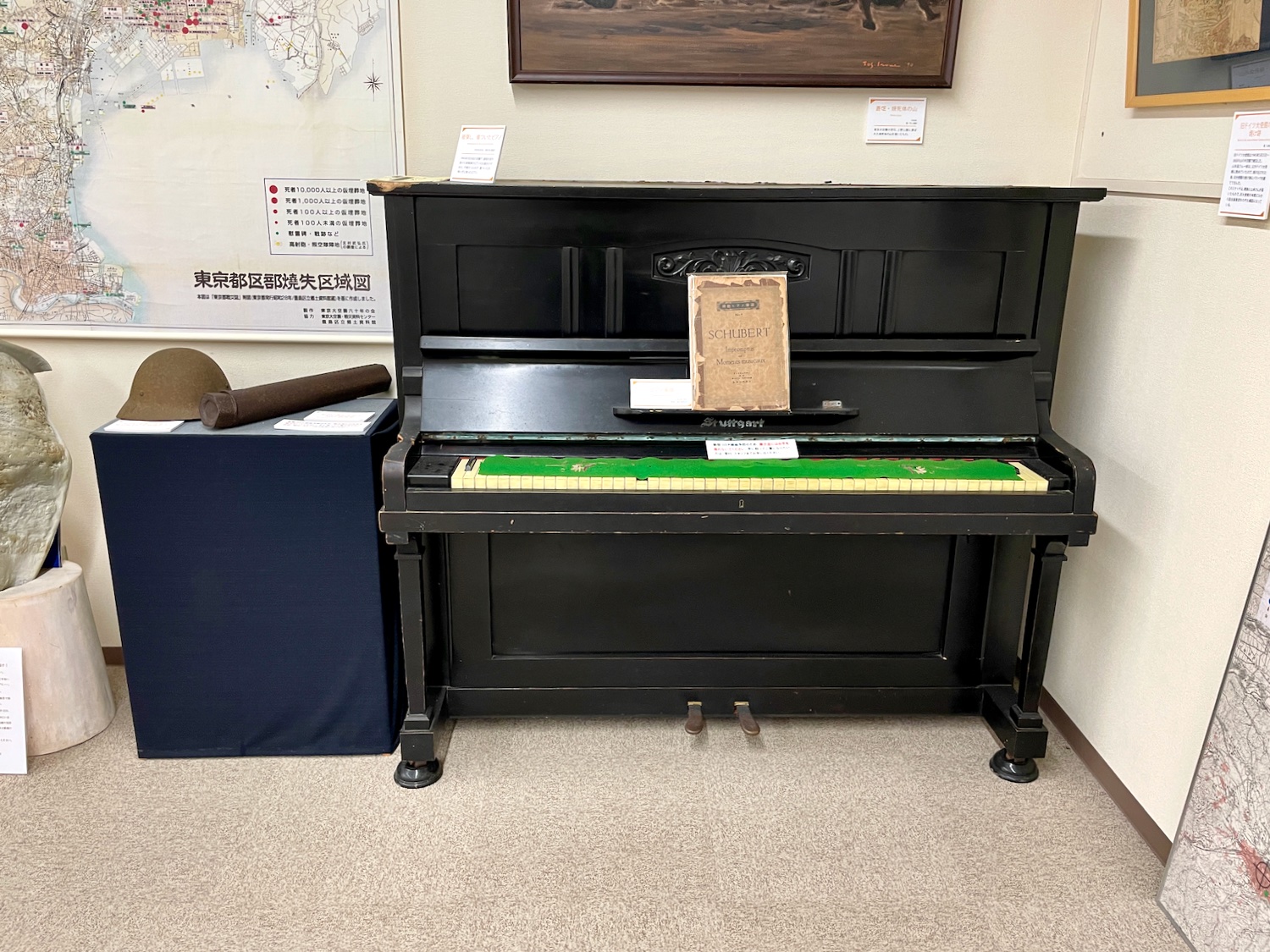 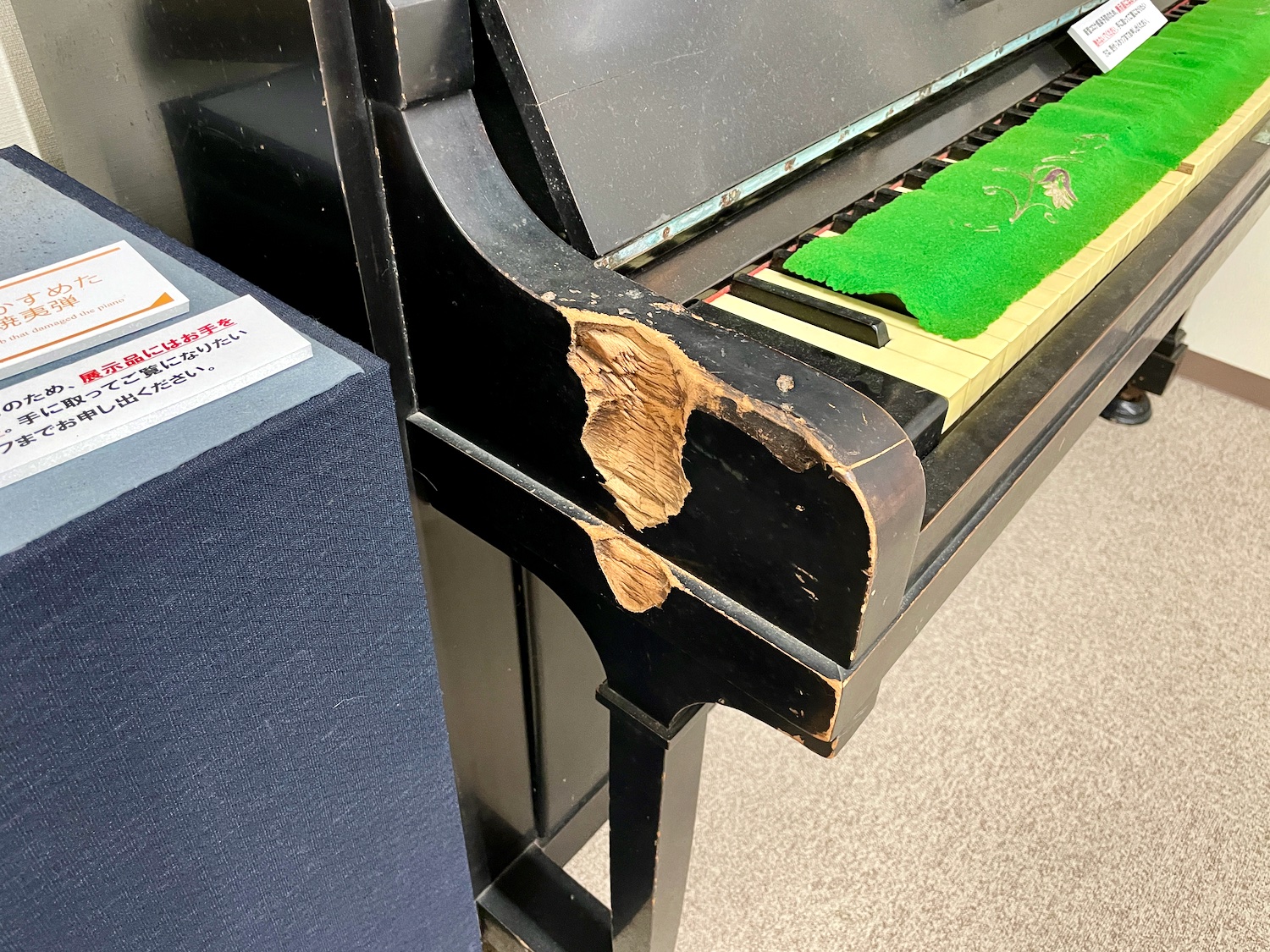 Source: Objaverse 1.0 / Sketchfab
Investigating the Effect of Simulated Live Piano Music on Preoperative Cancer Patients, Health Care Providers and Hospital Volunteers Using Validated Questionnaires and Proteomic Analysis
ClinicalTrials.gov study NCT03239587. IPD Sharing: Not stated. Countries: 0. Publications: 0.
Vista vero la Garfagnana, in primo piano uno dei tanti Monte Croce
<u>Source</u>: Flickr <br><u>4DCity URL</u>: <a href="https://4dcity.org/imgupload/1656262171.8199.jpg">https://4dcity.org/imgupload/1656262171.8199.jpg</a> <br>
ACPAS dataset: Aligned Classical Piano Audio and Score (synthetic subset)
<p><strong>ACPAS</strong> is a dataset with aligned audio and scores for classical piano music containing 497 distinct music scores aligned with 2189 performances, in total 179.77 hours. For each performance, we provide the corresponding performance audio (real recording or synthesized recording), performance MIDI, and MIDI score, together with rhythm and key annotations.</p> <p>This is the <strong>Synthetic subset</strong> of the ACPAS dataset. To download the full dataset and for dataset details, please refer to the dataset webpage at <a href="https://cheriell.github.io/research/ACPAS_dataset">https://cheriell.github.io/research/ACPAS_dataset</a></p> <p>For any questions, suggestions, or comments, please do not hesitate to contact <a href="mailto:lele.liu@qmul.ac.uk">lele.liu@qmul.ac.uk</a></p> <p><strong>How to cite:</strong></p> <p>- Lele Liu, Veronica Morfi, and Emmanouil Benetos, "ACPAS: A Dataset of Aligned Classical Piano Audio and Scores for Audio-to-Score Transcription," in ISMIR Late-breaking Demo, 2021.</p> <p><strong>Funding:</strong></p> <p>L. Liu is a research student at the UKRI Centre for Doctoral Training in Artificial Intelligence and Music, supported jointly by the China Scholarship Council and Queen Mary University of London.</p>
ACPAS dataset: Aligned Classical Piano Audio and Score (real recording subset)
<p><strong>ACPAS</strong> is a dataset with aligned audio and scores for classical piano music containing 497 distinct music scores aligned with 2189 performances, in total 179.77 hours. For each performance, we provide the corresponding performance audio (real recording or synthesized recording), performance MIDI, and MIDI score, together with rhythm and key annotations.</p> <p>This is the <strong>Real recording subset</strong> of the ACPAS dataset. To download the full dataset and for dataset details, please refer to the dataset webpage at <a href="https://cheriell.github.io/research/ACPAS_dataset">https://cheriell.github.io/research/ACPAS_dataset</a></p> <p>For any questions, suggestions, or comments, please do not hesitate to contact <a href="mailto:lele.liu@qmul.ac.uk">lele.liu@qmul.ac.uk</a></p> <p><strong>How to cite:</strong></p> <p>- Lele Liu, Veronica Morfi, and Emmanouil Benetos, "ACPAS: A Dataset of Aligned Classical Piano Audio and Scores for Audio-to-Score Transcription," in ISMIR Late-breaking Demo, 2021.</p> <p><strong>Funding:</strong></p> <p>L. Liu is a research student at the UKRI Centre for Doctoral Training in Artificial Intelligence and Music, supported jointly by the China Scholarship Council and Queen Mary University of London.</p> <p> </p>
ThumbSet - A dataset of partial annotations for Automatic Piano Fingering
<p>Here we introduce ThumbSet, an open dataset created from the collection of MusicXML piano scores published as public domain on the MuseScore website, which include finger label annotations. We relied on music publishers who added partial or full annotations to support piano learning when creating this dataset. It is important to note that these annotations reflect a single editor's expertise and do not represent a global ground truth. The source of the annotations on the MuseScore website is not always clear. Some scores may have incorrectly engraved labels, while others may have finger annotations provided by non-expert users. Consequently, the dataset may contain a significant amount of noise, resulting in lower data quality compared to the PIG dataset.</p> <p>ThumbSet is composed of 2523 music scores, as shown in Table 1. The genres, transcription quality, and fingering quality are highly heterogeneous, and the difficulty level of the pieces tends to lean towards the early years of music education compared to the PIG dataset. However, it is not possible to quantify all these claims with the existing metadata. We can assert that there are more finger labels annotated in the right hand (61%) than in the left hand (39%), although there are more pieces with only left-hand annotations (742) than with only right-hand annotations (153). The proportion of annotated fingers and the window lengths are similar in both hands.</p> <p>To make ThumbSet available for research purposes, we sliced the data into several windows. Each window takes into account the context, other notes, and symbols, ranging from 32 to 64 notes and symbols around each symbol of interest, including other finger label annotations. Additionally, the excerpts are encoded in the PIG encoding, a text format proposed in a previous study, which does not allow reverting to the original score to protect the copyright of the pieces. We distribute ThumbSet as variable-length music windows in the PIG encoding format. This format contains information about pitch, time onset, time offset, and finger label annotations, if they exist for all notes. Access to the data is limited and available upon request through the Zenodo platform. We also provide links to all the MuseScore source pieces used in creating ThumbSet.</p> <p> </p> <p>For citation and more information, please refer to the following Article:</p> <p><code>@inproceedings{ramoneda2022automatic,</code><br><code> title={Automatic Piano Fingering from Partially Annotated Scores using Autoregressive Neural Networks},</code><br><code> author={Pedro Ramoneda and Dasaem Jeong and Eita Nakamura and Xavier Serra and Marius Miron},</code><br><code> booktitle={Proceedings of the 30th ACM International Conference on Multimedia (MM '22)},</code><br><code> year={2022},</code><br><code> month={October 10--14},</code><br><code> location={Lisboa, Portugal}</code><br><code>}</code></p> <p>Disclaimer: Although the name may suggest that there are only thumb fingers annotated on the new dataset, it only indicates the fact that the most typical partial annotations are those suggesting finger crossing, and also that the authors like Tom Thumb story.</p>
ScienceDex guides
Understand access before you commit
These curated guides explain access requirements, typical timelines, costs, and reuse considerations for widely used research datasets.
Allen Brain Atlas
Allen Brain Atlas is an Allen Institute collection of brain map atlases, datasets, APIs, and analysis tools covering mouse, human, and non-human primate brain resources.
Annotated Behaviour and Observability Dataset (ABODe)
ABODe is a University of Edinburgh DataShare dataset for behavior classification in group-housed mice using home-cage video, identities, bounding boxes, ground-plate positions, and annotator labels.
DANDI Archive for NWB datasets
DANDI is a BRAIN Initiative archive for publishing and sharing neurophysiology data, including electrophysiology, optophysiology, and behavioral data packaged as NWB and related standards.
International Brain Laboratory public data
The International Brain Laboratory public data releases expose standardized mouse decision-making experiments, including Neuropixels recordings, widefield calcium imaging, behavior, and session metadata accessed through the ONE API.
OpenNeuro
OpenNeuro is a free, open platform for sharing neuroimaging datasets, with public search, dataset pages, and download paths for web, S3, DataLad, and the OpenNeuro CLI.