
Find research datasets worth reusing
Search datasets from major research repositories and use ShareScore to quickly assess how well each record supports discovery, access, and reuse.
61,240
datasets available to search
ShareScore release 0.9.0
Dataset results
61,240 results for “two”
Two Cornered Hat .Blend Free Low Poly
Introducing the Two Cornered Hat made by ACBRadio, the programs used to make this object are as follows: Blender 2.93 & G.I.M.P 2.10.4…The 'Textures' inclued in this object are the following: Diffuse…Textures are obtained from https://cc0textures.com/list?sort=Popular …free of Charge Backdrop image by Micah Boerma over on https://www.pexels.com 360 backdrop's total poly count: Triangles: 4k Vertices: 2k :D Source: Objaverse 1.0 / Sketchfab
Two small vases ornamented with cranes in flight
Two small vases ornamented with cranes in flight, placed against a dark blue background ID no.: MSITJM1142/1-2 Museum: The Manggha Centre of Japanese Art and Technology https://muzea.malopolska.pl/en/objects-list/1211 Digitalisation: RDW MIC, Małopolska's Virtual Museums Plus project Source: Objaverse 1.0 / Sketchfab
Two sets of Amitabha Triad (japan)
# 県指定重要文化財 双式浮彫阿弥陀三尊石塔婆 To place Amida-Nyorai(Amitabha) in the center for the religion, and place Kannon-Bosatsu(Avalokitesvara) and Seishi-Bosatsu(Mahasthamaprapta) on both sides of Amida-Nyorai, the form is called Amaida-Sanzon(Amitabha Triad). Amida-Nyorai a Buddha leading the dead to paradise. Kannon-Bosatsu represents "mercy" of Buddha, and Seishi-Bosatsu represents "wisdom" of Boddha. To sculpt empossing Amitabha Triad with bordered inward by processing the stone into a plate shape is unique to the stone Buddha found in a part of Fukushima region. Period/Century : - Cultural property designation : Prefecture designated important cultural property 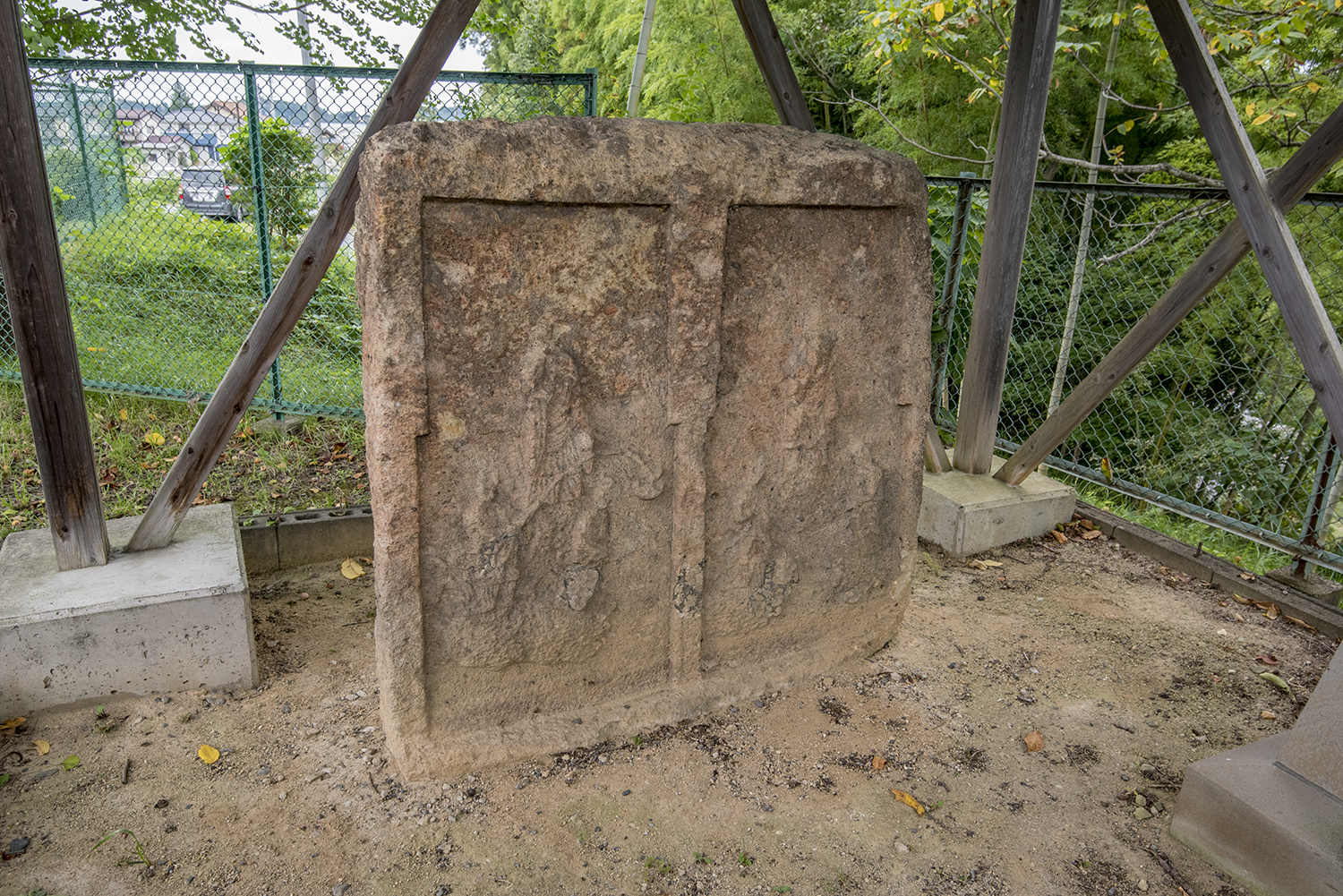 3D digitizing methods : Photogrammetry Software : Reality Capture Equipment : Nikon D750,NIKKOR 16-35mm f/4G Images: 323 photos Date : Sep.2019 Address : Sukagawa-City, Fukushima-prefecture.Japan. GoogleMap : https://goo.gl/maps/eBymdA2FWYd7Xjbk7 掲載確認済 Source: Objaverse 1.0 / Sketchfab
Knowledge Freedom in computational science: a two stage peer-review process with KF Eligibility Access Review
<p>What is explained below is the <em>peer review process</em> applied by <em>Notes on Transdisciplinar</em><em>y Modelling for Environment </em>(NTMe). Authors and readers are encouraged to understand not only the process, but also the rationale behind the process, which is closely connected with the peculiar challenges faced by the scientific problems (computational-science modelling under uncertainty, in broad and heterogeneous contexts) in the scope of the journal. </p> <p> </p> <p><span class="math-tex">\(\mathsf{\Large\text{The rationale behind the peer-review process}}\)</span></p> <p><strong>Computational research problems for more than one discipline. </strong>Research specific to a particular disciplinary domain is typically authored, and then studied, by experts in that domain. Several conventions, assumptions, fundamental protocols and methodology practices, are shared by domain experts as a common ground. Given that proficiency in these aspects is a precondition for domain experts, this kind of knowledge is often implicit, and not well communicated within domain-specific literature. "Typical" data preprocessing, model settings, quality-assessment assumptions (and their "default" simplifications and shortcuts), in this literature are often minimally reported or omitted, because the domain-specific community of researchers and practitioners knows them so well that they may resemble a sort of acquired conditioned response. However, when in a wider research more than one disciplinary domain is connected among each other, then implicit unexpressed knowledge may lead to ambiguity, misuse of results, and avoidable errors - sometimes challengly difficult to detect. The more and more diverse the domains, the higher this risk might be.</p> <p><strong>Useful cross-domain building blocks. </strong>"Transdisciplinary" research may risk being misinterpreted as just the final summary list of results grabbed by autonomous disciplinary silos run in parallel. However, a poor ability to communicate computational methods and data - and their limitations - between multiple disciplinary domains would jeopardise the collective (cross-domain) ability to distill truly integrated computational science. Computational science for transdisciplinary problems requires a pragmatic, engineered, but reasonably simple and modular approach to break and connect disciplinary silos - when appropriate for the problems investigated. Publishing <em>useful</em> cross-domain building blocks of this approach is the aim of the peer-review process in NTMe.</p> <p><strong>Connecting disciplines, space and time scales under uncertainty: the need for a shared semantics. </strong>Wide-scale transdisciplinary modelling (WSTM) relies on methods proper to computational science for connecting multiple scientific disciplines, and shedding light on broad, complex problems. Several of the most pressing problems we face as a human society are only partially known in their chain of consequences, and hopelessly difficult to address by a single discipline and a narrow perspective. Some of these problems capture the specific interest by particularly exposed regions, but their mechanism is more general, with essential knowledge often lying in other spatial areas - or even other time periods - hence calling for a wider perspective. Multiple spatial and temporal scales, with dissimilar data resolution, are frequent in WSTM problems, since they are often dictated by the complexity of reality and the available data. A wide-scale extent typically implies uneven quality and availability of data, and many sources of uncertainty - which increases when assumptions, methods and semantics by different disciplines or research institutions do not easily merge. A truly transdisciplinary communication of this essential semantics requires the <em>freedom </em>to communicate scientific knowledge, accurately and transparently, between disciplinary and corporate barriers.</p> <p><strong>Real knowledge sharing in computational science. </strong>As a consequence, wide-scale transdisciplinary modelling demands a focus on reproducible research and real scientific knowledge freedom. Data and software freedom are essential aspects of knowledge freedom in computational science. Therefore, ideally published articles should also provide the readers with the data and source code of the described mathematical modelling. To maximise transparency, replicability, reproducibility and reusability, published data should be made available as open data while source code should be made available as free software. Communicating semantics even to non-experts in a given domain requires that mathematical assumptions, otherwise obvious within a specific discipline, are duly annotated in a portable and concise way. Accordingly, brief but semantically clear documentation of data, methods and software is a key precondition. Here, a two-stage peer review process is described in which scientific knowledge freedom is considered with a dedicated Eligibility Access Review. This new peer review process is applied by <em>Notes on Transdisciplinary Modelling for Environment</em> with a focus on WSTM for environment.</p> <p> </p> <p><span class="math-tex">\(\mathsf{\Large\text{The peer-review process}}\)</span></p> <p><strong>A two-stage peer review process to avoid single-use disposable computational science. </strong>The two-stage peer review process requires discussion papers to be published so as to receive feedback from the scientific community before their possible finalisation. Initial manuscript submission is subject to the soundness review outlined above, also ensuring eligibility criteria to be fulfilled so as to support scientific knowledge freedom. Although this concept is multifaceted, some few dimensions might be emphasised which broadly apply in computational science and engineering (CSE). Among the many possible eligibility criteria in CSE, it should be highlighted at least the need for: </p> <ul> <li>free software to have been published so as for it to be persistently available;</li> <li>appropriate licensing and source code review to have been done (portable modularisation, with semantics of mathematical data-transformation methods clearly annotated);</li> <li>free data to have been published so as for it to be persistently available (with semantics of quantities clearly annotated);</li> <li>a minimal share of free-access core references to be selected in order for scientists and research organisations not to be discriminated on the basis of their funding availability, when they try to access the core literature cited in the manuscript.</li> </ul> <p>Before acceptance for discussion, a manuscript (and its potential data, parameters and software) may be revised, without exposing to the public immature versions, until it becomes able to fulfil the eligibility criteria. These iterations between author(s) and editors/reviewers remain confidential, and a potential manuscript rejection does not preclude resubmission. Acceptance of the manuscript to the discussion stage is followed by the permanent publication of the accepted version. This does not preclude, and actually encourages, further revised versions to be resubmitted. Any new revision is subject to eligibility access review, which takes into account the submission history of the manuscript and the already accepted public older versions.</p> <p><strong>Not a static publication. </strong>The discussion stage of the peer review process allows short comments to be submitted by referees and the scientific community, while authors are encouraged to interact with pending comments by providing their responses. During this stage, the paper accepted for discussion is already citable. Depending on the specific goals of each research problem, the discussion may remain open for a short time interval, or instead for a noticeably longer period of time (even indefinitely, if appropriate: for example, whenever authors do consider publishing cumulative milestone versions as important). There is not an a-priori limit to the duration of this first stage, and to the number of intermediate public revisions (which are optional), for a paper accepted for discussion. The second stage of peer review concludes the discussion stage with the submission of a revised manuscript, with final review and corrections. Fulfilment of the eligibility criteria is required over all the publication stages.<br> The published materials might be updated from time to time (at the authors' discretion), and - after peer-reviewing the changes - published so that the evolution is clear and available to others. Although preferred and encouraged in the discussion stage, updates are possible even after the final stage. Revisions offering a noticeably different content, compared with the previous versions, might sometime be recommended by editors/reviewers as deserving the status of a new publication - not to confuse the readers. This implies the full two-stage review process has to be applied to the new publication (as an independent publication), while the previous accepted publication is considered as the final permanent version. Recalling an analogy with the typical evolution of free-software, a software package is frequently subject to future improvements and corresponding new versions. If a new version is too different from the original package, it may become a new independent package. </p> <p><strong>Scientific opinions, perspectives, and overviews.</strong> Manuscripts focusing on computational science methods, data, parameters, and software are expected to contribute practical components of scientific knowledge which can be adapted, modified, or generally integrated within the future body of knowledge - potentially in unexpected ways. Therefore, the aforementioned two-stage review is, overall, meant to ease the future invention of derivative works. On the other hand, manuscripts offering expert opinions on these topics do not contribute "practical" components to be directly modified. Instead, they contribute organised ideas to support the evolution of scientific knowledge. Therefore, the peer review process for this typology of manuscripts focuses on:</p> <ul> <li>the broad understandability and potential interest of the expert opinions, and</li> <li>the factual correctness of the objective elements included in the opinion (with adequate bibliographic, tabular, visual support where appropriate). </li> </ul> <p><strong>Preregistration, protocols and methods. </strong>NTMe accepts a third typology of manuscripts, focusing on anticipated results (hence not yet computed) which are expected following a modelling procedure to transform input data and parameters into the desired output. As data and software are only anticipated in this typology of manuscripts, the peer-review process focuses on:</p> <ul> <li>the broad understandability and potential interest of the proposed protocol or methodology,</li> <li>the correctness and clarity of the mathematical formulation of the proposed computational-modelling steps (data-transformation modules),</li> <li>the discussion of anticipated results, pitfalls, sources of uncertainty and their proper management, bifurcations of the methodology depending on the potential variants that a user may desire to apply (depending on available data and their quality, and on the desired specialisation of the proposed general method), and</li> <li>the adequacy of bibliographic, tabular, visual supports where appropriate. </li> </ul> <p><strong>Abstract, and plain language summary. </strong>Each article includes a technical abstract. Although the topics of published content might deal with domain-specific aspects of computational/environmental science, their focused analysis is expected to support wider research in a transdisciplinary context. Therefore, the abstract is expected to be accessible beyond the domain-specific research community. Each article, either in the discussion or in the final stage, in addition to a technical abstract needs a <em>plain language summary</em> so that non-experts and readers with a basic scientific and technical literacy can understand the main contributions of the article. The aim of the plain language summary is to support educational dissemination. The summary is not a simpler abstract, and typically offers a longer, more comprehensive description. It is realised with an editorial support to authors, so as to respect a general structure (unless otherwise agreed):</p> <ul> <li>first, the general context of the work is presented (the general topics in which the work is situated);</li> <li>second, the general open questions are introduced to which the work aims to contribute;</li> <li>third, the specific way is described in which the work contributes to progress on the general open questions;</li> <li>fourth, the implications, new opportunities or suggested lines of research, and potential limitations and unaswered questions are summarised.</li> </ul> <p><strong>Constructive peer review.</strong> The ultimate aim of the peer review process is to support authors, and future readers, in sharing useful, durable, and understandable notes of transdisciplinary knowledge. Given the very nature of the topics in NTMe, the need for a cogent peer review on a multiplicity of expertise fields is essential. Rarely a single reviewer is able to cover all the aspects of transdiciplinary computational science. Even so, different opinions by different reviewers may emerge on specific points. Therefore, a <em>constructive </em>approach is promoted during each step of the peer review process, so that authors are guided to understand the peer review, and a compendium of recommandations may be presented in a consistent way.</p> <p> </p> <p><sup>© 2012-2020 Daniele de Rigo. This work is licensed under a </sup><a href="http://creativecommons.org/licenses/by-nd/4.0/legalcode"><sup>Creative Commons Attribution No Derivatives 4.0 International</sup></a><sup> license. Please, cite as<br> de Rigo, D., 2012. </sup><strong><sup>Knowledge Freedom in computational science: a two stage peer-review process with KF eligibility access review</sup></strong><sup>. </sup><em><sup>Zenodo, </sup></em><sup>CERN. </sup><a href="https://doi.org/10.5281/zenodo.7578"><sup>https://doi.org/10.5281/zenodo.7578</sup></a><sup> </sup></p> <p> </p>
Quasi-Static Cyclic Tests of Two U-Shaped Reinforced Concrete Walls
<p>U-shaped or channel-shaped walls are frequently used as lateral strength providing members in reinforced concrete (RC) buildings since their form does not only provide strength and stiffness in any horizontal direction but is also well suited to accommodate elevator shafts or staircases. Despite this popularity, experimental results on the seismic behavior of U-shaped walls are scarce. For this reason a research program with the objective to provide additional experimental evidence for such walls under seismic loading was developed. It included quasi-static cyclic testing of two U-shaped walls at the structural engineering laboratories of the ETH Zurich. The walls were built at half-scale and designed for high ductility. The main difference between the two walls was their wall thickness. The project was chiefly focusing on the bending behavior in different directions and therefore the walls were subjected to a bi-directional loading regime. This article discusses the design of the test units, the test setup and the test predictions. Finally the main results are summarized in terms of failure mechanisms and force-displacement hystereses.</p>
VELOCITY VECTOR FIELDS, MEASURED AT THE OUTFLOW FROM TWO HINGE MODELS OF A BILEAFLET MECHANICAL HEART VALVE, USING 2-COMPONENT PARTICLE IMAGE VELOCIMETRY TECHNIQUE
<p>VELOCITY VECTOR FIELDS, MEASURED AT THE OUTFLOW FROM TWO HINGE MODELS OF A BILEAFLET MECHANICAL HEART VALVE, USING 2-COMPONENT PARTICLE IMAGE VELOCIMETRY TECHNIQUE</p>
Multi-state modeling of the PhoQ two-component system
<p>This directory contains the input data, protocols and output model for the modeling of the PhoQ homodimer, using cysteine crosslinking and multi-state Bayesian modeling in IMP.</p> <p>For more information about how to reproduce this modeling, see https://salilab.org/phoq or the README file.</p>
Molecular investigation of bacterial communities on two frequently used surfaces in the São Paulo institute of tropical medicine
<p>In this study, we aimed to investigate the overall bacterial population on two frequently used surfaces in the São Paulo institute of tropical medicine (ITM) using a culture-independent Illumina massively parallel sequencing approach of the 16S rRNA genes. The massive parallel sequencing data presented here were derived from the surface samples collected from restroom surfaces and the fingerprint door clock system (FDLS) in our ITM in São Paulo.</p>
Testing sky brightness models against radial dependency: A dense two dimensional survey around the city of Madrid, Spain: SQM data
<p>We present a study of the night sky brightness around the extended<br /> metropolitan area of Madrid using Sky Quality Meter (SQM) photometers. The map is the first to cover the spatial distribution of the sky brightness in the<br /> center of the Iberian peninsula. These surveys are neccessary to test the light<br /> pollution models that predict night sky brightness as a function of the<br /> location and brightness of the sources of light pollution and the scattering of<br /> light in the atmosphere. We describe the data-retrieval methodology, which<br /> includes an automated procedure to measure from a moving vehicle in order to<br /> speed up the data collection, providing a denser and wider survey than previous<br /> works with similar time frames. We compare the night sky brightness map to the<br /> nocturnal radiance measured from space by the DMSP satellite. We find that i) a<br /> single source model is not enough to explain the radial evolution of the night<br /> sky brightness, despite the predominance of Madrid in size and population, and<br /> ii) that the orography of the region should be taken into account when deriving<br /> geo-specific models from general first-principles models. We show the tight<br /> relationship between these two luminance measures. This finding sets up an<br /> alternative roadmap to extended studies over the globe that will not require<br /> the local deployment of photometers or trained personnel.</p>
FIGURE 7 in A new genus and two new species of congrid eels (Teleostei: Anguilliformes: Congridae) from the IndoWest Pacific, with a redescription and osteology of Chiloconger dentatus
FIGURE 7. Chiloconger philippinensis, paratype, MNHN 2002 3730, 183 mm TL.
FIGURE 10 in A new genus and two new species of congrid eels (Teleostei: Anguilliformes: Congridae) from the IndoWest Pacific, with a redescription and osteology of Chiloconger dentatus
FIGURE 10. Kenyaconger heemstrai, holotype, SAIAB 13954, 267 mm TL.
FIGURES 12 – 13 in Omniops gen. n. and two new species of Hydrophilini from Papua New Guinea (Coleoptera: Hydrophilidae)
FIGURES 12 – 13. Omniops hanseni holotype. Dorsal and lateral habitus.
FIGURES 5 – 6 in Omniops gen. n. and two new species of Hydrophilini from Papua New Guinea (Coleoptera: Hydrophilidae)
FIGURES 5 – 6. Frontal habitus of holotypes. — 5. Omniops fasciatus. — 6. Omniops hanseni.
FIGURE 7 in Omniops gen. n. and two new species of Hydrophilini from Papua New Guinea (Coleoptera: Hydrophilidae)
FIGURE 7. Omniops fasciatus holotype. Pro, meso, and metasternum.
FIGURES 3 – 4 in Omniops gen. n. and two new species of Hydrophilini from Papua New Guinea (Coleoptera: Hydrophilidae)
FIGURES 3 – 4. Omniops fasciatus holotype. Oblique and ventral habitus.
FIGURES 16 17. Omniops hanseni holotype. — 16 in Omniops gen. n. and two new species of Hydrophilini from Papua New Guinea (Coleoptera: Hydrophilidae)
FIGURES 16 17. Omniops hanseni holotype. — 16. Dorsum of head. — 17. Venter of head.
FIGURES 1 2 in Omniops gen. n. and two new species of Hydrophilini from Papua New Guinea (Coleoptera: Hydrophilidae)
FIGURES 1 2. Omniops fasciatus holotype. Dorsal and lateral habitus.
FIGURES 8 – 9. Omniops fasciatus holotype. — 8 in Omniops gen. n. and two new species of Hydrophilini from Papua New Guinea (Coleoptera: Hydrophilidae)
FIGURES 8 – 9. Omniops fasciatus holotype. — 8. Dorsum of head. — 9. Divided eye.
FIGURE 4 in Neda Mulsant (Coleoptera, Coccinellidae): Redescriptions and revised combinations of two species formerly placed in Cycloneda Crotch
FIGURE 4. Neda tredecimsignata (Mulsant, 1850) comb. nov.. A, Female abdomen; B, Female genitalia.
FIGURE 1 in Two new troglobiotic palpigrades (Palpigradi: Eukoeneniidae) from Brazil
FIGURE 1. Eukoenenia jequitinhonha sp. n. Frontal organ, dorsal view. Scale bar 20 µm.
ScienceDex guides
Understand access before you commit
These curated guides explain access requirements, typical timelines, costs, and reuse considerations for widely used research datasets.
Allen Brain Atlas
Allen Brain Atlas is an Allen Institute collection of brain map atlases, datasets, APIs, and analysis tools covering mouse, human, and non-human primate brain resources.
Annotated Behaviour and Observability Dataset (ABODe)
ABODe is a University of Edinburgh DataShare dataset for behavior classification in group-housed mice using home-cage video, identities, bounding boxes, ground-plate positions, and annotator labels.
DANDI Archive for NWB datasets
DANDI is a BRAIN Initiative archive for publishing and sharing neurophysiology data, including electrophysiology, optophysiology, and behavioral data packaged as NWB and related standards.
International Brain Laboratory public data
The International Brain Laboratory public data releases expose standardized mouse decision-making experiments, including Neuropixels recordings, widefield calcium imaging, behavior, and session metadata accessed through the ONE API.
OpenNeuro
OpenNeuro is a free, open platform for sharing neuroimaging datasets, with public search, dataset pages, and download paths for web, S3, DataLad, and the OpenNeuro CLI.