
Find research datasets worth reusing
Search datasets from major research repositories and use ShareScore to quickly assess how well each record supports discovery, access, and reuse.
102
datasets available to search
ShareScore release 0.9.0
Dataset results
102 results for “GUIs”
Figure 1 from: Ren G-C, Wanasinghe DN, Jeewon R, Monkai J, Mortimer PE, Hyde KD, Xu J-C, Gui H (2022) Taxonomy and phylogeny of the novel rhytidhysteron-like collections in the Greater Mekong Subregion. MycoKeys 86: 65-85. https://doi.org/10.3897/mycokeys.86.70668
Figure 1 RAxML tree based on a combined dataset of partial SSU, LSU, ITS, and tef1-α sequence analyses. Bootstrap support values for ML and MP equal to or higher than 75% and Bayesian PP equal to or greater than 0.95 are shown at the nodes. Hyphens (--) represent support values less than 75% / 0.95 BYPP. The ex-type strains are in bold and the new isolate in this study is in blue. The tree is rooted with Gloniopsis calami (MFLUCC 15-0739) and G. praelonga (CBS 112415).
Figure 3 from: Wang R-B, Ni W-Y, Xu W-J, Gui Z-W, Zhou S-B (2019) Clematis guniuensis (Ranunculaceae), a new species from Eastern China. PhytoKeys 128: 47-55. https://doi.org/10.3897/phytokeys.128.33891
Figure 3 Clematisguniuensis W.Y.Ni, R.B.Wang & S.B.Zhou. A Habitat B Young branches, showing stems 6–grooved, puberulous C Inflorescences, showing style and abaxial surface view of leaf blade D Dorsal view of cymes, showing peduncles and bracts E Frontal view of flower, showing stamens F Fruit G Achenes, showing persistent style.
Figure 4 from: Wang R-B, Ni W-Y, Xu W-J, Gui Z-W, Zhou S-B (2019) Clematis guniuensis (Ranunculaceae), a new species from Eastern China. PhytoKeys 128: 47-55. https://doi.org/10.3897/phytokeys.128.33891
Figure 4 Distribution map of Clematisguniuensis (pentagon, red) and its congeners C.huchouensis (round, violet) and C.florida (square, green).
Figure 1 from: Wang R-B, Ni W-Y, Xu W-J, Gui Z-W, Zhou S-B (2019) Clematis guniuensis (Ranunculaceae), a new species from Eastern China. PhytoKeys 128: 47-55. https://doi.org/10.3897/phytokeys.128.33891
Figure 1 Clematisguniuensis W.Y.Ni, R.BWang & S.B.Zhou. A Habitat in flowering period B Inflorescences with budding flower, showing the bracts C Stamen D Pistil E Achene F Stem cross-section.
Figure 4 from: Ren G-C, Wanasinghe DN, Monkai J, Mortimer PE, Hyde KD, Xu J-C, Pang A, Gui H (2021) Novel saprobic Hermatomyces species (Hermatomycetaceae, Pleosporales) from China (Yunnan Province) and Thailand. MycoKeys 82: 57-79. https://doi.org/10.3897/mycokeys.82.67973
Figure 4 Hermatomyces sphaericus (HKAS 112725) a, b colonies on the natural substrate c mycelia d–g young conidia h–k mature conidia (h–j surface view k thickness view) l germinated conidium m, n culture characters on PDA. Scale bars: 1000 μm (a); 200 μm (b); 20 μm (c–i, l); 30 μm (j, k); 3 cm (m, n).
Figure 2 from: Ren G-C, Wanasinghe DN, Monkai J, Mortimer PE, Hyde KD, Xu J-C, Pang A, Gui H (2021) Novel saprobic Hermatomyces species (Hermatomycetaceae, Pleosporales) from China (Yunnan Province) and Thailand. MycoKeys 82: 57-79. https://doi.org/10.3897/mycokeys.82.67973
Figure 2 Hermatomyces turbinatus (HKAS 112724, holotype) a, b sporodochia on natural substrate c vertical section of sporodochium d conidiophores and conidiogenous cells e–h turbinate conidia i turbinate and mature lenticular conidia j–m mature lenticular conidia n germinated conidium o, p culture characters on PDA. Scale bars: 30 μm (c); 20 μm (d–n); 30 mm (o, p).
Figure 1 from: Ren G-C, Wanasinghe DN, Monkai J, Mortimer PE, Hyde KD, Xu J-C, Pang A, Gui H (2021) Novel saprobic Hermatomyces species (Hermatomycetaceae, Pleosporales) from China (Yunnan Province) and Thailand. MycoKeys 82: 57-79. https://doi.org/10.3897/mycokeys.82.67973
Figure 1 Phylogenetic RAxML tree based on analysis of a combined LSU, ITS, tub2, tef1-α and rpb2 and dataset. Bootstrap support values for ML and MP equal to or higher than 75% and Bayesian PP equal to or greater than 0.95 are shown at nodes. Hyphens (--) represent support values less than 75% / 0.95 BYPP. The ex-type strains are in bold and the new isolate in this study is in blue bold. The tree is rooted with Anteaglonium globosum (ANM 925.2) and A. parvulum (MFLUCC 14-0821). The scale bar represents the expected number of nucleotide substitutions per site.
Figure 3 from: Ren G-C, Wanasinghe DN, Monkai J, Mortimer PE, Hyde KD, Xu J-C, Pang A, Gui H (2021) Novel saprobic Hermatomyces species (Hermatomycetaceae, Pleosporales) from China (Yunnan Province) and Thailand. MycoKeys 82: 57-79. https://doi.org/10.3897/mycokeys.82.67973
Figure 3 Hermatomyces jinghaensis (HKAS 112167, holotype) a, b sporodochia on natural substrate c vertical section of sporodochium d conidiophores e, f conidiogenous cells g–l cylindrical conidia m–s mature lenticular conidia. Scale bars: 50 μm (c); 30 μm (d); 20 μm (e–r); 30 μm (s).
Figure 11. Haldanodon exspectatus, Gui Mam 30 in Postcranial anatomy of Haldanodon exspectatus (Mammalia, Docodonta) from the Late Jurassic (Kimmeridgian) of Portugal and its bearing for mammalian evolution
Figure 11. Haldanodon exspectatus, Gui Mam 30/79. Left femur as originally embedded in a posterior (= ventral) aspect. The width of the shaft is exaggerated due to crushing during fossilization.
Figure 8. Haldanodon exspectatus, Gui Mam 30 in Postcranial anatomy of Haldanodon exspectatus (Mammalia, Docodonta) from the Late Jurassic (Kimmeridgian) of Portugal and its bearing for mammalian evolution
Figure 8. Haldanodon exspectatus, Gui Mam 30/79. Left humerus in: A, anterior; B, medial; C, posterior; D, lateral; and E, distal view. entepic., entepicondylar; entepico., entepicondyle; intertuberc., intertubercular; tuber., tuberosity.
Figure 1. Haldanodon exspectatus, Gui Mam 30 in Postcranial anatomy of Haldanodon exspectatus (Mammalia, Docodonta) from the Late Jurassic (Kimmeridgian) of Portugal and its bearing for mammalian evolution
Figure 1. Haldanodon exspectatus, Gui Mam 30/79. Incomplete and dislocated postcranial skeleton associated with skull and right mandible. M5, fifth upper molar; ri, right.
LipidOz GUI Application Demonstration
<p>Demonstration of functionality for <em>LipidOz</em> GUI application. See "demo.pdf" for information about what is included in this demonstration. </p> <p><em>LipidOz</em> code and pre-built executables can be retrieved from: <a href="https://www.github.com/PNNL-m-q/lipidoz">https://www.github.com/PNNL-m-q/lipidoz</a>, and documentation is hosted at: <a href="https://lipidoz.readthedocs.io">https://lipidoz.readthedocs.io</a>. </p>
Patient Specific Virtual Reality for Simulation of Spine Procedures: an Intelligent Image Segmentation, Registration and 3-dimensional Visualization in a Unified Virtual Reality Workflow for Image Gui
ClinicalTrials.gov study NCT06714539. IPD Sharing: UNDECIDED. Countries: 0. Publications: 1.
Data from: Seed germination schedule and environmental context shaped the population genetic structure of subtropical evergreen oaks on the Yun-Gui Plateau, Southwest China
Open the record for dataset details and reuse information.
Integrated network pharmacology and transcriptomics to explore the mechanism of Gui-qi-yi-shen granules in the treatment of IgA nephropathy
GEO Series GSE286126. Mus musculus. 9 samples. Type: Expression profiling by high throughput sequencing.
Figure 2 from: Wang R-B, Ni W-Y, Xu W-J, Gui Z-W, Zhou S-B (2019) Clematis guniuensis (Ranunculaceae), a new species from Eastern China. PhytoKeys 128: 47-55. https://doi.org/10.3897/phytokeys.128.33891
Figure 2 Holotype of Clematisguniuensis W.Y.Ni, R.B.Wang & S.B.Zhou.
Model of the Golden Temple, Wan fa Gui yi Hall
GO INSIDE FROM BOTTOM OF THE MODEL "The Golden Temple" ([1935.50.4633](http://kulturarvsdata.se/SMVK-EM/objekt/html/2656068)). That is what the Swedish explorer Sven Hedin called [Wan fa Gui yi Hall in the Putuo Zongcheng Temple, Chengde](https://en.wikipedia.org/wiki/Putuo_Zongcheng_Temple). In 1929, Hedin travelled to China with the mission to procure a Lamaistic temple to the World Exhibition in Chicago in 1933. An exact model was manufactured at the architect W. H. Liang's workshops in 1932 in Beijing. Two smaller models in scale 1:10 were also made. One of them was sent to Chicago as well. The other was taken to the Ethnographic Museum in Stockholm. It is this model that you can see here as a 3D model.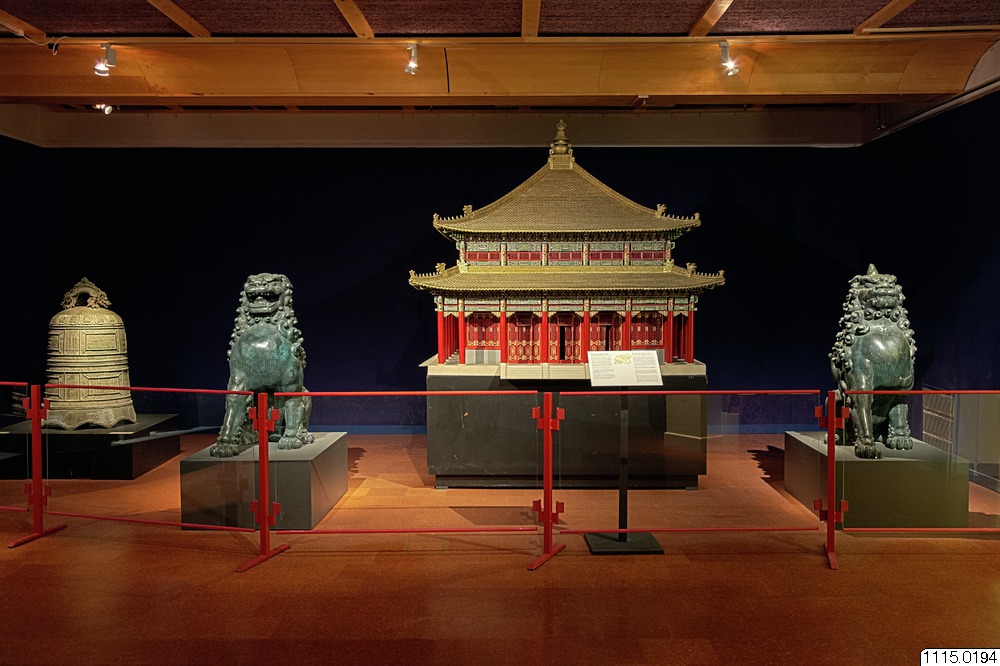 Source: Objaverse 1.0 / Sketchfab
Effect of Gui-Lu-Er-Xian-Jiao-Wan on Intradialytic Hypotension
ClinicalTrials.gov study NCT05517993. IPD Sharing: NO. Countries: 1. Publications: 0.
GUI INTERFACE OF THE DEVANALYZER OVERVIEW.
<p>Screen shot of the DevAnalyzer interface when a repository has been loaded.</p>
GUI INTERFACE OF THE DEVANALYZER FOR A USER
<p>Screen shot of the DevAnalyzer interface when a user has been selected</p>
ScienceDex guides
Understand access before you commit
These curated guides explain access requirements, typical timelines, costs, and reuse considerations for widely used research datasets.
Allen Brain Atlas
Allen Brain Atlas is an Allen Institute collection of brain map atlases, datasets, APIs, and analysis tools covering mouse, human, and non-human primate brain resources.
Annotated Behaviour and Observability Dataset (ABODe)
ABODe is a University of Edinburgh DataShare dataset for behavior classification in group-housed mice using home-cage video, identities, bounding boxes, ground-plate positions, and annotator labels.
DANDI Archive for NWB datasets
DANDI is a BRAIN Initiative archive for publishing and sharing neurophysiology data, including electrophysiology, optophysiology, and behavioral data packaged as NWB and related standards.
International Brain Laboratory public data
The International Brain Laboratory public data releases expose standardized mouse decision-making experiments, including Neuropixels recordings, widefield calcium imaging, behavior, and session metadata accessed through the ONE API.
OpenNeuro
OpenNeuro is a free, open platform for sharing neuroimaging datasets, with public search, dataset pages, and download paths for web, S3, DataLad, and the OpenNeuro CLI.