
Find research datasets worth reusing
Search datasets from major research repositories and use ShareScore to quickly assess how well each record supports discovery, access, and reuse.
137
datasets available to search
ShareScore release 0.9.0
Dataset results
137 results for “Maya”
Dimethylxanthine REMPI Measurements for Maya Pottery Extracts
Open the record for dataset details and reuse information.
Data from: Genetic variation and structure in the neotropical tree, Manilkara zapota (L) P. Royen (Sapotaceae) used by the ancient Maya
Open the record for dataset details and reuse information.
Data from: The evolution of microendemism in a reef fish (Hypoplectrus maya)
Open the record for dataset details and reuse information.
Data from: Ancient lowland Maya complexity as revealed by airborne laser scanning of northern Guatemala
Open the record for dataset details and reuse information.
FIGURE 4. Hypoplectrus maya, holotype MCZ 169196 in A review of the Caribbean hamlets (Serranidae, Hypoplectrus) with description of two new species
FIGURE 4. Hypoplectrus maya, holotype MCZ 169196, preserved specimen.
FIGURE 4 in Taxonomic revision of the Apiomerus maya species group (Heteroptera: Reduviidae: Harpactorinae)
FIGURE 4. Examples of intraspecific polychromatism across ranges of maya species group taxa.
Figure 8 from: El-Sherbiny M, M Al - Aidaroos A (2014) First report of the presence of Acartia bispinosa Carl, 1907 (Copepoda, Calanoida) in a semi-enclosed Bay (Sharm El-Maya), northern Red Sea with some notes on its seasonal variation in abundance and body size. ZooKeys 444: 95-118. https://doi.org/10.3897/zookeys.444.7633
Figure 8 - Seasonal variation in males/females sex ratio in the copepod Acartia bispinosa in the study area.
Figure 7 from: El-Sherbiny M, M Al - Aidaroos A (2014) First report of the presence of Acartia bispinosa Carl, 1907 (Copepoda, Calanoida) in a semi-enclosed Bay (Sharm El-Maya), northern Red Sea with some notes on its seasonal variation in abundance and body size. ZooKeys 444: 95-118. https://doi.org/10.3897/zookeys.444.7633
Figure 7 - Seasonal patterns at Sharm El-Maya Bay, the northern Red Sea. A Temperature and Salinity B pH and dissolved oxygen concentrations (DO), and C Chlorophyll a concentration (chl a) and abundance of Acartia bispinosa.
Figure 6 from: El-Sherbiny M, M Al - Aidaroos A (2014) First report of the presence of Acartia bispinosa Carl, 1907 (Copepoda, Calanoida) in a semi-enclosed Bay (Sharm El-Maya), northern Red Sea with some notes on its seasonal variation in abundance and body size. ZooKeys 444: 95-118. https://doi.org/10.3897/zookeys.444.7633
Figure 6 - Variations in Acartia bispinosa from the northern Red Sea. A–C female genital compound somite D female leg 5 E–H male last pediger I male second urosomite. All scale bars in mm.
Figure 4 from: El-Sherbiny M, M Al - Aidaroos A (2014) First report of the presence of Acartia bispinosa Carl, 1907 (Copepoda, Calanoida) in a semi-enclosed Bay (Sharm El-Maya), northern Red Sea with some notes on its seasonal variation in abundance and body size. ZooKeys 444: 95-118. https://doi.org/10.3897/zookeys.444.7633
Figure 4 - Acartia bispinosa male from the northern Red Sea. A habitus, dorsal view B rostrum, ventral view C urosome, dorsal view D urosome, latero-ventra view E left antennule F right antennule G leg 5 H terminal segment of left exopod of leg 5 I terminal segment of right exopod of leg 5. All scale bars in mm.
Figure 2 from: El-Sherbiny M, M Al - Aidaroos A (2014) First report of the presence of Acartia bispinosa Carl, 1907 (Copepoda, Calanoida) in a semi-enclosed Bay (Sharm El-Maya), northern Red Sea with some notes on its seasonal variation in abundance and body size. ZooKeys 444: 95-118. https://doi.org/10.3897/zookeys.444.7633
Figure 2 - SEM micrographs of Acartia bispinosa female from the northern Red Sea. A rostrum, ventral view B urosome, fine hairs on the posterior margin of genital compound somite indicated by arrow, ventral view C proximal part of antennule, claw-like curved spine indicated by arrow, lateral view D Female leg 5.
Figure 1 from: El-Sherbiny M, M Al - Aidaroos A (2014) First report of the presence of Acartia bispinosa Carl, 1907 (Copepoda, Calanoida) in a semi-enclosed Bay (Sharm El-Maya), northern Red Sea with some notes on its seasonal variation in abundance and body size. ZooKeys 444: 95-118. https://doi.org/10.3897/zookeys.444.7633
Figure 1 - Acartia bispinosa female from the northern Red Sea. A habitus, dorsal view B habitus, lateral view C rostrum and proximal part of the antennule, lateral view D urosome, dorsal view E urosome, ventral view F urosome, later view right G urosome, lateral view left H–I antennule. All scale bars in mm.
Figure 10 from: El-Sherbiny M, M Al - Aidaroos A (2014) First report of the presence of Acartia bispinosa Carl, 1907 (Copepoda, Calanoida) in a semi-enclosed Bay (Sharm El-Maya), northern Red Sea with some notes on its seasonal variation in abundance and body size. ZooKeys 444: 95-118. https://doi.org/10.3897/zookeys.444.7633
Figure 10 - Distribution of Acartia bispinosa based on previous records and on the present study (Note that its distribution is restricted between 35°N and 32°S).
Figure 5 from: El-Sherbiny M, M Al - Aidaroos A (2014) First report of the presence of Acartia bispinosa Carl, 1907 (Copepoda, Calanoida) in a semi-enclosed Bay (Sharm El-Maya), northern Red Sea with some notes on its seasonal variation in abundance and body size. ZooKeys 444: 95-118. https://doi.org/10.3897/zookeys.444.7633
Figure 5 - SEM micrographs of Acartia bispinosa male from the northern Red Sea. A abdomen, lateral view B leg 5, posterior surface.
Figure 3 from: El-Sherbiny M, M Al - Aidaroos A (2014) First report of the presence of Acartia bispinosa Carl, 1907 (Copepoda, Calanoida) in a semi-enclosed Bay (Sharm El-Maya), northern Red Sea with some notes on its seasonal variation in abundance and body size. ZooKeys 444: 95-118. https://doi.org/10.3897/zookeys.444.7633
Figure 3 - Acartia bispinosa female from the northern Red Sea. A antenna B mandible C maxillule D maxilla E maxilliped F Leg 1 G leg 2, posterior surface H Leg 3, posterior surface I leg 4, posterior surface J third exopodal segment of leg 1, anterior surface K second endopodal segment of leg 3, anterior surface L basis of leg 4, anterior surface I leg 5 anterior surface. All scale bars in mm.
Figure 9 from: El-Sherbiny M, M Al - Aidaroos A (2014) First report of the presence of Acartia bispinosa Carl, 1907 (Copepoda, Calanoida) in a semi-enclosed Bay (Sharm El-Maya), northern Red Sea with some notes on its seasonal variation in abundance and body size. ZooKeys 444: 95-118. https://doi.org/10.3897/zookeys.444.7633
Figure 9 - Box and whisker plot of seasonal variations of total and prosome length of female A and male B of Acartia bispinosa (total length: open symbol, prosome length: filled symbol).
Influence of Social and Environmental Factors on Women's Reproductive Function in a Maya Community of Guatemala
ClinicalTrials.gov study NCT00340782. IPD Sharing: Not stated. Countries: 1. Publications: 1.
Fachada de Estela Cafe Maya en Aeropuerto Aurora
Fachada de Estela Cafe Maya en Aeropuerto Aurora, ciudad de Guatemala Source: Objaverse 1.0 / Sketchfab
Edzna - Maya Temple
Edzná is a Maya archaeological site in the north of the Mexican state of Campeche. The most remarkable building at the site is the main temple located at the plaza. Built on a platform 40 m high, it provides a wide overview of the surroundings. Model by www.damnejesus.com Source: Objaverse 1.0 / Sketchfab
Maya figure, Yucatan
[1956.36.0001](https://collections.smvk.se/carlotta-em/web/object/1217318), figur Helfigur av lergods, ihålig, föreställande en person iförd huvudprydnad, mantel och ett kjolliknande underplagg, halsband, örontrissor etc. av rödaktigt lergods. Baksidan jämn. Två hål i höfthöjd till håligheten i figurens inre. Figuren, som ör i klassisk mayansk stil, härstammat från Jaina-ön, Yucatán. Inköp av professor S. Linné för museets räkning 1956 ur Marquez' samling i Mérida. 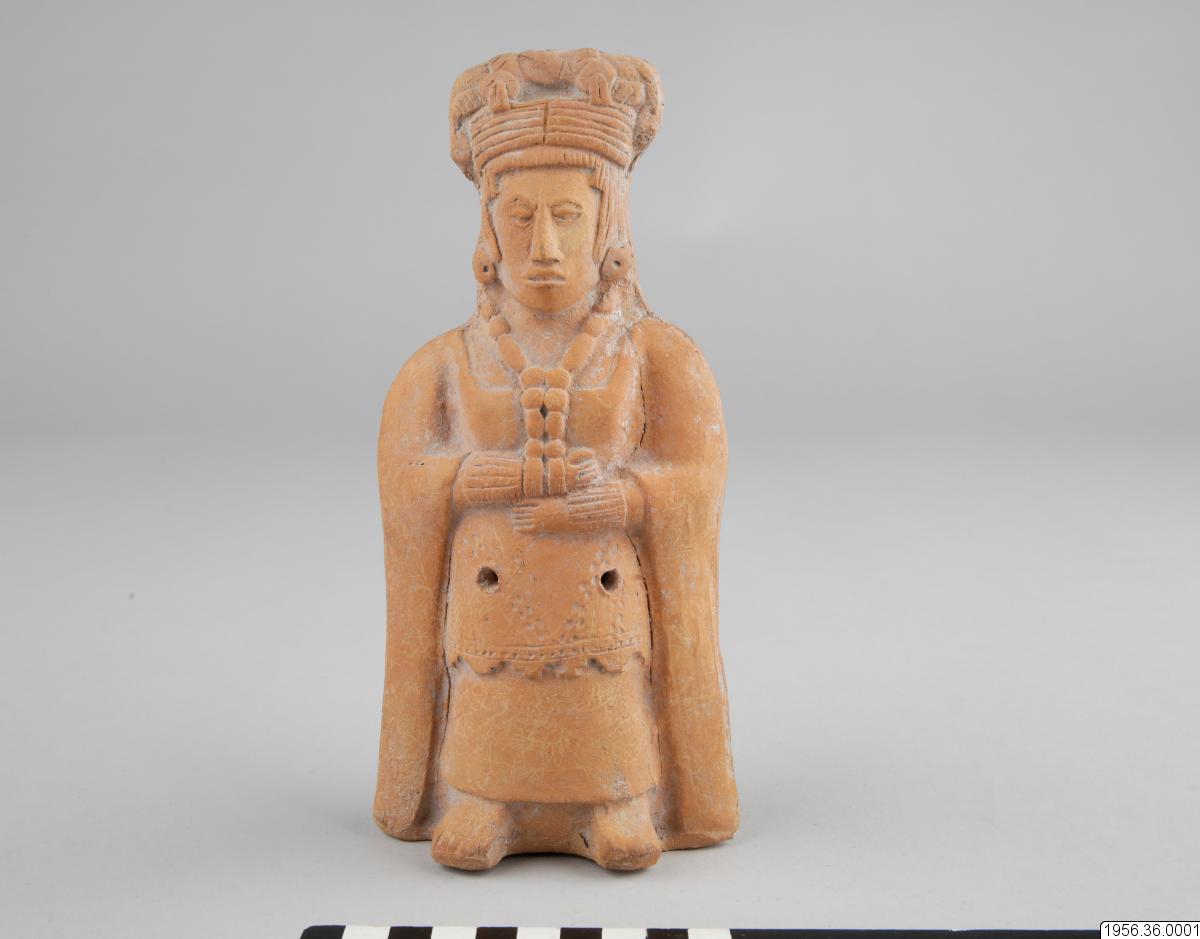 Source: Objaverse 1.0 / Sketchfab
ScienceDex guides
Understand access before you commit
These curated guides explain access requirements, typical timelines, costs, and reuse considerations for widely used research datasets.
Allen Brain Atlas
Allen Brain Atlas is an Allen Institute collection of brain map atlases, datasets, APIs, and analysis tools covering mouse, human, and non-human primate brain resources.
Annotated Behaviour and Observability Dataset (ABODe)
ABODe is a University of Edinburgh DataShare dataset for behavior classification in group-housed mice using home-cage video, identities, bounding boxes, ground-plate positions, and annotator labels.
DANDI Archive for NWB datasets
DANDI is a BRAIN Initiative archive for publishing and sharing neurophysiology data, including electrophysiology, optophysiology, and behavioral data packaged as NWB and related standards.
International Brain Laboratory public data
The International Brain Laboratory public data releases expose standardized mouse decision-making experiments, including Neuropixels recordings, widefield calcium imaging, behavior, and session metadata accessed through the ONE API.
OpenNeuro
OpenNeuro is a free, open platform for sharing neuroimaging datasets, with public search, dataset pages, and download paths for web, S3, DataLad, and the OpenNeuro CLI.