
Find research datasets worth reusing
Search datasets from major research repositories and use ShareScore to quickly assess how well each record supports discovery, access, and reuse.
21,983
datasets available to search
ShareScore release 0.9.0
Dataset results
21,983 results for “UNITE”
Figure 13 in Jumping spiders of the Phidippus princeps group in the southeastern United States (Araneae: Salticidae: Dendryphantina)
Figure 13. Adult male Phidippus princeps from Greenville County, South Carolina (locality 2). In this locality the carapace is completely black. Note the variation in scale cover of the dorsal opisthosom, from almost complete cover (3, 9, 12) to presentation of a black and red pattern (1, 5, 8). Iridescent chelicerae vary from green (2) to blue-green (11).
Figure 14 in Jumping spiders of the Phidippus princeps group in the southeastern United States (Araneae: Salticidae: Dendryphantina)
Figure 14. Immature Phidippus princeps from Laurens County, South Carolina (locality 3). 1-2, Juveniles. 3-6, Penultimate females. 7-12, Penultimate males.
Figure 12 in Jumping spiders of the Phidippus princeps group in the southeastern United States (Araneae: Salticidae: Dendryphantina)
Figure 12. Adult female Phidippus princeps from Greenville County, South Carolina (locality 2). 1-5, Ventral view of five females, showing variation in the appearance of the darker median band flanked by lighter bands. P. pulcherrimus females have essentially the same appearance. 6, Detail of epigynum of female shown in (5). Here the posterior notch is semi-circular, but it can also be more shallow, angular or triangle-shaped. 8, Detail from (7), showing grey rostrum between the chelicerae.
Figure 4 in Jumping spiders of the Phidippus princeps group in the southeastern United States (Araneae: Salticidae: Dendryphantina)
Figure 4. Early instars of Phidippus princeps from Greenville County, South Carolina (locality 2). 1-6, Emergent or instar 2 spiderlings. When placed on Prunus stems and leaves spiderlings sought out extrafloral nectaries (4-6). Note the uniform black color of the body and the relatively light, translucent legs and pedipalps of this stage. 7-9, Early juvenile or instar 3. 10- 12, Juvenile or instar 4. Note the shiny gold scale cover of the carapace (10), typical of juvenile P. princeps.
Figure 8 in Jumping spiders of the Phidippus princeps group in the southeastern United States (Araneae: Salticidae: Dendryphantina)
Figure 8. Penultimate (nominally instar 7) male Phidippus princeps from Greenville County, South Carolina (locality 2).
Figure 11 in Jumping spiders of the Phidippus princeps group in the southeastern United States (Araneae: Salticidae: Dendryphantina)
Figure 11 (continued from previous page). Adult female Phidippus princeps from Greenville County, South Carolina (locality 2). 31-32, Darker individual, with two pairs of posterior spots on the dorsal opisthosoma.
Figure 9 in Jumping spiders of the Phidippus princeps group in the southeastern United States (Araneae: Salticidae: Dendryphantina)
Figure 9 (continued on next page). Adult female Phidippus princeps from Greenville County, South Carolina (locality 2). In this locality, adult females tend to have a white face, or white scales surrounding the anterior eyes. This makes the anterior eyes quite visible and most likely represents a device for intraspecific recognition or communication.
Figure 6 in Jumping spiders of the Phidippus princeps group in the southeastern United States (Araneae: Salticidae: Dendryphantina)
Figure 6. Pre-penultimate (instar 6) Phidippus princeps from Greenville County, South Carolina (locality 2). Pre-penultimate P. princeps in this area can be quite dark with more scale cover over the dorsal opisthosoma, but their chelicerae are not yet iridescent.
Figure 3 in Jumping spiders of the Phidippus princeps group in the southeastern United States (Araneae: Salticidae: Dendryphantina)
Figure 3. Female Phidippus princeps collected as a penultimate (1-2) on an herbaceous plant in the deciduous woodland understory of Spartanburg County, South Carolina (locality 1), and reared to maturity (3-8). As in subsequent figures, each scale bar is 1.0 mm and identifiers in rectangles are used to associate images with respective spiders. Note the broad basal band, middorsal tract of scales, and relatively bright red-orange cover of the dorsal opisthosoma. Otherwise this is a fairly typical female P. princeps. 7-8, Suction (7) followed by regurgitation/maceration (8) phases of feeding.
Figure 2 in Jumping spiders of the Phidippus princeps group in the southeastern United States (Araneae: Salticidae: Dendryphantina)
Figure 2. Distribution of the Phidippus princeps group in eastern North America. Sources for these records are described in Figure 1. Cedar Lake, Manitoba represents an additional record reported by Edwards (2004), to the north of this map. Note the western outlier near the Great Salt Lake of Utah. In Canada P. princeps has been reported from Saskatchewan, Manitoba, Ontario, Quebec and Nova Scotia (Paquin et al. 2010; Richman et al. 2012). P. princeps can be found in all parts of the eastern deciduous and mixed forest regions of North America, but is not known from the boreal forest to the north. P. pulcherrimus and many intermediate forms (or mixed populations) are mostly restricted to the southeastern coastal plain below the fall line. The background map of land usage, based on USDS 1992 1 km landcover data, was modified from images obtained with the online National Atlas Map Maker, no longer available.
Figure 10 in Jumping spiders of the Phidippus princeps group in the southeastern United States (Araneae: Salticidae: Dendryphantina)
Figure 10 (continued from previous page, continued on next page). Adult female Phidippus princeps from Greenville County, South Carolina (locality 2). 19-21, Typical dorsalis form, with middorsal opisthosomal stripe.
Figure 7 in Jumping spiders of the Phidippus princeps group in the southeastern United States (Araneae: Salticidae: Dendryphantina)
Figure 7. Penultimate (nominally instar 7) female Phidippus princeps from Greenville County, South Carolina (locality 2). In this stage the face is still covered with a mask of dark red-brown scales around the anterior eyes, but the chelicerae are also iridescent as in adults. Except for one female (1-2), note the presence of distinct scale patterns on the dorsal opisthosoma, retained but not as obvious as they are in the juvenile stages.
Figure 1 in Jumping spiders of the Phidippus princeps group in the southeastern United States (Araneae: Salticidae: Dendryphantina)
Figure 1. Distribution of the Phidippus princeps group in the southeastern United States. Study sites are identified with numbers (1-10). Records reported by Edwards (2004) are identified with an E. More recent records documented by Beaton are identified with a B. Other records are based on a review of photographs posted at BugGuide, FLICKR and iNaturalist sites on the internet. The background relief map was adapted from National Map/Landsat images.
Figure 5 in Jumping spiders of the Phidippus princeps group in the southeastern United States (Araneae: Salticidae: Dendryphantina)
Figure 5. Juvenile (instar 5) Phidippus princeps from Greenville County, South Carolina (locality 2). Juvenile P. princeps have flat, shiny scales on the dorsal opisthosoma like those seen in typical adult P. pulcherrimus.
Figures 2-7. 2-5 in New records of the exotic jumping spider Pseudeuophrys erratica (Araneae: Salticidae: Euophryini) in the United States
Figures 2-7. 2-5, Male Pseudeuophrys erratica in Essex County, Massachusetts. Photos by Richard Walton (CC-BY 3.0). 6, Male P. erratica in Pittsburgh, Pennsylvania. Photo by Ryan Kaldari (CC0 1.0). 7, Ventral view of left pedipalp of male P. erratica from Eugene, Oregon. Photograph by Ken Schneider (CC-BY 4.0).
Re-evaluating coho salmon (Oncorhynchus kisutch) conservation units in Canada using genomic data
<p><span>Conservation units (CUs) are important tools for supporting the implementation of standardized management practices for exploited species. Following the adoption of the Wild Salmon Policy in Canada, CUs were defined for Pacific salmon based on characteristics related to ecotype, life history, and genetic variation using microsatellite markers as indirect measures of local adaptation. Genomic datasets have the potential to improve the definition of CUs by reducing variance around estimates of population genetic parameters, thereby increasing the power to detect more subtle patterns of population genetic structure and by providing an opportunity to incorporate adaptive information more directly with the identification of variants putatively under selection. We used one of the largest genomic datasets recently published for a non-model species, comprising 5,662 individual Coho salmon (<em>Oncorhynchus kisutch</em>) from 149 sampling locations and a total of 24,542 high-quality SNPs obtained using genotyping-by-sequencing and mapped to the Coho salmon reference genome to 1) evaluate the current delineation of CUs for Coho in Canada and 2) compare patterns of population structure observed using neutral and outlier loci from genotype-environment association analyses to determine whether separate CUs that capture adaptive diversity are needed. Our results reflected CU boundaries on the whole, with the majority of sampling locations managed in the same CU clustering together within genetic groups. However, additional groups not currently represented by CUs were also uncovered. We observed considerable overlap in the genetic clusters identified using neutral or candidate loci, indicating a general congruence in patterns of genetic variation driven by local adaptation and gene flow in this species. Consequently, we suggest that the current CU boundaries for Coho salmon are largely well-suited for meeting the Canadian Wild Salmon Policy's objective of defining biologically distinct groups, but we highlight specific areas where CU boundaries may be refined.</span></p>
13 Star Flag of the United States
Cloth simulation based on a [CC0](https://creativecommons.org/share-your-work/public-domain/cc0/) image of a cotton and wool flag made by [Alida Schuyler Hamilton](https://en.wikipedia.org/wiki/Elizabeth_Schuyler_Hamilton) (1656–1729) ca. 1777 released as part of the [Met Museum](https://www.metmuseum.org)'s [Open Access](https://www.metmuseum.org/about-the-met/policies-and-documents/image-resources) program. Animated in Blender. 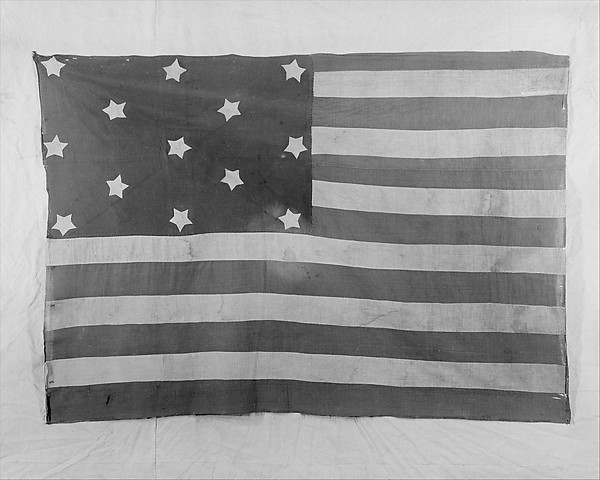 Full record: https://www.metmuseum.org/art/collection/search/13674 **Maker**: Alida Schuyler (1656–1729) **Maker**: Elizabeth Schuyler Hamilton **Date**: ca. 1777 **Geography**: Made in New York, United States **Culture**: American **Medium**: Cotton and wool **Dimensions**: 46 1/2 x 65 1/2 in. (118.1 x 166.4 cm) **Classification**: Textiles **Credit Line**: Anonymous gift, 1956, in memory of William Willis Reese **Accession Number**: 56.65 Source: Objaverse 1.0 / Sketchfab
Badge of the telephone unit
Badge of the telephone unit of the Polish Legions ID no.: MNS-H/4049 Museum: Nowy Sącz District Museum https://muzea.malopolska.pl/en/objects-list/2528 Digitalisation: RDW MIC, Virtual Małopolska project Source: Objaverse 1.0 / Sketchfab
Excavated test units at the Piqua site
Test units excavated by students at the Wright State University Field School in Archaeology at the Piqua site, May 2021. Source: Objaverse 1.0 / Sketchfab
Replication Kit for Paper: "Are There Any Unit Tests? An Empirical Study on Unit Testing in Open Source Python Projects"
<p>Replication Kit for the Paper "Are there any Unit Tests? An Empirical Study on Open Source Python Projects" by Fabian Trautsch, Jens Grabowski.</p> <p>You can cite the paper via:</p> <p>@inproceedings{trautsch2017there,<br> title={Are There Any Unit Tests? An Empirical Study on Unit Testing in Open Source Python Projects},<br> author={Trautsch, Fabian and Grabowski, Jens},<br> booktitle={Proceedings of the IEEE International Conference on Software Testing, Verification and Validation (ICST)},<br> pages={207--218},<br> year={2017},<br> organization={IEEE}<br> }</p> <p> </p> <p>Contents:<br> 1) Used version of the vcsSHARK<br> - located in “vcsSHARK”<br> 2) Used version of the testImpSHARK<br> - located in “testImpSHARK”<br> 3) Analysis implementations<br> - located in “testImpSHARK/testimpshark/analysis”<br> 4) Raw Data CSV Files<br> - located in “testImpSHARK/testimpshark/analysis/data<br> 5) Raw MongoDB<br> - located in “mongo_backup”</p> <p><br> Usage:<br> 1) Usage instructions for the vcsSHARK is given on its github homepage (http://ftrautsch.github.io/vcsSHARK/index.html) or directly in the “vcsSHARK/pyvcsshark/main.py” file</p> <p>2) Usage instructions for the testImpSHARK:<br> - if only one revision should be analyzed use “testImpSHARK/main.py”<br> - if all revisions should be analyzed use “testImpSHARK/execution.py”<br> - in both files concrete instructions can be found</p> <p>3) Each analysis file is commented. For some of them (rq1_boxplot.py and rq4.py the connection to the MongoDB must be changed). For the R files, the path to the data must be adapted. Otherwise, the files can be directly executed.</p> <p>4) The MongoDB can be restored via:<br> mongorestore --gzip --archive=smartshark040816.gz --db smartshark --host <HOST> --port <PORT> --username <USERNAME> --password <PASSWORD> --authenticationDatabase <AUTHENTICATION_DATABASE></p> <p><br> Tests:<br> 1) The tests can be run directly via the unittest framework of python: e.g., python -m unittest tests/test_common.py</p>
ScienceDex guides
Understand access before you commit
These curated guides explain access requirements, typical timelines, costs, and reuse considerations for widely used research datasets.
Allen Brain Atlas
Allen Brain Atlas is an Allen Institute collection of brain map atlases, datasets, APIs, and analysis tools covering mouse, human, and non-human primate brain resources.
Annotated Behaviour and Observability Dataset (ABODe)
ABODe is a University of Edinburgh DataShare dataset for behavior classification in group-housed mice using home-cage video, identities, bounding boxes, ground-plate positions, and annotator labels.
DANDI Archive for NWB datasets
DANDI is a BRAIN Initiative archive for publishing and sharing neurophysiology data, including electrophysiology, optophysiology, and behavioral data packaged as NWB and related standards.
International Brain Laboratory public data
The International Brain Laboratory public data releases expose standardized mouse decision-making experiments, including Neuropixels recordings, widefield calcium imaging, behavior, and session metadata accessed through the ONE API.
OpenNeuro
OpenNeuro is a free, open platform for sharing neuroimaging datasets, with public search, dataset pages, and download paths for web, S3, DataLad, and the OpenNeuro CLI.