
Find research datasets worth reusing
Search datasets from major research repositories and use ShareScore to quickly assess how well each record supports discovery, access, and reuse.
137
datasets available to search
ShareScore release 0.9.0
Dataset results
137 results for “Maya”
Maya figure
[1923.06.0589](https://collections.smvk.se/carlotta-vkm/web/object/51649), figur, Lerfigur Lerfigur, rassla. Jämför 1923.06.0587. Orig. nummer IV Ca 4860. 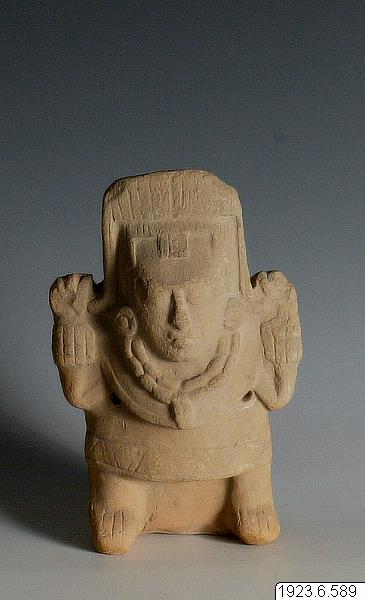 Source: Objaverse 1.0 / Sketchfab
Ancient Maya mammiform tetrapod plate
Guatemalan Highlands. Department of Anthropology, University of Alabama. SFM photogrammetry, Agisoft Photoscan Pro; Canon 5D Mark II, 24-70 2.8 lens Source: Objaverse 1.0 / Sketchfab
Mexico Maya Relief: K'inich Ahkal
A bas-relief in the Palenque Maya ruin that depicts Upakal K'inich, the son of K'inich Ahkal Mo' Naab III. Source: Objaverse 1.0 / Sketchfab
Maya Wood Carving II
Wooden sculpture from Guatemala, 3D scanned with the Artec Space Spider. Texture captured and wrapped in Artec Studio 15. For more information on the scanner, please visit: https://gomeasure3d.com/artec/spider Source: Objaverse 1.0 / Sketchfab
FIGURE 12. Parygrus maya n in Hiding in plain sight: rediscovery and review of Parygrus Erichson, 1847, with description of five new species from the Neotropics (Coleoptera: Byrrhoidea Dryopidae)
FIGURE 12. Parygrus maya n. sp., male; 4.60 mm long, 1.70 mm wide: a) dorsal habitus; b) lateral habitus. FIGURE 13. Parygrus maya n. sp., male genitalia: a) dorsal view; b) lateral view; c) ventral view.
FIGURE 11. Floriaster maya. A in New species, occurrence records and observations of predation by deep-sea Asteroidea (Echinodermata) from the North Atlantic by NOAA ship Okeanos Explorer
FIGURE 11. Floriaster maya. A. In situ feeding observation Berg Bits. B. In situ feeding observation Mona South Ridge, 1156 m. C. Abactinal surface. Scale bar=1.0 cm. D. Actinal surface. Scale bar=1.0 cm. E. Abactinal-lateral surface. Scale bar=0.5 cm.
FIGURE 3. Magnolia oscarrodrigoi. A in Three new species of Magnolia (Magnoliaceae) endemic to the north-wet-arc in the Maya Highlands of Guatemala
FIGURE 3. Magnolia oscarrodrigoi. A. Flower in male phase. B. Gynoecium. C. Flower bud, D. Flower at female phase. Photographs by F. Archila.
FIGURE 13 in New species and records of braconid wasps from Farasan Archipelago (Jazan) Saudi Arabia, with notes on Diolcogaster mayae Shestakov
FIGURE 13. Aleiodes farasanensis Gadallah & Edmardash, sp. nov. (holotype, ♀). A, latero-dorsal view of mesosoma; B, lateral view of head and mesosoma; C, fore and hind wings. A: scale bar (= 1.0×); B C: 0.9×.
FIGURE 2 in Taxonomic revision of the Apiomerus maya species group (Heteroptera: Reduviidae: Harpactorinae)
FIGURE 2. (A–F) Caudal views of the pygophores (pyg) of males of the maya species group displaying the bifid medial process with rami (rm). In these taxa, the base of the medial process is greatly reduced giving the impression of the rami being inserted directly on the posterior rim of the pygophore. The rami are often broadly spaced from one another and render the medial process either V-shaped, as frequently observed in A. pipil (see C), or lyre-shaped (most male A. venosus). Figs. A– F are not to scale. (G–J) Dissected right parameres. All scale bars for Figs. G– J represent 0.25 mm.
Octopus maya decontaminated gx
<p>.</p>
Maya assignment 1 Potion
Source: Objaverse 1.0 / Sketchfab
FIGURE 11. Ceratonereis maya n in Revision of Ceratonereis Kinberg, 1865 recorded from the Caribbean Sea, with description of two new Ceratonereis species and a new combination of Platynereis Kinberg, 1865
FIGURE 11. Ceratonereis maya n. sp. Holotype A, B, D–F (ECOSUR 0245); paratype C (ECOSUR 0247). A, anterior end dorsal view. B posterior end, dorsal view. C, anterior end, dorsal view. D, close-up of prostomium, dorsal view. E, pharynx, dorsal view (arrow tips point rounded papillae in areas VI). F, pharynx, ventral view. Scale bars: A, 1 mm; B–F, 0.5 mm.
FIGURE 12. Ceratonereis maya n in Revision of Ceratonereis Kinberg, 1865 recorded from the Caribbean Sea, with description of two new Ceratonereis species and a new combination of Platynereis Kinberg, 1865
FIGURE 12. Ceratonereis maya n. sp. Holotype A–E, I–O (ECOSUR 0245); paratype F–H (ECOSUR 0247). A, chaetiger 1, right parapodium. B, chaetiger 12, right parapodium. C, chaetiger 30, right parapodium. D, chaetiger 81, right parapodium. E, chaetiger 121, right parapodium. F, chaetiger 52, right parapodium. G, chaetiger 65, right parapodium. H, left jaw, dorsal view. I, notopodial short-bossed heterogomph falciger, chaetiger 29. J, notopodial short-bossed heterogomph falciger, chaetiger 121. K, notopodial short-bossed heterogomph spiniger, chaetiger 121. L, sub-acicular long-bossed heterogomph falcigers, chaetiger 29. M, supra-acicular long-bossed heterogomph falciger, chaetiger 121. N, sub-acicular long-bossed heterogomph spiniger, chaetiger 121. O, sub-acicular long-bossed heterogomph falciger, chaetiger 121. Scale bars: A–D, G, H, 0.3 mm; E, 0.5 mm; F, 0.2 mm; I–O, 10 µm.
Palenque ruin Maya Relief
Source: Objaverse 1.0 / Sketchfab
Improving Sleep and Reducing External Stimuli With the Maya
ClinicalTrials.gov study NCT05078645. IPD Sharing: NO. Countries: 0. Publications: 0.
Base de términos idioma Maya Kaqchikel (Gua)
<p><strong>Base de términos del idioma Maya Kaqchikel (Gua).</strong></p>
Anthropogenic effects on spatio-temporal coexistence of a carnivore guild in the Maya Biosphere Reserve
<p>Most carnivores adapt their spatio-temporal pattens to avoid humans and limit interspecific competition. Species that differ in their temporal activity patterns or that segregate spatially are less likely to engage in direct competition. However, interspecific interactions are context-dependent and research has shown that anthropogenic activities are often the leading factor affecting ecological context. We used camera trap data from four study sites in the Maya Biosphere Reserve in Guatemala which ranged from low to high levels of anthropogenic activities from 11,011 trap/nights at 121 sites to compare the spatio-temporal patterns among jaguars (<em>Panthera onca</em>), pumas (<em>Puma concolor</em>), ocelots (<em>Leopardus pardalis</em>), and gray foxes (<em>Urocyon cinereoargenteus</em>). We performed a quantitative analysis by doing a temporal selection function to model the effects of human activities on diel behavior and a qualitative analysis to graphically inspect activity patterns among all four species across all study sites. Jaguars and pumas increased their nocturnality in areas with low-medium and medium levels of anthropogenic activities, whereas gray foxes decreased their nocturnality in areas with higher anthropogenic activities and human presence. Ocelots where the only species that remained nocturnal throughout all study sites. The study site with high anthropogenic activities showed that gray foxes segregated temporally with ocelots with a temporal overlap of Δ<sub>4</sub> = 0.45 which was different from the one in areas with low activity (Δ<sub>4</sub> = 0.65). Our findings show that carnivores modified their nocturnality in areas with higher anthropogenic disturbance and that their spatio-temporal patterns are context-and species- dependent.</p>
ScienceDex guides
Understand access before you commit
These curated guides explain access requirements, typical timelines, costs, and reuse considerations for widely used research datasets.
Allen Brain Atlas
Allen Brain Atlas is an Allen Institute collection of brain map atlases, datasets, APIs, and analysis tools covering mouse, human, and non-human primate brain resources.
Annotated Behaviour and Observability Dataset (ABODe)
ABODe is a University of Edinburgh DataShare dataset for behavior classification in group-housed mice using home-cage video, identities, bounding boxes, ground-plate positions, and annotator labels.
DANDI Archive for NWB datasets
DANDI is a BRAIN Initiative archive for publishing and sharing neurophysiology data, including electrophysiology, optophysiology, and behavioral data packaged as NWB and related standards.
International Brain Laboratory public data
The International Brain Laboratory public data releases expose standardized mouse decision-making experiments, including Neuropixels recordings, widefield calcium imaging, behavior, and session metadata accessed through the ONE API.
OpenNeuro
OpenNeuro is a free, open platform for sharing neuroimaging datasets, with public search, dataset pages, and download paths for web, S3, DataLad, and the OpenNeuro CLI.