
Find research datasets worth reusing
Search datasets from major research repositories and use ShareScore to quickly assess how well each record supports discovery, access, and reuse.
470
datasets available to search
ShareScore release 0.9.0
Dataset results
470 results for “coffee”
Figure 2 in INTEGRATED PEST MANAGEMENT IN CONILON COFFEE
Figure 2. Coffee beans damaged by coffee berry borer at different maturation stages.
Figure 8 in INTEGRATED PEST MANAGEMENT IN CONILON COFFEE
Figure 8. Coffee scale root, Dysmicoccus texensis.
Data Excel File of APEDA products, Tobacco, Spices, Tea and Coffee in India
Open the record for dataset details and reuse information.
The genome and population genomics of allopolyploid Coffea arabica reveal the diversification history of modern coffee cultivars
<div> <p><em>Coffea arabica</em>, an allotetraploid hybrid of <em>C. eugenioides</em> and <em>C. canephora</em>, is the source of approximately 60% of coffee products worldwide, and its cultivated accessions have undergone several population bottlenecks. We present chromosome-level assemblies of a di-haploid <em>C. arabica</em> accession and modern representatives of its diploid progenitors, <em>C. eugenioides</em> and <em>C. canephora</em>. The three species exhibit largely conserved genome structures between diploid parents and descendant subgenomes, with no obvious global subgenome dominance. We find evidence for a founding polyploidy event 350,000-610,000 years ago, followed by several pre-domestication bottlenecks, resulting in narrow genetic variation. A split between wild accessions and cultivar progenitors occurred ∼30.5 kya, followed by a period of migration between the two populations. Analysis of modern varieties, including lines historically introgressed with <em>C. canephora</em>, highlights their breeding histories and loci that may contribute to pathogen resistance, laying the groundwork for future genomics-based breeding of <em>C. arabica</em>.</p> </div>
Impact of climate on a host-hyperparasite interaction on Arabica coffee in its native range
<p>Natural enemies of plant pathogens might play an important role in controlling plant disease levels in natural and agricultural systems. Yet, plant pathogen-natural enemy interactions might be sensitive to climatic changes. Understanding the relationship between climate, plant pathogens, and their natural enemies is thus important for developing climate-resilient, sustainable agriculture.</p> <p>To this aim, we recorded shade cover, daily minimum and maximum temperature, relative humidity, coffee leaf rust, and its hyperparasite at 58 sites in southwestern Ethiopia during the dry and wet season for two years. </p> <p>Coffee leaf rust severity was positively related to the maximum temperature. Hyperparasite severity was higher when the minimum temperature was low (i.e. in places with cold night temperatures). While canopy cover did not have a direct effect on rust severity, it reduced rust severity indirectly by lowering the maximum temperature. Canopy cover had a direct positive effect on the hyperparasite severity during one surveying period. </p> <p><em><strong>Synthesis and applications.</strong></em> Our findings highlight that coffee leaf rust and its hyperparasite are both affected by shade cover and temperature, but in different ways. On the one hand, these niche differences lead to the worrying prediction that levels of coffee leaf rust will increase, and its hyperparasite will decrease, with climate change. On the other hand, these niche differences between coffee leaf rust and its hyperparasite provide opportunities to develop strategies to manage the environment (such as shade cover and microclimate) in such a way that the rust is disfavored and the hyperparasite is favored.</p>
Korsnes museum, Manual coffee grinder
https://www.museumnord.no/en/our-venues/korsnes-museum/ My 3D reconstruction generated with photogrammetry software 3DF Zephyr v6.507 processing 132 images Source: Objaverse 1.0 / Sketchfab
Coffee Grinder, PBR
Antique Coffee Grinder. Made with blender and substance painter. It was my first project with substance painter. I think the texture set for the handles are totally unnecessary. feel free to remove them before using...some basic dia-electric materials would be enough :") Renders:  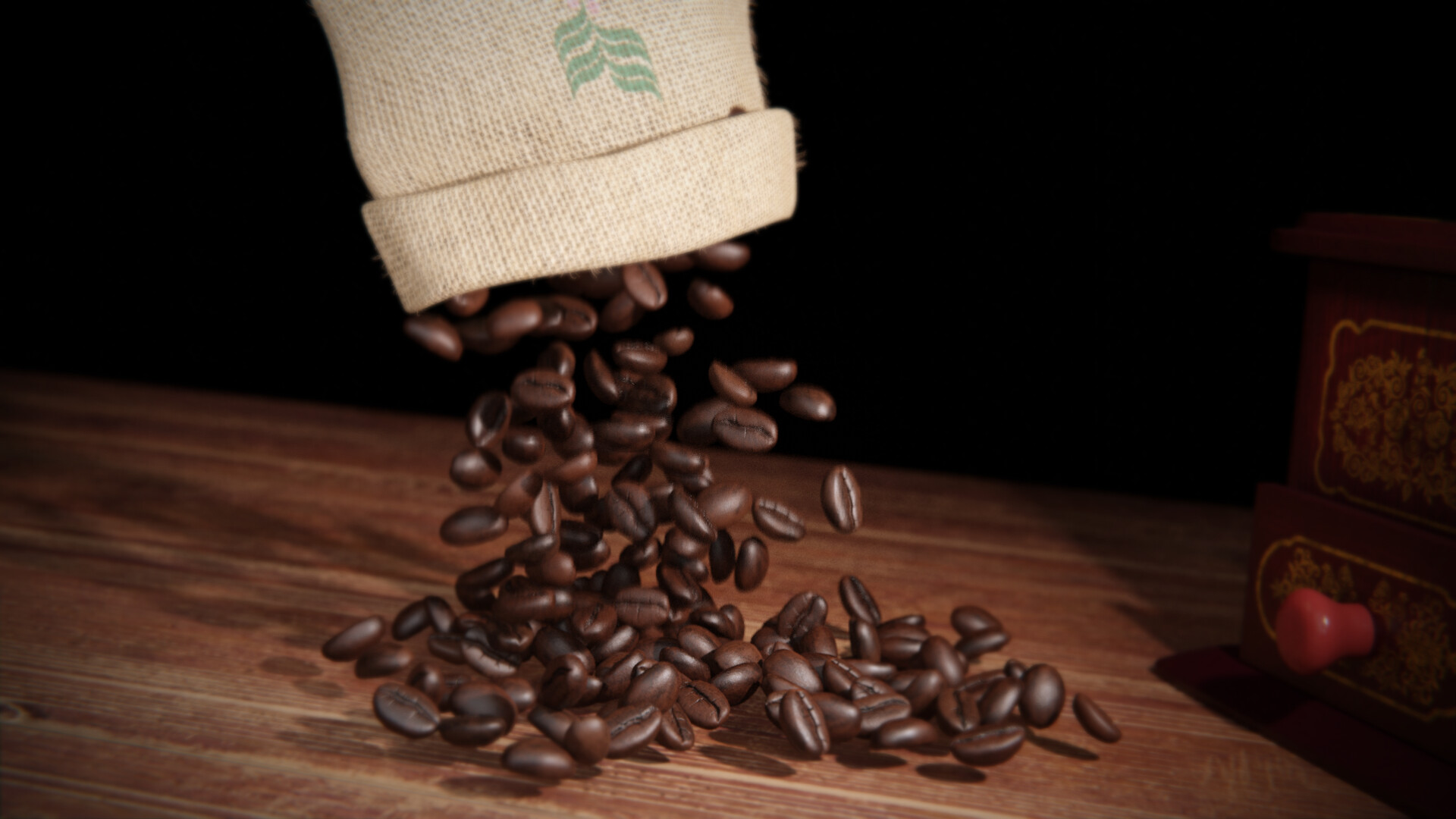   Source: Objaverse 1.0 / Sketchfab
A target enrichment probe set for resolving phylogenetic relationships in the coffee family, Rubiaceae
<p><em>Rubiaceae </em>is among the most species-rich, morphologically and geographically diverse plant families. Phylogenies have been inferred for many different groups across the family, however these have mostly relied on few genomic and plastid loci, as opposed to large-scale genomic data. Target enrichment provides the ability to generate sequence data for hundreds to thousands of phylogenetically informative, single-copy loci, which often leads to improved phylogenetic resolution at both shallow and deep taxonomic scales; however, a publicly accessible <em>Rubiaceae</em>-specific probe set that allows for comparable phylogenetic inference across clades is lacking. Here, we use publicly accessible genomic resources to identify putatively single copy nuclear loci for target enrichment in two <em>Rubiaceae </em>tribes: Hillieae (<em>Cinchonoideae</em>) and Palicoureeae+Psychotrieae (<em>Rubioideae</em>). We sequenced 2270 exons corresponding to 1059 supercontigs in our target clades, and generated in silico target enrichment sequences for other <em>Rubiaceae </em>taxa using our designed probe set. Our probe set, which we call <em>Rubiaceae </em>2270, was effective for targeting loci in species across and even outside of <em>Rubiaceae</em>. This probe set will facilitate phylogenomic studies in <em>Rubiaceae </em>and advance systematics and macroevolutionary studies in the family.</p>
Spent Coffee Grounds as a Sustainable Coffee Flavouring Ingredient in Muffins
<p>Data for the paper entitles: Spent Coffee Grounds as a Sustainable Coffee Flavouring Ingredient in Muffins <br>Published by Sina Breian Solberg and Svein Øivind Solberg<br>Journal: Exploration of Foods and Foodomics, December 2024</p> <p>Affiliation SBS: The National Bakery School, London South Bank University, London SE1 0AA, United Kingdom <br>Affiliation SØS: Faculty of Applied Ecology, Agricultural Sciences and Biotechnology, Inland Norway University of Applied Sciences, Ridabu, Norway</p> <p>Correspondence: Svein Øivind Solberg, Faculty of Applied Ecology, Agricultural Sciences and Biotechnology, Inland Norway University of Applied Sciences, 2322 Ridabu, Norway; svein.solberg@inn.no.</p>
Composition of coffee beans influenced by bioprocessing with selected bacteria
<p>Dataset contains calculation files (Ex2 and Ex3_raw data.xlsx) and summary excel file (Statistics_data.xlsx), on which statistical analysis was performed using attached code in R programming language.</p> <p>Ex1 - Experiment 1; Screening of bacterial strains’ growth.</p> <p>Ex2 - Experiment 2; Coffee fermentation with selected bacterial strains.</p> <p>Ex3 - Experiment 3; Influence of time on coffee fermentation with selected bacterium.</p>
Testing what we know about coffee volatiles affecting behaviour of Hypothenemus hampei
<p>Raw data about laboratory and field assays of volatile compounds that affects coffee berry borer, <em>Hypothenemus hampei.</em></p>
Target capture data resolve recalcitrant relationships in the coffee family (Rubioideae, Rubiaceae)
<p class="MsoNormal"><span>Subfamily Rubioideae is the largest of the main lineages in the coffee family (Rubiaceae), with over 8,000 species and 29 tribes. Phylogenetic relationships among tribes and other major clades within this group of plants are still only partly resolved despite considerable efforts. While previous studies have mainly utilized data from the organellar genomes and nuclear ribosomal DNA, we here use a large number of low-copy nuclear genes obtained via a target capture approach to infer phylogenetic relationships within Rubioideae. We included 101 Rubioideae species representing all but two (the monogeneric tribes Foonchewieae and Aitchinsonieae) of the currently recognized tribes, and all but one non-monogeneric tribe were represented by more than one genus. Using data from the 353 genes targeted with the universal Angiosperms353 probe set we investigated the impact of data type, analytical approach, and potential paralogs on phylogenetic reconstruction. We inferred a robust phylogenetic hypothesis of Rubioideae with the vast majority (or all) nodes being highly supported across all analyses and datasets and few incongruences between the inferred topologies. The results were similar to those of previous studies but novel relationships were also identified. We found that supercontigs (coding sequence [CDS] + noncoding sequence) clearly outperformed CDS data in levels of support and gene tree congruence. The full datasets (353 genes) outperformed the datasets with potential paralogous genes removed (186 genes) in levels of support but increased gene tree incongruence slightly. The pattern of gene tree conflict at short internal branches was often consistent with high levels of incomplete lineage sorting (ILS) due to rapid speciation in the group. While concatenation- and coalescence-based trees mainly agreed, the observed phylogenetic discordance between the two approaches may be best explained by their differences in accounting for ILS. The use of target capture data greatly improved our confidence and understanding of the Rubioideae phylogeny, highlighted by the increased support for previously uncertain relationships and the increased possibility to explore sources of underlying phylogenetic discordance.</span></p>
Ethiopian coffee cup
The ethiopian coffee cup set with pyrex and borosilicate glass can withstand high heat and cold and do not react with the liquid. Source: Objaverse 1.0 / Sketchfab
Enameled Coffee Percolator
This yellow enameled coffee percolator was discovered by construction crews in October, 2018. Construction crews conducting work in an area where a known historic homestead once stood and contacted CAP once this coffee percolator and bricks were discovered. CAP members conducted a quick salvage operation at the location and found the remains of two glass bleach bottles dating to 1951, ceramic drain pipes, cement foundations, and the crumbling remains of brick walls, possibly part of an old basement. Based on the distribution, it is likely that trash and reduse was dumped into the basement before the structure was torn down and the foundations burried. The artifacts found here associated with the coffee percolator, as well as artifacts found in this area during the summer of 2018, CAP choose this location for excavations for the 2019 field season. No doubt other exciting finds such as this one will be uncovered! Source: Objaverse 1.0 / Sketchfab
Figure 1 in Statewide Survey of Insects Found on Coffee in Hawaii
Figure 1. Map of coffee pest survey locations throughout the State of Hawaii.
Raw Data from Cepea on Sugar, Fed Cattle, Coffee, and Soybean Price Indexes
<p>Data for the full series of the Sugar, Fed Cattle, Coffee, and Soybean Price Indexes were extracted from the Cepea Database, covering their series beginnings until 06-28-2023. Reproduction of the data in non-commercial circumstances is free. For commercial purposes, arrangements must be made with Cepea: <a rel="noreferrer">cepea@usp.br</a>.</p>
Fig. 4 in Diversity of anurans in forest fragments of southwestern Ethiopia: The case of the Yayu Coffee Forest Biosphere Reserve (YCFBR)
Fig. 4. Species cumulative curve.
Management intensity affects insect pests and natural pest control on Arabica coffee in its native range
<p><span>Agroforestry systems provide opportunities to reduce the trade-off between agricultural production and biodiversity, for example by enhancing a diverse community of species potentially acting as natural pest control agents. While management of agroforestry systems is intensifying across the globe, we lack insights into the impact of management intensity on pest levels and natural pest control, especially along broad management gradients and as compared with natural forests. </span></p> <p><span>We assessed the impact of management intensity on major insect pests (the coffee blotch miner, the serpentine leaf miner, the coffee leaf skeletonizer, and damage by other free-feeding herbivores) and natural pest control by parasitoid wasps across sixty sites in the center of origin of Arabica coffee in southwestern Ethiopia. Within this region, coffee is growing along a broad management gradient ranging from little or no management in the natural forest to intensively managed commercial plantations. </span></p> <p><span>In the wet season, pest levels were largely similar in the natural forest, semi-forest, and semi-plantation systems, whereas pests reached outbreak densities in the most intensively managed plantation system. In contrast, management intensity did not significantly affect pest levels</span><span> in the dry season</span><span>. The insect pests differed in their seasonal dynamics, consistently declined with elevation, and were largely unaffected by shade levels. Parasitism rate of the coffee blotch miner was lower, and the parasitoid community was distinct, in the most intensively managed plantation system. </span></p> <p><span><em><strong>Synthesis and applications</strong></em>: Our findings support the hypothesis that the weaker top-down control by parasitoids in the intensively managed plantation sites leads to higher pest levels, and that – at least for some pest species – there is a threshold in the effect of management intensity on pest levels and natural pest control. It is important to consider such non-linear relationships to maintain or enhance the sustainability of agroforestry systems during management intensification. Overall, our findings highlight that ecological knowledge of natural pest control can be used to intensify production to improve the livelihood of smallholders without jeopardizing natural pest control, at least up to a certain point. </span></p>
Coffee Leaf Rust monitoring data on Hawaii Island
<p><span>CLR was detected in Hawaii for the first time in 2020 and quickly spread across the state. We initiated a CLR monitoring program in Kona, West Hawaii Island to track the spread of this new invasive disease across a broad elevational gradient. The goals of the program were to assist growers in the early detection of CLR, to characterize patterns of disease incidence across the region, and to collect information on farm agronomics, management practices, and costs to apply fungicides, all of which can be used to develop IPM strategies for this pathogen. We monitored 30 coffee lots in Kona, located between 204 and 875 m elevation. Average CLR incidence remained below 4% early in the season and increased to 36% during harvest. We observed no significant difference in CLR incidence between low-, mid- and high-elevation farms. A significant reduction in the number of leaves per branch was observed at the end of the harvest season, and a significant negative correlation was found between the number of leaves per branch and maximum CLR severity. Mean disease incidence and mean severity were observed to have a significant positive correlation. Incidence increased above threshold levels (5%) despite most growers applying preventative fungicides 3-10 times throughout the season, suggesting that improved coverage and timing of applications is needed along with the addition of systemic fungicides. Our study provides the first insights into CLR disease patterns under the unique and variable conditions under which Hawaiian coffee is grown and will aid in the development of IPM programs that can be used to sustain Hawaii's coffee industry under this new threat. </span></p>
Figure 8 in A Case Study of Wavelets and SVM Application in Coffee Agriculture: Detecting Cicadas Based on Their Acoustic and Image Patterns
Figure 8. Cross-oalidation algorithm.
ScienceDex guides
Understand access before you commit
These curated guides explain access requirements, typical timelines, costs, and reuse considerations for widely used research datasets.
Allen Brain Atlas
Allen Brain Atlas is an Allen Institute collection of brain map atlases, datasets, APIs, and analysis tools covering mouse, human, and non-human primate brain resources.
Annotated Behaviour and Observability Dataset (ABODe)
ABODe is a University of Edinburgh DataShare dataset for behavior classification in group-housed mice using home-cage video, identities, bounding boxes, ground-plate positions, and annotator labels.
DANDI Archive for NWB datasets
DANDI is a BRAIN Initiative archive for publishing and sharing neurophysiology data, including electrophysiology, optophysiology, and behavioral data packaged as NWB and related standards.
International Brain Laboratory public data
The International Brain Laboratory public data releases expose standardized mouse decision-making experiments, including Neuropixels recordings, widefield calcium imaging, behavior, and session metadata accessed through the ONE API.
OpenNeuro
OpenNeuro is a free, open platform for sharing neuroimaging datasets, with public search, dataset pages, and download paths for web, S3, DataLad, and the OpenNeuro CLI.