
Find research datasets worth reusing
Search datasets from major research repositories and use ShareScore to quickly assess how well each record supports discovery, access, and reuse.
713
datasets available to search
ShareScore release 0.9.0
Dataset results
713 results for “towns”
Dataframes for: Postpartum cessation of urban space use by a female baboon living at the edge of the City of Cape Town
<p>Species with slow life history strategies that invest in few offspring with extended parental care need to adapt their behaviour to cope with anthropogenic changes that occur within their lifetime. Here we show that a female chacma baboon (<em>Papio</em> <em>ursinus</em>) who commonly ranges within urban space in the City of Cape Town, South Africa, stops using urban space after giving birth. This change of space use occurs without any significant change in daily distance travelled or social interactions that would be expected with general risk-sensitive behaviour after birth. Instead, we suggest this change occurs because of the specific and greater risks the baboons experience within the urban space compared to natural space, and because leaving the troop (to enter urban space) may increase infanticide risk. This case study can inform methods used to manage the baboon's urban space use in Cape Town and provides insight into how life history events alter individuals' use of anthropogenic environments.</p>
Data for: Thermal refugia and persistence of Texas horned lizards (Phrynosoma cornutum) in small towns
<p class="MsoNormal">Vegetation loss is a primary cause of habitat degradation and results in a decline in reptile species abundance due to loss of refuge from predators and hot temperatures, and foraging opportunities. Texas horned lizards (<em>Phrynosoma cornutum</em>) have disappeared from many areas in Texas, especially from urbanized areas, probably in large part due to loss of suitable habitat. This species still occurs in some small towns in Texas that still contain suitable habitat. Long-term data from Kenedy and Karnes City, Texas indicate that when study sites experienced significant shrub and vegetation removal horned lizards declined by 79%. We hypothesize the decline was due to the degradation of the thermal landscape for these lizards. We determined the preferred temperature range (<em>T<sub>set25 </sub></em>−<em>T<sub>set75</sub></em>) of lizards at our study sites and took field measurements of body temperature (<em>T<sub>b</sub></em>). Temperature loggers were also placed in three microhabitats across our study sites. Shrubs and vegetation provided the highest quality thermal environment, especially for about 5 hours midday when temperatures in the open and buried under the surface in the open exceeded the lizards' critical maximum temperature (<em>CT<sub>max</sub></em>) or were above their preferred temperature range. Horned lizard density was positively related to the thermal quality of the habitat across our sites. Texas horned lizards in these towns require a heterogeneous mix of closely spaced microhabitats and especially thermal refugia, such as shrubs and vegetation along fence lines and in open fields. Maintaining thermal refugia is one of the most important and practical conservation actions that can be taken to help small ectotherms persist in modified human landscapes and cope with increasing temperatures due to climate change.</p>
Figures 35-36 in Contributions to the taxonomy of the Brazilian Leurus Townes, 1946 (Hymenoptera: Ichneumonidae, Metopiinae)
Figures 35-36. Map of known distribution occurrences of Leurus in Brazil. (35) L. angustignathus. (36) L. caeruliventris.
Figures 29-34 in Contributions to the taxonomy of the Brazilian Leurus Townes, 1946 (Hymenoptera: Ichneumonidae, Metopiinae)
Figures 29-34. Males. Genital capsules and hypopygium of Leurus in dorsal view. (29) Genital capsule of L. discus, (30) Genital capsule of L. gracius and (31) Genital capsule of L. caeruliventris. (32) Hypopygium of L. discus, (33) Hypopygium of L. gracius and (34) Hypopygium of L. caeruliventris. Scale bars: 200 μm.
Figures 22-28 in Contributions to the taxonomy of the Brazilian Leurus Townes, 1946 (Hymenoptera: Ichneumonidae, Metopiinae)
Figures 22-28. Leurus gracius, Male. (22) Face in frontal view. (23, 24) Detail of the mandible, with the presence of the ventral lobe, in frontal view. (25) Lateromedial longitudinal carina of propodeum in dorsal view. (26) Lateromedial longitudinal carina in the first metasomal tergite in dorsal view. (27) Habitus. (28) Metasoma in ventral view. Scale bars: 200 μm (22), 100 μm (23), 100 μm (24), 200 μm (25), 200 μm (26), 2.0 mm (27), and 2.0 mm (28).
Figures 8-14 in Contributions to the taxonomy of the Brazilian Leurus Townes, 1946 (Hymenoptera: Ichneumonidae, Metopiinae)
Figures 8-14. Leurus caeruliventris, Female. (8) Face in frontal view. (9, 10) Detail of the mandible, with the presence of the ventral lobe, in frontal view. (11) Lateromedial longitudinal carina of propodeum in dorsal view. (12) Lateromedial longitudinal carina in the first metasomal tergite in dorsal view. (13) Habitus. (14) Metasoma in ventral view. Scale bars: 200 μm (8), 100 μm (9), 100 μm (10), 200 μm (11), 200 μm (12), 2.0 mm (13) and 500 μm (14).
Figures 15-21 in Contributions to the taxonomy of the Brazilian Leurus Townes, 1946 (Hymenoptera: Ichneumonidae, Metopiinae)
Figures 15-21. Leurus discus, Male. (15) Face in frontal view. (16, 17) Detail of the mandible, with the presence of the ventral lobe, in frontal view. (18) Lateromedial longitudinal carina of propodeum in dorsal view. (19) Lateromedial longitudinal carina in the first metasomal tergite in dorsal view. (20) Habitus. (21) Metasoma in ventral view. Scale bars: 200 μm (15), 100 μm (16), 100 μm (17), 200 μm (18), 200 μm (19), 2.0 mm (20) and 500 μm (21).
Spatial database of the towns of the repertoire of all the roads of Spain in the year of grace of 1543 by Juan Villuga [shapefile]
<p>Este archivo proporciona una versión digital de los pueblos categorizados por Juan Villuga en 1543. El archivo consta de 1070 entidades geográficas de tipo punto, cada entidad representa un pueblo documentado por Juan Villuga con su respectivo nombre. Se ha utilizado la proyección ETRS89 30N. La vectorización ha sido realizada a partir de dos fuentes: 1) Villuga, Juan. 1543. Repertorio de todos los caminos de España en el año de gracia de 1543. Barcelona: Institut Cartografic i Geològic de Catalunya, R: RL 3419. (Consulta 14/05/2014). <a href="http://cartotecadigital.icgc.cat/cdm/singleitem/collection/espanya/id/2618/rec/1">http://cartotecadigital.icgc.cat/cdm/singleitem/collection/espanya/id/2618/rec/1</a>; y 2) Villuga, Juan. 1950 [1543]. Repertorio de todos los caminos de España. Madrid: Reimpresiones Bibliográficas.</p> <p>La tabla de atributos contiene información de la denominación de cada pueblo dada por Juan Villuga (1543), de la categorización dada por Villuga, de la denominación dada por Gonzalo Menéndez Pidal (1951), de la denominación actual y de la precisión de la digitalización.</p> <p>Cuanto a la metodología, en primer lugar, se transcribieron los núcleos y se relacionaron con la información de sus respectivas rutas y clasificación definida por Villuga (capital, ciudad importante, ciudad pequeña, venta) a través de una tabla en formato .xml. Cada núcleo, a su vez, se asoció también con la denominación actual y las establecidas en las cartografías de Villuga y Menéndez Pidal. De esta forma, se registraron los cambios en la toponimia entre las cartografías de 1546 y 1941. Otra característica adicional que decidimos considerar fue el atributo de "exactitud" que se refiere a la calidad de la información espacial (las coordenadas). Cuando los datos de un núcleo no eran exactos al georreferenciarlos, añadimos el atributo "inexacto", de modo que la calidad de los datos también quedara registrada en la propia tabla de atributos.</p>
Town Hall - Steampunk
* Model of a steampunk town hall * **Formats: OBJ** * Imagined, designed, and commissioned by MOJackal * Collection link: https://skfb.ly/6OSTq Source: Objaverse 1.0 / Sketchfab
The town of Fukagawa in the Edo period
Nagaya well and others It is a shared space for Nagaya residents with a well, a communal toilet, a garbage collection, and Inari. Permanent exhibition "The town of Fukagawa in the Edo period" The Fukagawa Edo Museum is a "scenery reproduction, life reproduction exhibition" that recreates the townscape of Fukagawa Saga Town around the end of the Edo period and the Tenpo era. [Fukagawa Edo Museum](https://www.kcf.or.jp/fukagawa/), Koto Ward 1-3-28 Shirakawa, Koto-ku, Tokyo, 135-0021 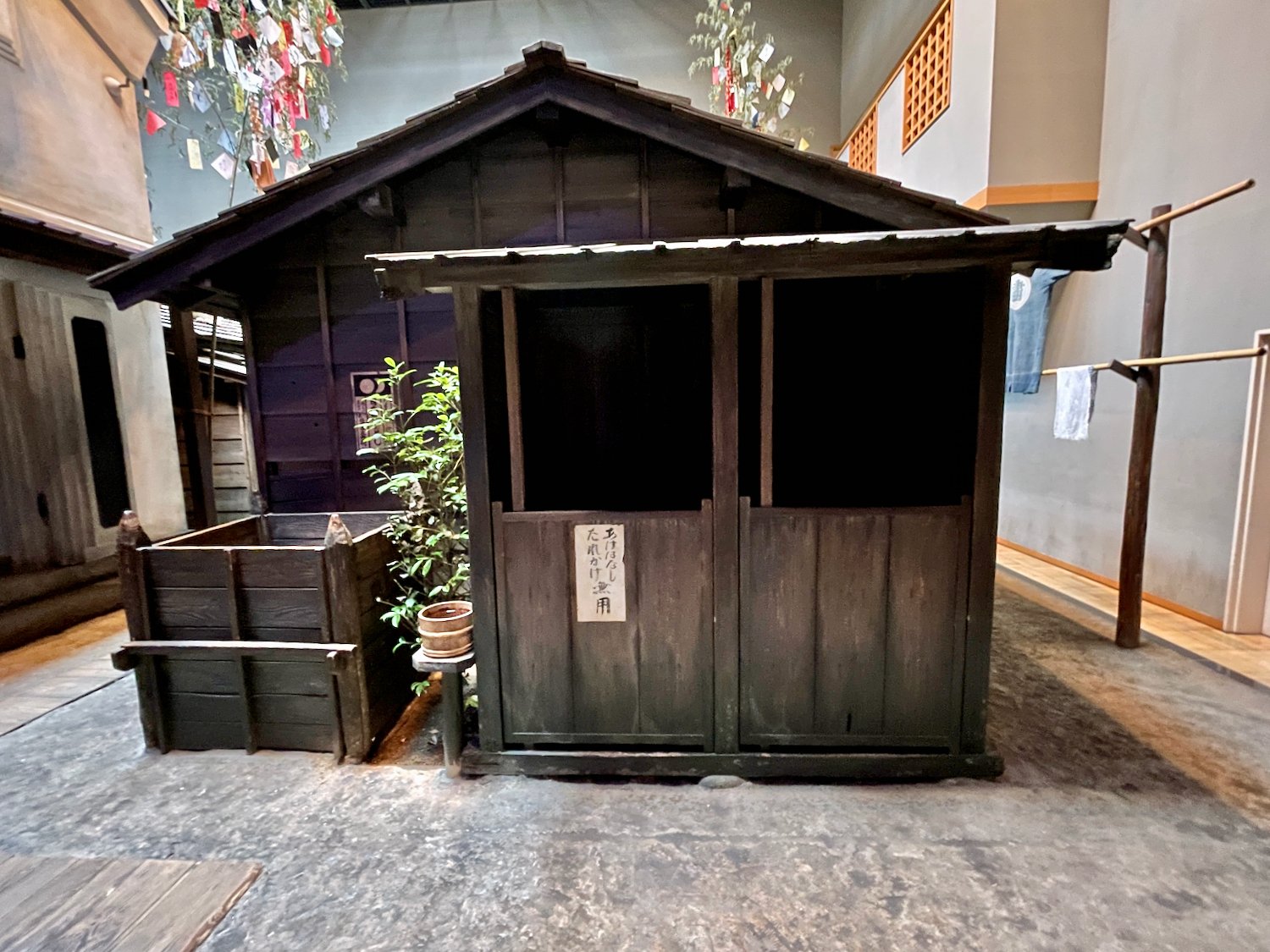 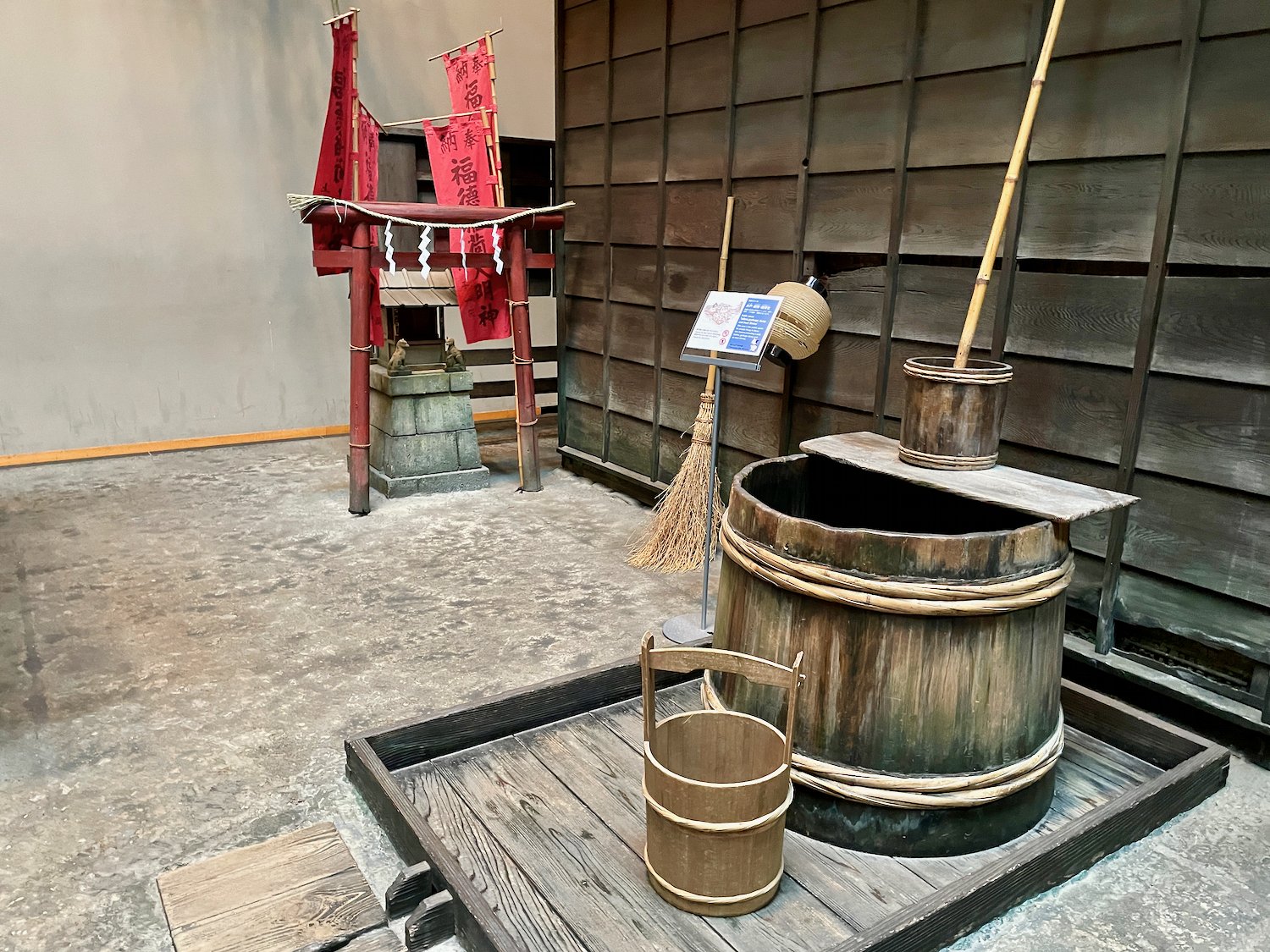 Source: Objaverse 1.0 / Sketchfab
Athenry - Medieval Walled Town - Madonna Child
This carvings is located within the Dominican Priory of Athenry. Located towards the East of the church on the N. wall it shows a Modonna and the child christ. Two fish form an arch over the carvigs with detailed faces. The faces of the Madonna and Child are word, and may have been damaged in a fire or deliberty broken over time. Source: Objaverse 1.0 / Sketchfab
Tralee Town Square
Tralee (/træ.ˈliː/; Irish: Trá Lí (formerly Tráigh Lí), meaning "strand of the Lee (river)") is the county town of County Kerry in the south-west of Ireland. The town is on the northern side of the neck of the Dingle Peninsula, and is the largest town in County Kerry. The town's population including suburbs was 23,693 as of the 2011 census making it the 7th largest town, and 13th largest urban settlement in Ireland. Tralee is well known for the Rose of Tralee International Festival which has been held annually in August since 1959. [https://en.wikipedia.org/wiki/Tralee](http://) This model, created by Viewsion.ie from a laser scan by BaslineSurveys.ie Viewsion Virtual Environments. Source: Objaverse 1.0 / Sketchfab
Medieval Town Sample
This is just a sample Medieval Town model I've modeled and textured in 3DS Max for my Assignment which was to create a scene with three world game assests based on the Medieval Period. The assets had to be orientated in a way that would compliment each other and add a sense of story and life to the scene. Source: Objaverse 1.0 / Sketchfab
Roman Town (WIP)
A fictional ancient Roman town. Work in progress. https://twitter.com/lexferreira89 http://patreon.com/lexferreira89 https://linktr.ee/lexferreira89 Source: Objaverse 1.0 / Sketchfab
Rollo of the town of Picón
The Rollo (a large stone column) of the town of Picón is located in the heart of this small village (Ciudad Real, Spain). In 1564 Luis Alfonso de Estrada bought the town of Picón from King Felipe II. Until that moment this small town had belonged to the Military Order of Calatrava. A year later the building of the City council was constructed, incorporating in its ground floor a jail. Possibly in this same year a Rollo was placed in front of the Town Hall, which indicated the capacity of this town to judge crimes. 3D model made using 256 images in Reality Capture. Additional processing was completed in Geomagic Wrap, Zbrush, Substance Designer, and Blender. Source: Objaverse 1.0 / Sketchfab
Ballarat Town Hall facade
Ballarat Town Hall is situated in Sturt Street, Ballarat, and was built in the 1860s in the classical revival style. The design, which resulted from an architectural competition in 1868, is the interesting and unusual work of three architects - the exterior by JJ Lorenz, the interior by local architect HR Caselli, and the final overall composition by Ballarat architect Percy Oakden, who merged the incompatible design designs of Lorenz and Caselli into a whole. View the Town Hall's full heritage citation [here](http://vhd.heritagecouncil.vic.gov.au/places/1395#sthash.AcCfQVF7.dpuf). Model developed by  [Digital Heritage Australia ](http://digitalheritageaustralia.com) Source: Objaverse 1.0 / Sketchfab
Characteristics and Prevalence of Tuberculosis and HIV in Masiphumelele Township, Cape Town, South Africa
ClinicalTrials.gov study NCT00346476. IPD Sharing: Not stated. Countries: 1. Publications: 7.
Evaluation of Pre-exposure Prophylaxis Cascade in Pregnant and Breastfeeding Women in Cape Town (Formative Study)
ClinicalTrials.gov study NCT03826199. IPD Sharing: Not stated. Countries: 1. Publications: 6.
Young Women's Health CoOp (Cooperative) in Cape Town
ClinicalTrials.gov study NCT02677025. IPD Sharing: YES. Countries: 1. Publications: 1.
Comparison of Two Intrauterine Devices (IUDs) Among Cape Town HIV-positive Women
ClinicalTrials.gov study NCT01721798. IPD Sharing: NO. Countries: 1. Publications: 2.
ScienceDex guides
Understand access before you commit
These curated guides explain access requirements, typical timelines, costs, and reuse considerations for widely used research datasets.
Allen Brain Atlas
Allen Brain Atlas is an Allen Institute collection of brain map atlases, datasets, APIs, and analysis tools covering mouse, human, and non-human primate brain resources.
Annotated Behaviour and Observability Dataset (ABODe)
ABODe is a University of Edinburgh DataShare dataset for behavior classification in group-housed mice using home-cage video, identities, bounding boxes, ground-plate positions, and annotator labels.
DANDI Archive for NWB datasets
DANDI is a BRAIN Initiative archive for publishing and sharing neurophysiology data, including electrophysiology, optophysiology, and behavioral data packaged as NWB and related standards.
International Brain Laboratory public data
The International Brain Laboratory public data releases expose standardized mouse decision-making experiments, including Neuropixels recordings, widefield calcium imaging, behavior, and session metadata accessed through the ONE API.
OpenNeuro
OpenNeuro is a free, open platform for sharing neuroimaging datasets, with public search, dataset pages, and download paths for web, S3, DataLad, and the OpenNeuro CLI.