
Find research datasets worth reusing
Search datasets from major research repositories and use ShareScore to quickly assess how well each record supports discovery, access, and reuse.
16,668
datasets available to search
ShareScore release 0.9.0
Dataset results
16,668 results for “ITS-1”
Sw Stone Pipe (2177a3-1)
**Carved stone pipe** Location: Qualla Boundary, Swain County, North Carolina. Period: Historic (1880s). Material: stone. Dimensions: length, 45.1 mm; width, 21.4 mm; height, 28.1 mm. Notes: Catalog no. 2177a3, specimen 1. Ethnographic specimen. North Carolina Archaeological Collection, Research Laboratories of Archaeology, University of North Carolina at Chapel Hill. Model by Abigail Gancz. Source: Objaverse 1.0 / Sketchfab
COADS_55-1
Diagnostic biface collected in Jefferson Township, Ross County, Ohio, Material: Flint Ridge Uploaded by: Gabi Ritter Nolan, Kevin C., Eric Olson, Kelli Wathen, Gabi Ritter, Abby Clark, and Michael Shott, 2017. COADS_55-1, 3D Model .ply file.Central Ohio Archaeological Digitization Survey, Department of Anthropology, University of Akron and Applied Anthropology Laboratories, Department of Anthropology, Ball State University. Source: Objaverse 1.0 / Sketchfab
center2-1 Saint George Cathedral
Изображение святого, часть композиции "Преображение Господне" Каменный рельеф Георгиевского собора (г.Юрьев-Польский) Преображение Иисуса Христа - двунадесятый праздник, воспоминание великого события в жизни И. Христа, когда, совершив половину своего земного служения и достаточно доказав свою божественность дивным учением и чудесами, Он порешил еще особым необычайным способом показать ученикам славу своего Божества. (ЭСБЭ). В источниках: Матф., XVII, 1—13; Марк., IX, 1—12; Лук., IX, 28—36. Части композиции идентифицированы и реконструированы К.К. Романовым в 1910 г. Место расположения: южный фасад собора Ряд: 2 ряд, верхний Порядок: 1 Программа разработки: Agisoft Photockan Создан в рамках научно-исследовательского проекта кафедры совместно с Юрьев-Польским историко-архитектурным и художественным музеем под руководством Карташова С.А. Авторы: к.и.н., ассистент Жеребятьев Д.И., магистрант Тришин И.Г. Авторы выражают благодарность директору музея Борисовой С.В. Рабочее название файла: center2-1 Source: Objaverse 1.0 / Sketchfab
COADS_272-1
Core collected in Ross County, Ohio. Material: Flint Ridge Uploaded by: Gabi Ritter Nolan, Kevin C., Eric Olson, Kelli Wathen, Gabi Ritter, Abby Clark, and Michael Shott, 2017. COADS_272-1, 3D Model .ply file.Central Ohio Archaeological Digitization Survey, Department of Anthropology, University of Akron and Applied Anthropology Laboratories, Department of Anthropology, Ball State University. Source: Objaverse 1.0 / Sketchfab
5500 year-old Leather Shoe Areni-1
The Areni-1 shoe is a 5,500-year-old leather shoe that was found in 2008 in excellent condition in the Areni-1 cave located in the Vayots Dzor province of Armenia. It is a one-piece leather-hide shoe, the oldest piece of leather footwear in the world known to contemporary researchers. The discovery was made by an international team led by Boris Gasparyan, an archaeologist from the Institute of Archaeology and Ethnography of the National Academy of Sciences of Armenia (co-directors of the project are Ron Pinhasi from University College Cork in Ireland, and Gregory Areshian from UCLA). * Available in ARLOOPA App - https://arloopa.com/experiences/19864 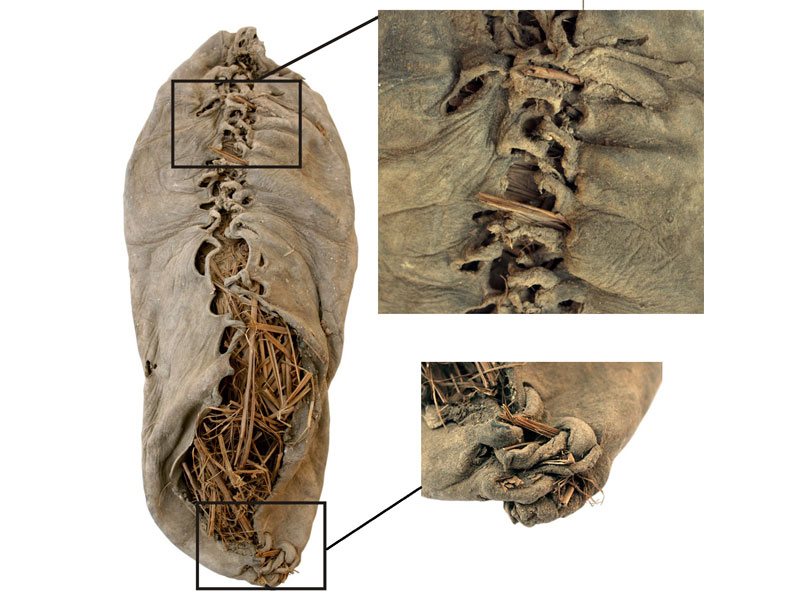 Source: Objaverse 1.0 / Sketchfab
Stone Fish Effigy Pipe (2101a185-1)
**Stone fish effigy pipe** Location: Site 31St1, Stanly County, North Carolina. Period: Late Woodland (AD 800-1200?). Material: soapstone. Dimensions: length, 104.8 mm; width, 25.9 mm; height, 44.6 mm. Notes: Catalog no. 2101a185-1. North Carolina Archaeological Collection, Research Laboratories of Archaeology, University of North Carolina at Chapel Hill. Model by Abigail Gancz. Source: Objaverse 1.0 / Sketchfab
A Chinese Tongguan kiln teapot-1
A Chinese Tongguan kiln teapot which created by the Chinese national intangible cultural heritage master Liu. Source: Objaverse 1.0 / Sketchfab
Skrunda-1
Oficiāli šo vietu sauc par Līdumniekiem, bet biežāk par Skrunda-1 vai Lokatoru. Šeit atrodas PSRS armijas pamestā kara pilsētiņa. Source: Objaverse 1.0 / Sketchfab
Kirk Corner-Notched (690a409-1)
**Kirk Corner-Notched spear point** Location: Hardaway site (31St4), Stanly County, North Carolina. Period: Early Archaic (7000-6000 BC). Material: metavolcanic rock. Dimensions: length, 45.1 mm; width, 23.5 mm; thickness, 6.5 mm. Notes: Catalog no. 690a409-1, North Carolina Archaeological Collection, Research Laboratories of Archaeology, University of North Carolina at Chapel Hill. Illustrated in *The Formative Cultures of the Carolina Piedmont*, by Joffre L. Coe, Transactions of the American Philosophical Society vol. 54, pt. 5, 1964, Figure 60. Model by Steve Davis. Source: Objaverse 1.0 / Sketchfab
Scissors (2351a542-1)
**Scissors** Location: Fredricks site (31Or231), Orange County, North Carolina. Period: Historic (AD 1700). Material: iron. Dimensions: length, 167.0 mm; width, 34.2 mm; thickness, 4.7 mm. Notes: Catalog no. 2351a542 (specimen 1). North Carolina Archaeological Collection, Research Laboratories of Archaeology, University of North Carolina at Chapel Hill. Model by Abigail Gancz. Source: Objaverse 1.0 / Sketchfab
Фотоаппарат «Фотокор-1» • Camera 'Photokor-1'
1938 15.5 x 27.5 x 11 cm Фотоаппарат принадлежал Михаилу Проскурякову, инженеру, который увлекался фотографией. Фотопечатью он занимался по ночам в ванной коммунальной квартиры. Соседи сообщили о таком подозрительном поведении в органы и Михаила вызвали на Лубянку. К счастью, следователь тоже оказался фотолюбителем, все понял, но настоятельно рекомендовал ему бросить фотографию. This camera belonged to Mikhail Proskuryakov, an engineer who enjoyed photography. As he lived in communal living quarters, he had to print the photos at night time in the communal bathroom. His neighbours informed the security services about such suspicious behaviour and he was summoned to the Lubyanka. Happily the investigator also loved photography, he understood everything but strongly recommended Mikhail to quit photography. Source: Objaverse 1.0 / Sketchfab
Shell Disk Bead (1940a121-1)
**Columella shell disk bead** Location: Cane Creek site (31Ml3), Mitchell County, North Carolina. Period: late Middle Woodland (AD 700-1100). Material: marine shell. Dimensions: length, 20.5 mm; width, 20.1 mm; thickness, 4.1 mm. Notes: Catalog no. 1940a121, specimen 1. North Carolina Archaeological Collection, Research Laboratories of Archaeology, University of North Carolina at Chapel Hill. Model by Abigail Gancz. Source: Objaverse 1.0 / Sketchfab
0.48 Angstrom 3,5-dinitrobenzoic acid (3,5-DNBA) C2/c polymorph single crystal X-ray diffraction data set recorded at Diamond Light Source I19-1
<p>Data set from 3,5-dinitrobenzoic acid (3,5-DNBA) C2/c polymorph recorded during in house research (DLS proposal: NR18193). Each run is saved as a single compressed tar file for convenience, runs 1, 2, 3 correspond to 3 x 170 degree omega scans at phi 0, 120, 240 degrees with 2-theta of 30 degrees, run 4 phi scan at 2-theta 0, runs 5-8 omega scans at 2-theta 55 degrees, giving data to 0.48A.</p> <p> </p> <p>Now including scale factor graph & report from processing</p>
Data associated with the publication "A de novo designed coiled-coil-based switch regulates the microtubule motor kinesin-1"
<p> All raw data required to reproduce the findings in the manuscript ""A de novo designed coiled-coil-based switch regulates the microtubule motor kinesin-1".</p>
3D-coordinates of the complex formed by TRN-1 and CA hexamer from HIV-1 and MD simulation of H27 with CA hexamer
<p>The complex formed by HIV-1 CA hexamer (based on 3H4E) and Transportin-1 (TRN-1, based on 4FQ3) was first obtained by rigid docking and optimized by MD simulations and finally energy minimized using NAMD program and Charmm36m force field. This complex was used for the in silico screening study for discovering new antiviral drugs.</p> <p>The 3D coordinates (PDB file) of CA hexamer in presence of H27</p> <p>The corresponding trajectory of MD simulation (500 ns) of H27 with CA hexamer in order to find preferential binding sites (trajectory reduced or strided for reducing the size of the file</p>
The role of Cornulin (CRNN) in the progression of cutaneous squamous cell carcinoma involving AKT activation in SCL-1
<p>Cutaneous squamous cell carcinoma (cSCC) is a prevalent type of skin cancer that has been on the rise in recent times, particularly among older individuals. Cornulin (CRNN) is increasingly recognized as an oncogene involved in developing various types of tumors. However, the precise contribution to cSCC remains unclear. Our study observed a significant increase in CRNN expression in cSCC samples compared to healthy skin. CRNN expression in the SCL-1 cell line derived from cSCC was reduced, leading to a halt in cell growth during the transition from the G1 phase to the S phase. This reduction inhibits cell division, promotes cell death, and decreases cell invasion and migration. CRNN overexpression has been found to enhance cell growth and prevent cells from undergoing natural cell death, and the cancer-promoting effects of CRNN are linked to AKT activation. Using a mouse xenograft model, we demonstrated that the inhibition of CRNN led to a decline in cSCC tumor growth in a living organism, providing evidence of CRNN’s involvement in cSCC occurrence and development. This study establishes a foundation for evaluating the effectiveness of CRNN in treating cSCC, enabling further investigation in this area</p>
Anion exchange chromatography-mass spectrometry to characterize proteoforms of alpha-1-acid glycoprotein during and after pregnancy
<p><span>This data repository contains all previously unpublished raw data files for the manuscript "Anion exchange chromatography-mass spectrometry to characterize proteoforms of alpha-1-acid glycoprotein during and after pregnancy"</span></p>
(Re)construção de vasilhame guarani do sítio T003-1 (Barra do Rio Azul, Rio Grande do Sul)
<p>(Re)construção 3D de vasilhame cerâmico guarani do sítio T003-1 (Barra do Rio Azul, Rio Grande do Sul), apresentada no XX Congresso da Sociedade de Arqueologia Brasileira, Pelotas, 2019.</p>
Crab Nebula DL3 example dataset from the LST-1 performance study
<h1>DL3 example dataset from Crab Nebula observations with LST-1</h1> <p>This repository contains a subsample of DL3 files from Crab Nebula observations used in the performance study of the Large-Sized Telescope prototype (LST-1, <a href="https://www.lst1.iac.es/">https://www.lst1.iac.es/</a>) for the Cherenkov Telescope Array Observatory (CTAO, <a href="https://www.ctao.org/">https://www.ctao.org/</a>). The results of this performance study [1] were obtained from a larger sample of the Crab Nebula observations than the one compiled here.</p> <p>This reduced dataset aims to serve as an example for analyzing observed data by one of the telescopes that will be part of the future CTAO. These data files are intended to be used in the hands-on sessions for the 1D high-level DL3 analysis in the CTAO Shcool (<a href="https://www.school.cta-observatory.org/" target="_blank" rel="noopener">https://www.school.cta-observatory.org/</a>).</p> <h2>Information about the data and the reduction process</h2> <p>The DL3 files included in this repository are a subsample of 1.9 hours of Crab Nebula observations data taken on March 4th and 5th, 2022. They were produced with <a href="https://github.com/cta-observatory/cta-lstchain" target="_blank" rel="noopener">cta-lstchain</a> in FITS format following the Gamma-ray Astronomy Data Format (GADF; [3]). They can be directly read and analyzed with <a href="https://gammapy.org/" target="_blank" rel="noopener">Gammapy</a> [4]. Data were processed following the source-independent analysis approach described in [1]. The gamma-hadron separation and directional cuts (<em>gammaness</em> and <em>theta</em> parameters) for the gamma-ray-like event selection were chosen to keep 70% of gamma-ray-like simulated events in each bin of reconstructed energy. The point-like instrument response functions (IRF) were produced (using <a href="https://github.com/cta-observatory/pyirf" target="_blank" rel="noopener">pyirf</a> [5]) using the same energy-dependent efficiency cuts from simulated gamma rays in an all-sky grid of pointing positions. Final IRFs for each observation run were produced by linear interpolation among the closest simulated pointing nodes to the actual telescope pointing while observing the Crab Nebula.</p> <h2>List of files</h2> <ul> <li>dl3_LST-1.Run07253.fits</li> <li>dl3_LST-1.Run07254.fits</li> <li>dl3_LST-1.Run07255.fits</li> <li>dl3_LST-1.Run07256.fits</li> <li>dl3_LST-1.Run07274.fits</li> <li>dl3_LST-1.Run07275.fits</li> <li>dl3_LST-1.Run07276.fits</li> <li>dl3_LST-1.Run07277.fits</li> <li>hdu-index.fits.gz</li> <li>obs-index.fits.gz</li> </ul> <p> </p> <h2>Acknowledgements</h2> <p>The production of these files has been possible thanks to the LST Collaboration work at different levels, namely, hardware and software development, data-taking, production of simulations, and data analysis.</p> <h2>References</h2> <p>[1] H. Abe <em>et al</em> 2023 <em>ApJ</em> <strong>956</strong> 80 (<strong>DOI</strong> <a href="https://iopscience.iop.org/article/10.3847/1538-4357/ace89d" target="_blank" rel="noopener">10.3847/1538-4357/ace89d</a>)</p> <p>[2] <em>cta-lstchain</em>: <a href="https://doi.org/10.5281/zenodo.10849683" target="_blank" rel="noopener">https://doi.org/10.5281/zenodo.10849683</a></p> <p>[3] Data formats for gamma-ray astronomy. <a href="https://github.com/open-gamma-ray-astro/gamma-astro-data-formats" target="_blank" rel="noopener">https://github.com/open-gamma-ray-astro/gamma-astro-data-formats</a></p> <p>[4] A&A, 678, A157 (2023) DOI <a href="https://doi.org/10.1051/0004-6361/202346488" target="_blank" rel="noopener">https://doi.org/10.1051/0004-6361/202346488 </a></p> <p>[5] <em>pyirf</em>: <a href="https://doi.org/10.5281/zenodo.8348922" target="_blank" rel="noopener">https://doi.org/10.5281/zenodo.8348922</a></p>
Sentinel-1 snow depth assimilation to improve river discharge estimates in the western European Alps
<p>This data set contains model output presented in the following paper: I. Brangers, H. Lievens, A. Getirana, and G. J. M. De Lannoy. (2024). Sentinel-1 snow depth assimilation to improve river discharge estimates in the western European Alps. Water Resources Research. Under review.</p> <div>The model simulations were carried out in NASA's Land Information System (LIS), using the NoahMP v3.6 land surface model, forced with ERA5. The land surface model was coupled to the HyMAP routing algorithm to produce streamflow estimates. The data contains model results for the western European Alps for the period of 2015-2021 for two seperate cases. 1) The OL run: model run without assimilation of external observations; and 2) DA run: model run with the assimilation of Sentinel-1 snow depth observations.</div> <div> </div> <div>The zip-folders contain netcdf files for each day of the simulation period, for 1) the river discharge (_ROUTING), </div> <div>2) land surface model variables such as snow depth and SWE (_SURFACEMODEL_yyyy) grouped per year, and 3) variables related to the data assimilation such as the spread and innovations (_EnKF).</div>
ScienceDex guides
Understand access before you commit
These curated guides explain access requirements, typical timelines, costs, and reuse considerations for widely used research datasets.
Allen Brain Atlas
Allen Brain Atlas is an Allen Institute collection of brain map atlases, datasets, APIs, and analysis tools covering mouse, human, and non-human primate brain resources.
Annotated Behaviour and Observability Dataset (ABODe)
ABODe is a University of Edinburgh DataShare dataset for behavior classification in group-housed mice using home-cage video, identities, bounding boxes, ground-plate positions, and annotator labels.
DANDI Archive for NWB datasets
DANDI is a BRAIN Initiative archive for publishing and sharing neurophysiology data, including electrophysiology, optophysiology, and behavioral data packaged as NWB and related standards.
International Brain Laboratory public data
The International Brain Laboratory public data releases expose standardized mouse decision-making experiments, including Neuropixels recordings, widefield calcium imaging, behavior, and session metadata accessed through the ONE API.
OpenNeuro
OpenNeuro is a free, open platform for sharing neuroimaging datasets, with public search, dataset pages, and download paths for web, S3, DataLad, and the OpenNeuro CLI.