
Find research datasets worth reusing
Search datasets from major research repositories and use ShareScore to quickly assess how well each record supports discovery, access, and reuse.
870
datasets available to search
ShareScore release 0.9.0
Dataset results
870 results for “boxing”
Fig. 2 in Nest Predation In The African Blue Tit, Cyanistes Teneriffae (Aves, Paridae), Using Nest-Boxes And Artificial Nests
Fig. 2. Predation rates versus years, %.
Fig. 1 in Nest Predation In The African Blue Tit, Cyanistes Teneriffae (Aves, Paridae), Using Nest-Boxes And Artificial Nests
Fig. 1. Location of the study area.
Fig. 3 in Nest Predation In The African Blue Tit, Cyanistes Teneriffae (Aves, Paridae), Using Nest-Boxes And Artificial Nests
Fig. 3. Predation typology in nest-boxes, %.
Seeds in box micro-CT dataset
<p>Nikon XTH225 micro-CT dataset of sunflower seeds in an acrylic box.</p> <p>1572 projections size 1000x1000 pixels in TIFF-format, over 0-360 degrees both included, cone-beam geometry.</p> <p>Scan geometry meta data in .xtekct file. Rotation axis has a small tilt, see information from dual-slice centering in parameters CentreOfRotationTop and CentreOfRotationBottom in the file "47209 testscan korn01_recon.xtekct".</p> <p>Only raw projections provided, no reconstruction based on vendor software.</p>
Nest-boxes alter the reproductive ecology of urban cavity-nesters in a species-dependent way
<p><span>Human-provided nesting shelters such as nest-boxes mitigate the shortage of natural breeding sites. Since artificial nests are not where animals evolved and optimised their reproductive performance, it remains inconclusive if these are adequate substitutes, ensuring equivalent fitness returns while breeding. In particular, most knowledge on the ecology of cavity-nesting birds comes from nest-box populations, but no study has directly compared fitness consequences of breeding inside nest-boxes in relation to natural cavities in cities. We directly compare the reproductive performance, life-history trait variation and fitness consequences for two small passerines, blue and great tits, breeding in nest-boxes as opposed to natural cavities in an urban deciduous forest. We use a quasi-experimental setting to comprehend the conservation potential of these artificial cavities and to support/question generalisations stemming from nest-box studies. We show that the effects of cavity type vary between species: in blue tits, fitness proxies were negatively affected by nest-boxes (lower fledging success and fledgling numbers, longer time spent in the nest and later fledging date relative to natural cavities), while in great tits, the fitness proxies were unaffected by cavity type. Importantly, we detected accelerated incubation in both species breeding in nest-boxes. No differences in pre-hatching traits (lay date, clutch size, hatching rates) between cavity types suggest that the fitness deterioration occurred because of post-hatching effects. We highlight the ecological importance of old-growth tree stands, providing natural cavities for city-breeding animals and the need for quantifying alterations of reproductive ecology in other taxa using human-provided nests. Due to the detected cavity type-dependent variation in reproductive performance, we support the criticism regarding the unconditional extrapolation of evolutionary and ecological interpretations of nest-box studies to general populations.</span></p>
Flakify: A Black-Box, Language Model-based Predictor for Flaky Tests – Replication Package
<p>This is the replication package associated with the paper: <em>Flakify: A Black-Box, Language Model-based Predictor for Flaky Tests.</em> We explain how to use it to reproduce the results reported in the paper. A maintainable version of this replication package is available on GitHub (<a href="https://github.com/uOttawa-Nanda-Lab/Flakify">https://github.com/uOttawa-Nanda-Lab/Flakify</a>).</p> <p><strong>Flakify Test Smell Detector</strong></p> <p>This is a step-by-step guideline to detect test smells in the source code of test cases and retain statements that match them.</p> <p><em><strong>Requirements:</strong></em></p> <ul> <li>Eclipse IDE (the version we used was 2021-12)</li> <li>The libraries (the <strong><em>.jar</em></strong> files in the <strong><code>lib\</code></strong> directory)</li> </ul> <p><em><strong>Input Files:</strong></em></p> <p>This is a list of input files that are required to accomplish this step:</p> <ul> <li> <p><em>dataset/FlakeFlagger/FlakeFlagger_filtered_dataset.csv</em></p> </li> <li> <p><em>dataset/FlakeFlagger/FlakeFlagger_class_files/</em></p> </li> <li> <p><em>dataset/IDoFT/IDoFT_filtered_dataset.csv</em></p> </li> <li> <p><em>dataset/IDoFT/IDoFT_class_files/</em></p> </li> </ul> <p>The <strong><code>dataset/FlakeFlagger/FlakeFlagger_filtered_dataset.csv</code></strong> and <strong><code>dataset/IDoFT/IDoFT_filtered_dataset.csv</code></strong> are used to obtain the label (<em>flaky</em>=1 or <em>non-flaky</em>=0) and project name for each test case parsed from <strong><code>dataset/FlakeFlagger/FlakeFlagger_class_files/</code></strong> and <strong><code>dataset/IDoFT/IDoFT_class_files/</code></strong>, respectively.</p> <p><strong><em>Output Files:</em></strong></p> <ul> <li> <p><em>dataset/FlakeFlagger/FlakeFlagger_dataset.csv</em></p> </li> <li> <p><em>dataset/FlakeFlagger/FlakeFlagger_test_cases_full_code/</em></p> </li> <li> <p><em>dataset/FlakeFlagger/FlakeFlagger_test_cases_preprocessed_code/</em></p> </li> <li> <p><em>dataset/IDoFT/IDoFT_dataset.csv</em></p> </li> <li> <p><em>dataset/IDoFT/IDoFT_test_cases_full_code/</em></p> </li> <li> <p><em>dataset/IDoFT/IDoFT_test_cases_preprocessed_code/</em></p> </li> </ul> <p> </p> <p><strong>Replicating the experiment</strong></p> <p>To detect test smells and retain only code statements related to them, the <strong><code>src/FlakifySmellsDetector.java</code></strong> file should be compiled and run using the Eclipse IDE by having all the <em>.jar</em> files in the classpath.</p> <p>The pre-generated executable Jar file <strong><code>src/FlakifySmellsDetector.jar</code></strong> can be executed using the shell script <strong><code>src/FlakifySmellsDetector.sh</code></strong> after changing paths for each dataset as needed, using the following commands:</p> <pre><code class="language-bash">bash FlakifySmellsDetector.sh FlakeFlagger bash FlakifySmellsDetector.sh IDoFT</code></pre> <p>It will generate the dataset required to run Flakify's flaky test prediction model for the datasets given as input. The class file containing each of the test cases is then parsed to produce the corresponding full code and pre-processed code of the test case. The full and pre-processed source code of all test cases are also combined and saved in a CSV file, along with test smells found, project names, and labels.</p> <p> </p> <p><strong>Flakify Replication</strong></p> <p>This is the guideline for replicating the experiments we used to evaluate Flakify for classifying test cases as <em>flaky</em> and <em>non-flaky</em> using both cross-validation and per-project validation.</p> <p><em><strong>Requirements:</strong></em></p> <p>This is a list of all required python packages:</p> <ul> <li><em>python =3.8.5</em></li> <li><em>imbalanced_learn= 0.8.1</em></li> <li><em>numpy= 1.19.5</em></li> <li><em>pandas= 1.3.3</em></li> <li><em>transformer= 4.10.2</em></li> <li><em>torch=1.5.0</em></li> <li><em>scikit_learn= 0.22.1</em></li> </ul> <p><em><strong>Input Files:</strong></em></p> <p>This is a list of input files that are required to accomplish this step:</p> <ul> <li><em>dataset/FlakeFlagger/Flakify_FlakeFlagger_dataset.csv</em></li> <li><em>dataset/IDoFT/Flakify_IDoFT_dataset.csv</em></li> </ul> <p>This file contains the full code and pre-processed code of the test cases in both FlakeFlagger and IDOFT datasets, along with their ground truth labels (<em>flaky</em> and <em>non-flaky</em>).</p> <p><em><strong>Output File:</strong></em></p> <ul> <li> <p><em>results/Flakify_cross_validation_results_on_FlakeFlagger_dataset.csv</em></p> </li> <li> <p><em>results/Flakify_per_project_results_on_FlakeFlagger_dataset.csv</em></p> </li> <li> <p><em>results/Flakify_model_trained_on_FlakeFlagger_dataset.pt</em></p> </li> <li> <p><em>results/Flakify_cross_validation_results_on_IDoFT_dataset.csv</em></p> </li> <li> <p><em>results/Flakify_per_project_results_on_IDoFT_dataset.csv</em></p> </li> <li> <p><em>results/Flakify_model_trained_on_IDoFT_dataset.pt</em></p> </li> </ul> <p> </p> <p><strong>Replicating Flakify experiments</strong></p> <p><strong>Cross-Validation</strong></p> <p>To run the Flakify experiment using cross-validation on the two datasets, navigate to <code>src\</code> folder and run the following commands:</p> <pre><code class="language-bash">bash Flakify_predictor_cross_validation.sh FlakeFlagger bash Flakify_predictor_cross_validation.sh IDoFT</code></pre> <p>This will generate the classification results into <strong><code>results/Flakify_cross_validation_results_on_FlakeFlagger_dataset.csv</code></strong> and <strong><code>results/Flakify_cross_validation_results_on_IDoFT_dataset.csv</code></strong> for the cross-validation experiments on both datasets. It will also save the weights of the two models trained on the FlakeFlagger and IDoFT datasets into <strong><code>results/Flakify_model_trained_on_FlakeFlagger_dataset.pt</code></strong> and <code><strong>results/Flakify_model_trained_on_IDoFT_dataset.pt</strong></code>, respectively.</p> <p> </p> <p><strong>Per-project Validation</strong></p> <p>To run the Flakify experiment using per-project validation on the two datasets, navigate to <code>src\</code> folder and run the following commands:</p> <pre><code class="language-bash">bash Flakify_predictor_per_project.sh FlakeFlagger bash Flakify_predictor_per_project.sh IDoFT</code></pre> <p>This will generate the classification results into <strong><code>results/Flakify_per_project_results_on_FlakeFlagger_dataset.csv</code></strong> and <strong><code>results/Flakify_per_project_results_on_IDoFT_dataset.csv</code></strong> for the whole per-project validation experiments on both datasets.</p> <p> </p> <p><strong>FlakeFlagger Replication</strong></p> <p>This is the guideline for replicating the experiments we used to evaluate the two versions of FlakeFlagger, white-box and black-box, for classifying test cases as <em>flaky</em> and <em>non-flaky</em> using cross-validation on the FlakeFlagger dataset.</p> <p><em><strong>Requirements:</strong></em></p> <p>This is a list of all required python packages:</p> <ul> <li><em>python =3.8.5</em></li> <li><em>imbalanced_learn= 0.8.1</em></li> <li><em>pandas= 1.3.3</em></li> <li><em>scikit_learn= 0.22.1</em></li> </ul> <p><em><strong>Input File:</strong></em></p> <p>This is a list of input files that are required to accomplish this step:</p> <ul> <li><em>dataset/FlakeFlagger/FlakeFlagger_filtered_dataset.csv</em></li> <li><em>dataset/FlakeFlagger/FlakeFlaggerFeaturesTypes.csv</em></li> <li><em>dataset/FlakeFlagger/Information_gain_per_feature.csv</em></li> </ul> <p><em><strong>Output File:</strong></em></p> <ul> <li><em>results/FlakeFlagger_black-box_results.csv</em></li> <li><em>results/FlakeFlagger_white-box_results.csv</em></li> </ul> <p> </p> <p><strong>Replicating FlakeFlagger experiments</strong></p> <p>To run the FlakeFlagger experiments, navigate to <code>src\</code> folder and run the following command:</p> <pre><code class="language-bash">bash FlakeFlagger_predictor.sh white-box bash FlakeFlagger_predictor.sh black-box</code></pre> <p>This will generate the classification results into <strong><code>results/FlakeFlagger_white-box_results.csv</code> </strong>and <strong><code>results/FlakeFlagger_black-box_results.csv</code> </strong>for both white-box and black-box experiments, respectively.</p>
Dendrochonological dataset related to a medieval chest from the city of Antwerp ('Privilegiekom') and several associated wooden boxes, as published by Haneca et al. 2022 in the International Journal of Wood Culture
<p>This repository contains detailed macro-photographs of the wood structure and tree-ring pattern observed on the examined elements of the medieval ‘Privilegiekom’ chest and individual wooden boxes that were stored inside this chest. On these digital macro-photographs the ring-width pattern could be accuratly measured, and are available in this repository as well. The recorded tree-ring series were further analysed and published by <strong>Haneca <em>et al. </em>2022</strong> in the <em><strong>International Journal of Wood Culture</strong></em>.</p>
Figure 3 in Eriophyoid (Trombidiformes: Eriophyoidea) mite species associated with boxes worldwide with a new record of Eriophyes canestrinii (Nalepa, 1890) from Iran
Figure 3. Deformation on Buxus sempervirens hyrcana bud caused by Eriophyes canestrinii.
Figure 2 in Eriophyoid (Trombidiformes: Eriophyoidea) mite species associated with boxes worldwide with a new record of Eriophyes canestrinii (Nalepa, 1890) from Iran
Figure 2. High population of Eriophyes canestrinii collected on Buxus sempervirens hyrcana (×100).
Data for: Microclimate shifts in nest-boxes and natural cavities throughout reproduction
<p>Animals breeding in nest-boxes experience nesting environments in which they did not originally evolve. Despite the central importance of nesting microclimate for offspring fitness, little is known about the thermal properties of human-provided nest sites compared to natural ones. In particular, comparisons with offspring in the nest are lacking. Here, we compare microclimate (temperature and absolute humidity) from the onset of breeding, thus starting with nest-site choice and ending with the post-fledging stage, quantified in natural cavities and nest-boxes used by several species of hollow-nesting birds in a temperate deciduous forest. We confirm that across all nesting stages, nest-boxes were thermally unstable when compared to natural cavities, with higher temperature maximums, larger amplitudes and worse insulation from maximum ambient temperatures relative to natural cavities. Surprisingly, as average humidity of natural cavities was previously shown to be higher than in nest-boxes, in the presence of actively thermoregulating young, nest-boxes were more humid than natural cavities. When offspring were in the nest, internal microclimatic shifts were mitigated three times more effectively in natural cavities than in nest-boxes (in terms of mean daily differences from ambient temperature). Artificial cavity microclimate is likely to amplify the adverse effects of projected temperature increases by compromising thermoregulation of developing animals. We stress that conservation efforts should focus on the protection of areas offering natural breeding-hollows to reduce the potential impacts of climate change on breeding animals.</p>
Vintage Letter Box Game Res
Here is my game res version of my vintage letter box. You can see that the sillohette is very readable but with a lower poly count compaired to the High res model. Source: Objaverse 1.0 / Sketchfab
Penfold Post Box Nevill Road
A Penfold post box on the corner of Nevill Road and Walford Road, Stoke Newington, London. Date: 19th Century 109 photos taken in July 2020 with a Sony a6000 and processed in Reality Capture. Model surface is quite noisy unfortunately because the post box was quite smooth and shiny. Source: Objaverse 1.0 / Sketchfab
Princess Mary Christmas Box - 1914
Ionad Oidhreachta Leitir Mealláin (Heritage Centre) A lot of interest was shown in cultural and heritage exhibitions held in recent years of the private collection of the local historian John Bhaba Jeaic Ó Confhaola. As a result the committee decided to find a permanent centre to exhibit the rich heritage of the area. This Brass box was given to soliders by Princess Mary for Christmas 1914. Each was decorated with an image of Mary and other military and imperial symbols and typically filled with an ounce of tobacco, a packet of cigarettes in a yellow monogrammed wrapper, a cigarette lighter, and a Christmas card and photograph from Princess Mary. There is no admission charge, but a donation is welcome. Source: Objaverse 1.0 / Sketchfab
Telescope & Box
I renovated one of my very first models of a telescope and wooden box. Old time pirate-like telescope with a small jewelry box. Source: Objaverse 1.0 / Sketchfab
Boxing Glove from 1952 Olympic Games
This boxing glove made by the Finnish manufacturer Karhu carries the signatures of all boxing gold medalists at the Helsinki Olympic Games of 1952. The finals of the Olympic boxing tournament took place in Töölö Exhibition Hall on 2 August, one day before the closing ceremony of the Games. American boxers won five gold medals out of ten. The rest of the winners came from five different European countries. Pentti Hämäläinen of Finland delighted the home crowd by winning gold in the bantamweight division. Names on the glove: Nathan "Nate" Brooks (USA), flyweight (51 kg) Pentti Hämäläinen (Finland), bantamweight (54 kg) Ján Zachara (Czechoslovakia), featherweight (57 kg) Aureliano Bolognesi (Italy), lightweight (60 kg) Charles Adkins (USA), light welterweight (63.5 kg) Zygmunt Chychła (Poland), welterweight (67 kg) László Papp (Hungary), light middleweight (71 kg) Floyd Patterson (USA), middleweight (75 kg) Norvel Lee (USA), heavy middleweight (81 kg) Edward Sanders (USA), heavyweight (over 81 kg) Source: Objaverse 1.0 / Sketchfab
1952 Olympic Tin Candy Box
The Organising Committee of the Helsinki Olympic Games authorised dozens of companies to use the Olympic rings in their marketing. The range of licensed products spanned from spoons to saunas and candies to car parts. The Olympic candy boxes were made by Oy G.W. Sohlberg Ab. The same company made also Olympic needle plates, corkscrews, matchbox covers and flashlights. Source: Objaverse 1.0 / Sketchfab
Mining Cigar Box
***"As soon as his shift finished, he lit up a cigarre. He smoked like a chimney."*** - This was a description of a former miner. The object displayed shows a cigar box. 70% of all miners smoked, although of course not within the mines. Yet, after the second World War, the cigarette industry was booming and cigars transformed into a luxury object, mostly used by the higher ranked miners, the deputies. On the box, the name **Albert Cuypmarkt** is written, which refers to the largest trade market of the Netherlands, located in Amsterdam in the quarter **De Pijp.** In the beginning of the 20th century, this quarter was famous for its criminality, poverty and prostitution. Furthermore, **Staatsmijnen 1902-1952** stands on the box - the peak of the cole mines in the Netherlands. **Gluck auf** is the usual greeting of the miners. Measurements: 4x23,5x11cm. Created by: Laura Plum. Source: Objaverse 1.0 / Sketchfab
Copy of box to Lidded box, tepetlacalli
[1939.32.0001](https://collections.smvk.se/carlotta-em/web/object/1770465), kista, gipsavgjutning Inventar: "Askkista. Gipsavgjutning från [original i Museum fuer Völkerkunde, Hamburg (Hackmacks samling)](https://markk-hamburg.de/en/objekte/lidded-box-decorated-with-reliefs-tepetlacalli/). Ursprung okänt, troligen Mexicodalen. Originalet är hugget ur grågrön sten och lock, som sluter till omkring lådans upphöjda inre kant. Formen är rektangulär med platt lock och botten. Alla större ytor äro försedda med reliefer. På lådans framsida bilden av en sittande figur med en hieroglyf som Seler tyder såsom tecken för 'den döde krigarens själ' (Seler Abb. 18). Motstående långsidas figur tyder Seler såsom Tepeyollotli, hålernas eller grottornas gud. Kortsidorna och bottens inre uppta datumtecken, som torde symbolisera nordens och sydens regioner. 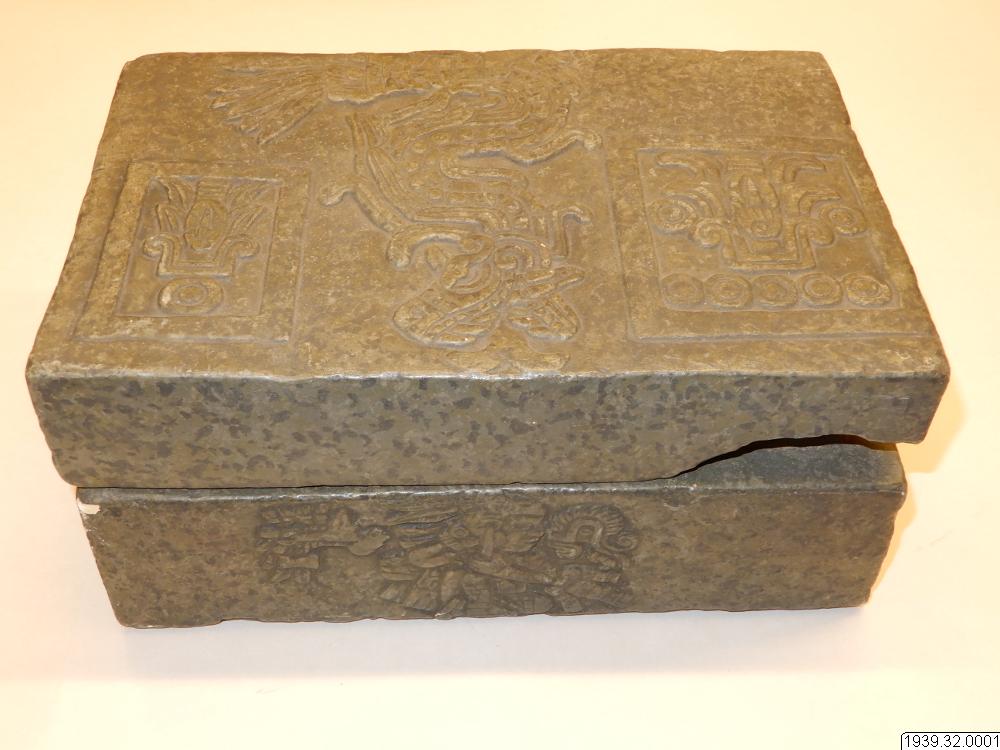 Source: Objaverse 1.0 / Sketchfab
Red Dot Cigar Box
Red Dot Cigar Box, is apart of the Indianapolis Motor Speedway Museum collection. For more information visit: https://indyracingmuseum.org/ This object was 3D scanned using a Creaform Go Scan 50. Source: Objaverse 1.0 / Sketchfab
Stone Box 1
A painted stone box I bought in Laos. Scanned with the Artec Space Spider. Source: Objaverse 1.0 / Sketchfab
ScienceDex guides
Understand access before you commit
These curated guides explain access requirements, typical timelines, costs, and reuse considerations for widely used research datasets.
Allen Brain Atlas
Allen Brain Atlas is an Allen Institute collection of brain map atlases, datasets, APIs, and analysis tools covering mouse, human, and non-human primate brain resources.
Annotated Behaviour and Observability Dataset (ABODe)
ABODe is a University of Edinburgh DataShare dataset for behavior classification in group-housed mice using home-cage video, identities, bounding boxes, ground-plate positions, and annotator labels.
DANDI Archive for NWB datasets
DANDI is a BRAIN Initiative archive for publishing and sharing neurophysiology data, including electrophysiology, optophysiology, and behavioral data packaged as NWB and related standards.
International Brain Laboratory public data
The International Brain Laboratory public data releases expose standardized mouse decision-making experiments, including Neuropixels recordings, widefield calcium imaging, behavior, and session metadata accessed through the ONE API.
OpenNeuro
OpenNeuro is a free, open platform for sharing neuroimaging datasets, with public search, dataset pages, and download paths for web, S3, DataLad, and the OpenNeuro CLI.