
Find research datasets worth reusing
Search datasets from major research repositories and use ShareScore to quickly assess how well each record supports discovery, access, and reuse.
42
datasets available to search
ShareScore release 0.7.1
Dataset results
42 results for “Morella”
Annual Morella cerifera shoot growth on Hog Island of the Virginia Coast Reserve 1990-2007 and 2016-2017
This dataset contains an annual summary of stem growth data for Morella cerifera (formerly Myrica cerifera)shrubs. Data was collected yearly starting in 1990 until 2007 and irregularly thereafter.
Snapgene files of the genetic constructions for Morella thermoacetica used in Task 2.2 (Advanced GMO preparation for gas (CO2/CO/H2) fermentation process)
<p>Part of WP2 these snapgene files of the genetic constructions for Morella thermoacetica were used in Task 2.2 (Advanced GMO preparation for gas (CO2/CO/H2) fermentation process). The strains we were able to construct were:</p> <p>1.- M. thermoacetica DSM 521 pK18ACSACassette complete<br>2.- M. thermoacetica DSM 521 pK18ACSACassette AatA<br>3.- M. thermoacetica DSM 2955 pK18ACSACassette PudL-AckA<br>4.- M. thermoacetica DSM 2955 pK18ACSACassette AatA</p> <p>To construct these strains CSIC used a modular synthetic construction carrying the regions up and down of the acsA gene to delete it. Within these regions, a gene cluster composed by the GmR, pduL, ackA and aatA genes, all of them controlled by the strong constitutional promoter of the glyceraldehyde 3-phosphate dehydrogenase gene from Moorella were inserted. The modular design of our recombinant cassette allows us to construct different cassettes with different gene combinations. In all cases, the acsA gene will be deleted and the acetate cannot be transformed back into acetyl-CoA:</p> <p>Cassette 1.- ACSA-GmR-pduL-ackA-aatA-ACSA: this is a complete cassette which carries the genes encoding the phosphotransacetylase, the acetate kinase and the acetate exporter. This strain should accumulate a higher concentration of acetate inside the cell that should be exported to the medium.</p> <p>Cassette 2.- ACSA-GmR-pduL-ackA-ACSA: this cassette lacks the transporter, so this strain should accumulate a higher concentration inside the cell. Then, the only way to prevent acetate toxicity is by increasing its own mechanisms to export this compound or by growing slower in order to manage acetate accumulation.</p> <p>Cassette 3.- ACSA-GmR-aatA-ACSA: this cassette only carries the acetate exporter, so virtually all the acetate produced inside the cell should be exported. This is another strategy to increase the metabolic flux inside the cell towards acetate without overexpressing any other gene of the acetate pathway, and at the same time avoiding toxicity problems.</p> <p>Cassette 4.- ACSA-GmR-ACSA: this cassette would generate an insertion mutant in which acsA is only replaced by the GmR encoding gene. This mutant should also generate a higher amount of acetate since it cannot be transformed back to acetyl-CoA.</p>
Leaf area index (LAI), leaf traps and allometric data for Morella cerifera on Hog Island, VA 2004 and 2007
Leaf-area index (LAI) and understory light levels of Morella cerifera shrub thickets were assessed on Hog Island, Virginia, USA, at four sites along a soil chronosequence. LAI was estimated from annual leaf litter, with allometric models relating stem diameter to leaf area, with a portable integrating radiometer (LI-COR LAI-2000), and from photosynthetically active radiation (PAR) using the Beer-Lambert law. Read More: http://www.esajournals.org/doi/full/10.1890/06-0913
Morella pubescens (Humb. & Bonpl. Ex Willd.) Wilbur from Colombia collected by Z. Restrepo #8268
<p><strong>File Name</strong>: <span>TOLI-23073-TRI-01-13-C12-15.jpg</span></p> <p><strong>CÓDIGO FOTO</strong>: <span>TOLI-23073-TRI-01-13-C12-15-</span></p> <p><strong>Fotografía</strong>: <span>SI</span></p> <p><strong>Nº TOLI</strong>: <span>TOLI-23073</span></p> <p><strong>PARCELA</strong>: <span>TRI-01</span></p> <p><strong>CÓDIGO</strong>: <span>13-C12-15</span></p> <p><strong>Nº COLECTA</strong>: <span>8268</span></p> <p><strong>NUEVOS COLECTORES</strong>: <span>Wilmar López Oviedo</span></p> <p><strong>COLECTORES</strong>: <span>Z. Restrepo</span></p> <p><strong>Nº MUESTRAS MONTADAS</strong>: <span>1</span></p> <p><strong>Homologación</strong>: <span>No homologado</span></p> <p><strong>Nueva fecha del evento </strong>: <span>16/01/2019.</span></p> <p><strong>Fecha del evento</strong>: <span>08/10/2014.</span></p> <p><strong>Proyecto </strong>: <span>Recursos Botánicos Disponibles en Línea (BRAVO) para la flora Colombiana</span></p> <p><strong>Hábitat</strong>: <span>Bosque húmedo montano (bh-M)</span></p> <p><strong>Continente</strong>: <span>SA</span></p> <p><strong>Pais</strong>: <span>Colombia</span></p> <p><strong>Estado/Provincia</strong>: <span>Quindío</span></p> <p><strong>Municipio</strong>: <span>Calarcá</span></p> <p><strong>Localidad</strong>: <span>Reserva Natural La Tribuna </span></p> <p><strong>Elevación minima en metros</strong>: <span>2300</span></p> <p><strong>Elevación maxima en metros</strong>: <span>2400</span></p> <p><strong>Latitud</strong>: <span>4.454</span></p> <p><strong>Longitud original</strong>: <span>-75.621</span></p> <p><strong>datum geodésico</strong>: <span>WGS 84</span></p> <p><strong>Latitud decimal</strong>: <span>4.454</span></p> <p><strong>Longitud decimal</strong>: <span>-75.621</span></p> <p><strong>Nombre cientifico</strong>: <span>Morella pubescens (Humb. & Bonpl. Ex Willd.) Wilbur</span></p> <p><strong>Reino</strong>: <span>Plantae</span></p> <p><strong>Filo</strong>: <span>Magnoliophyta</span></p> <p><strong>Clase</strong>: <span>Equisetopsida</span></p> <p><strong>Orden</strong>: <span>Fagales</span></p> <p><strong>Familia nueva</strong>: <span>Myricaceae</span></p> <p><strong>Género nuevo</strong>: <span>Morella </span></p> <p><strong>especie nueva</strong>: <span>pubescens </span></p> <p><strong>Autoría del nombre científico</strong>: <span>(Humb. & Bonpl. Ex Willd.) Wilbur</span></p> <p><strong></strong>: <span>Myricaceae</span></p> <p><strong>genero herbario</strong>: <span>Morella</span></p> <p><strong>especie herbario</strong>: <span>pubescens</span></p> <p><strong>Especie de herbario para TNRS</strong>: <span>Morella pubescens</span></p> <p><strong>Especie corregida herbario y desde TNRS</strong>: <span>Morella pubescens</span></p> <p><strong>Familia corregida desde TNRS</strong>: <span>Myricaceae</span></p> <p><strong></strong>: <span>2184</span></p>
Morella sp. from Colombia collected by Z. Restrepo #8020
<p><strong>File Name</strong>: <span>TOLI-25268-ALP-02-12-C12-22.jpg</span></p> <p><strong>CÓDIGO FOTO</strong>: <span>TOLI-25268-ALP-02-12-C12-22-</span></p> <p><strong>Fotografía</strong>: <span>SI</span></p> <p><strong>Nº TOLI</strong>: <span>TOLI-25268</span></p> <p><strong>PARCELA</strong>: <span>ALP-02</span></p> <p><strong>CÓDIGO</strong>: <span>12-C12-22</span></p> <p><strong>Nº COLECTA</strong>: <span>8020</span></p> <p><strong>NUEVOS COLECTORES</strong>: <span>Wilmar López Oviedo</span></p> <p><strong>COLECTORES</strong>: <span>Z. Restrepo</span></p> <p><strong>Nº MUESTRAS MONTADAS</strong>: <span>1</span></p> <p><strong>Homologación</strong>: <span>Homologado</span></p> <p><strong>Nueva fecha del evento </strong>: <span>05/12/2018.</span></p> <p><strong>Fecha del evento</strong>: <span>08/10/2014.</span></p> <p><strong>Proyecto </strong>: <span>Recursos Botánicos Disponibles en Línea (BRAVO) para la flora Colombiana</span></p> <p><strong>Hábitat</strong>: <span>Bosque húmedo montano (bh-M)</span></p> <p><strong>Continente</strong>: <span>SA</span></p> <p><strong>Pais</strong>: <span>Colombia</span></p> <p><strong>Estado/Provincia</strong>: <span>Quindío</span></p> <p><strong>Municipio</strong>: <span>Calarcá</span></p> <p><strong>Localidad</strong>: <span>Reserva Natural Alpes</span></p> <p><strong>Elevación minima en metros</strong>: <span>2744</span></p> <p><strong>Elevación maxima en metros</strong>: <span>2744</span></p> <p><strong>Latitud</strong>: <span>4.4705</span></p> <p><strong>Longitud original</strong>: <span>-75.576</span></p> <p><strong>datum geodésico</strong>: <span>WGS 84</span></p> <p><strong>Latitud decimal</strong>: <span>4.4705</span></p> <p><strong>Longitud decimal</strong>: <span>-75.576</span></p> <p><strong>Familia antigua</strong>: <span>Myricaceae</span></p> <p><strong>Especie antigua</strong>: <span>Morella sp.</span></p> <p><strong>Nombre cientifico</strong>: <span>Morella sp.</span></p> <p><strong>Reino</strong>: <span>Plantae</span></p> <p><strong>Filo</strong>: <span>Magnoliophyta</span></p> <p><strong>Clase</strong>: <span>Equisetopsida</span></p> <p><strong>Orden</strong>: <span>Fagales</span></p> <p><strong>Familia nueva</strong>: <span>Myricaceae</span></p> <p><strong>Género nuevo</strong>: <span>Morella</span></p> <p><strong>especie nueva</strong>: <span>sp.</span></p> <p><strong></strong>: <span>Myricaceae</span></p> <p><strong>genero herbario</strong>: <span>Morella</span></p> <p><strong>especie herbario</strong>: <span>sp.</span></p> <p><strong>Especie de herbario para TNRS</strong>: <span>Morella sp.</span></p> <p><strong>Especie corregida herbario y desde TNRS</strong>: <span>Morella indet</span></p> <p><strong>Familia corregida desde TNRS</strong>: <span>Myricaceae</span></p> <p><strong></strong>: <span>4281</span></p>
En Balaguer / Portell de Morella / Castellón
+INFO: [Español](http://www.castellonarqueologico.es/yacimientos/els-ports/en-balaguer/) / [Valencià](http://www.castellonarqueologico.es/va/yacimientos/els-ports/en-balaguer/) / [English](http://www.castellonarqueologico.es/en/yacimientos/els-ports/en-balaguer/) 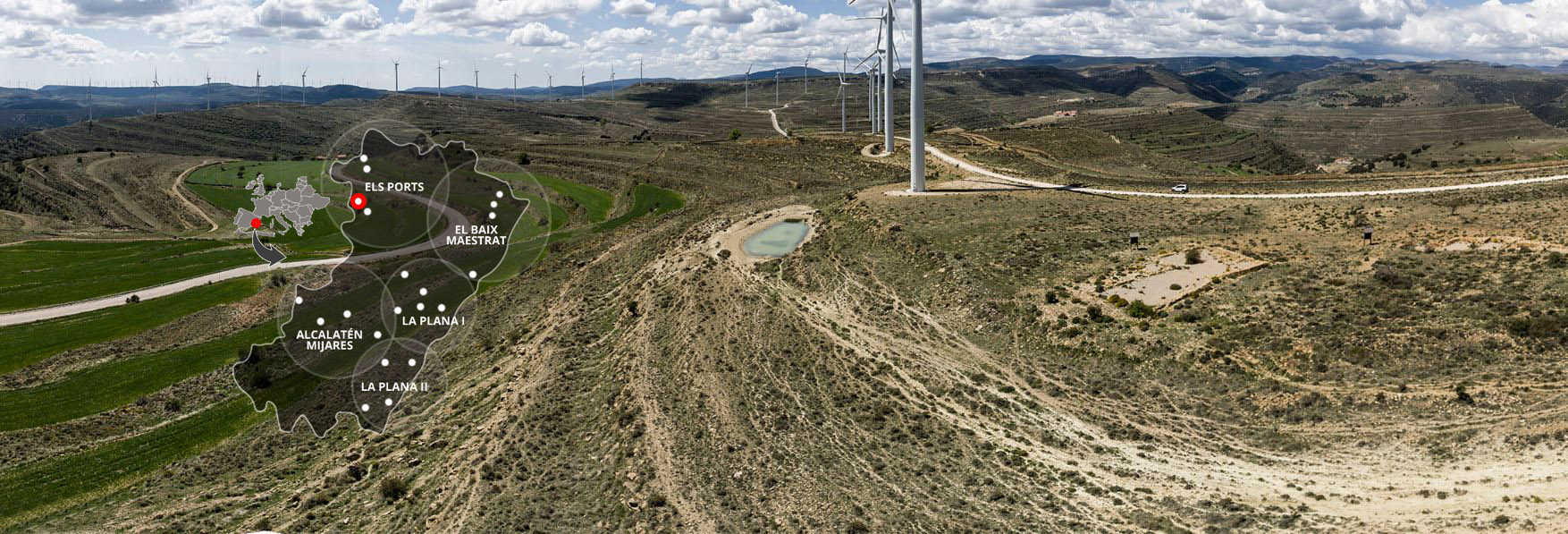 2018-05-16 Source: Objaverse 1.0 / Sketchfab
Lápida Romana / Morella / Castellón
Epígrafe dedicatorio de la comunidad urbana de la ciudad de Lesera (La Moleta dels Frares) al dios Júpiter por su intervención en la protección y salvación del emperador Caracalla frente el atentado sufrido.  [Geolocalización](https://goo.gl/Vygd7u) Source: Objaverse 1.0 / Sketchfab
Specific Leaf Area for a chronosquence of Morella cerifera shrub thickets on Hog Island, VA, 2012
Leaf area and mass for Morella cerifera leaves were measured inside and outside shrub thickets of different age (ranging from ~12 to ~50 years old) on Hog Island Virginia and Specific Leaf Area (SLA) was calculated.
Microclimate and growth data under three vegetation manipulations with and without Morella cerifera seedlings and grass clipping on Hog Island, Virginia, 2018
These data represent the growth, physiology, and microclimate measurements of 30 Morella cerifera seedlings in a south Hog Island swale. There were three manipulations: shrub seedlings with intact grass canopy, shrub seedlings with grasses clipped, and plots with no shrub seedlings but an intact grass canopy. Measurements include shrub seedlings dimensions, and isotopic characterizations for N and C.
Figure 21 in New sauropod dinosaur from the Lower Cretaceous of Morella (Spain) provides new insights on the evolutionary history of Iberian somphospondylan titanosauriforms
Figure 21. Garumbatitan morellensis, gen. et sp. nov., pedal phalanges from the paratype specimen. Right phalanx I.1 (SAV05-035.f, first row), II.1 (SAV05-035.g, second row), II.2 (SAV05-035.j, third row), III.2 (SAV05-038.b, fourth row), IV.1 (SAV05-035.h, fifth row), IV.2 (SAV05- 035.i, sixth row) and IV.3 (SAV05-035.m, seventh row) in dorsal (A, G, M, S, Y, AE, AK), medial (B, H, N, T, Z, AF, AL), ventral (C, I, O, U, AA, AG, AM), lateral (D, J, P, V, AB, AH, AN), proximal (E, K, Q, W, AC, AI, AO; dorsal towards top side), and distal (F, L, R, X, AD, AJ, AP; dorsal towards top side) views. Abbreviations: dp, depression; icg, intercondylar groove; lc, lateral condyle; mc, medial condyle. Scale bar equals 30 mm.
Figure 8 in New sauropod dinosaur from the Lower Cretaceous of Morella (Spain) provides new insights on the evolutionary history of Iberian somphospondylan titanosauriforms
Figure 8. Garumbatitan morellensis, gen. et sp. nov., anterior chevrons from the holotype specimen. Anterior chevron SAV05-060chb (A–E), SAV05-063 (F–J), SAV05-060cha (K–O), and SAV05-060chc (P–T) in dorsal (A, F, K, P; anterior towards bottom side), anterior (B, G, L, Q), left lateral (C, H, M, R), posterior (D, I, N, S), and right lateral (E, J, O, T) views. Missing edges indicated by dashed lines. Abbreviations: acr, anterior crest; gr, groove; pcr, posterior crest; st, step. Scale bar equals 50 mm.
Figure 7 in New sauropod dinosaur from the Lower Cretaceous of Morella (Spain) provides new insights on the evolutionary history of Iberian somphospondylan titanosauriforms
Figure 7. Garumbatitan morellensis, gen. et sp. nov., middle-posterior caudal vertebrae from the holotype specimen. Middle-posterior caudal vertebrae SAV08-047, SAV08-048 and SAV08-049 in ventral (A; anterior towards right side), dorsal (B; anterior towards right side) and right lateral (C, D), anterior (I), and left lateral (J) views. Middle-posterior caudal vertebra SAV08-050 in dorsal (E; anterior towards left side), ventral (F; anterior towards right side), left lateral (G), and posterior (H) views. A, B, D, E, F, and J correspond to a 3D digital model. Missing edges indicated by dashed lines. Abbreviations: acf, anterior chevron facet; dp, depression; lr, lateral ridge; pbu, posterior bulge; pcf, posterior chevron facet; prsl, prespinal lamina; prz, prezygapophyseal process; rdg, ridge; sprf, spinoprezygapophseal fossa; sprl, spinoprezygapophyseal lamina; tprl, intraprezygapophyseal lamina. Scale bar equals 50 mm.
Figure 14 in New sauropod dinosaur from the Lower Cretaceous of Morella (Spain) provides new insights on the evolutionary history of Iberian somphospondylan titanosauriforms
Figure 14. Garumbatitan morellensis, gen. et sp. nov., tibiae from the paratype specimen. Right tibia (SAV05-032) in proximal (A), anterior (B), medial (C), posterior (D), lateral (E), and distal (F) views. Left tibia (SAV05-036) in proximal (I), anterior (G), medial (H), posterior (J), lateral (K), and distal (L) views. Missing edges indicated by dashed lines. Abbreviations: 2cc, second cnemial crest; aspa, articular surface for the ascending process; cc, cnemial crest; cr, crest; fia, fibular articular surface; pvp, posteroventral process. Scale bar equals 100 mm.
Figure 10 in New sauropod dinosaur from the Lower Cretaceous of Morella (Spain) provides new insights on the evolutionary history of Iberian somphospondylan titanosauriforms
Figure 10. Garumbatitan morellensis, gen. et sp. nov., pubes from the paratype specimen. Left pubis SAV05-31b in posterior (A), lateral (B), anterior (C), and distal (E) views. Right pubis SAV05-31a in distal (D), posterior (F), and anterior (G) views. Missing edges indicated by dashed lines. Scale bar equals 50 mm.
Figure 5 in New sauropod dinosaur from the Lower Cretaceous of Morella (Spain) provides new insights on the evolutionary history of Iberian somphospondylan titanosauriforms
Figure 5. Garumbatitan morellensis, gen. et sp. nov., anterior caudal vertebrae from the holotype specimen. Anterior caudal vertebra SAV05-027 (A–F), SAV08-028 (G–L), SAV08-029 (M–R), SAV08-030 (S–X) in right lateral (A, G, M, S), anterior (B, H, N, T), left lateral (C, I, O, U), posterior (D, J, P, V), dorsal (E, K, Q, W; anterior towards right side), and ventral (F, L, R, X; anterior towards left side) views. Isolated anterior caudal neural spines SAV05-029 (Y–CC) and SAV05-030 (DD-HH) from the holotype specimen in dorsal (Y, DD), right lateral (Z, EE), anterior (AA, FF), left lateral (BB, GG), and posterior (CC, HH) views. Missing edges indicated by dashed lines. Abbreviations: acdl, anterior centrodiapophyseal laminae; acf, anterior chevron facet; cdr, caudal rib; f, fossa; fr, foramen; lr, lateral ridge; nc, neural canal; pcdl, posterior centrodiapophyseal laminae; posl, postspinal lamina; prsl, prespinal lamina; spol, spinopostzygapophyseal lamina. Scale bar equals 50 mm.
Figure 11 in New sauropod dinosaur from the Lower Cretaceous of Morella (Spain) provides new insights on the evolutionary history of Iberian somphospondylan titanosauriforms
Figure 11. Garumbatitan morellensis, gen. et sp. nov., right femur SAV05-024 from the holotype specimen in anterior (A, B*), medial (C*), posterior (D, F*) lateral (G*), and distal (E, I*) views; and cross-section of diaphysis at minimal diameter (E; anterior towards top side). *3D digital model. Missing edges indicated by dashed lines. Abbreviations: ep, epicondyle; fic, fibular condyle; lg, longitudinal groove; lic, linea intermuscularis cranialis; icg, intercondylar groove; icr, intercondylar ridge; plf, posterolateral fossa; tic, tibial condyle. Scale bar equals 100 mm.
Figure 1 in New sauropod dinosaur from the Lower Cretaceous of Morella (Spain) provides new insights on the evolutionary history of Iberian somphospondylan titanosauriforms
Figure 1. Geographical and geological situation of the type locality of Garumbatitan morellensis gen. et sp. nov.. A, simplified geological map showing the location of Morella (Castellón, Spain) and of the Sant Antoni de la Vespa Quarry. B, simplified diagram of litho-stratigraphic framework of chronostratigraphic and lithostratigraphic units of the Maestrat Basin (based on: Bover-Arnal et al. 2016). C. NW–SE crosssection across in the region of Sant Antoni de la Vespa, detailing the lithostratigraphy of Arcilla de Morella Formation.
Figure 25 in New sauropod dinosaur from the Lower Cretaceous of Morella (Spain) provides new insights on the evolutionary history of Iberian somphospondylan titanosauriforms
Figure 25. Schematic draws of eusauropod femora (not to scale) showing the development of the lateral bulge following Salgado et al. (1997, in blue) and the medial deflection of the proximal end following Mannion et al. (2013): A, Tehuelchesaurus benitezii in posterior view (Carballido et al. 2011b); B, Apatosaurus louisae in anterior view (Gilmore 1936, CM 3018); C, Camarasaurus grandis in anterior view (YPM 1901, Ostrom and McIntosh 1966); D, Lourinhasaurus alenquerensis in posterior view (Mocho et al. 2014, MG 4931); E, Aragosaurus ischiaticus in posterior view (ZH-2, Royo-Torres et al. 2014); F, Vouivria dampariensis in posterior view (MNHN.F.1934.6 DAM 36, Mannion et al. 2017); G, Brachiosaurus altithorax in anterior view (FMNH P 25107, Riggs 1903); H, Giraffatitan brancai in posterior view (HMN St 291, Janensch 1961); I, Dongbeititan dongi in posterior view (Wang et al. 2007); J, Garumbatitan morellensis in posterior view (SAV05-023);
Figure 3 in New sauropod dinosaur from the Lower Cretaceous of Morella (Spain) provides new insights on the evolutionary history of Iberian somphospondylan titanosauriforms
Figure 3. Garumbatitan morellensis gen. et sp. nov., type site-map showing the approximate association of the bones (different mapping methodologies were used in the fieldwork of 2005 and 2008, resulting in a schematic map only showing the relative position of the main elements found in the field). The holotype specimen is in orange and the paratype one is in yellow. The elements collected in 2005 are indicated by dashed lines, and the elements collected in 2008 by continuous line.
Figure 17 in New sauropod dinosaur from the Lower Cretaceous of Morella (Spain) provides new insights on the evolutionary history of Iberian somphospondylan titanosauriforms
Figure 17. Garumbatitan morellensis, gen. et sp. nov., right pes of the holotype (A, B) and paratype (C, D) specimens in proximal (A, C) and dorsal (B, D) views. Missing edges indicated by dashed lines. Scale bar equals 50 mm.
ScienceDex guides
Understand access before you commit
These curated guides explain access requirements, typical timelines, costs, and reuse considerations for widely used research datasets.
Allen Brain Atlas
Allen Brain Atlas is an Allen Institute collection of brain map atlases, datasets, APIs, and analysis tools covering mouse, human, and non-human primate brain resources.
Annotated Behaviour and Observability Dataset (ABODe)
ABODe is a University of Edinburgh DataShare dataset for behavior classification in group-housed mice using home-cage video, identities, bounding boxes, ground-plate positions, and annotator labels.
DANDI Archive for NWB datasets
DANDI is a BRAIN Initiative archive for publishing and sharing neurophysiology data, including electrophysiology, optophysiology, and behavioral data packaged as NWB and related standards.
International Brain Laboratory public data
The International Brain Laboratory public data releases expose standardized mouse decision-making experiments, including Neuropixels recordings, widefield calcium imaging, behavior, and session metadata accessed through the ONE API.
OpenNeuro
OpenNeuro is a free, open platform for sharing neuroimaging datasets, with public search, dataset pages, and download paths for web, S3, DataLad, and the OpenNeuro CLI.