
Find research datasets worth reusing
Search datasets from major research repositories and use ShareScore to quickly assess how well each record supports discovery, access, and reuse.
19
datasets available to search
ShareScore release 0.9.0
Dataset results
19 results for “Rainwater”
Subsample of the maximum Water Area Extent of Telangana Rainwater Harvesting System from Pléiades DEM
<p>Small Reservoirs maximum water area extent polygones composing the Rainwater Harvesting System over the Telangana state, South-India. Maximum Water Area Extent are elevation isolines selected by hand from Very High Resolution Digital Elevation Model (VHR DEM at 2 meters resolution) derived from pairs of stereoscopic Pléiades images at 50cm resolution (10.5281/zenodo.10403040). The selection is made to find the area that contain both MWAE derived from Sentinel-2 (10.5281/zenodo.10402199) and Landsat archives (Global Surface Water, <span><a href="https://doi.org/10.1038/nature20584" target="_blank" rel="noopener">10.1038/nature20584</a></span>) curated from rivers and big dams (10.5281/zenodo.10402096).</p>
Maximum Water Area Extent of the Rainwater Harvesting System in Telangana from GSW
<p>Small Reservoirs maximum water area extent polygones composing the Rainwater Harvesting System over the Telangana state, South-India. Maximum water area extent (occurence >0) is extracted form the Global Surface Water dataset at 30 meters resolution (doi:10.1038/nature20584) and currated from rivers, canal and dammed reservoirs related surface water areas. The last access to GSW maximum water extent to build this dataset was in November 2022.</p>
Subsample of the maximum Water Area Extent of Telangana Rainwater Harvesting System from Sentinel-2
<p>Small Reservoirs Maximum Water Area Extent polygones (MWAE) composing the Rainwater Harvesting System (RHS) derieved from Sentinel-2 Multispectral data in the Telangana state, South-India. MWAE is extracted from Sentinel-2 cloud free images time serie collected from 2016 to 2021 (last access in 2021) over the area covered by stereoscopic images acquired from Pléiades satellites (DEM available 10.5281/zenodo.10403040). A random forest classification is used with a set of training and validation samples. These samples are Sentinel pixel locations (10 x 10 meters) corresponding to permanent water pixels extracted from Global Surface Water datasets (doi:10.1038/nature20584) and never flooded pixels derived from Height Above Nearest Drainage data-set (10.1016/j.jhydrol.2011.03.051).</p>
Dataset for publication: Compound parabolic collector solar disinfection system for the treatment of harvested rainwater, Strauss et al. (2018). DOI:10.1039/c8ew00152a.
<p>Datasets used for the publication: Strauss A, Reyneke B, Waso M and Khan W (2018) Compound parabolic collector solar disinfection system for the treatment of harvested rainwater. Environ Sci: Water Res. Technol. DOI: 10.1039/c8ew00152a. Please cite the article when using the datasets.</p> <p>Available datasets:</p> <ul> <li>WATERSPOUTT_688928_US_Environmental Conditions_01_1.0.0: Dataset describing the environmental conditions on sampling days while assessing a SODIS-CPC reactor for the treatment of roof-harvested rainwater.</li> <li>WATERSPOUTT_688928_US_SODIS-CPC Schematics_01_1.0.0: Schematic diagrams showing the design of the SODIS-CPC reactor.</li> <li>WATERSPOUTT_688928_US_SODIS-CPC-Microbiology_01_1.0.0: Dataset describing the results obtained while monitoring the microbiological quality of the roof-harvested rainwater before and after treatment with the SODIS-CPC reactor.</li> <li>WATERSPOUTT_688928_US_SODIS-CPC-Physicochemical_01_1.0.0: Dataset describing the physicochemical quality of the roof-harvested rainwater before and after treatment with the SODIS-CPC reactor.</li> <li>WATERSPOUTT_688928_US_UV-transmittance_01_1.0.0: Dataset describing the UV transmittance of polymethyl methacrylate and borosilicate glass.</li> </ul>
EMA-amplicon-based taxonomic characterisation of the viable bacterial community present in untreated and SODIS treated roof-harvested rainwater
<p>Dataset for publication: EMA-amplicon-based taxonomic characterisation of the viable bacterial community present in untreated and SODIS treated roof-harvested rainwater, Strauss et al. (2018). DOI: 10.1039/c8ew00613j.</p>
Dataset for publication: Validation of large-volume batch solar reactors for the treatment of rainwater in field trials in sub-Saharan Africa, Reyneke et al. (2020). DOI: 10.1016/j.scitotenv.2020.137223
<p>Datasets, Supplementary Information and Water Safety Plan (Assessment Form and Risk Matrix) for the publication: "Validation of large-volume batch solar reactors for the treatment of rainwater in field trials in sub-Saharan Africa" which was published in Science of the Total Environment (https://doi.org/10.1016/j.scitotenv.2020.137223).</p>
Microbiome of domestic water in rainwater-harvesting dependent Carriacou, Grenada - Water_aCCSIS Project
<p>Data files for the manuscript "The microbiome of domestic water in the rainwater harvesting-dependent island community of Carriacou, Grenada in the southern Caribbean"</p>
Iron Rainwater Tub scans with iPhone12 Pro
The rainwater tub is used to collect rainwater for fire prevention. On an octagonal stone platform, there is a square stone pedestal resembling a lotus valve, on which is placed a circular rainwater tub. Yanagimori Shrine 2-15-1 Kandasudacho, Chiyoda-ku, Tokyo 101-0041 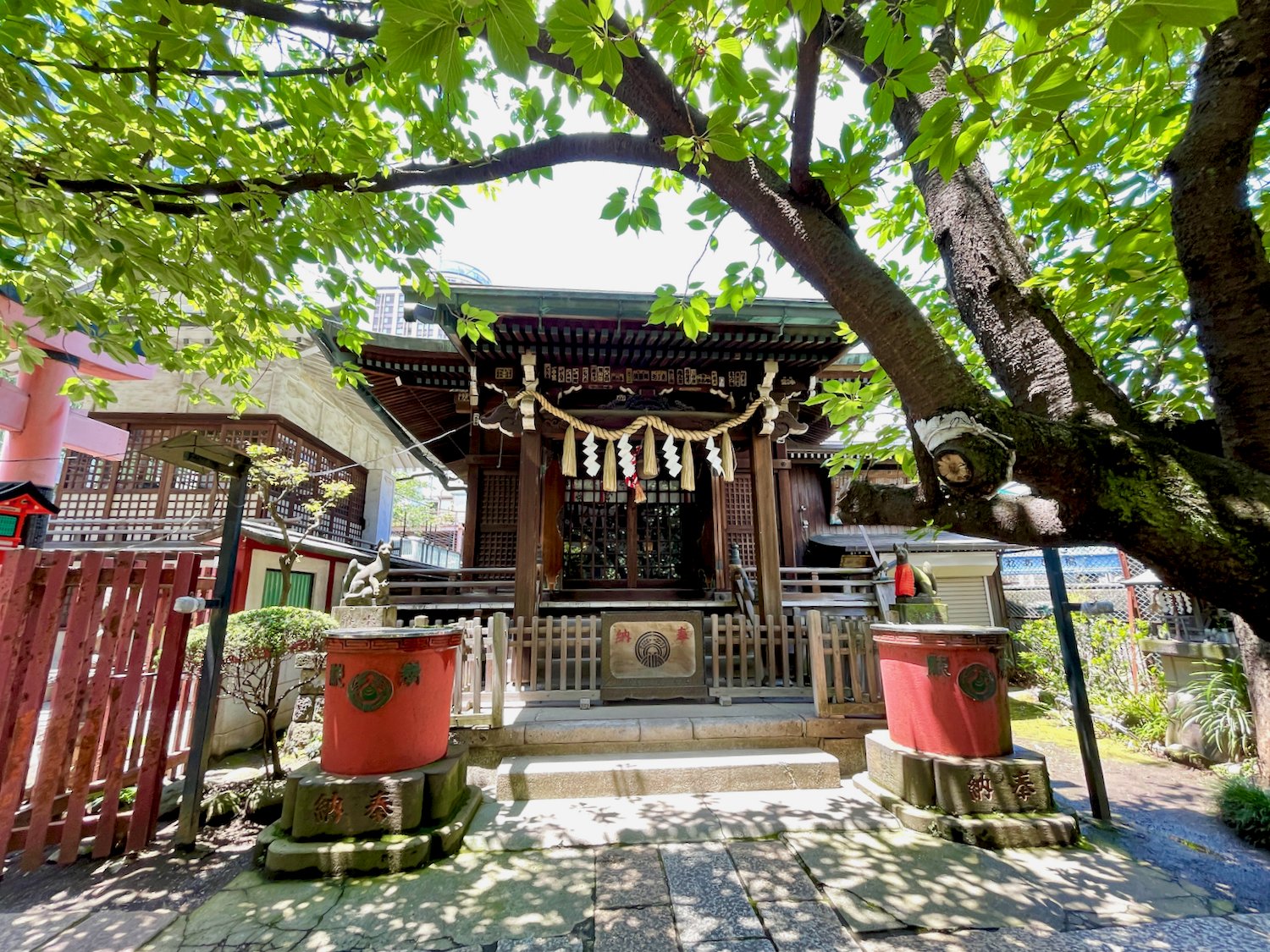 Source: Objaverse 1.0 / Sketchfab
Dataset for "Characterization of rainwater infiltration within a controlled experiment by self-potential monitoring and modeling"
<p>This dataset provides the raw experimental data for the manuscript "Characterization of rainwater infiltration within a controlled experiment by self-potential monitoring and modeling". By imposing rainfall, we monitored the self-potential, volumetric water content, and temperature at different depths of a soil-column model within a water infiltration process. </p> <p> </p>
Data sets for: EMA-amplicon-based sequencing of untreated and SODIS treated rainwater
<p>Data sets for the EMA-amplicon-based sequencing of untreated and treated rainwater collected from an informal settlement and rural farming community in South Africa. The data sets were used for the publication: EMA-amplicon-based sequencing informs risk assessment analysis of water treatment systems (Submitted to Science of the Total Environment).</p>
Beryllium in rainwater (Galápagos)
<p>There are three sheets in the provided Excel document: the first contains daily precipitation data, the second includes measured meteoric 10-beryllium concentrations in precipitation, and the third presents calculated and normalized annual fluxes along with the coordinates of the study sites.</p>
Rainwater-driven microbial fuel cells for power generation in the remote areas' raw data
<p>The possibility of utilizing rainwater as a sustainable anolyte in an air-cathode microbial fuel cell is investigated in this study. The results indicate that the proposed microbial fuel cell can work within a wide temperature range (from 0 to 30 oC), and under aerobic or anaerobic conditions. However, the rainwater season has a distinct impact. Under anaerobic conditions, the summer rainwater achieves a promised open circuit potential of 553±2 mV without addition of nutrients at the ambient temperature, while addition of nutrients leads to increase the cell voltage to 763±3 and 588±2 mV at 30 oC and ambient temperature, respectively. The maximum open circuit potential for the winter rainwater (492±1.5 mV) is obtained when the reactor is exposed to the air (aerobic conditions) at ambient temperature. Furthermore, the winter rainwater microbial fuel cell generates a maximum power output of 7±0.1 mWm-2 at a corresponding current density value of 44±0.7 mAm-2 at 30 oC. While, at the ambient temperature, the maximum output power is obtained with the summer rainwater (7.2±0.1 mWm-2 at 26±0.5 mAm-2). Moreover, investigation of the bacterial diversity indicates that lactobacillus sp. is the dominant electroactive genus in the summer rainwater, while in the winter rainwater, Staphylococcus sp. is the main electroactive bacteria. The cyclic voltammetry analysis confirms that the electrons are delivered directly from the bacterial biofilm to the anode surface and without mediators. Overall, the study opens a new avenue for utilizing a novel sustainable type of microbial fuel cell derived by rainwater.</p>
Data and code of co-created rooftop harvested rainwater study in AZ environmental justice communities
<p>See README</p>
Rainwater-driven microbial fuel cells for power generation in the remote areas' raw data
Open the record for dataset details and reuse information.
Water-insoluble components in rainwater in suburban Guiyang, southwestern China: a potential contributor to dissolved organic carbon
<p>Source Data.</p>
Biomass-Burning-Originated Constitutes in Rainwater and Aerosol May Be Overestimated in Urban China
Open the record for dataset details and reuse information.
Suitability of Rainwater Harvesting in Bangladesh's Saline and Arsenic Areas
Open the record for dataset details and reuse information.
BOREAS TGB-07 Rainwater Herbicide and Organochlorine Concentration Data
The BOREAS TGB-07 team measured the concentration and flux of several agricultural pesticides in air and rainwater samples in order to determine the associated yearly deposition rates. This data set contains information on the rainwater concentration of seven herbicides [2,4-dichlorophenoxyacidic_acid (2,4-D), bromoxynil, dicamb, 2-methyl-4-chlorophenoxyacetic acid (MCPA), triallate, trifluralin, and diclop-methyl] known to appear in the atmosphere of the Canadian prairies. Also, the concentration of three herbicides (atrazine, alaclor and metolachlor), two groups of insecticides (lindane and breakdown products and dichlro-diphenyl-trichloroethane (DDT) and breakdown products), and several polychlorinated biphenyls commonly used in the central United States were measured. All of these chemicals are reported, in the literature, to be transported in the atmosphere. Many have been reported to occur in boreal and arctic food chains. The sampling was carried out from June 16 to August 13, 1993 and May 4 to July 20, 1994 at the BOREAS site in the Prince Albert National Park (Waskesiu).
Rocca Malatestiana - rainwater recovery system
Rainwater recovery system in use between XIV-XVI, part of the Rocca Malatestiana, a castle built by Guastafamiglia Malatesta (1299-1364) in Montefiore Conca, Italy. Source: Objaverse 1.0 / Sketchfab
ScienceDex guides
Understand access before you commit
These curated guides explain access requirements, typical timelines, costs, and reuse considerations for widely used research datasets.
Allen Brain Atlas
Allen Brain Atlas is an Allen Institute collection of brain map atlases, datasets, APIs, and analysis tools covering mouse, human, and non-human primate brain resources.
Annotated Behaviour and Observability Dataset (ABODe)
ABODe is a University of Edinburgh DataShare dataset for behavior classification in group-housed mice using home-cage video, identities, bounding boxes, ground-plate positions, and annotator labels.
DANDI Archive for NWB datasets
DANDI is a BRAIN Initiative archive for publishing and sharing neurophysiology data, including electrophysiology, optophysiology, and behavioral data packaged as NWB and related standards.
International Brain Laboratory public data
The International Brain Laboratory public data releases expose standardized mouse decision-making experiments, including Neuropixels recordings, widefield calcium imaging, behavior, and session metadata accessed through the ONE API.
OpenNeuro
OpenNeuro is a free, open platform for sharing neuroimaging datasets, with public search, dataset pages, and download paths for web, S3, DataLad, and the OpenNeuro CLI.