
Find research datasets worth reusing
Search datasets from major research repositories and use ShareScore to quickly assess how well each record supports discovery, access, and reuse.
14
datasets available to search
ShareScore release 0.7.1
Dataset results
14 results for “lucerne”
Lucerna Romana | Roman Lucerne
Esta lucerna romana é de produção tardia, datada do século III a IV d. C., e é caracterizada pelo seu bico redondo pouco saliente da restante peça. Este artefacto não muito comum na nossa região é oriundo do sítio arqueológico da Necrópole da Fonte da Senhora 7 - um local de enterramento tardo-romano (séc. IV d.C.) na zona da actual Barragem dos Minutos, escavado em 2001 e onde foram encontradas quinze sepulturas escavadas na rocha com espólio funerário associado Source: Objaverse 1.0 / Sketchfab
Data for: A taxonomic revision of ten whitefish species from lakes Lucerne, Sarnen, Sempach, and Zug, Switzerland, with descriptions of seven new species (Teleostei, Coregonidae)
<p><span>The taxonomy of the endemic whitefish of the lakes of the Reuss River system (Lucerne, Sarnen, Zug) and Lake Sempach, Switzerland, is reviewed and revised. Lake Lucerne harbours five species. <em>Coregonus</em> <em>intermundia</em> </span><span><strong>sp. nov.</strong> </span><span>and <em>C</em>. <em>suspensus</em> </span><strong><span>sp. nov.</span></strong><span>, are described. <em>Coregonus</em> <em>nobilis</em> Haack, 1882, <em>C</em>. <em>suidteri</em> Fatio, 1885, and <em>C</em>. <em>zugensis</em> Nüsslin, 1882, are redescribed. Genetic studies have shown that <em>C</em>. <em>suidteri</em> and <em>C</em>. <em>zugensis</em> are composed of several distinct species endemic to different lakes. The names <em>C</em>. <em>suidteri</em> and <em>C</em>. <em>zugensis</em> are restricted to the species of lakes Sempach and Zug, respectively. The whitefish populations previously referred to as <em>C</em>. <em>suidteri</em> and <em>C</em>. <em>zugensis</em> from Lake Lucerne are described as <em>C</em>. <em>litoralis</em> </span><span><strong>sp. nov.</strong> </span><span>and <em>C</em>. <em>muelleri</em> </span><strong><span>sp. nov.</span></strong><span>, respectively. Furthermore, the whitefish from Lake Zug that were previously referred to as <em>C</em>. <em>suidteri</em> are described as <em>C</em>. <em>supersum</em> </span><strong><span>sp. nov</span></strong><span><strong>.</strong> A holotype is designated for <em>C</em>. <em>supersum</em> that was previously one of two syntypes of <em>C</em>. <em>zugensis</em>. The other syntype is retained for <em>C</em>. <em>zugensis</em>. <em>Coregonus</em> <em>obliterus</em> </span><span><strong>sp. nov.</strong> </span><span>is described from Lake Zug, and <em>C</em>. <em>obliterus</em> and <em>C</em>. <em>zugensis</em> from Lake Zug are extinct. Finally, we describe <em>C</em>. <em>sarnensis</em> </span><span><strong>sp. nov.</strong> </span><span>from lakes Sarnen and Alpnach. <em>Coregonus</em> <em>suidteri</em> from Lake Sempach shows strong signals of introgression from deliberately translocated non-native whitefish species, which questions if the extant population still carries a genetic legacy from the original species and thus may need to be considered extinct. <em>Coregonus</em> <em>suspensus</em> is genetically partially of allochthonous origin, closely related to the radiation of Lake Constance. It is therefore compared to all known and described species of Lake Constance: <em>C</em>. <em>wartmanni</em> Bloch, 1784, <em>C</em>. <em>macrophthalmus</em> Nüsslin, 1882, <em>C</em>. <em>arenicolus</em> Kottelat,1997, and <em>C</em>. <em>gutturosus</em> Gmelin, 1818.</span></p>
A Study to Evaluate the Efficacy and Safety of Faricimab in Participants With Neovascular Age-Related Macular Degeneration (LUCERNE)
ClinicalTrials.gov study NCT03823300. IPD Sharing: YES. Countries: 21. Publications: 4.
Data for: A taxonomic revision of ten whitefish species from lakes Lucerne, Sarnen, Sempach, and Zug, Switzerland, with descriptions of seven new species (Teleostei, Coregonidae)
Open the record for dataset details and reuse information.
Oil Lamp- Lucerne, Camaina, Sicily
"Lucerne with open tank. From the site of Camarina, Ragusa, Sicily, Italy. Classical Age. 5th-4th centuries BC. In the collection of the Museo Archeologico Ibleo di Ragusa. Processed in Reality Capture from 490 images. GDH ID and Catalog No. 3796 Citation: We want to publicly acknowledge the collaboration of the ""Soprintendenza per i Beni Culturali ed Ambientali di Ragusa"" and the ""Parco Archeologico di Kamarina e Cava d'Ispica"". Our most sincere thanks to General CC, retired, Renato Scuzzarello, the archaeologist Dr. Saverio Scerra, the architect Giorgio Battaglia, the restorer Stefania Patti Occhipinti and the archaeologists Veronica Falcone and Alessandra D'Izzia, the custodians of Parco Archeologico Marco Giardina, Giovanna Brugaletta e Rosario Licitra" Source: Objaverse 1.0 / Sketchfab
Oil Lamp / Lucerne, Camarina, Sicily
"Lucerne with open tank. From the site of Camarina, Ragusa, Sicily, Italy. Classical Age. 5th-4th centuries BC. In the collection of the Museo Archeologico Ibleo di Ragusa. Processed in Reality Capture from 628 images. GDH ID and Catalog No. 3795 Citation: We want to publicly acknowledge the collaboration of the ""Soprintendenza per i Beni Culturali ed Ambientali di Ragusa"" and the ""Parco Archeologico di Kamarina e Cava d'Ispica"". Our most sincere thanks to General CC, retired, Renato Scuzzarello, the archaeologist Dr. Saverio Scerra, the architect Giorgio Battaglia, the restorer Stefania Patti Occhipinti and the archaeologists Veronica Falcone and Alessandra D'Izzia, the custodians of Parco Archeologico Marco Giardina, Giovanna Brugaletta e Rosario Licitra" Source: Objaverse 1.0 / Sketchfab
Illustrative materials for presentation B1113, European Fuel Cell Forum 2024, Lucerne, Switzerland.
<p>Internal EIS data file (text): 18eis1_700c_cc-6a_180h2o+20h2+500air.eisdf</p> <p>Formal equivalent circuit model file (text): 18_drt20240502085244.eism</p> <p>Equivalent circuit model file (text): 18_eqc20240502090321.eism</p> <p>DRT report: 18_drt20240502085232.xlsx</p> <p>Augmented DRT report: 18aug_drt20240502092610.xlsx</p> <p>Equivalent circuit fit report: 18_eqc20240502090124.xlsx<br><br></p>
Supplementary material 1 from: Selz OM, Seehausen O (2023) A taxonomic revision of ten whitefish species from the lakes Lucerne, Sarnen, Sempach and Zug, Switzerland, with descriptions of seven new species (Teleostei, Coregonidae). ZooKeys 1144: 95-169. https://doi.org/10.3897/zookeys.1144.67747
Historical and contemporary notes on C. sarnensis, C. litoralis, C. nobilis, Lake Zug whitefish and on different topics in the discussion of the main manuscript.
Lucerne Fall Risk Prediction Score for Stroke Rehabilitation
ClinicalTrials.gov study NCT05135884. IPD Sharing: UNDECIDED. Countries: 1. Publications: 10.
Monitoring of solar irradiation at Lucerne University of Applied Sciences and Arts
<p>Global and diffuse irradiation data as monitored at the Horw campus of Lucerne University of Applied Sciences and Arts. The data is stored in a tabular format at intervals of one minute. The monitoring station comprises two Kipp and Zonen CMP11 pyranometers, equipped with ventilation units. Diffuse irradiation is measured employing a manually adjusted shadow ring.</p>
The dying lion, Lucerne
The Lion Monument (Löwendenkmal) is located in [Lucerne, Switzerland](http://www.luzern.com/en/lion-monument). The monument commemorates the Swiss Guards who were massacred in 1792 during the French Revolution, when revolutionaries stormed the Tuileries Palace in Paris, France. The sculpture was designed by Danish sculptor Bertel Thorvaldsen, and finally hewn in 1820–1821 by Lukas Ahorn, in a former sandstone quarry near Lucerne. --- 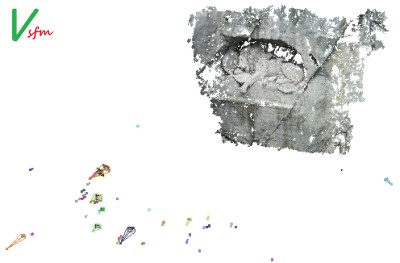 *3D photogrammetry reconstructed with VisualSFM* Source: Objaverse 1.0 / Sketchfab
Lucerne Hammer / Люцернский молот
The Lucerne hammer is a kind of war hammer that originated in Switzerland at the end of the 14th century and was in service with the European infantry until the 17th century inclusive. its foundation. The hammer was forged double-sided - one side in the form of a beak for making hooks, the second in the form of a notched hammer for stunning the enemy, in some samples of hammers the teeth were forged quite sharp. Люцернский молот — разновидность боевого молота, возникшая в Швейцарии в конце XIV века и бывшая на вооружении европейской пехоты до XVII века включительно.Представляет собой длинное (до 2 метров) окованное древко с боевой частью в виде пики длиной до 0,5 м и молота в её основании. Молот ковался двухсторонним — одна сторона в виде клюва для выполнения зацепов, вторая в виде зубчатого молотка для оглушения противника, в отдельных образцах молотов зубцы ковались достаточно острыми. Source: Objaverse 1.0 / Sketchfab
Conservative Therapy of Proximal Phalanx Fractures - Comparing the Lucerne Cast With Finger Splinting
ClinicalTrials.gov study NCT06022419. IPD Sharing: NO. Countries: 1. Publications: 0.
Roman lucerne, Fonte da Senhora 7, Portugal
Description of the archaeological site: Fonte da Senhora 7, a roman necropolis, in Montemor-o-Novo (Portugal). This archaeological piece is part of the collection of the Archaeological Museum of Montemor-o-Novo. This roman lucerne is of late production, dating from the 3rd to the 4th century AD. Characterized by its round spout slightly protruding from the rest of the lucerne body. This artefact, which is not very common in the region of Montemor-o-Novo, comes from the archeological site of the Necropolis of Fonte da Senhora 7 - a Roman-Late Burial Site (4th century AD) in the area of the Minutos Dam, excavated in 2001, where there were found fifteen graves excavated in the rock with associated funeral archaeological pieces. Source: Objaverse 1.0 / Sketchfab
ScienceDex guides
Understand access before you commit
These curated guides explain access requirements, typical timelines, costs, and reuse considerations for widely used research datasets.
Allen Brain Atlas
Allen Brain Atlas is an Allen Institute collection of brain map atlases, datasets, APIs, and analysis tools covering mouse, human, and non-human primate brain resources.
Annotated Behaviour and Observability Dataset (ABODe)
ABODe is a University of Edinburgh DataShare dataset for behavior classification in group-housed mice using home-cage video, identities, bounding boxes, ground-plate positions, and annotator labels.
DANDI Archive for NWB datasets
DANDI is a BRAIN Initiative archive for publishing and sharing neurophysiology data, including electrophysiology, optophysiology, and behavioral data packaged as NWB and related standards.
International Brain Laboratory public data
The International Brain Laboratory public data releases expose standardized mouse decision-making experiments, including Neuropixels recordings, widefield calcium imaging, behavior, and session metadata accessed through the ONE API.
OpenNeuro
OpenNeuro is a free, open platform for sharing neuroimaging datasets, with public search, dataset pages, and download paths for web, S3, DataLad, and the OpenNeuro CLI.