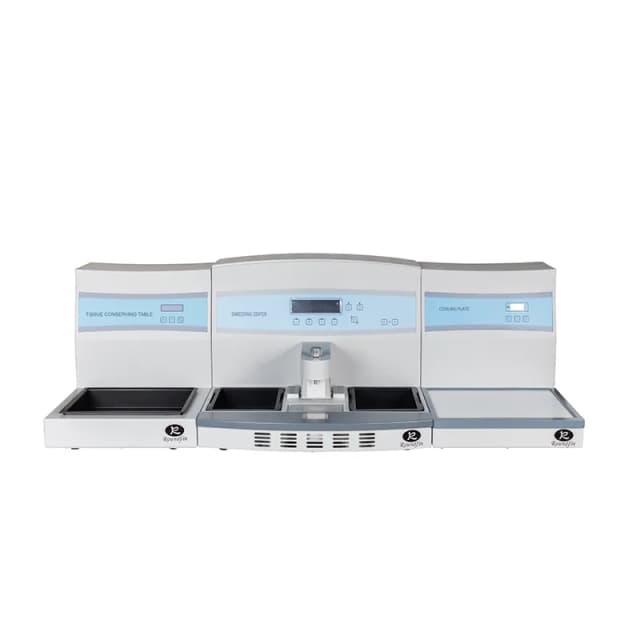
Wax Paraffin Trimmer
Manual precision trimming device for removing excess paraffin from tissue blocks in histopathology sample preparation workflows.
| Automation Level | manual |
| Brand | ConductScience |
The Wax Paraffin Trimmer is a precision instrument designed for histopathology laboratories requiring accurate sectioning of paraffin-embedded tissue blocks. This manual trimming device enables researchers and pathologists to remove excess paraffin material from specimen blocks prior to microtome sectioning, ensuring optimal sample preparation for histological analysis.
The trimmer facilitates controlled removal of paraffin layers to expose tissue surfaces at the desired depth, reducing waste and improving section quality. Regular use of paraffin trimmers in histopathology workflows helps maintain consistent block face preparation and extends microtome blade life by preventing excessive paraffin buildup during sectioning operations.
How It Works
The Wax Paraffin Trimmer operates through controlled manual sectioning using a sharp cutting edge to remove thin layers of paraffin from embedded tissue blocks. The instrument maintains a consistent cutting angle and depth control through mechanical guidance systems that ensure uniform paraffin removal across the block surface.
During operation, the tissue block is secured in position while the cutting mechanism advances in controlled increments. This systematic approach removes excess paraffin material layer by layer until the desired tissue depth is reached. The trimmer's design minimizes heat generation during cutting, preventing paraffin melting that could compromise tissue morphology.
The cutting action exposes fresh tissue surfaces at predetermined depths while maintaining block integrity. This preparation step is critical for subsequent microtome sectioning, as properly trimmed blocks produce more consistent section thickness and reduce blade dulling caused by excessive paraffin material.
Features & Benefits
Automation Level
- manual
Brand
- ConductScience
Research Domain
- Cancer Research
- Cardiovascular
- Developmental Biology
- Histopathology
- Neurodegeneration
- Toxicology
Weight
- 32.25 lbs
Dimensions
- L: 78.0 in
- W: 70.0 in
- H: 73.3 in
Comparison Guide
| Feature | This Product | Typical Alternative | Advantage |
|---|---|---|---|
| Operation Type | Manual precision trimming with operator control | Entry-level models often provide basic manual operation | Allows researchers to maintain complete control over cutting speed and depth for delicate specimens. |
| Construction Quality | ConductScience engineering and materials | Basic models may use lighter construction | Provides stability and durability required for consistent daily laboratory use. |
| Block Compatibility | Standard histology block accommodation | Some models have limited size ranges | Accommodates the full range of specimen blocks commonly processed in histopathology workflows. |
| Maintenance Requirements | Simple mechanical maintenance procedures | Complex motorized systems require electrical service | Reduces downtime and maintenance costs while ensuring reliable laboratory operation. |
This manual paraffin trimmer provides precision control and reliable mechanical operation for histopathology laboratories. The design emphasizes operator control and maintenance simplicity while accommodating standard block processing requirements.
Practical Tips
Check cutting blade alignment and sharpness before each trimming session to ensure consistent paraffin removal depth.
Why: Proper blade condition prevents tissue tearing and maintains uniform cutting performance across specimens.
Clean paraffin debris from cutting mechanisms and holding fixtures after each use to prevent buildup.
Why: Regular cleaning prevents paraffin accumulation that can interfere with precise cutting and block positioning.
Trim paraffin blocks at room temperature when paraffin has optimal consistency for clean cutting.
Why: Proper paraffin temperature ensures clean cuts without cracking or smearing that can affect subsequent sectioning quality.
If tissue tearing occurs, check blade sharpness and reduce cutting pressure to prevent specimen damage.
Why: Dull blades or excessive pressure can compromise tissue architecture and affect histological interpretation.
Trim only to the depth necessary to expose tissue surfaces, preserving specimen material for multiple sectioning planes.
Why: Conservative trimming maximizes tissue availability for serial sections and special staining procedures.
Maintain proper hand positioning away from cutting edges and keep work surfaces clean of paraffin debris.
Why: Safe operating procedures prevent injury and maintain a clean work environment for accurate specimen processing.
Setup Guide
What’s in the Box
- Wax Paraffin Trimmer main unit (typical)
- Cutting blade assembly (typical)
- Block holding fixtures (typical)
- Operating manual (typical)
- Maintenance tools (typical)
Warranty
ConductScience provides a standard one-year manufacturer warranty covering defects in materials and workmanship, with technical support available for operational guidance and maintenance procedures.
Compliance
What paraffin block sizes are compatible with this trimmer?
The trimmer accommodates standard histology block dimensions. Consult product datasheet for specific size limitations and holding fixture specifications.
How frequently should the cutting blade be replaced or sharpened?
Blade maintenance depends on usage frequency and paraffin hardness. Replace or sharpen when cutting quality diminishes or tissue tearing occurs during trimming.
Can this trimmer handle both soft and hard paraffin formulations?
The manual cutting mechanism accommodates various paraffin consistencies. Adjust cutting pressure and speed based on paraffin hardness to maintain clean cuts.
What safety precautions are necessary during operation?
Handle cutting edges carefully and maintain proper finger positioning. Keep work area clean of paraffin debris to prevent slipping hazards.
How does this compare to electric paraffin trimmers?
Manual operation provides precise control over cutting speed and depth but requires more operator time compared to motorized alternatives.
What maintenance procedures are required?
Regular blade inspection, cleaning of paraffin debris, and lubrication of mechanical components ensure consistent performance and extend instrument life.
Have a question about this product?