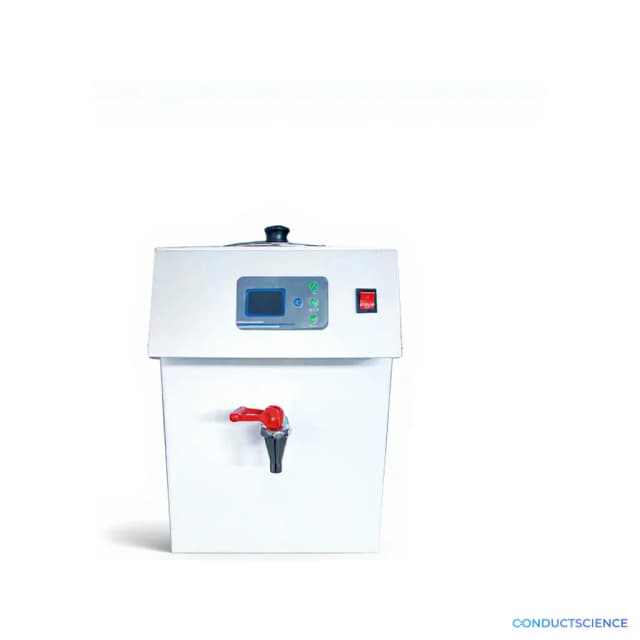
Carousel Type Auto Tissue Processor (No Vacuum)
Automated carousel tissue processor with 12 stations, vacuum-assisted dehydration, and 3-hour processing capability for rapid histological specimen preparation.
| pa_equipment-type | 4952 |
| pa_automation-level | fully-automated |
| pa_pathology-application | 4968 |
| pa_reagent-stations | 5020 |
| pa_specimen-capacity | 4996 |
| pa_vacuum-capability | 4994 |
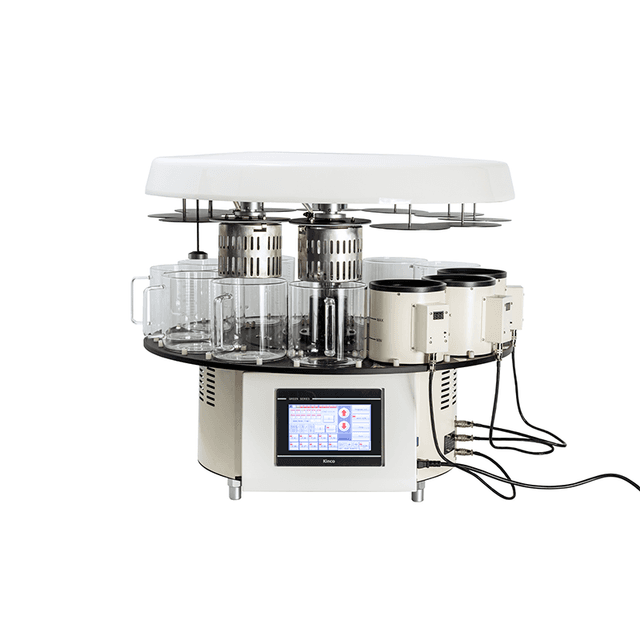
The Carousel Type Auto Tissue Processor (No Vacuum) is an automated histopathology instrument designed for rapid tissue dehydration and processing. This carousel-based system features a rotating sample basket that moves specimens through 12 reagent stations (9 reagent cups plus 3 paraffin cups) with programmable processing times from 0-2000 minutes per station. The system achieves accelerated dehydration through vacuum extraction cycles every 5 minutes, enabling processing of small specimens in as little as 3 hours.
The instrument incorporates dual safety systems with internal software and external mechanical limiters, obstacle detection sensors, and a filtration system for harmful gas removal during vacuum extraction. Transparent glass reagent cylinders with handles facilitate reagent visualization and replacement, while the rotating basket ensures thorough specimen-reagent mixing. Ten built-in programming protocols, manual/automatic operation modes, and power failure protection with memory resumption provide operational flexibility for diverse histological workflows.
How It Works
The tissue processor operates on automated carousel principles where specimens in baskets rotate through sequential reagent stations. The vacuum extraction system creates negative pressure every 5 minutes, drawing interstitial fluids from tissues and accelerating the diffusion of processing reagents into cellular structures. This vacuum-assisted dehydration significantly reduces processing times compared to passive diffusion methods.
The rotating basket mechanism ensures continuous agitation and uniform reagent contact with all specimen surfaces. Sample baskets rotate every 5 minutes during the 1-minute vacuum extraction cycles, promoting thorough mixing and preventing sedimentation. The programmable station timing allows customization of dehydration (alcohol series), clearing (xylene), and infiltration (paraffin) steps based on specimen size and tissue type.
Temperature control in the three paraffin stations (0-85°C) maintains optimal wax viscosity for tissue infiltration. The transparent reagent cylinders enable visual monitoring of processing progress, while the 5-second pause during cylinder changes prevents reagent cross-contamination and spillage.
Features & Benefits
pa_equipment-type
- 4952
pa_automation-level
- fully-automated
pa_pathology-application
- 4968
pa_reagent-stations
- 5020
pa_specimen-capacity
- 4996
pa_vacuum-capability
- 4994
pa_processing-speed
- 4988
vacuum_extraction_interval
- every 5 minutes
minimum_processing_time
- 3 hours for small specimens
sample_basket_rotation_interval
- every 5 minutes
built_in_programs
- 10 programs
delayed_start_maximum
- 30 days
reagent_cylinder_pause_time
- 5 seconds
operating_modes
- manual and automatic
safety_limiters
- internal software and external mechanical
filtration_system
- harmful gas filtration during vacuum extraction
power_failure_protection
- resumes from memory position
obstacle_detection
- automatic stop sensor
Reagent cup volume
- 1.3L Single basket
- 1.3L Double basket
- 2.3L Single basket
- 2.3L Double basket
Number of reagent cups:
- 12 - Reagent cups: 9 Paraffin cups: 3
Reagent cup volume (optional configuration)
- 1.3L Double basket
Paraffin cup temperature range
- 0-85℃
Reagent cup work time setting range
- 0-2000min
Draining time:
- 30s
Vacuum pump working time
- 5min/time 1min once
Frequency of basket stirring
- 5min/time 1min once
Operating temperature/humidity
- Working temperature: Rt--70℃
Product Size
- Φ660*(600-720)/φ780*(600-720)mm
Fuse
- Φ5*20mm,10A AC 120V
Warranty
- 2 years, lifetime technical support
Customize needes
- According to communication
Packing size / weight
- 115KG 105*80*78CM
Material
- glass
Research Domain
- Cancer Research
- Clinical Diagnostics
- Developmental Biology
- Histopathology
- Neurodegeneration
- Toxicology
Weight
- 65KG/75KG
Power/Voltage
- 300W
Certifications
- CE; ISO; 13485
Brand
- ROUNDFIN - Accept OEM
Weight
- 65.0 kg
Dimensions
- L: 105.0 mm
- W: 80.0 mm
- H: 78.0 mm
Comparison Guide
| Feature | This Product | Typical Alternative | Advantage |
|---|---|---|---|
| Processing Speed | 3 hours minimum for small specimens with vacuum assistance | Entry-level processors often require 8-12 hours without vacuum enhancement | Reduces turnaround time for urgent diagnostic specimens and increases laboratory throughput. |
| Reagent Stations | 12 stations (9 reagent + 3 paraffin) with individual programming | Basic models typically offer 6-10 stations with limited customization | Accommodates complete processing protocols including extended dehydration series without reagent changes. |
| Safety Systems | Dual limiters, obstacle detection, and harmful gas filtration | Standard models often have basic mechanical safety only | Provides comprehensive operator protection and prevents costly equipment damage from failures. |
| Programming Flexibility | 10 built-in programs plus custom programming with 0-2000 minute ranges | Basic processors may offer fewer preset programs with limited timing options | Enables optimization for diverse specimen types and research protocols without external timers. |
| Visual Monitoring | Transparent glass cylinders with handles for specimen observation | Opaque containers in many systems require opening to check progress | Allows real-time assessment of processing quality without interrupting the protocol. |
| Power Protection | Memory-based resumption after power failure | Entry-level units may restart protocols from beginning after outages | Prevents specimen loss and maintains protocol integrity during power interruptions. |
This processor combines vacuum-assisted dehydration, comprehensive safety systems, and flexible programming to deliver rapid processing with enhanced reliability. The transparent cylinder design and dual safety features provide operational advantages for demanding histopathology workflows.
Practical Tips
Verify temperature accuracy of paraffin stations using a calibrated thermometer before processing temperature-sensitive specimens.
Why: Temperature variations can affect paraffin infiltration quality and sectioning characteristics.
Clean reagent cylinders thoroughly between different tissue types to prevent cross-contamination and maintain processing quality.
Why: Residual reagents or tissue debris can compromise subsequent processing runs and affect diagnostic accuracy.
Fill reagent cylinders to appropriate levels based on specimen volume to ensure complete immersion during vacuum cycles.
Why: Insufficient reagent volume can result in inadequate processing and compromise tissue morphology.
Ensure adequate ventilation around the unit and verify filtration system function before processing with volatile reagents.
Why: The filtration system removes harmful vapors, but proper ventilation provides additional operator protection.
If carousel stops unexpectedly, check for paraffin solidification or foreign objects before manual reset attempts.
Why: The obstacle detection system activates to prevent damage, and identifying the cause prevents equipment harm.
Monitor specimen orientation in baskets to ensure uniform reagent access during rotation cycles.
Why: Poor orientation can create processing artifacts and uneven dehydration patterns.
Use the delayed start function for overnight processing to maximize laboratory efficiency and reduce hands-on time.
Why: Automated scheduling allows processing during off-hours while maintaining consistent results.
Check vacuum pump performance regularly by monitoring extraction effectiveness during processing cycles.
Why: Reduced vacuum efficiency directly impacts processing speed and tissue quality outcomes.
Setup Guide
What’s in the Box
- Carousel tissue processor main unit
- Transparent glass reagent cylinders with handles (typical)
- Sample baskets (single and/or double configuration)
- Power cord and fuse
- User manual and programming guide (typical)
- Safety documentation and compliance certificates (typical)
Warranty
ConductScience provides a 2-year manufacturer warranty with lifetime technical support. Coverage includes parts replacement and technical assistance for operational issues under normal laboratory use conditions.
Compliance
What is the minimum processing time achievable with this system?
Small specimens can be processed in as little as 3 hours using vacuum-assisted dehydration cycles, significantly faster than conventional passive processors.
How many specimens can be processed simultaneously?
Capacity depends on reagent cylinder configuration - single basket (1.3L or 2.3L) or double basket arrangements accommodate varying specimen loads based on tissue size.
Can processing protocols be customized beyond the 10 built-in programs?
Yes, each of the 12 stations can be programmed individually with processing times from 0-2000 minutes, and delayed start times up to 30 days can be set.
What happens if power fails during processing?
The system includes power failure protection that automatically resumes processing from the memory position upon power restoration, preventing specimen loss.
How is reagent contamination prevented during cylinder changes?
The system pauses for 5 seconds at the top position during cylinder replacement, allowing excess liquid to drain and preventing reagent spillage or cross-contamination.
What safety features protect against mechanical failures?
Dual safety limiters (internal software and external mechanical) plus obstacle detection sensors prevent equipment damage and ensure safe operation.
Can the system operate in manual mode for specialized protocols?
Yes, the processor can switch between manual and automatic modes, allowing researchers to control individual processing steps for specialized applications.
How are chemical fumes managed during automated tissue processing?
Tissue processors that include a built-in activated carbon adsorption system capture xylene and other volatile reagent fumes during operation, reducing the need for a dedicated fume hood. The top-mounted carbon filter adsorbs volatile organic compounds to help maintain a safer lab environment. Regular replacement of the activated carbon element is recommended for optimal performance. For models without integrated fume management, operating under a fume hood or in a well-ventilated area is advised.
Does the tissue processor have fume management for formaldehyde and xylene?
Yes. The unit features an activated carbon adsorption system positioned on top of the equipment, effective at adsorbing formaldehyde and xylene generated during processing.
How often does the activated carbon filter need to be replaced?
Approximately every 3–4 months, depending on usage frequency. Replacement is performed by the user.