Zebrafish Behavioral Tracking
Markerless video analysis for neuroscience, genetics, and pharmacology — 16+ validated paradigms across adults, juveniles, and larvae.
Seven capabilities for zebrafish research

Multi-Subject Tracking
Track dozens of zebrafish simultaneously with unique identity labels. ConductVision maintains individual trajectories even through occlusions and crossings.
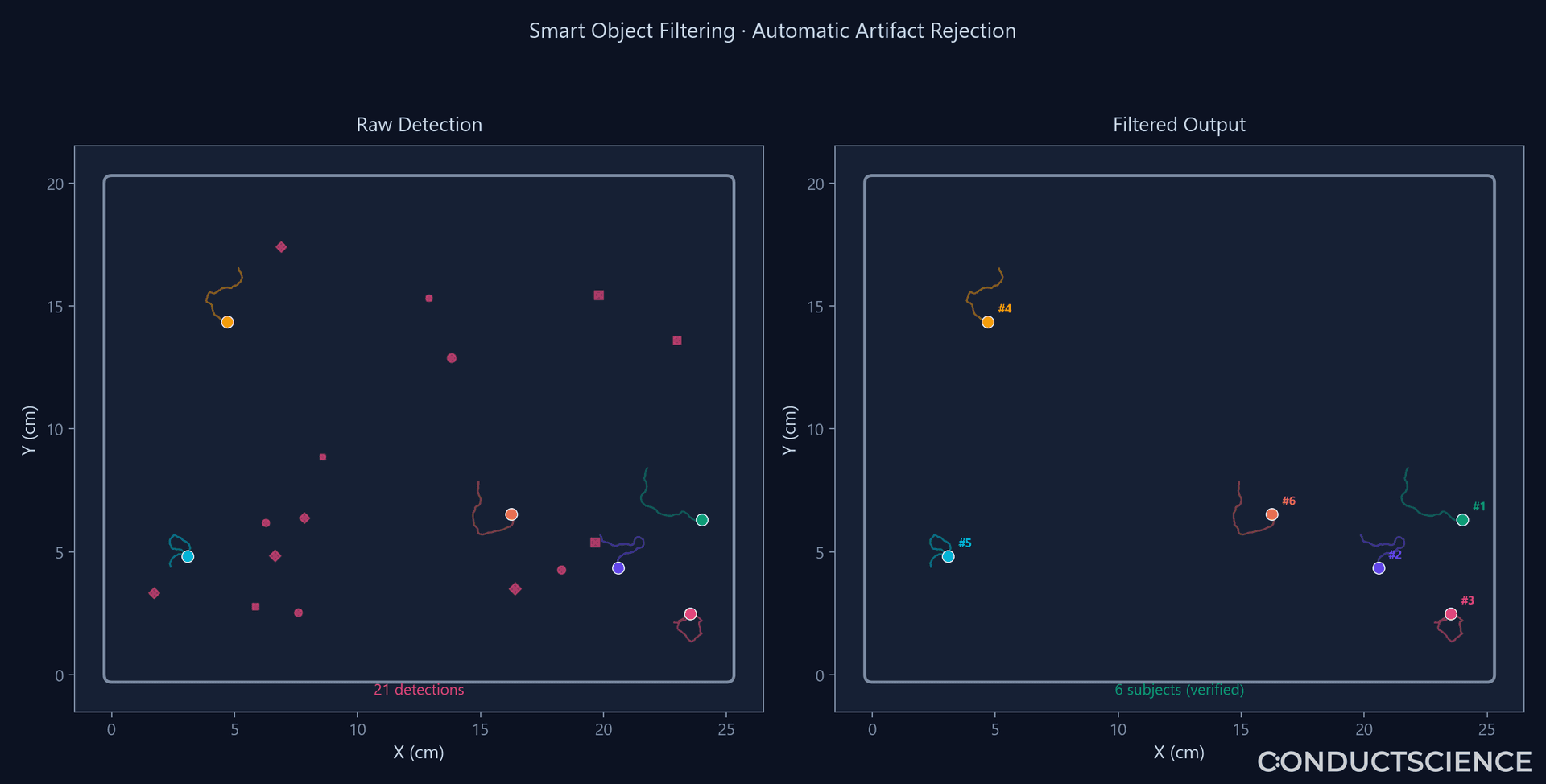
Smart Object Filtering
Separate real subjects from artifacts, reflections, and debris automatically. Fine-tune detection thresholds to match your specific arena and lighting conditions.
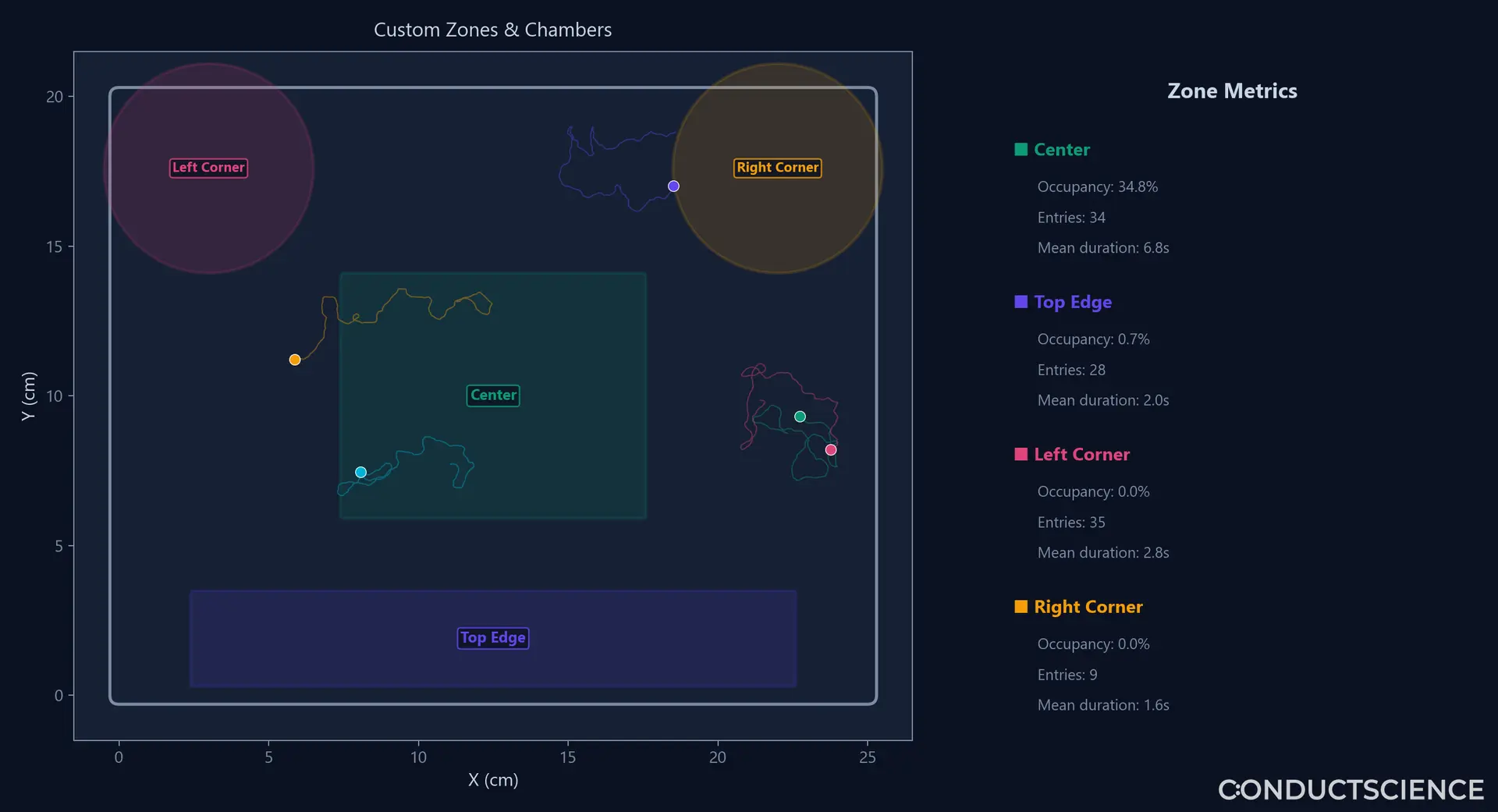
Custom Zones & Chambers
Define any arena geometry — circular tanks, rectangular chambers, T-mazes, or multi-well plates. Draw zones directly on the video feed for region-specific metrics.
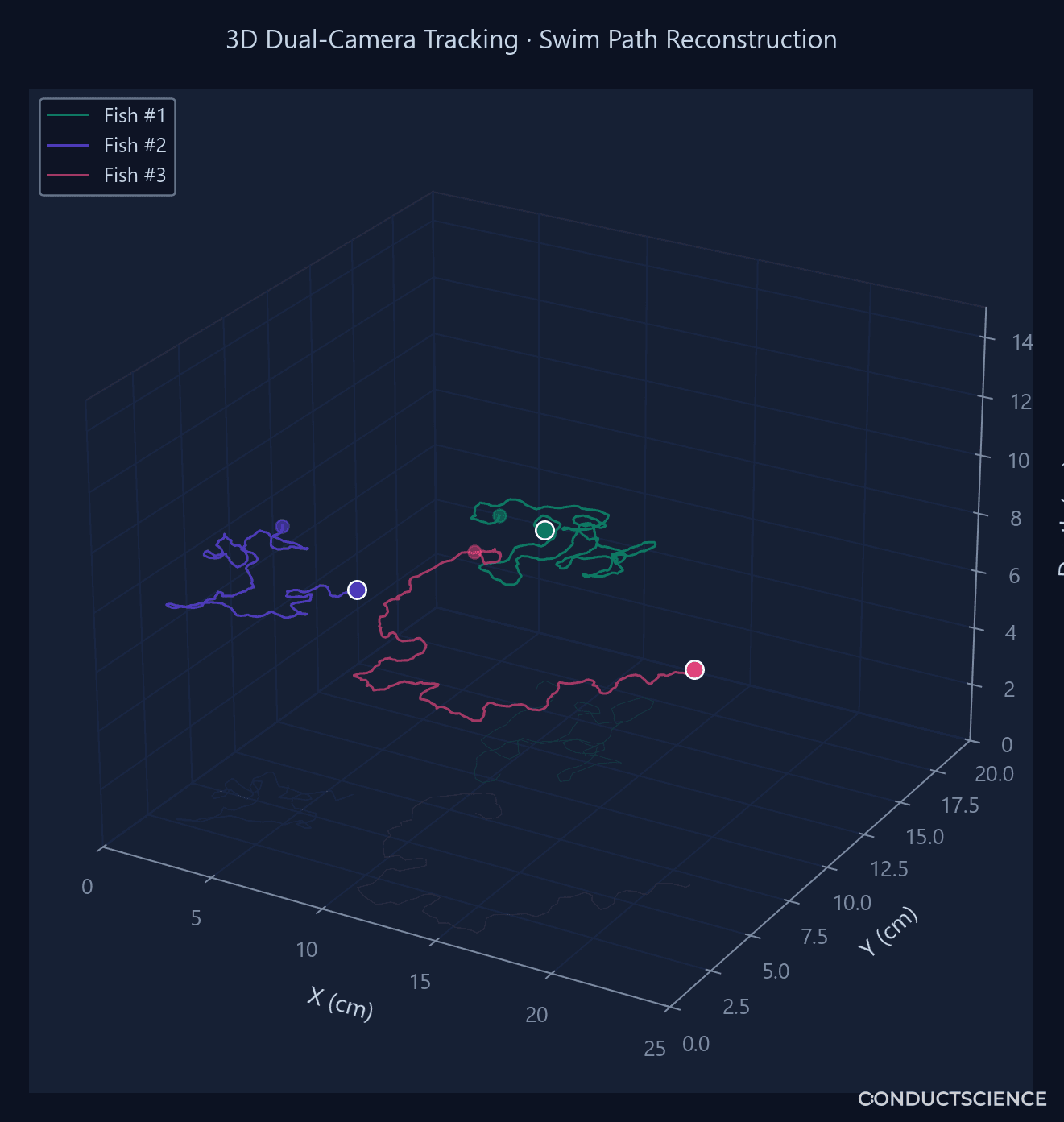
3D Dual-Camera Tracking
Capture the full three-dimensional behavior of zebrafish with synchronized top and side cameras. Reconstruct 3D swim paths for depth preference, diving, and vertical exploration.
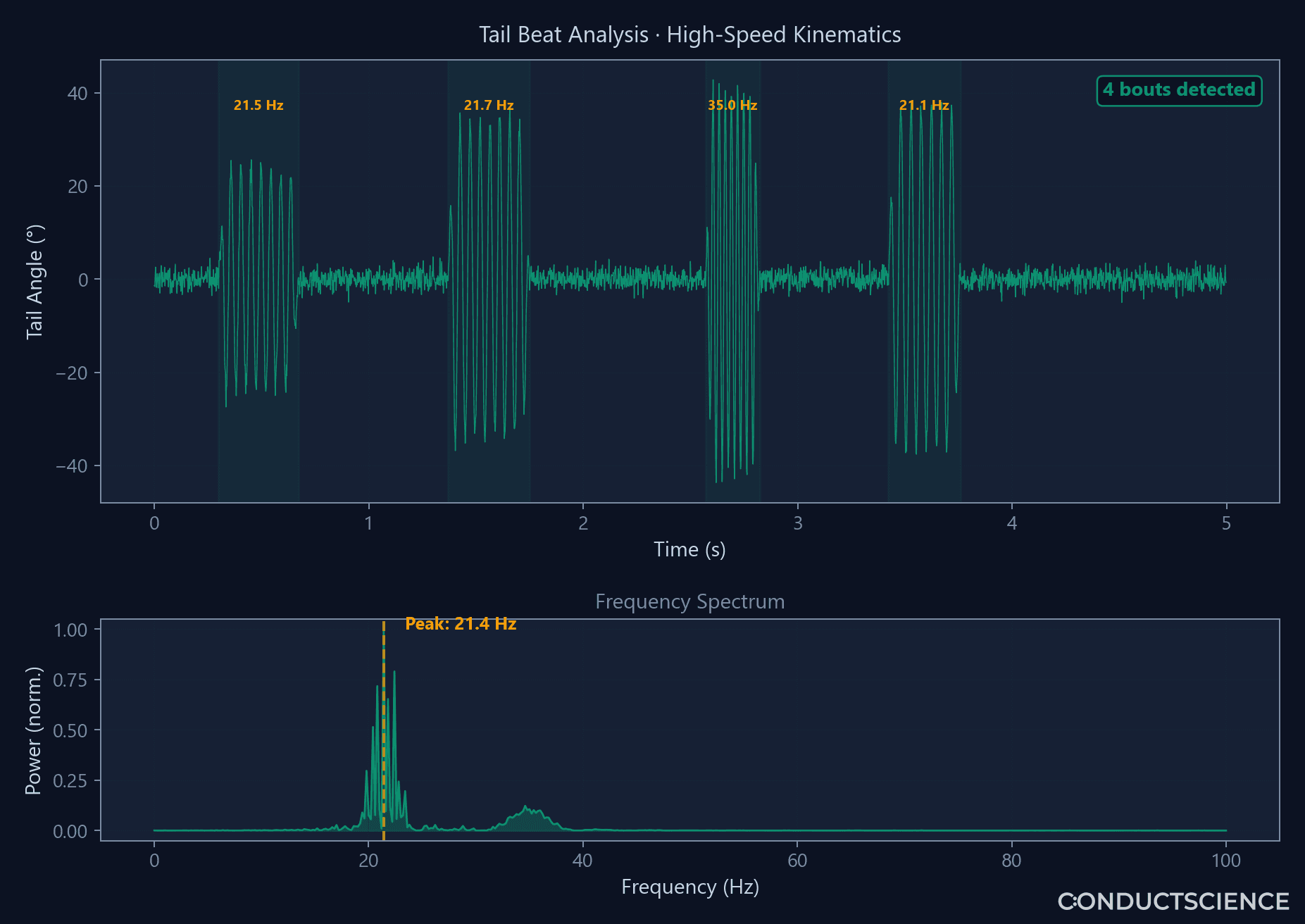
Tail Beat & Physiology
Measure tail-beat frequency, bend amplitude, and swim bout kinematics at sub-second resolution. Correlate locomotor microstructure with pharmacological treatments.
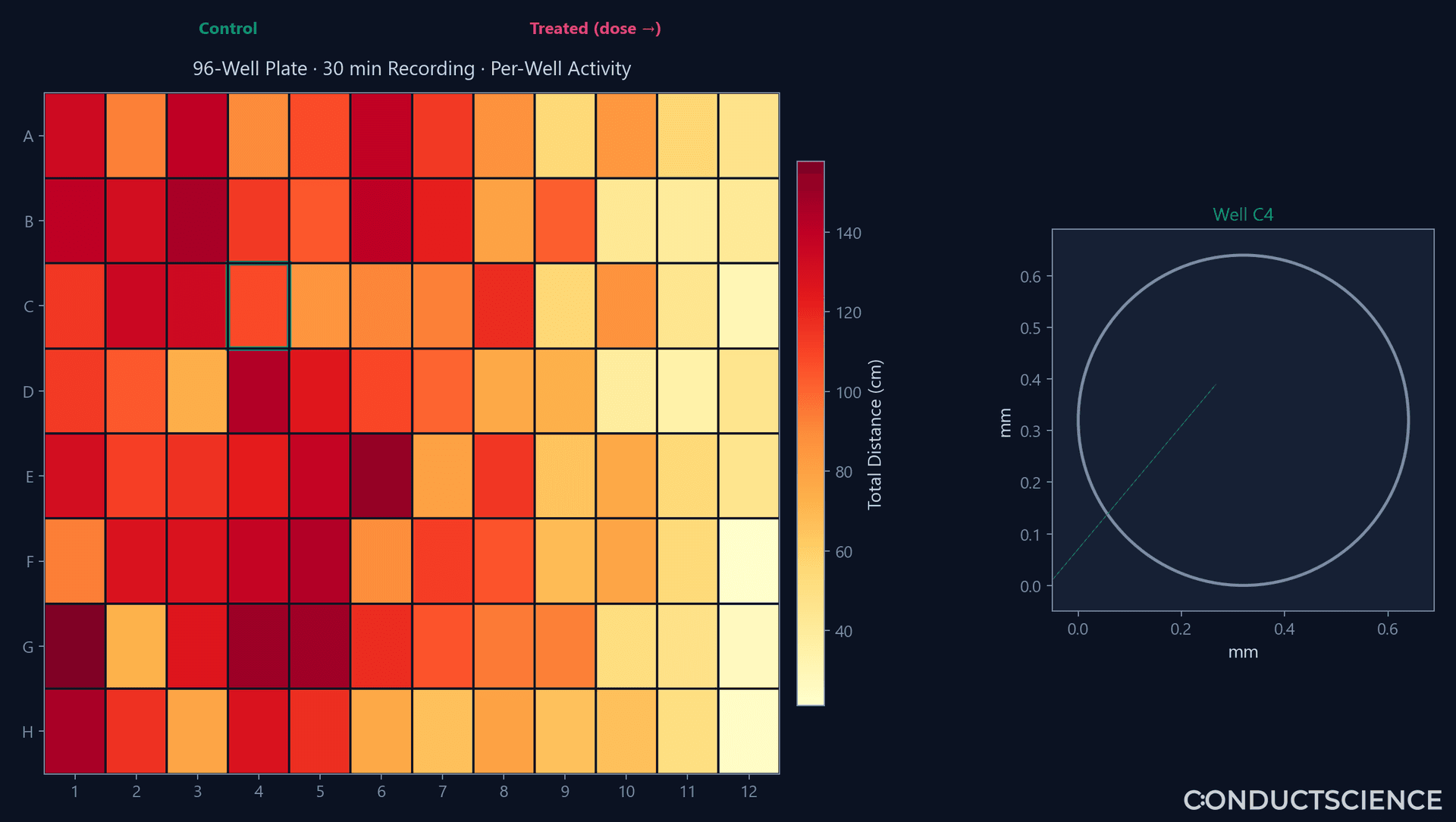
Microplate Analysis
High-throughput screening in 6-, 12-, 24-, 48-, and 96-well plates. Automatic well detection, per-well tracking, and batch export for rapid compound screening.
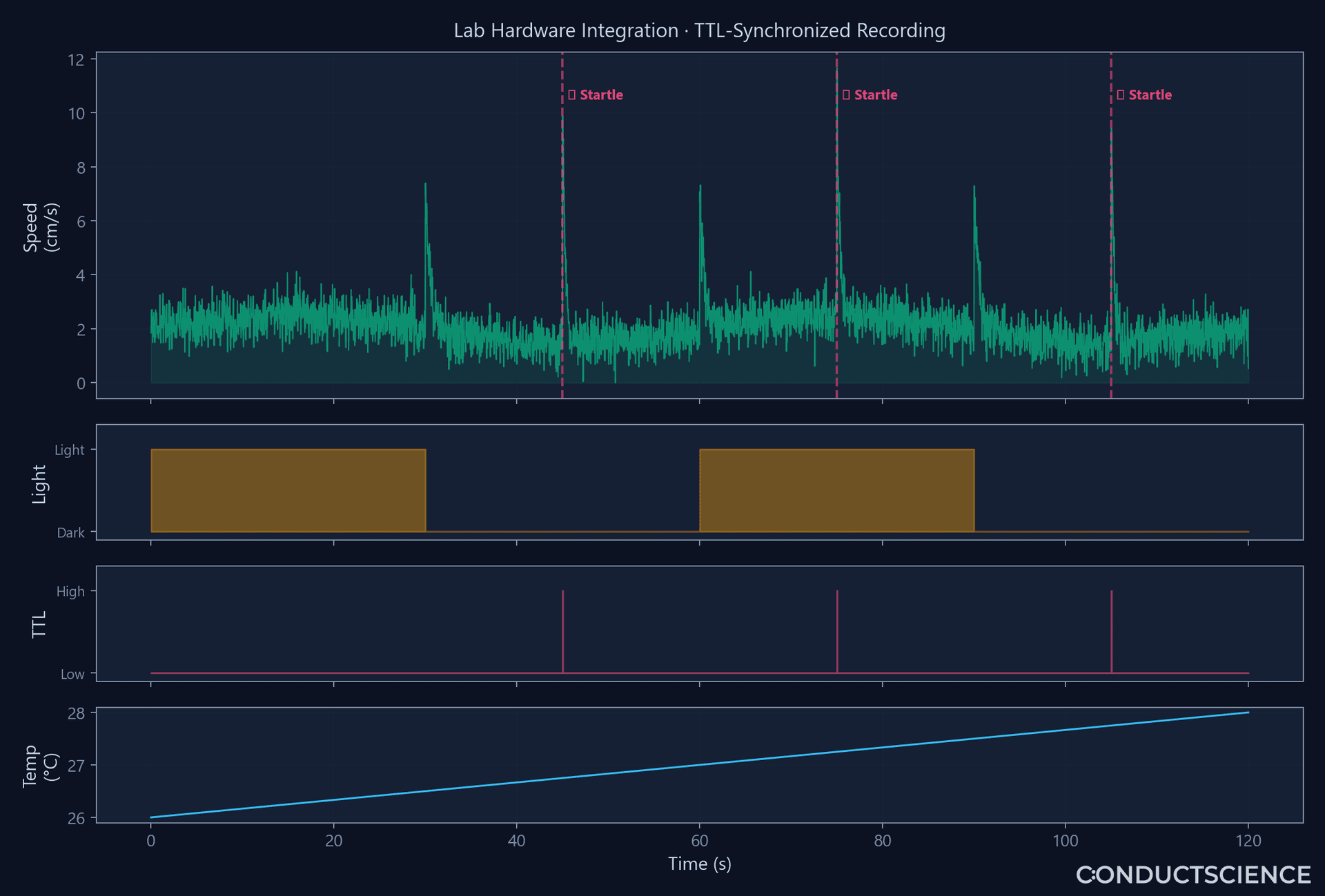
Lab Hardware Integration
Synchronize tracking with light stimuli, acoustic startle devices, temperature controllers, and optogenetics hardware. TTL triggers ensure frame-accurate event alignment.
Zebrafish Behavioral Tests
Visual Water Maze
Visual discrimination and learning
Swim Tunnel
Anxiety and exploration
Light/Dark Maze
Anxiety via scototaxis
Y-Maze
Spatial working memory
5-Choice
Attention and impulsivity
Social Interaction
Markerless social tracking
Novel Tank
Anxiety via vertical exploration
Locomotor Activity
Swimming speed and distance
Larvae Tracking
High-throughput multi-well
Acoustic Startle
C-bend and sensorimotor gating
Thigmotaxis
Wall-hugging anxiety measure
Shoaling
Group cohesion and social dynamics
Aggression
Agonistic behavior quantification
Sleep/Wake
Circadian sleep monitoring
Habituation
Non-associative learning
Seizure Detection
Automated seizure staging
Key Assay Methods
Compatible Equipment
Works with your existing zebrafish hardware
DanioVision Observation Chamber
Larval 96-well locomotion and light/dark assays.
ZebraBox Multi-Well System
High-throughput larval screening.
Zebrafish Behavioral Tank
Adult novel tank, shoaling, social preference.
T-Maze for Zebrafish
Spatial learning and memory.
Infrared Camera System
Dark-phase recording without light artifact.
Choose Your Plan
Free Trial
Full software access for evaluation
- Full software access
- All zebrafish paradigms
- Export limitations apply
- Priority support
Annual License
Most popular
- Unlimited exports
- All zebrafish paradigms
- Priority support
- Software updates included
Full License
30% discount vs. annual
- Unlimited exports
- All zebrafish paradigms
- Priority support
- 5 years of updates
- Best value per year
Why Zebrafish?
One of the most widely used vertebrate models in behavioral neuroscience, toxicology, and drug discovery
70% Gene Homology
Over 70% of human genes have a zebrafish counterpart, making them ideal for translational research.
Transparent Embryo Imaging
Optically clear embryos enable live developmental observation without invasive procedures.
Rapid Breeding Cycle
High fecundity and short generation time for large-scale studies and genetic screens.
Talk to a Zebrafish Specialist
Our PhD scientists will help design your behavioral study.
