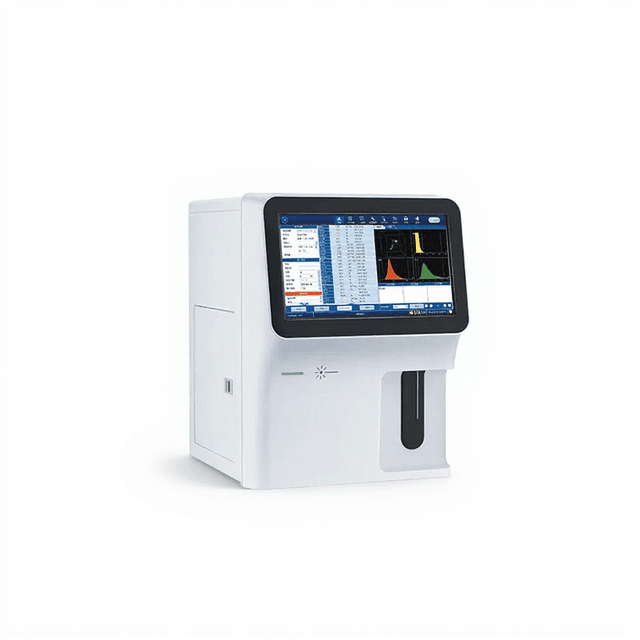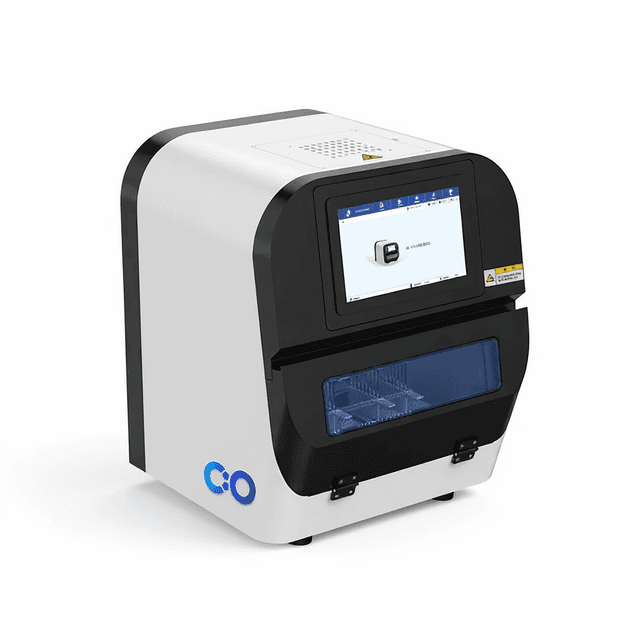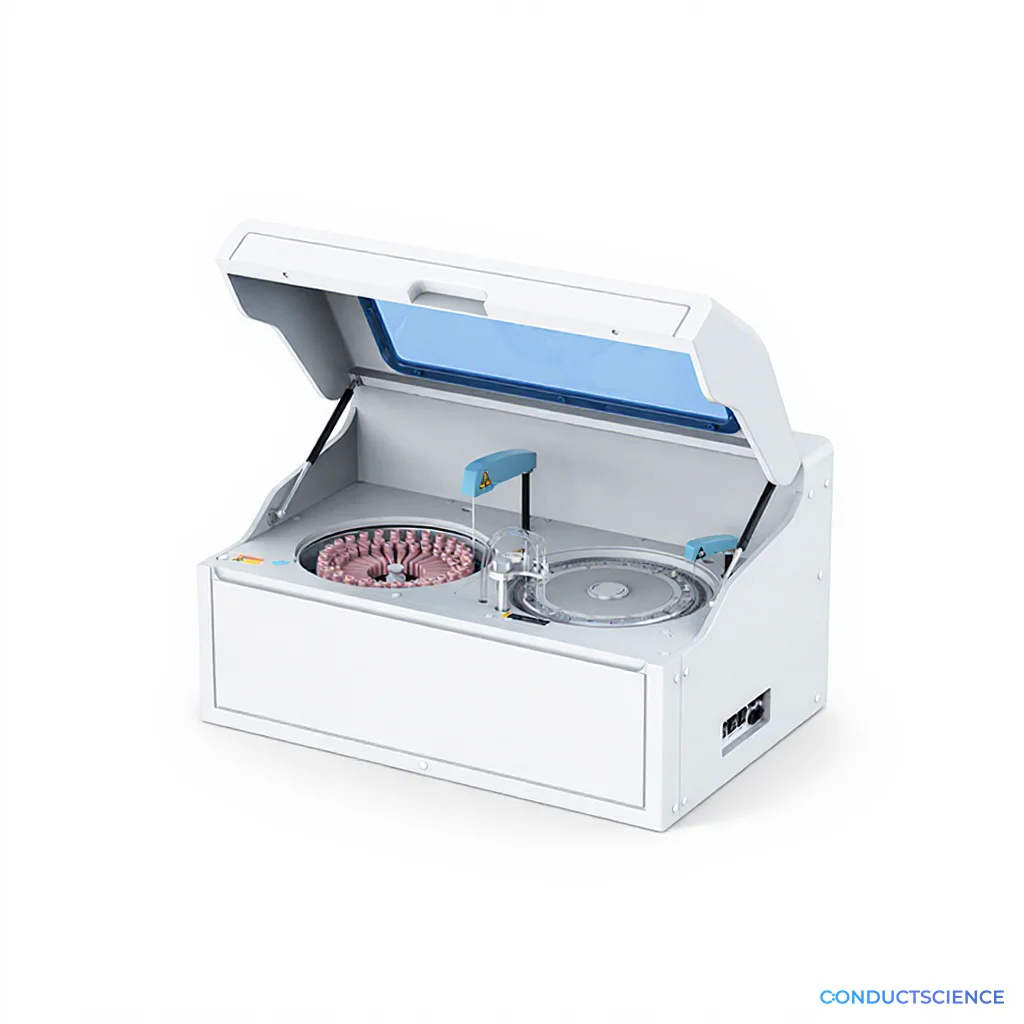
Automatic Blood Chemistry Biochemistry Analyzer
Automatic Chemistry Analyzer BK-200 — for pre-clinical use only.
| Instrument Type | Clinical Analyzers |
| Application Area | Clinical Diagnostics |
| Automation Level | fully-automated |
| sample_positions | 37 |
| reagent_positions | 28 |
| reaction_cuvettes | 48 |
The Automatic Blood Chemistry Biochemistry Analyzer is a fully automated clinical chemistry system designed for high-throughput biochemical analysis across research and diagnostic laboratories. The system processes 200 tests per hour using photometric detection across eight discrete wavelengths (340-700nm), accommodating 37 sample positions and 28 reagent positions with precise temperature control at 37±0.2°C. The analyzer supports multiple analysis methods including end-point, fixed-time, rate, and turbidimetry measurements with sample volume requirements from 2-70μl.
The instrument incorporates 48 reusable reaction cuvettes with a refrigerated reagent tray featuring independent temperature control for reagent stability throughout extended analytical runs. Anti-collision probe technology with liquid level detection and real-time reagent volume monitoring ensures reliable automated operation. The system's Teflon-coated probes and independent 3-step washing system minimize cross-contamination between samples and maintain analytical precision across diverse biochemical assays.
How It Works
The analyzer operates on photometric principles, measuring light absorption by chemical compounds in solution according to Beer-Lambert law. When samples are mixed with specific reagents, target analytes undergo chemical reactions that produce colored products or cause turbidity changes. The system illuminates these reaction mixtures with monochromatic light at eight discrete wavelengths (340, 405, 450, 510, 546, 578, 630, 700nm) and measures the amount of light absorbed or scattered.
Temperature-controlled reaction cuvettes maintain optimal conditions at 37±0.2°C for enzymatic and chemical reactions. The system supports four measurement modes: end-point analysis measures final absorbance after reaction completion, kinetic analysis monitors reaction rates over time, fixed-time analysis measures at predetermined intervals, and turbidimetry detects particle formation or aggregation. Real-time monitoring ensures accurate timing and temperature control throughout each analytical cycle.
Automated liquid handling systems dispense precise volumes of sample (2-70μl) and reagents into reaction cuvettes. Teflon-coated probes prevent carryover between samples, while the independent 3-step washing system removes residual material. The refrigerated reagent compartment maintains reagent stability, and real-time volume detection prevents reagent depletion errors during extended runs.
Features & Benefits
Instrument Type
- Clinical Analyzers
Application Area
- Clinical Diagnostics
Automation Level
- fully-automated
sample_positions
- 37
reagent_positions
- 28
reaction_cuvettes
- 48
test_throughput
- 200 tests per hour
reaction_temperature
- 37±0.2°C
reagent_tray_type
- Refrigerated tray with independent switch
probe_coating
- Teflon coating
washing_system
- Independent 3-step washing system
liquid_level_detection
- Yes
anti_collision_function
- Yes
reagent_volume_detection
- Real-time detection
temperature_monitoring
- Real-time monitor
Throughput
- 200 tests/hour
Analysis Method
- End-point, Fixed-time, Rate, Turbidimetry
Sample Volume
- 2~70μl
Temperature Control
- 37±0.2°C
Cuvettes
- 48 reusable
Wavelengths
- 340, 405, 450, 510, 546, 578, 630, 700nm
External Size
- 625×425×460mm
Material
- Teflon
Research Domain
- Cardiovascular
- Clinical Diagnostics
- Immunology
- Metabolic Research
- Pharmaceutical QC
- Toxicology
Power/Voltage
- AC 220V±10% or 110V±10%, 50/60Hz, 300W
Weight
- 36kg
Weight
- 79.37 lbs
Dimensions
- L: 24.61 in
- W: 18.11 in
- H: 16.73 in
Comparison Guide
| Feature | This Product | Typical Alternative | Advantage |
|---|---|---|---|
| Test Throughput | 200 tests per hour | Entry-level analyzers typically offer 100-150 tests per hour | Higher throughput reduces bottlenecks in busy laboratories and improves workflow efficiency. |
| Wavelength Options | Eight discrete wavelengths (340-700nm) | Basic analyzers often provide 2-4 wavelengths | Greater wavelength selection enables broader assay compatibility and method optimization. |
| Sample Volume Range | 2-70μl variable sample volume | Fixed volume systems typically require 10-20μl minimum | Flexible volume accommodation preserves precious research samples while maintaining accuracy. |
| Reaction Cuvettes | 48 reusable cuvettes | Smaller systems often provide 20-30 cuvettes | Higher cuvette capacity supports simultaneous processing of multiple assays and sample types. |
| Temperature Control | 37±0.2°C with real-time monitoring | Basic systems may have ±0.5°C tolerance | Tighter temperature control improves assay precision and reproducibility for temperature-sensitive reactions. |
| Reagent Storage | 28-position refrigerated tray with independent control | Ambient temperature storage or limited refrigerated positions | Refrigerated storage extends reagent shelf life and supports temperature-sensitive assays. |
This analyzer combines high throughput with flexible analytical capabilities through eight-wavelength detection and variable sample volumes. The refrigerated reagent system and precise temperature control support demanding research applications while reusable cuvettes provide cost-effective operation for high-volume laboratories.
Practical Tips
Perform wavelength calibration verification monthly using certified reference standards to ensure measurement accuracy across all eight wavelengths.
Why: Wavelength drift over time can compromise assay accuracy and affect result comparability between runs.
Replace Teflon probe coatings when surface wear becomes visible to maintain optimal liquid handling performance.
Why: Worn probe surfaces increase carryover risk and can affect sample aspiration accuracy.
Balance reagent loading across both sides of the tray to minimize mechanical stress during rotation cycles.
Why: Unbalanced loading can cause vibration and affect photometric stability during measurements.
Monitor real-time reagent volume displays to prevent analytical failures from reagent depletion during long runs.
Why: Reagent shortage during analysis can cause incomplete reactions and invalid results requiring sample reanalysis.
Review blank absorbance values at all wavelengths before each analytical session to detect optical path contamination.
Why: Elevated blank readings indicate potential cuvette contamination or optical system issues affecting measurement accuracy.
Ensure proper ventilation around the analyzer when processing samples containing volatile organic compounds or strong acids.
Why: Chemical fumes can affect laboratory air quality and potentially interfere with optical measurements through vapor condensation.
Store calibration standards at recommended temperatures and use within expiration periods to maintain traceability.
Why: Degraded calibrators compromise measurement accuracy and may invalidate quality control results.
Schedule reagent inventory management to align with the 28-position capacity to minimize reagent waste from expiration.
Why: Proper inventory rotation prevents reagent expiration and reduces operating costs while ensuring assay reliability.
Setup Guide
What’s in the Box
- Main analyzer unit
- Power supply cable
- Sample rack system (typical)
- Reagent tray (typical)
- Reaction cuvettes set (typical)
- Waste container (typical)
- User manual and software
- Calibration materials (typical)
- Installation accessories (typical)
Warranty
ConductScience provides a standard one-year manufacturer warranty covering defects in materials and workmanship, with comprehensive technical support for installation, calibration, and troubleshooting assistance.
Compliance
References
Background reading relevant to this product:
What is the linear range and detection limits for typical clinical chemistry assays?
Linear range and detection limits vary by specific assay and reagent system used. Consult product datasheet and reagent specifications for each analytical method. The eight-wavelength capability supports optimization across diverse assay types.
How does the refrigerated reagent system maintain reagent stability?
The independent temperature-controlled reagent tray maintains optimal storage conditions for temperature-sensitive reagents. Real-time monitoring prevents temperature excursions that could compromise reagent integrity during extended runs.
What maintenance procedures are required for optimal performance?
Regular maintenance includes daily cleaning cycles, weekly deep cleaning of reaction cuvettes, monthly wavelength calibration verification, and periodic replacement of liquid handling components. The 3-step washing system automates routine cleaning between samples.
Can the system handle viscous or turbid samples?
The liquid level detection and anti-collision probe technology accommodate samples with varying viscosity and clarity. Turbidimetry measurement capability specifically supports analysis of turbid specimens, though severe turbidity may require dilution or alternate methods.
What data output formats are available for laboratory information systems?
Consult product specifications for specific data interface options and LIS connectivity. Most modern analyzers support standard laboratory communication protocols for seamless integration with existing laboratory workflows.
How does the system prevent carryover between samples?
Teflon-coated sample probes resist adhesion of biological materials, while the independent 3-step washing system removes residual sample between aspirations. Anti-collision technology prevents probe contamination from sample contact.
What is the recommended sample storage time before analysis?
Sample stability depends on specific analytes being measured. Most routine chemistry parameters are stable for 24-48 hours refrigerated, though some enzymes and labile compounds require analysis within hours of collection. Follow established pre-analytical guidelines.
Can reagent positions be configured for different assay panels?
The 28-position reagent tray allows flexible configuration for different test menus. Independent temperature control accommodates reagents with varying storage requirements within a single analytical run.
Is the Automatic Blood Chemistry Biochemistry Analyzer approved for clinical or diagnostic use on human samples?
This analyzer is intended for pre-clinical (research) use only. It is not approved or validated for clinical diagnostic use on human patient samples. Researchers should consult applicable regulations in their jurisdiction before use.
Have a question about this product?
Accessories
Enhance your setup with compatible accessories