
Cheeseboard Maze
- Mar 2026 Verified All current specifications independently verified
- Apr 2026 Spec 2 configuration options verified for availability and pricing
- Mar 2026 Spec Verified application protocols for neuroscience, learning and memory, pain research research
- Mar 2026 Review Comprehensive documentation verified u2014 setup guidance, specifications, and application notes
- Mar 2026 Review Product imagery verified u2014 2 images with detailed views
- Mar 2026 Spec Technical specifications verified u2014 Maze Shape, Total Wells, Well Pattern and 15 total parameters
- Mar 2026 Verified Product specifications published and verified for Cheeseboard Maze
 by MazeEngineers

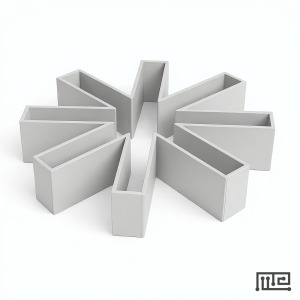
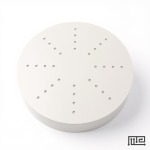
The Cheeseboard Maze is a circular behavioral testing platform designed for assessing spatial learning, working memory, and foraging behavior in rodents. Constructed from grey painted acrylic with 32 strategically positioned wells arranged in a radial pattern, this elevated maze system provides a controlled environment for hippocampus-dependent learning paradigms. The circular platform features wells distributed between 20-60 cm from center (species-dependent), with each well capable of accommodating plastic bottle caps for reward delivery.
Available in mouse and rat configurations, the maze incorporates visual stimulus capabilities through flag-equipped caps for non-spatial testing protocols. The rear section remains well-free, serving as a habituation zone for experimental protocols. The elevated design (75-100 cm above floor) ensures proper behavioral responses while the radial well arrangement allows for complex spatial pattern learning assessments and reference memory evaluation.
How It Works
The Cheeseboard Maze operates on the principle of spatial reference memory and working memory assessment through foraging behavior. Animals must learn and remember the locations of baited wells among 32 possible positions arranged in a radial pattern. The task requires subjects to develop spatial maps using distal environmental cues while avoiding previously visited locations within a session (working memory) and remembering consistently baited locations across sessions (reference memory).
The circular design with radial well distribution creates a spatial learning environment similar to natural foraging contexts. Visual stimuli can be introduced through flag-equipped bottle caps for non-spatial control conditions, allowing researchers to dissociate spatial from non-spatial learning strategies. The elevated platform design encourages exploration while the well depth and diameter specifications ensure reliable reward detection and consumption.
Performance metrics include latency to find baited wells, number of errors (visits to unbaited wells), search strategy analysis, and path efficiency measures. The rear habituation zone allows for controlled introduction to the apparatus before testing begins.
Features & Benefits
Maze Shape
- Circular
Total Wells
- 32
Well Pattern
- Radial
elevation
- Elevated above floor
Rear Side Wells
- None (used for habituation)
Visual Stimulus
- Flag-equipped caps available
Bottle Cap Compatibility
- Plastic bottle caps fit in wells
Behavioral Construct
- Spatial Learning
- Working Memory
- Reference Memory
- Foraging Behavior
- Spatial Navigation
Automation Level
- manual
Material
- Acrylic
Color
- Grey
Species
- Mouse
- Rat
Display Type
- None
Research Domain
- Aging Research
- Behavioral Pharmacology
- Learning and Memory
- Neurodegeneration
- Neuroscience
Weight
- 6.06 lbs
Dimensions
- 65.0 × 36.0 × 27.0 cm
Product Highlights
| Feature | This Product | Category Context |
|---|---|---|
| Number of Choice Points | 32 wells in radial arrangement | Traditional radial arm mazes typically offer 8-12 arms |
| Platform Design | Open circular platform with distributed wells | Maze designs often constrain movement to specific pathways |
| Visual Stimulus Integration | Flag-equipped caps for non-spatial control conditions | Many spatial mazes lack integrated cue-based control protocols |
| Species Configurations | Purpose-built mouse and rat versions with optimized scaling | Generic maze sizes often require adaptation for different species |
The Cheeseboard Maze provides a comprehensive spatial learning assessment platform with 32 choice points, integrated visual stimulus capabilities, and species-specific optimization. The open-field design promotes naturalistic foraging behavior while maintaining experimental control for hippocampus-dependent learning protocols.
Applications & Use Cases
Practical Tips
Clean the platform thoroughly between subjects using 70% ethanol to eliminate olfactory cues that could influence spatial navigation.
Residual odor trails can provide unintended navigation cues that confound spatial learning assessment.
Verify well depth measurements periodically and ensure bottle caps sit consistently flush with platform surface.
Inconsistent well depth or cap positioning can affect reward accessibility and introduce behavioral artifacts.
Inspect acrylic surface regularly for scratches or damage that could create unwanted visual landmarks.
Surface irregularities may provide proximal visual cues that interfere with distal cue-based spatial navigation.
Record multiple dependent variables including latency, errors, path efficiency, and search strategy to capture different aspects of spatial cognition.
Single measures may miss important cognitive changes and comprehensive analysis provides more robust behavioral characterization.
If animals show preference for specific well locations, rotate the platform orientation between sessions while maintaining distal cues.
Platform rotation helps distinguish between true spatial learning and potential response biases to local cues.
Ensure platform stability and check elevation support structure before each testing session.
Platform movement during testing can create aversive experiences that interfere with natural exploratory behavior.
Setup & Operation Guide
-
Unpack and InspectRemove the circular acrylic platform and support structure from packaging, inspecting for any damage to the grey painted surface or well integrity.
-
Platform AssemblyAssemble the elevation support system and secure the circular platform at the specified height (75 cm for mouse, 99.8 cm for rat configuration).
-
Well PreparationInsert plastic bottle caps into designated wells according to your experimental protocol, ensuring caps sit flush with the platform surface.
-
Environmental SetupPosition the maze in a well-lit room with consistent distal visual cues that animals can use for spatial orientation and navigation.
-
Baiting ConfigurationPlace food rewards in designated wells according to your experimental design, using consistent reward types and quantities.
-
Video Recording SetupInstall overhead video recording equipment to track animal movement patterns and calculate performance metrics.
-
Habituation ProtocolConduct initial habituation sessions using the rear well-free section before beginning formal testing protocols.
What's in the Box
- Circular acrylic platform (grey painted)
- Elevation support structure
- 32 plastic bottle caps
- Flag-equipped stimulus caps for visual cues
- Assembly hardware
- User manual with protocol guidelines (typical)
Warranty & Support
ConductScience provides a one-year manufacturer warranty covering material defects and workmanship, with technical support for experimental protocol optimization.
Compliance & Standards
Background Reading
The following papers provide general scientific background on measurement techniques relevant to this product category. They are not validation studies of this specific instrument.
What is the optimal inter-trial interval for spatial working memory protocols?
Consult behavioral literature for species-specific recommendations, typically ranging from 30 seconds to several minutes depending on experimental design and memory retention requirements.
How do I distinguish between spatial and non-spatial learning strategies?
Use flag-equipped visual stimulus caps in control conditions and analyze search patterns - spatial learners show organized search strategies while non-spatial learners rely on visual cues or random searching.
What environmental cues should be present for optimal spatial learning?
Maintain consistent distal visual landmarks around the testing room while minimizing proximal cues on the maze itself to encourage hippocampus-dependent spatial navigation.
How many training sessions are typically required for acquisition?
Protocol-dependent, but most studies use 5-10 training sessions with multiple trials per session to establish stable baseline performance before experimental manipulation.
What food rewards work best for motivation without satiation?
Use small, highly palatable rewards like sucrose pellets or food crumbs, adjusting quantity based on body weight and maintaining 85-90% free-feeding weight for optimal motivation.
Can the maze be modified for different well configurations?
Yes, wells can be selectively baited or covered to create various spatial patterns, though the fixed 32-well radial arrangement provides the structural framework.
Have a question about this product?
Accessories
Enhance your setup with compatible accessories
Frequently Bought Together
Related Products