ConductScience Cryogenic Vials 1.0mL, External Thread, Sterile (Pack of 10)
$75.00 per unit | 10 units per pack Bulk pricing: Pack of 10 at $750.00 ($75.00 per unit)
| Automation Level | manual |

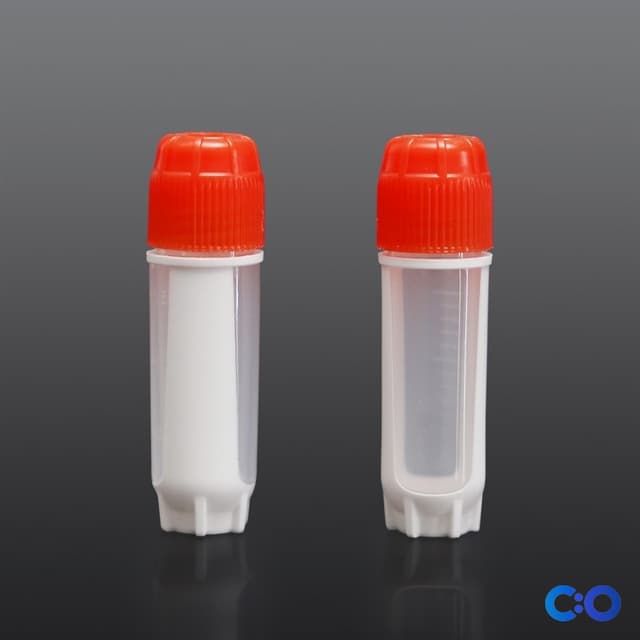
The ConductScience Cryogenic Vials 1.0mL with External Thread are sterile storage containers engineered for ultra-low temperature applications down to -196°C. The external threading design prevents sample contact with threads, eliminating potential contamination pathways during storage and retrieval. These self-standing vials provide reliable sample containment for cryopreservation protocols in research and clinical applications.
The 1.0mL capacity accommodates typical aliquot volumes for cell suspensions, tissue samples, and biological fluids requiring long-term cryogenic storage. The external thread configuration facilitates secure closure while maintaining sample integrity during freeze-thaw cycles and extended storage periods.
How It Works
Cryogenic vials function as sealed containment vessels that protect biological samples during ultra-low temperature storage. The external threading system positions screw threads outside the sample chamber, preventing sample contact with thread surfaces that could harbor contaminants or create sample loss pathways. During closure, the cap compresses against a sealing surface to create a leak-proof barrier.
The polypropylene construction maintains structural integrity at temperatures down to -196°C, resisting thermal shock and material brittleness common in standard plastics. The self-standing base design provides stability during handling and storage, reducing tip-over incidents that could compromise sample security. The 1.0mL internal volume accommodates standard aliquot sizes while minimizing dead space that could affect sample recovery efficiency.
Features & Benefits
Automation Level
- manual
Research Domain
- Analytical Chemistry
- Cancer Research
- Cell Biology
- Clinical Diagnostics
- Developmental Biology
- Immunology
- Microbiology
- Pharmaceutical QC
Weight
- 30.92 kg
Dimensions
- L: 43.2 mm
- W: 36.0 mm
- H: 28.8 mm
Comparison Guide
| Feature | This Product | Typical Alternative | Advantage |
|---|---|---|---|
| Thread Design | External threading prevents sample contact with threads | Many vials use internal threading which contacts sample | Reduces contamination pathways and improves sample recovery efficiency during retrieval |
| Temperature Range | Withstands temperatures to -196°C for liquid nitrogen storage | Some alternatives limited to -80°C applications | Enables direct liquid nitrogen storage for extended preservation periods |
| Base Design | Self-standing base for operational stability | Some models require rack support for upright positioning | Simplifies handling procedures and reduces tip-over incidents during sample preparation |
| Sterility | Pre-sterilized for immediate use | Many alternatives require user sterilization | Eliminates sterilization steps and reduces preparation time in sterile workflows |
These vials offer external threading for contamination control, self-standing design for handling convenience, and pre-sterilization for immediate use in cryogenic storage applications. The 1.0mL capacity accommodates standard research aliquot volumes.
Practical Tips
Cool vials gradually to -80°C before liquid nitrogen transfer to prevent thermal shock.
Why: Rapid temperature transitions can cause material stress and potential vial cracking.
Always use cryogenic gloves and face protection when handling vials in liquid nitrogen.
Why: Direct contact with cryogenic materials can cause severe frostbite injury.
Inspect vial threads and caps for damage before each use, especially after multiple freeze-thaw cycles.
Why: Thread damage compromises seal integrity and can lead to sample contamination or loss.
Use cryogenic-rated labels and indelible markers to prevent sample identification loss during storage.
Why: Standard labels and inks can fail at ultra-low temperatures, resulting in sample misidentification.
Leave 10-15% headspace when filling vials to accommodate thermal expansion during cooling.
Why: Overfilling can cause cap displacement or vial cracking due to sample expansion.
If caps become difficult to remove after cryogenic storage, allow vials to warm slightly at room temperature.
Why: Thermal contraction can increase closure force, making caps harder to remove when frozen.
Setup Guide
What’s in the Box
- 500 x 1.0mL cryogenic vials with external threads
- 500 x matching screw caps
- Sterile packaging (individual or bulk, typical)
- Certificate of sterility (typical)
Warranty
ConductScience provides standard manufacturer warranty coverage for material defects and manufacturing quality issues. Technical support available for proper handling and storage procedures.
Compliance
What is the maximum storage duration for samples in these vials at -196°C?
Storage duration depends on sample type rather than vial limitations. The polypropylene construction maintains integrity indefinitely at cryogenic temperatures, with some biobanks reporting successful storage exceeding 20 years.
Can these vials be used with controlled-rate freezers before liquid nitrogen storage?
Yes, the vials are compatible with controlled-rate freezing protocols. Pre-cooling to -80°C before liquid nitrogen transfer reduces thermal shock and improves sample viability.
How does the external threading prevent contamination compared to internal threads?
External threads position screw surfaces outside the sample chamber, eliminating crevices where contaminants could accumulate and preventing sample contact with thread surfaces during storage or retrieval.
What is the recommended fill volume for optimal sample protection?
Fill to 85-90% capacity (approximately 0.85-0.9mL) to provide headspace for thermal expansion while minimizing air exposure that could affect sample quality.
Are these vials compatible with automated liquid handling systems?
The self-standing design and standard dimensions are compatible with many automated systems, though specific compatibility should be verified with liquid handler specifications for cryogenic applications.
How many freeze-thaw cycles can these vials withstand?
Polypropylene construction typically withstands hundreds of freeze-thaw cycles without structural failure, though actual limits depend on temperature transition rates and mechanical stress.
Have a question about this product?
Upgrade Options
Related Products