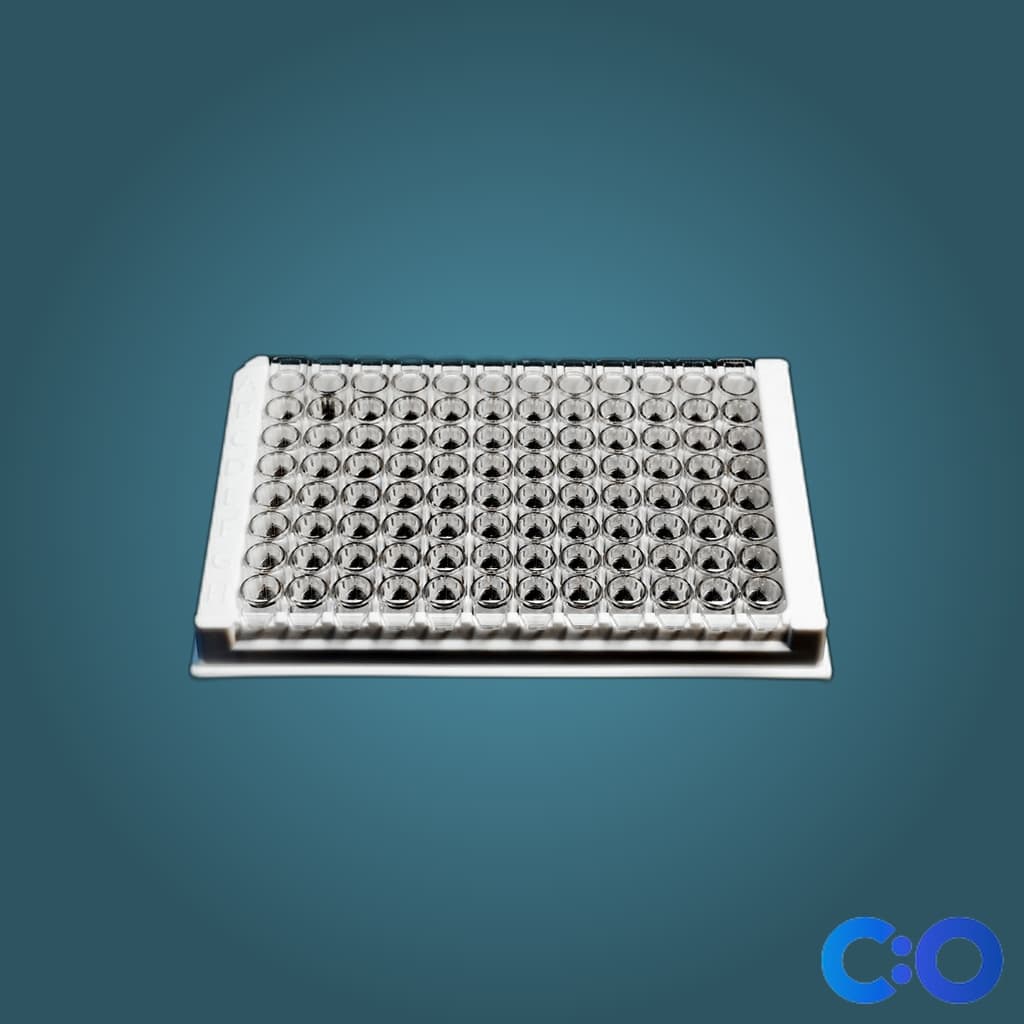
ConductScience ELISA Plates, 96-Well, High-Binding (Case of 10)
$95.00 per unit | 10 units per pack Bulk pricing: Case of 10 at $950.00 ($95.00 per unit)
| Automation Level | semi-automated |
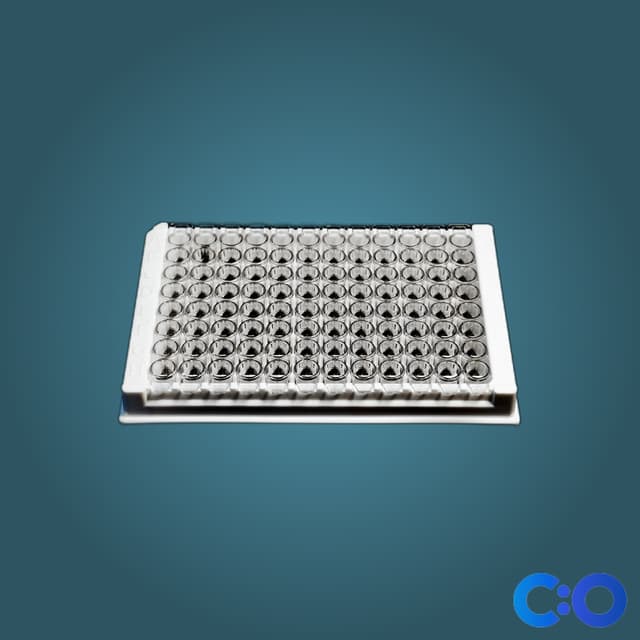
ConductScience ELISA Plates are 96-well high-binding polystyrene microplates designed for enzyme-linked immunosorbent assays. The plates feature a flat-bottom well configuration with enhanced surface chemistry optimized for protein adsorption, providing consistent binding characteristics essential for quantitative immunoassays. The clear polystyrene construction enables optical detection across visible wavelengths while maintaining dimensional stability under standard ELISA protocol conditions.
These plates are specifically engineered for sandwich ELISA applications where high surface binding capacity is required for capture antibody immobilization. The uniform well geometry and consistent surface treatment across all 96 wells ensure reproducible results in multi-sample screening workflows common in clinical diagnostics, pharmaceutical development, and biomedical research applications.
How It Works
ELISA methodology relies on the specific binding interaction between antigens and antibodies, with enzymatic signal amplification for quantitative detection. In sandwich ELISA protocols, capture antibodies are first immobilized on the high-binding plate surface through passive adsorption. The enhanced surface chemistry provides optimal protein orientation and density for efficient antigen capture.
Following sample incubation and washing steps, detection antibodies conjugated to enzymes bind to captured antigens, forming a sandwich complex. Substrate addition generates a colorimetric, fluorometric, or chemiluminescent signal proportional to target antigen concentration. The flat-bottom well geometry ensures uniform optical path length for accurate photometric measurements.
The high-binding surface treatment maximizes antibody retention while minimizing non-specific binding, critical for assay sensitivity and specificity. Consistent well-to-well performance enables reliable standard curve generation and sample quantification across the 96-well format.
Features & Benefits
Automation Level
- semi-automated
Research Domain
- Clinical Diagnostics
- Environmental Monitoring
- Food Science
- Immunology
- Microbiology
- Pharmaceutical QC
Weight
- 559.16 lbs
Dimensions
- L: 113.5 in
- W: 94.6 in
- H: 75.6 in
Comparison Guide
| Feature | This Product | Typical Alternative | Advantage |
|---|---|---|---|
| Surface Binding Capacity | High-binding polystyrene surface chemistry | Standard binding surfaces with lower protein adsorption | Enhanced binding capacity improves assay sensitivity particularly for low-abundance targets |
| Well Format | 96-well flat-bottom configuration | Entry-level models may offer fewer wells or different geometries | Standard format enables high-throughput screening while maintaining compatibility with existing protocols |
| Optical Properties | Clear polystyrene construction | Some plates use colored materials or different plastics | Clear material provides optimal light transmission for accurate colorimetric measurements |
| Quality Consistency | Uniform surface treatment across all wells | Lower-grade plates may have variable well-to-well performance | Consistent binding characteristics ensure reproducible results across large sample sets |
These plates combine high-binding surface chemistry with standard microplate formatting to deliver enhanced sensitivity for sandwich ELISA applications. The clear polystyrene construction and uniform well treatment provide reliable performance for quantitative immunoassays.
Practical Tips
Allow plates and reagents to equilibrate to room temperature before use to ensure consistent binding kinetics.
Why: Temperature variations can affect protein-surface interactions and assay reproducibility.
Include standard curves on each plate rather than relying on historical data for quantification.
Why: Plate-to-plate variations and environmental factors can affect binding efficiency and signal generation.
Store unused plates in original packaging with desiccant to prevent moisture absorption and contamination.
Why: Humidity exposure can alter surface properties and compromise binding performance.
Use appropriate controls including blanks, positive controls, and quality control samples on each plate.
Why: Controls enable detection of systematic errors and validation of assay performance parameters.
If background signals are high, optimize blocking conditions and verify wash buffer composition and pH.
Why: High-binding surfaces require thorough blocking and washing to minimize non-specific signal generation.
Dispose of used plates according to biological waste protocols as they may contain infectious materials.
Why: Clinical samples and biological reagents require appropriate containment and disposal procedures.
Setup Guide
What’s in the Box
- 25 individual 96-well ELISA plates
- Product documentation (typical)
- Certificate of quality (typical)
Warranty
ConductScience provides standard manufacturer warranty covering material defects and dimensional specifications. Technical support available for protocol optimization and troubleshooting.
Compliance
References
Background reading relevant to this product:
What is the protein binding capacity compared to standard binding plates?
High-binding surfaces typically provide 2-5 fold increased protein adsorption compared to standard binding plates, though specific binding capacity should be verified for individual antibodies and protocols.
Are these plates compatible with automated liquid handling systems?
Yes, the plates conform to standard microplate dimensions and spacing specifications, making them compatible with most automated pipetting and washing systems.
What blocking agents work best with this surface chemistry?
BSA, casein, and synthetic blocking buffers are all compatible. Optimal blocking conditions should be determined empirically for each assay system.
Can these plates be used for direct ELISA applications?
While optimized for sandwich ELISA, these plates can be used for direct and indirect ELISA formats where high binding capacity is beneficial for antigen or antibody coating.
What is the recommended storage condition for unused plates?
Store at room temperature in original packaging to prevent contamination and maintain surface integrity. Avoid extreme temperatures and humidity.
Are the plates suitable for fluorescence-based detection?
The clear polystyrene construction is compatible with fluorescence detection, though black plates may provide better signal-to-noise ratios for fluorometric assays.
Have a question about this product?
Accessories
Enhance your setup with compatible accessories
Frequently Bought Together