ConductScience ELISA Plates, 96-Well, Medium-Binding (Case of 10)
$85.00 per unit | 10 units per pack Bulk pricing: Case of 10 at $850.00 ($85.00 per unit)

Louise Corscadden, PhD
Director of Science · ConductScience
Ask Louise about ConductScience ELISA Plates, 96-Well, Medium-Binding (Case of 10) fit, setup, configuration, or quote prep.
Already working with us? Sign in to connect this with My Scientist.
Key Specifications
Full details →- Model fit
- Configured during quote
- SKU family
- CS-ELISA-96MB-25
- Shipping box
- 113.5 x 94.6 x 75.6 cm
- Ordering
- Online checkout and quote request available
- Category
- General Labware
- Build notes
- Confirm accessories, station layout, and support needs before purchase
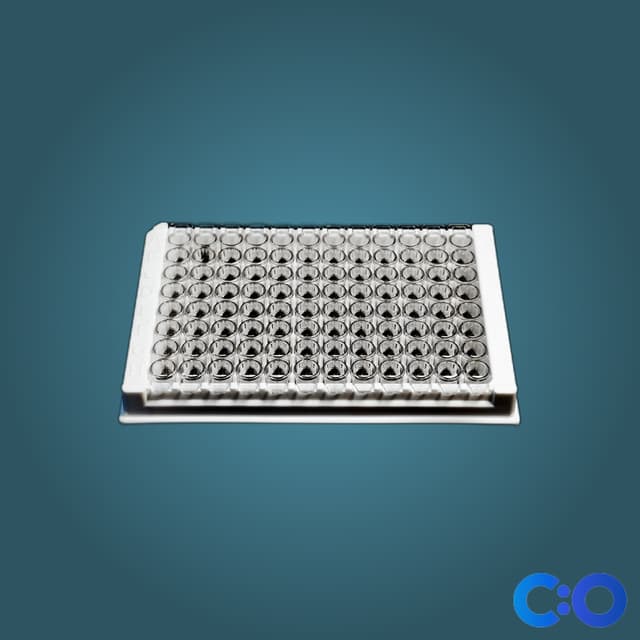
96-well ELISA plates designed for enzyme-linked immunosorbent assays with medium-binding surface properties. These plates feature flat-bottom wells optimized for optical density measurements and reduced non-specific binding characteristics to minimize background interference in immunoassays.
The medium-binding surface provides balanced protein adsorption suitable for capturing antibodies, antigens, and other biomolecules while maintaining low background signals. Each plate contains 96 individual wells arranged in a standard 8x12 format compatible with multichannel pipettes and automated liquid handling systems commonly used in immunoassay workflows.
How It Works
ELISA plates function as solid-phase supports for enzyme-linked immunosorbent assays through surface-mediated protein adsorption. The medium-binding polystyrene surface provides moderate hydrophobic interactions that allow antibodies and antigens to adhere while maintaining proper orientation for binding activity. The flat-bottom geometry enables uniform light path length for spectrophotometric detection at standard wavelengths (450 nm, 492 nm, 630 nm).
During assay development, target molecules bind to the plate surface through non-covalent interactions. Subsequent washing steps remove unbound materials while detection antibodies conjugated to enzymes (typically horseradish peroxidase or alkaline phosphatase) bind to captured analytes. Substrate addition produces colorimetric signals proportional to target concentration, measured using standard microplate readers.
The reduced non-specific binding characteristics minimize background signal interference by limiting non-target protein adsorption to well surfaces. This improves signal-to-noise ratios and assay sensitivity, particularly important for low-abundance analyte detection in complex biological matrices.
Features & Benefits
Automation Level
- manual
Research Domain
- Analytical Chemistry
- Cell Biology
- Clinical Diagnostics
- Environmental Monitoring
- Food Science
- Immunology
- Microbiology
- Pharmaceutical QC
Shipping weight
- 559.16 lb
Shipping box
- L: 113.5 cm
- W: 94.6 cm
- H: 75.6 cm
| Feature | This Product | Typical Alternative | Advantage |
|---|---|---|---|
| Surface Binding Properties | Medium-binding surface with reduced non-specific binding | High-binding plates may show increased background; low-binding plates may have reduced capture efficiency | Optimizes signal-to-noise ratio for better assay sensitivity and specificity in routine applications. |
| Well Bottom Design | Flat-bottom wells for optical density measurements | Round-bottom wells may cause uneven light paths and measurement variability | Ensures consistent optical characteristics and accurate quantitative measurements across all wells. |
| Plate Format | Standard 96-well configuration | Some formats offer 384-well or 48-well options for different throughput needs | Provides optimal balance of sample throughput and reagent volume for most laboratory workflows. |
| Material Construction | Polystyrene with optimized surface treatment | Untreated surfaces may show variable protein binding characteristics | Delivers consistent performance batch-to-batch for reliable assay reproducibility. |
These medium-binding ELISA plates offer optimized surface properties for balanced protein capture with low background binding. The flat-bottom design and standard 96-well format provide reliable performance for routine immunoassay applications with consistent optical characteristics for accurate measurements.
Practical Tips
Pre-warm coating solutions and plates to room temperature before use to ensure uniform protein distribution across wells.
Why: Temperature differences can cause uneven coating and affect assay reproducibility.
Handle plates by edges only and avoid touching well surfaces to prevent contamination and surface damage.
Why: Fingerprints and oils can interfere with protein binding and optical measurements.
Include standard curves on each plate and verify linearity within expected concentration ranges.
Why: Plate-to-plate variation and environmental factors can affect binding characteristics and require internal calibration.
Use appropriate blanks and controls in every assay, including negative controls and known positive samples.
Why: Controls help identify assay problems and validate results, particularly important for low-abundance analyte detection.
If background levels are high, increase washing stringency or extend blocking incubation times.
Why: Incomplete blocking or insufficient washing can lead to non-specific binding and elevated background signals.
Avoid air bubbles in wells during reagent addition as they can interfere with binding and optical readings.
Why: Air bubbles create uneven surfaces that affect both protein adsorption and light transmission measurements.
Dispose of used plates according to biological waste protocols, especially when handling clinical or infectious samples.
Why: ELISA plates may contain biological materials that require proper containment and disposal procedures.
Setup Guide
What’s in the Box
- 25 sterile 96-well ELISA plates
- Product documentation (typical)
- Certificate of analysis (typical)
Warranty
ConductScience provides standard manufacturer warranty covering material defects and manufacturing quality. Technical support available for application-specific guidance and troubleshooting.
Compliance
References
Background reading relevant to this product:
What protein concentrations are optimal for coating these medium-binding plates?
Typical coating concentrations range from 1-10 μg/mL for antibodies and 0.5-5 μg/mL for antigens. Optimization studies should determine optimal concentrations for specific assays, as binding capacity varies with protein size and buffer conditions.
Are these plates compatible with automated washing systems?
Yes, the standard 96-well format and flat-bottom design are compatible with most automated plate washers. Ensure wash head alignment and aspiration settings are appropriate for complete buffer removal without well damage.
What is the maximum incubation temperature for these plates?
Polystyrene plates typically withstand temperatures up to 80°C for short periods. For routine ELISA protocols, incubations at 37°C are standard. Consult product datasheet for specific temperature limits and recommendations.
How should unused plates be stored?
Store sealed plates at room temperature in dry conditions away from direct sunlight. Avoid temperature fluctuations that could cause condensation. Once opened, use within manufacturer recommendations to prevent contamination.
Can these plates be used for cell-based assays?
While designed for ELISA applications, the medium-binding surface may not provide optimal cell attachment for cell culture. Cell-culture treated plates with enhanced binding properties are recommended for cell-based assays.
What washing protocols work best with these plates?
Use PBS with 0.05% Tween-20 for standard washing. Three wash cycles with 200-300 μL per well typically provide adequate removal of unbound reagents. Avoid harsh detergents that might affect surface properties.
Are these plates suitable for chemiluminescent detection?
The white or clear bottom design affects suitability for chemiluminescent assays. Clear plates work for colorimetric detection, while white plates optimize light output for luminescent substrates. Consult product specifications for bottom type.
Have a question about this product?
Have a question? Just ask.
Send it over and we'll email you a personalized answer — no call, no scheduling.
Prefer to talk it through?
Accessories
Enhance your setup with compatible accessories
Frequently Bought Together
Upgrade Options
Related Products