Microplate Centrifuge
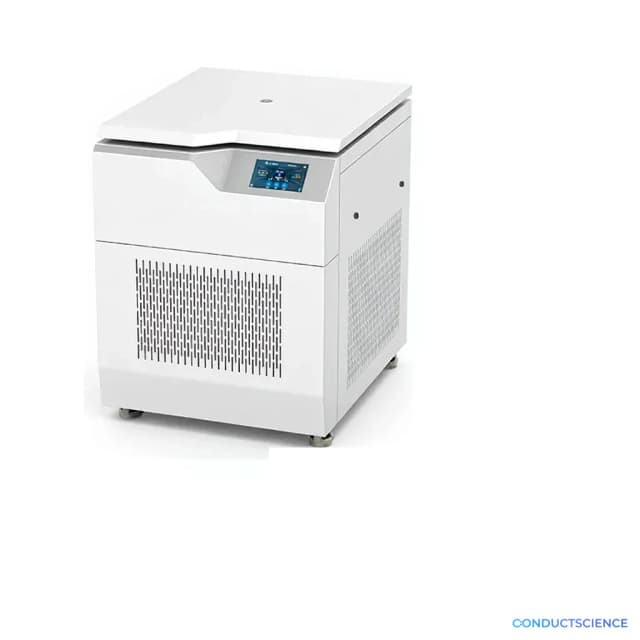
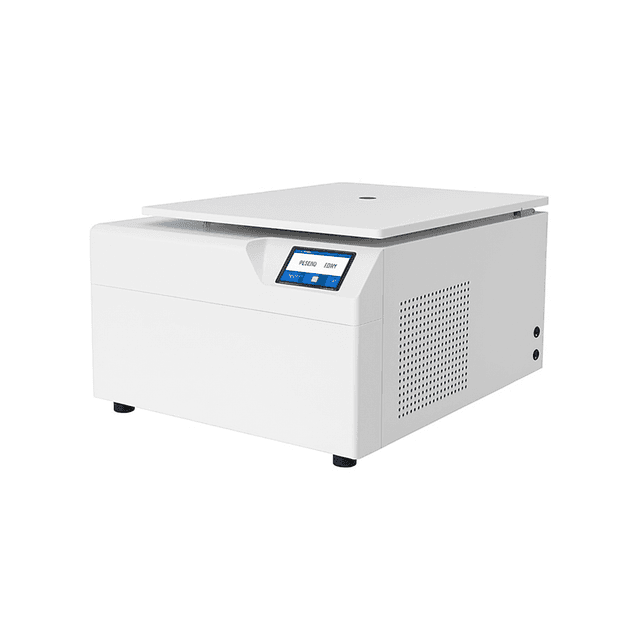
Benchtop microplate centrifuge with 4000 rpm maximum speed and 2361×g RCF capacity for processing 96-well plates, ELISA plates, and deep-well plates in analytical workflows.

Louise Corscadden, PhD
Director of Science · ConductScience
Ask Louise about Microplate Centrifuge fit, setup, configuration, or quote prep.
Already working with us? Sign in to connect this with My Scientist.
Key Specifications
Full details →- Model fit
- Configured during quote
- SKU family
- BIO-0331
- Shipping box
- 37.0 x 44.0 x 58.0 cm
- Ordering
- Online checkout and quote request available
- Category
- Centrifuges
- Build notes
- Confirm accessories, station layout, and support needs before purchase
The ConductScience Microplate Centrifuge is a benchtop centrifugation system designed for high-throughput processing of microplates and deep-well plates in analytical laboratories. With a maximum speed of 4000 rpm and centrifugal force of 2361×g, this instrument accommodates standard 96-well microplates, ELISA plates, and deep-well plates for applications requiring rapid sedimentation, cell pelleting, and phase separation. The unit features precision speed control (±20 rpm) and flexible timing options from 1 second to 99 hours 59 minutes, supporting both short-pulse spins and extended centrifugation protocols.
Operating at noise levels ≤65 dB(A), the centrifuge provides quiet operation suitable for shared laboratory spaces. The compact footprint (440×580×370 mm) and 41 kg weight allow for placement on standard laboratory benches while maintaining stability during high-speed operation. Power options include standard AC220V and optional 110V configurations to accommodate different facility requirements.
How It Works
Centrifugal separation relies on the principle that particles of different densities will sediment at different rates when subjected to centrifugal force. The microplate centrifuge generates centrifugal acceleration by rotating samples around a fixed axis, creating an artificial gravitational field that is 2361 times stronger than Earth's gravity at maximum speed. This enhanced gravitational force causes denser particles, cells, or phases to migrate toward the bottom of wells while lighter components remain in the supernatant.
The rotor system maintains balanced loading through its design for standard microplate configurations, ensuring uniform force distribution across all wells. Speed precision of ±20 rpm ensures reproducible centrifugal forces, critical for consistent separation results across multiple samples. The timing system allows for precise control of separation duration, from brief pulse spins for mixing to extended runs for complete phase separation.
Temperature control during centrifugation prevents sample degradation and maintains consistent viscosity conditions. The noise-dampening design (≤65 dB(A)) incorporates vibration isolation to minimize disturbance to sensitive analytical instruments in the laboratory environment.
Features & Benefits
Automation Level
- semi-automated
Max. Capacity
- 2*2*96 well microplate/ELISA plate, 2*96 deep-well plate
Max speed
- 4,000 rpm
Timing Range
- 1s~99h59min/continuous/short-spin
Speed Precision
- ±20rpm
Noise
- ≤65dB(A)
Consumption
- 500W
External Size(L*W*H)
- 440*580*370mm
Package Size(L*W*H)
- 596*736*650mm
NO.
- Rotors Type
Brand
- ConductScience
Research Domain
- Analytical Chemistry
- Cell Biology
- Clinical Diagnostics
- Environmental Monitoring
- Microbiology
- Pharmaceutical QC
Power/Voltage
- AC220V, 50/60Hz(Standard); 110V, 50/60Hz(Optional)
Weight
- 55kg(220V), 60kg(110V)
Capacity
- Max. Speed
Max force
- 2,361 ×g
Shipping weight
- 41.0 lb
Shipping box
- L: 37.0 cm
- W: 44.0 cm
- H: 58.0 cm
| Feature | This Product | Typical Alternative | Advantage |
|---|---|---|---|
| Maximum Speed | 4000 rpm | Entry-level models often limited to 3000 rpm or below | Higher speed capability enables faster separations and processing of difficult-to-pellet samples |
| Plate Capacity | 2×2×96 well microplates or 2×96 deep-well plates | Single plate capacity common in compact units | Dual capacity increases throughput for high-volume analytical workflows without requiring larger footprint |
| Speed Precision | ±20 rpm | Lower-cost models may offer ±50 rpm or greater variation | Tighter speed control ensures reproducible centrifugal forces for method validation and consistent results |
| Timing Range | 1 second to 99h59min plus continuous operation | Basic models often limited to shorter maximum times | Extended timing capability supports specialized protocols requiring long separation periods |
| Noise Level | ≤65 dB(A) | Higher noise levels common in budget centrifuges | Quieter operation allows placement near sensitive analytical equipment without interference |
| Power Options | 220V standard with 110V optional | Single voltage configuration typical | Dual voltage compatibility accommodates different international laboratory power systems |
This microplate centrifuge combines higher speed capability (4000 rpm, 2361×g) with dual-plate capacity and precision speed control (±20 rpm) in a compact benchtop design. The extended timing range and quiet operation support both routine analytical workflows and specialized separation protocols requiring longer run times or sensitive laboratory environments.
Practical Tips
Verify speed accuracy monthly using a calibrated tachometer or strobe light, particularly after any rotor changes or maintenance.
Why: Speed accuracy directly affects centrifugal force calculations and method reproducibility.
Clean the rotor chamber and plate adapters weekly with mild detergent solution to prevent sample cross-contamination.
Why: Residual sample materials can affect balance and introduce analytical interferences.
Always balance plates with equal volumes across symmetric positions, using water-filled plates as counterbalances when processing odd numbers.
Why: Proper balance prevents excessive vibration that can damage the instrument and affect separation quality.
Allow samples to reach room temperature before centrifugation to prevent condensation and ensure consistent separation conditions.
Why: Temperature variations affect sample viscosity and can lead to variable separation results.
If excessive vibration occurs during operation, stop immediately and check plate loading balance and rotor installation.
Why: Unbalanced loads can cause mechanical damage and compromise separation efficiency.
Record actual centrifugation parameters (speed, time, temperature) for each run to ensure method traceability and reproducibility.
Why: Documentation supports analytical method validation and troubleshooting of inconsistent results.
Never open the lid during operation and ensure all safety interlocks are functional before each use session.
Why: Rotating components present serious injury risk and safety systems prevent accidental exposure.
Inspect rotor components quarterly for signs of wear, cracking, or corrosion that could lead to failure during operation.
Why: Rotor integrity is critical for safe operation at high speeds and preventing catastrophic failure.
Setup Guide
What’s in the Box
- Microplate centrifuge main unit
- Standard microplate rotor assembly
- Power cable (220V or 110V as specified)
- User manual and safety instructions
- Warranty documentation
- Rotor balancing weights (typical)
- Sample plate adapters (typical)
Warranty
ConductScience provides a standard 1-year manufacturer warranty covering parts and labor, with technical support for installation, operation, and troubleshooting throughout the warranty period.
Compliance
What is the maximum centrifugal force achievable with standard microplates?
The centrifuge generates a maximum of 2361×g at 4000 rpm, sufficient for most microplate applications including cell pelleting, protein precipitation, and phase separation protocols.
Can the system accommodate both standard and deep-well plates simultaneously?
Yes, the rotor configuration allows for 2×2×96 well standard microplates or 2×96 deep-well plates, but these formats cannot be mixed in a single run due to different plate heights.
How precise is the speed control for method validation requirements?
Speed precision is maintained at ±20 rpm across the full operating range, meeting typical analytical method requirements for reproducible centrifugal force application.
What is the shortest centrifugation time for rapid mixing applications?
The timing system supports 1-second minimum duration with a dedicated short-spin function for brief mixing or quick separations.
Does the centrifuge require special electrical installation?
Standard 220V configuration uses conventional laboratory power supply; optional 110V version is available. Both require proper grounding for safety.
How does noise level affect placement in shared laboratory spaces?
Operating noise ≤65 dB(A) allows placement near sensitive analytical instruments without interference, comparable to normal conversation levels.
What maintenance procedures are required for consistent performance?
Regular rotor cleaning, balance verification, and annual speed calibration are recommended; consult product datasheet for detailed maintenance schedule.
Have a question about this product?
Have a question? Just ask.
Send it over and we'll email you a personalized answer — no call, no scheduling.
Prefer to talk it through?
Accessories
Enhance your setup with compatible accessories
Replacement Parts & Consumables
Upgrade Options