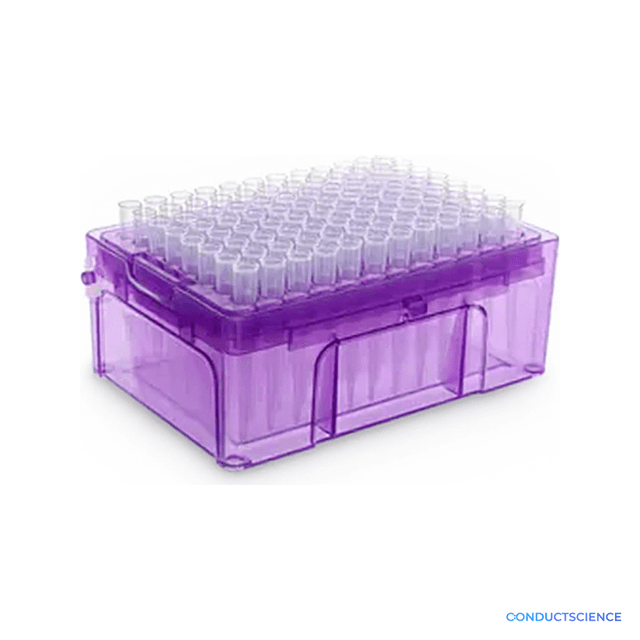
ConductScience 384-Well Deep Well Plates, 240uL (Case of 10)
$85.00 per unit | 10 units per pack Bulk pricing: Case of 10 at $850.00 ($85.00 per unit)

Louise Corscadden, PhD
Director of Science · ConductScience
Ask Louise about ConductScience 384-Well Deep Well Plates, 240uL (Case of 10) fit, setup, configuration, or quote prep.
Already working with us? Sign in to connect this with My Scientist.
Key Specifications
Full details →- Model fit
- Configured during quote
- SKU family
- CS-DWP-384-10
- Shipping box
- 113.5 x 94.6 x 75.6 cm
- Ordering
- Online checkout and quote request available
- Category
- General Labware
- Build notes
- Confirm accessories, station layout, and support needs before purchase
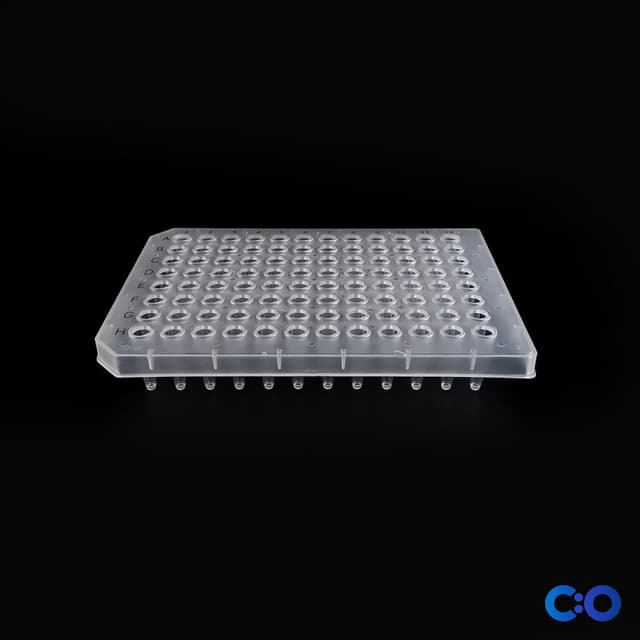
The ConductScience 384-Well Deep Well Plates are high-density polypropylene microplates designed for high-throughput screening applications requiring larger working volumes. Each plate contains 384 individual wells with a 240μL capacity, providing researchers with the ability to process significantly more samples per plate compared to standard formats while maintaining adequate volume for compound storage, dilution series, and enzymatic reactions.
Manufactured from autoclavable polypropylene, these plates offer chemical resistance and thermal stability suitable for diverse laboratory protocols. The deep well format accommodates applications requiring higher volumes than standard microplates, including compound libraries, sample preparation workflows, and automated liquid handling systems. The 384-well density enables efficient use of laboratory space and reagents while supporting statistical robustness through increased sample throughput.
How It Works
Deep well plates function as miniaturized reaction vessels arranged in a standardized format compatible with automated liquid handling systems and analytical instrumentation. The 384-well configuration follows the standard microplate footprint (127.76 × 85.48 mm) while providing quadruple the well density of 96-well formats through reduced well spacing and diameter.
The 240μL well capacity enables applications requiring larger volumes than standard screening plates, accommodating serial dilutions, enzymatic reactions with extended incubation times, and storage of concentrated stock solutions. The polypropylene construction provides chemical inertness across a broad pH range and temperature stability for autoclaving at 121°C, ensuring sterility for cell culture applications and decontamination between uses.
Well geometry and spacing conform to industry standards, enabling compatibility with multichannel pipettes, automated dispensers, plate readers, and robotic systems. The deep well design minimizes cross-contamination between wells while providing sufficient volume for mixing and sampling operations throughout experimental protocols.
Features & Benefits
Research Domain
- Analytical Chemistry
- Cancer Research
- Cell Biology
- Materials Science
- Microbiology
- Pharmaceutical QC
Shipping weight
- 559.16 lb
Shipping box
- L: 113.5 cm
- W: 94.6 cm
- H: 75.6 cm
| Feature | This Product | Typical Alternative | Advantage |
|---|---|---|---|
| Well Capacity | 240μL maximum capacity per well | Standard screening plates often provide 50-100μL capacity | Larger volumes accommodate serial dilutions and extended reaction protocols without multiple plate transfers |
| Well Density | 384-well high-density format | Many laboratories use 96-well plates with lower throughput | Quadruples sample processing capacity while reducing reagent costs per data point |
| Material Construction | Autoclavable polypropylene | Some plates use materials not suitable for heat sterilization | Enables sterile technique protocols and reuse after appropriate decontamination |
| Well Geometry | Deep well design for larger volumes | Shallow wells limit volume capacity and mixing efficiency | Accommodates applications requiring higher volumes while minimizing evaporation and cross-contamination |
These plates combine high-density 384-well format with deep well capacity (240μL) and autoclavable construction. The design balances increased throughput with practical volume requirements for diverse laboratory protocols.
Practical Tips
Pre-cool plates and reagents when working with temperature-sensitive compounds to maintain stability during extended pipetting procedures.
Why: Temperature control prevents degradation of sensitive compounds during multi-well processing workflows.
Clean plates immediately after use with appropriate solvents or detergents before residues can set and compromise well surfaces.
Why: Prompt cleaning prevents cross-contamination in subsequent experiments and maintains plate integrity for reuse.
Include control wells on each plate to monitor for edge effects and ensure consistent assay performance across the plate surface.
Why: High-density formats can exhibit position-dependent variations that affect experimental reproducibility.
Use appropriate personal protective equipment and work in ventilated areas when handling organic solvents or volatile compounds.
Why: Small well volumes can concentrate vapors, and multiple samples increase overall exposure risk.
Allow plates to equilibrate to room temperature after refrigerated storage before adding samples or reagents.
Why: Temperature equilibration prevents condensation formation and ensures accurate volume measurements.
Check for air bubbles in wells after sample addition, especially with viscous solutions or small volumes.
Why: Air bubbles can interfere with optical measurements and cause inaccurate volume determinations in downstream analysis.
Setup Guide
What’s in the Box
- 384-well deep well plates (quantity varies by package size)
- Product documentation and specifications sheet (typical)
Warranty
ConductScience provides standard manufacturer warranty covering defects in materials and workmanship. Technical support available for application guidance and troubleshooting.
Compliance
What is the maximum temperature these plates can withstand during autoclaving?
The polypropylene construction allows autoclaving at 121°C for standard sterilization protocols. Extended exposure to higher temperatures may cause dimensional changes.
Are these plates compatible with automated liquid handling systems?
Yes, the plates conform to standard microplate dimensions and well spacing, ensuring compatibility with most automated dispensers, washers, and robotic systems.
What is the actual working volume for accurate pipetting?
While maximum capacity is 240μL, working volumes of 200μL or less are recommended to prevent spillover and ensure accurate liquid handling operations.
Can these plates be used for long-term sample storage?
Yes, with appropriate sealing methods, the plates are suitable for sample storage. Chemical resistance of polypropylene supports storage of most organic solvents and aqueous solutions.
What sealing options are available for these plates?
Compatible with heat-sealable films, pressure-sensitive adhesive seals, and individual well caps depending on application requirements and storage conditions.
Are the plates suitable for freezer storage?
Polypropylene maintains flexibility at low temperatures, making the plates suitable for freezer storage when properly sealed to prevent sublimation.
How do I prevent cross-contamination between wells?
Use proper pipetting technique, avoid touching well rims, and consider using filtered pipette tips. The deep well design helps minimize splash between adjacent wells.
Have a question about this product?
Have a question? Just ask.
Send it over and we'll email you a personalized answer — no call, no scheduling.
Prefer to talk it through?
Upgrade Options