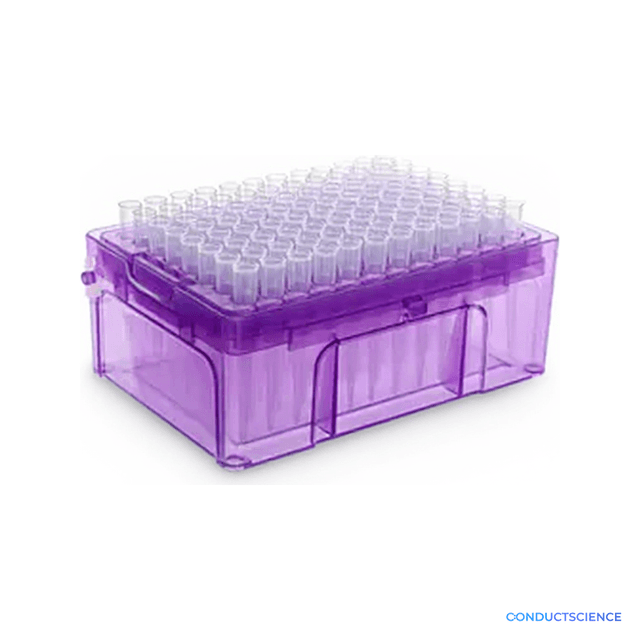
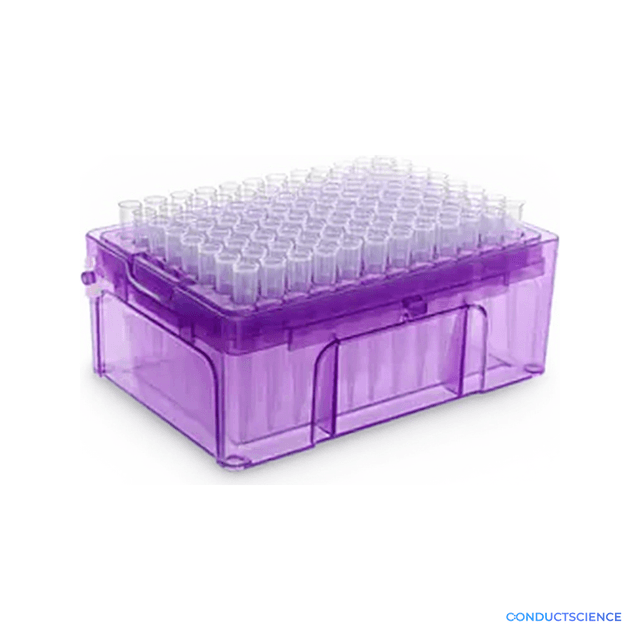
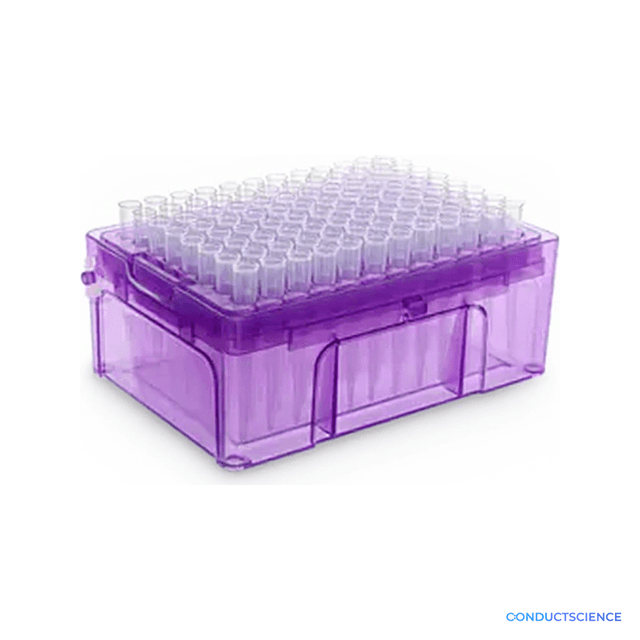
ConductScience Pipette Tips 10mL, Non-Filtered, Sterile (Pack of 10)
$55.00 per unit | 10 units per pack Bulk pricing: Pack of 10 at $550.00 ($55.00 per unit)

Louise Corscadden, PhD
Director of Science · ConductScience
Ask Louise about ConductScience Pipette Tips 10mL, Non-Filtered, Sterile (Pack of 10) fit, setup, configuration, or quote prep.
Already working with us? Sign in to connect this with My Scientist.
Key Specifications
Full details →- Model fit
- Configured during quote
- SKU family
- CS-PT-10ML-200
- Shipping box
- 22.6 x 18.8 x 15.1 cm
- Ordering
- Online checkout and quote request available
- Category
- Lab Supplies
- Build notes
- Confirm accessories, station layout, and support needs before purchase
ConductScience Pipette Tips 10mL are high-capacity consumables designed for large-volume liquid handling applications requiring sterile, contamination-free transfers. Manufactured from medical-grade polypropylene, these non-filtered tips accommodate macro pipettes for dispensing volumes up to 10mL with consistent accuracy and precision.
The sterile, DNase/RNase-free construction ensures sample integrity across molecular biology, cell culture, and analytical chemistry workflows. Autoclavable design permits on-site sterilization for cost-effective reuse in non-critical applications, while maintaining compatibility with standard macro pipette systems.
How It Works
Pipette tips function as disposable liquid contact surfaces that form a sealed interface with pipette shaft mechanisms. The tip interior creates a sterile pathway for liquid uptake and dispensing, while the graduated taper ensures proper sealing with compatible macro pipette systems.
Medical-grade polypropylene construction provides chemical inertness across a broad range of aqueous and organic solvents while maintaining dimensional stability under typical laboratory conditions. The non-filtered design maximizes flow rates for rapid dispensing of large volumes without introducing flow restrictions that could affect accuracy or precision.
Sterile manufacturing and DNase/RNase-free processing eliminate enzymatic contamination sources that could compromise nucleic acid integrity in molecular biology applications. The autoclavable polymer formulation permits steam sterilization at standard cycles (121°C, 15 minutes) for laboratories requiring validated sterile consumables.
Features & Benefits
Research Domain
- Analytical Chemistry
- Cell Biology
- Clinical Diagnostics
- Environmental Monitoring
- Microbiology
- Pharmaceutical QC
Shipping weight
- 4.41 lb
Shipping box
- L: 22.6 cm
- W: 18.8 cm
- H: 15.1 cm
| Feature | This Product | Typical Alternative | Advantage |
|---|---|---|---|
| Volume Capacity | 10mL maximum volume capacity | Entry-level macro tips often limited to 5mL or require multiple transfers | Reduces transfer steps and contamination risk for large-volume preparations |
| Filtration System | Non-filtered design for maximum flow rates | Filtered tips provide contamination protection but reduce flow speed | Enables rapid dispensing for high-throughput applications where speed is prioritized |
| Sterility Assurance | Sterile manufacturing with DNase/RNase-free processing | Basic tips may lack sterility validation or enzyme-free certification | Supports both microbiological and molecular biology applications without cross-contamination |
| Autoclave Compatibility | Medical-grade PP autoclavable at 121°C | Standard tips may not withstand repeated autoclaving cycles | Permits on-site sterilization for cost-effective reuse in appropriate applications |
These tips combine large-volume capacity with sterile, enzyme-free manufacturing for versatile laboratory applications. The non-filtered design prioritizes flow rate while maintaining contamination control through sterile processing and single-use protocols.
Practical Tips
Pre-wet tip interior with sample solution before final volume measurement to improve accuracy with viscous or surface-tension-sensitive liquids.
Why: Initial liquid contact reduces measurement variability caused by surface adhesion effects.
Store opened tip packages in dust-free environment to maintain sterility and prevent particulate contamination.
Why: Environmental exposure can compromise sterile conditions and introduce foreign particles.
Use appropriate personal protective equipment when handling tips used with hazardous or infectious materials.
Why: Tip surfaces can retain trace amounts of potentially harmful substances even after liquid dispensing.
Verify tip sealing by performing air displacement test before critical volume measurements.
Why: Improper sealing leads to volume errors and compromised measurement precision.
Perform gravimetric verification of dispensed volumes when switching between different tip lots or manufacturers.
Why: Manufacturing variations between lots can affect volumetric accuracy and should be verified for critical applications.
If tips feel loose on pipette shaft, check for wear on pipette tip cone or incorrect tip size selection.
Why: Poor tip-to-pipette interface compromises both accuracy and can cause tip ejection during use.
Setup Guide
What’s in the Box
- 200 sterile pipette tips, 10mL capacity
- Product specification sheet (typical)
- Certificate of sterility (typical)
Warranty
ConductScience provides standard manufacturing warranty covering material defects and sterility claims. Technical support available for compatibility and application guidance.
Compliance
References
Background reading relevant to this product:
What is the maximum temperature these tips can withstand during autoclaving?
The medical-grade polypropylene construction is autoclavable at standard steam sterilization conditions (121°C, 15 minutes). Consult product datasheet for specific temperature and time parameters.
Are these tips compatible with organic solvents commonly used in extraction procedures?
Polypropylene exhibits broad chemical resistance to aqueous and organic solvents. However, compatibility should be verified for specific solvent systems, particularly at elevated temperatures or extended contact times.
Can these tips be used for accurate dispensing of viscous solutions?
The non-filtered design provides maximum flow rates suitable for viscous liquids. However, dispensing accuracy may be affected by solution viscosity and should be verified with appropriate standards.
What documentation is provided to verify sterility for GMP applications?
Sterile manufacturing is standard, but specific documentation requirements for GMP validation should be confirmed with ConductScience technical support.
How should these tips be stored to maintain sterility and material integrity?
Store in original packaging at room temperature away from direct sunlight. Avoid exposure to extreme temperatures that could affect polymer properties or packaging integrity.
Are these tips suitable for PCR setup and molecular biology applications?
Yes, DNase/RNase-free processing and sterile manufacturing make these appropriate for nucleic acid handling and PCR preparation workflows.
What is the recommended disposal method for used tips?
Dispose according to local laboratory waste regulations. Contaminated tips should be treated as biohazardous waste if used with potentially infectious materials.
Have a question about this product?
Have a question? Just ask.
Send it over and we'll email you a personalized answer — no call, no scheduling.
Prefer to talk it through?
Accessories
Enhance your setup with compatible accessories
Frequently Bought Together
Upgrade Options
Related Products