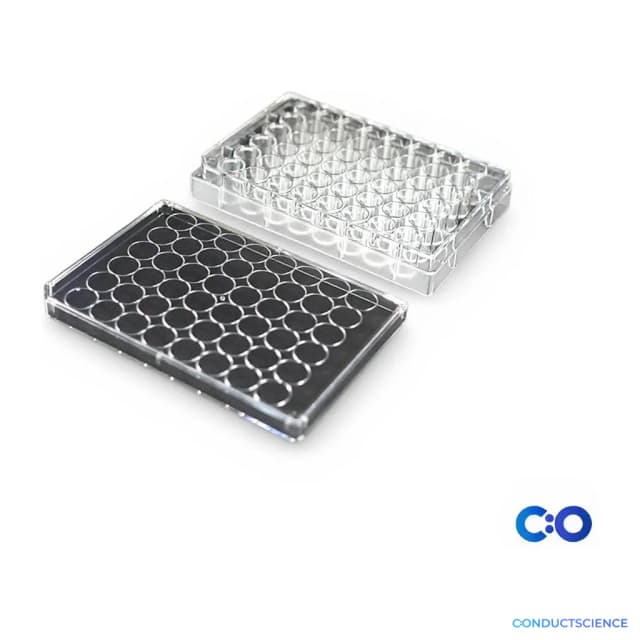
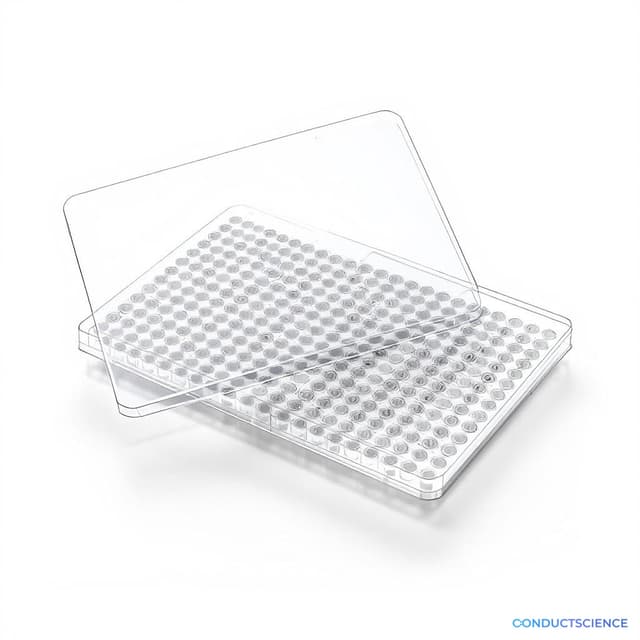
ConductScience Cell Culture Plates, 96-Well, Flat Bottom (Case of 10)
$88.00 per unit | 10 units per pack Bulk pricing: Case of 10 at $880.00 ($88.00 per unit)

Louise Corscadden, PhD
Director of Science · ConductScience
Ask Louise about ConductScience Cell Culture Plates, 96-Well, Flat Bottom (Case of 10) fit, setup, configuration, or quote prep.
Already working with us? Sign in to connect this with My Scientist.
Key Specifications
Full details →- Model fit
- Configured during quote
- SKU family
- CS-CCP-96W-50
- Shipping box
- 30.0 x 25.0 x 20.0 cm
- Ordering
- Online checkout and quote request available
- Category
- Cell Culture
- Build notes
- Confirm accessories, station layout, and support needs before purchase
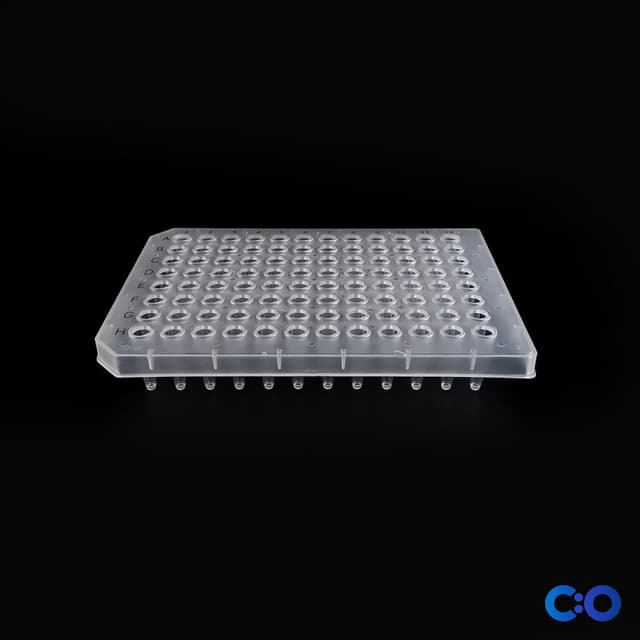
96-well cell culture plates with flat bottom design and tissue culture-treated surface for enhanced cell attachment and growth. These sterile plates provide consistent well-to-well uniformity for high-throughput cell-based assays, ELISA protocols, and screening applications. The flat bottom geometry ensures optimal optical clarity for spectrophotometric and microscopic analysis.
Each plate features standardized 96-well format compatible with multichannel pipettes, automated liquid handling systems, and plate readers. The TC-treated polystyrene surface promotes cell adhesion while maintaining biocompatibility across diverse cell lines. Sterile packaging maintains aseptic conditions for immediate use in cell culture workflows.
How It Works
The flat bottom design provides a uniform optical path length across all wells, enabling consistent spectrophotometric measurements at wavelengths from 340-850 nm. The polystyrene base material exhibits minimal autofluorescence and optimal transparency for both absorbance and fluorescence-based detection methods.
Tissue culture treatment involves oxygen plasma modification of the polystyrene surface, creating negatively charged functional groups that enhance protein adsorption and cell attachment. This surface chemistry promotes spreading and proliferation of adherent cell lines while maintaining consistent growth characteristics across the entire plate.
The standardized 96-well format follows SBS (Society for Biomolecular Screening) specifications with 9 mm well spacing and 6.4 mm well diameter, ensuring compatibility with automated liquid handling systems and multichannel pipettes. Each well provides approximately 360 μL maximum working volume with recommended working volumes of 100-200 μL for optimal assay performance.
Features & Benefits
Research Domain
- Cancer Research
- Cell Biology
- Developmental Biology
- Immunology
- Microbiology
- Pharmaceutical QC
- Toxicology
Shipping weight
- 632.15 lb
Shipping box
- L: 30.0 cm
- W: 25.0 cm
- H: 20.0 cm
| Feature | This Product | Typical Alternative | Advantage |
|---|---|---|---|
| Well Bottom Geometry | Flat bottom design for uniform optical measurements | Some alternatives offer round or V-bottom configurations | Provides consistent optical path length and optimal surface area for cell attachment and imaging |
| Surface Treatment | Tissue culture-treated polystyrene surface | Non-treated plates available at lower cost | Enhanced cell adhesion and spreading improves assay reproducibility across diverse cell lines |
| Sterility Assurance | Gamma-sterilized with individual packaging | Some products require user sterilization | Ready-to-use format eliminates contamination risk and reduces preparation time |
| Well Volume | 360 μL maximum working volume | Standard 96-well formats typically range 200-400 μL | Optimized capacity balances reagent economy with adequate working volume for standard protocols |
These plates combine flat bottom geometry for optimal optical performance with tissue culture treatment for enhanced cell attachment. The sterile packaging and SBS-standard format provide immediate usability with automated systems while maintaining cost-effectiveness for high-throughput applications.
Practical Tips
Pre-warm plates to 37°C before cell seeding to minimize thermal shock and improve cell attachment uniformity.
Why: Temperature equilibration reduces condensation and thermal stress that can affect cell viability and assay consistency.
Use multichannel pipettes or automated dispensers to ensure uniform reagent distribution and minimize well-to-well variation.
Why: Consistent volume delivery across wells reduces coefficient of variation and improves statistical power of assays.
Check for air bubbles before optical measurements, as they can interfere with absorbance and fluorescence readings.
Why: Bubbles scatter light and create artifacts that compromise measurement accuracy and reproducibility.
Store unused plates in original packaging at room temperature away from UV light to preserve sterility and material properties.
Why: UV exposure can degrade polystyrene and alter surface chemistry, affecting cell attachment and optical properties.
Dispose of used plates according to biological waste protocols, especially when working with infectious agents or hazardous compounds.
Why: Proper disposal prevents contamination and ensures compliance with laboratory safety and environmental regulations.
If cells appear unevenly distributed, verify incubator level and avoid excessive vibration during incubation.
Why: Mechanical disturbances can cause cell migration and settling patterns that compromise assay uniformity.
Setup Guide
What’s in the Box
- 96-well cell culture plates (quantity as specified in pack size)
- Individual sterile packaging
- Product documentation and certificate of sterilization (typical)
Warranty
ConductScience provides standard warranty coverage for manufacturing defects and maintains technical support for optimal product performance. Sterile integrity is guaranteed when packaging remains unopened and stored under recommended conditions.
Compliance
What is the recommended working volume range for these plates?
Optimal working volumes range from 100-200 μL per well, providing adequate depth for optical measurements while maintaining appropriate surface area for cell growth.
Are these plates compatible with automated liquid handling systems?
Yes, the plates follow SBS microplate standards with 9 mm well spacing and are fully compatible with automated pipetting systems and plate readers.
What wavelength range is suitable for optical measurements?
The polystyrene construction provides optimal transparency from 340-850 nm, covering standard absorbance and fluorescence detection wavelengths.
Can these plates be used for both adherent and suspension cell cultures?
The TC-treated surface is optimized for adherent cell lines. For suspension cultures, consider non-treated plates to minimize unwanted cell attachment.
What is the maximum incubation temperature for these plates?
Standard polystyrene plates are stable up to 80°C, well above typical cell culture incubation temperatures of 37°C.
How should unused plates be stored?
Store in original packaging at room temperature in a dry environment, away from direct sunlight to maintain sterile integrity.
Are these plates suitable for PCR or qPCR applications?
These plates are designed for cell culture applications. For PCR, use specialized thin-wall plates designed for thermal cycling protocols.
Have a question about this product?
Have a question? Just ask.
Send it over and we'll email you a personalized answer — no call, no scheduling.
Prefer to talk it through?
Replacement Parts & Consumables
Upgrade Options