ConductScience Microcentrifuge Tubes 1.5mL, Assorted Colors (Pack of 25)
$22.00 per unit | 25 units per pack Bulk pricing: Pack of 25 at $550.00 ($22.00 per unit)

Louise Corscadden, PhD
Director of Science · ConductScience
Ask Louise about ConductScience Microcentrifuge Tubes 1.5mL, Assorted Colors (Pack of 25) fit, setup, configuration, or quote prep.
Already working with us? Sign in to connect this with My Scientist.
Key Specifications
Full details →- Model fit
- Configured during quote
- SKU family
- CS-MCT-15C-500
- Shipping box
- 22.6 x 18.8 x 15.1 cm
- Ordering
- Online checkout and quote request available
- Category
- Centrifuge Tubes
- Build notes
- Confirm accessories, station layout, and support needs before purchase
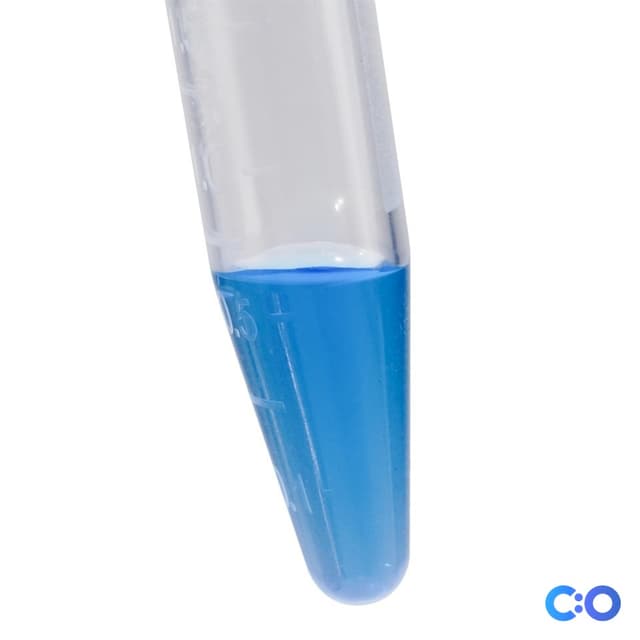
Medical-grade polypropylene microcentrifuge tubes designed for routine sample processing and storage in research laboratories. These 1.5mL tubes feature color-coded caps in five distinct colors (blue, green, red, yellow, purple) to facilitate sample organization and prevent cross-contamination during multi-sample protocols. The tubes are manufactured from virgin polypropylene to ensure chemical resistance and sample integrity.
Autoclavable construction withstands repeated sterilization cycles at 121°C, while the robust design supports centrifugation forces up to 20,000xg without deformation or failure. The precision-molded cap design provides secure sealing to prevent sample evaporation and contamination during storage and processing. Color coding enables systematic sample tracking in complex experimental workflows involving multiple treatment groups or time points.
How It Works
Microcentrifuge tubes function as sample containers engineered to withstand the mechanical stresses of high-speed centrifugation while maintaining sample integrity. The polypropylene construction provides chemical inertness across a wide pH range and temperature spectrum, preventing leaching of compounds that could interfere with analytical measurements. The conical bottom design facilitates complete sample recovery and efficient pellet formation during centrifugal separation procedures.
Color-coded caps serve as a visual identification system that reduces the risk of sample mix-ups in multi-group experiments. Each color can be assigned to specific treatment conditions, time points, or sample types, creating an immediate visual reference during processing. The secure cap-to-tube interface prevents sample loss during high-speed centrifugation through a precision-molded seal that maintains integrity even under mechanical stress.
Autoclave compatibility enables sterilization of tubes prior to use in sterile applications, eliminating potential microbial contamination that could compromise experimental results. The thermal stability of polypropylene allows repeated sterilization cycles without degradation of mechanical properties or dimensional accuracy.
Features & Benefits
Automation Level
- manual
Research Domain
- Analytical Chemistry
- Cancer Research
- Cell Biology
- Immunology
- Microbiology
- Pharmaceutical QC
Shipping weight
- 4.41 lb
Shipping box
- L: 22.6 cm
- W: 18.8 cm
- H: 15.1 cm
| Feature | This Product | Typical Alternative | Advantage |
|---|---|---|---|
| Color Coding Options | Five distinct colors (blue, green, red, yellow, purple) | Clear tubes or basic two-color options | Enables more complex experimental designs with multiple treatment groups or time points |
| Centrifugation Rating | 20,000xg maximum | Standard tubes often rated for 15,000-17,000xg | Supports more demanding separation protocols requiring higher centrifugal forces |
| Material Grade | Medical-grade polypropylene | Laboratory-grade or unspecified plastic formulations | Ensures consistent performance and minimal contamination risk in critical applications |
| Temperature Range | Autoclavable to 121°C | Some tubes limited to lower sterilization temperatures | Compatible with standard autoclave protocols for sterile sample processing |
| Package Quantity | 500 tubes per package | Varies by model, often smaller quantities | Provides sufficient inventory for high-throughput laboratories while maintaining cost efficiency |
These microcentrifuge tubes provide enhanced sample organization through five-color coding while maintaining high centrifugation performance up to 20,000xg. The medical-grade polypropylene construction and autoclave compatibility support both routine and sterile laboratory applications.
Practical Tips
Assign specific colors to experimental conditions at the protocol design stage and maintain consistent color coding throughout the study.
Why: Prevents sample mix-ups and facilitates data tracking in complex multi-group experiments.
Inspect cap-to-tube seal integrity before each use, especially for tubes subjected to multiple autoclave cycles.
Why: Ensures sample security during high-speed centrifugation and prevents contamination.
Balance tubes in opposing positions within the centrifuge rotor, using water-filled tubes if necessary to achieve proper balance.
Why: Prevents rotor damage and ensures safe operation during high-speed centrifugation.
Pre-label tubes with permanent markers before sample addition to maintain traceability throughout processing.
Why: Prevents sample identity loss and maintains data integrity in analytical workflows.
Avoid filling beyond 90% capacity to prevent spillage during centrifugation and allow for sample expansion.
Why: Maintains sample integrity and prevents cross-contamination between tubes.
Verify volume accuracy using calibrated pipettes if precise volumetric measurements are critical for the protocol.
Why: Ensures accurate sample-to-reagent ratios in quantitative analytical procedures.
If caps become difficult to remove after centrifugation, allow tubes to reach room temperature before opening.
Why: Temperature equilibration relieves pressure differential that can cause caps to bind.
Setup Guide
What’s in the Box
- 500 microcentrifuge tubes (1.5mL capacity)
- Color-coded caps in five colors (blue, green, red, yellow, purple)
- Product specification sheet (typical)
Warranty
ConductScience provides standard warranty coverage against manufacturing defects, with technical support available for application guidance and troubleshooting.
Compliance
References
Background reading relevant to this product:
What is the maximum centrifugation speed these tubes can withstand?
The tubes are rated for centrifugation up to 20,000xg, suitable for most standard laboratory protocols including protein precipitation and cellular fractionation.
Can these tubes be used for long-term sample storage at ultra-low temperatures?
Polypropylene construction supports storage from -80°C to +121°C, making them suitable for freezer storage, though consult datasheet for specific freeze-thaw cycle data.
Are the tubes compatible with organic solvents commonly used in extraction protocols?
Medical-grade polypropylene provides broad chemical resistance, but compatibility with specific solvents should be verified against the chemical resistance chart in the product datasheet.
How many tubes of each color are included in the 500-tube package?
The distribution of colors in the assorted package is not specified; contact ConductScience for specific color ratios if precise counts are required for experimental design.
Can these tubes be reused after autoclaving?
While the tubes can withstand multiple autoclave cycles, reuse depends on the specific application and contamination risk; single-use is recommended for critical analytical procedures.
What is the precision of the 1.5mL volume marking?
Volume accuracy specifications are not provided; consult product datasheet for precise capacity tolerances if volumetric accuracy is critical for the application.
Are these tubes compatible with automated liquid handling systems?
Standard 1.5mL microcentrifuge tube dimensions typically fit most automated systems, but verify compatibility with specific instrument specifications before use.
Have a question about this product?
Have a question? Just ask.
Send it over and we'll email you a personalized answer — no call, no scheduling.
Prefer to talk it through?
Accessories
Enhance your setup with compatible accessories
Frequently Bought Together
Related Products