ConductScience Cell Culture Plates, 96-Well, U-Bottom (Case of 10)
$90.00 per unit | 10 units per pack Bulk pricing: Case of 10 at $900.00 ($90.00 per unit)

Louise Corscadden, PhD
Director of Science · ConductScience
Ask Louise about ConductScience Cell Culture Plates, 96-Well, U-Bottom (Case of 10) fit, setup, configuration, or quote prep.
Already working with us? Sign in to connect this with My Scientist.
Key Specifications
Full details →- Model fit
- Configured during quote
- SKU family
- CS-CCP-96WU-50
- Shipping box
- 30.0 x 25.0 x 20.0 cm
- Ordering
- Online checkout and quote request available
- Category
- Cell Culture
- Build notes
- Confirm accessories, station layout, and support needs before purchase
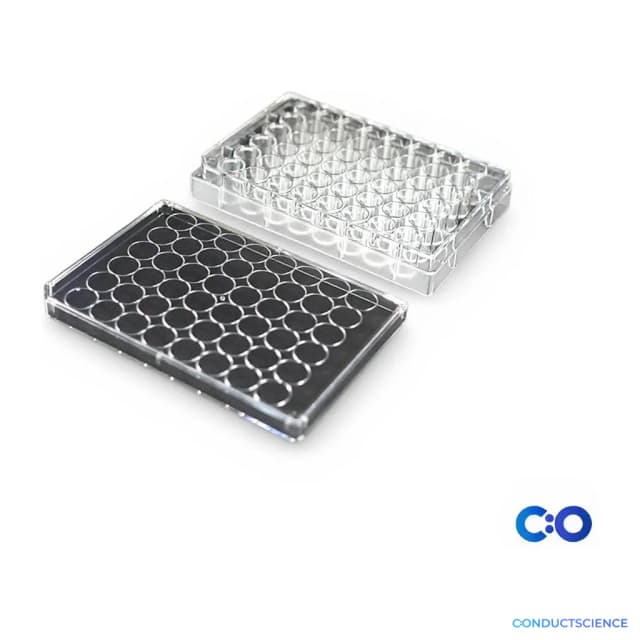
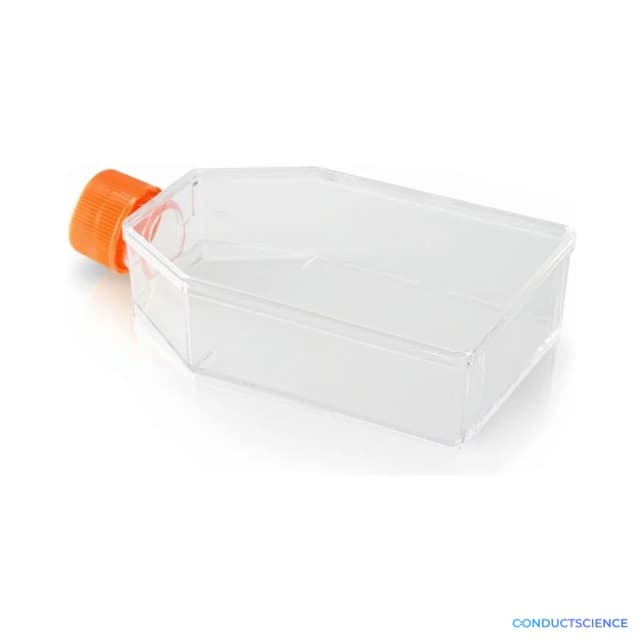
The ConductScience 96-Well U-Bottom Cell Culture Plates are tissue culture-treated polystyrene microplates designed for suspension cell culture and spheroid formation applications. The U-shaped well geometry promotes cell aggregation and facilitates the formation of three-dimensional cellular structures, making these plates ideal for studies requiring spheroid models or non-adherent cell growth conditions.
Each plate features 96 individual wells with U-bottom architecture that concentrates cells at the well center, enabling consistent spheroid formation and simplified harvesting procedures. The tissue culture treatment provides optimal surface properties for cell culture applications while maintaining the non-adherent characteristics necessary for suspension culture protocols.
How It Works
The U-bottom well geometry creates a curved surface that promotes gravitational settling of cells toward the well center. This concentrated cell arrangement facilitates cell-to-cell contact and aggregation, which is essential for spheroid formation and three-dimensional culture systems. The curved bottom eliminates the flat surface area where cells might otherwise adhere, maintaining suspension culture conditions.
The tissue culture treatment involves surface modification of the polystyrene to optimize protein adsorption and cell interaction while preserving the non-adherent properties required for suspension cultures. This treatment ensures consistent culture conditions across all wells while supporting cell viability and proliferation in three-dimensional configurations.
Features & Benefits
Automation Level
- manual
Research Domain
- Cancer Research
- Cell Biology
- Developmental Biology
- Immunology
- Neuroscience
- Pharmaceutical QC
Shipping weight
- 632.15 lb
Shipping box
- L: 30.0 cm
- W: 25.0 cm
- H: 20.0 cm
| Feature | This Product | Typical Alternative | Advantage |
|---|---|---|---|
| Well Geometry | U-bottom design for cell concentration | Many standard plates feature flat-bottom wells | Promotes consistent spheroid formation by concentrating cells at the well center |
| Surface Treatment | Tissue culture treated for optimal cell culture conditions | Some plates lack specialized surface treatments | Provides consistent culture environment while maintaining non-adherent properties |
| Well Count | 96-well format | Formats range from 24 to 384 wells | Balances throughput with adequate well volume for spheroid culture protocols |
| Optical Clarity | Clear polystyrene construction | Varies by material and manufacturing quality | Enables direct microscopic observation and imaging without spheroid transfer |
These plates combine U-bottom geometry with tissue culture treatment to optimize suspension culture and spheroid formation. The 96-well format provides high throughput while maintaining adequate working volumes for three-dimensional culture applications.
Practical Tips
Pre-warm culture medium to 37°C before adding to wells to minimize temperature shock during cell seeding.
Why: Temperature stability promotes consistent cell aggregation and spheroid formation kinetics.
Add cell suspensions slowly to the well center to avoid disrupting the natural settling pattern.
Why: Gentle addition preserves the cell concentration effect of the U-bottom geometry.
Store plates in original sterile packaging at room temperature away from direct sunlight.
Why: Proper storage maintains sterility and prevents degradation of the tissue culture treatment.
Allow spheroids to form for at least 24-48 hours before experimental manipulations or measurements.
Why: Adequate formation time ensures consistent spheroid architecture and reproducible experimental results.
If spheroids form irregularly, adjust cell seeding density or medium composition for your specific cell type.
Why: Different cell lines have varying aggregation properties and may require optimization of culture conditions.
Handle plates using sterile technique and work within a biological safety cabinet to prevent contamination.
Why: Contamination can compromise experimental results and pose biological safety risks.
Setup Guide
What’s in the Box
- 50 sterile 96-well U-bottom cell culture plates
- Product certificate of analysis (typical)
- Usage instructions (typical)
Warranty
ConductScience provides standard warranty coverage against manufacturing defects with technical support for proper usage protocols and application guidance.
Compliance
What is the optimal cell seeding density for spheroid formation?
Seeding density varies by cell type, but typically ranges from 1,000-10,000 cells per well. Start with 5,000 cells per well and adjust based on spheroid size and formation kinetics for your specific cell line.
How do these plates compare to flat-bottom plates for suspension cultures?
U-bottom geometry concentrates cells at the well center, promoting cell-cell contact and spheroid formation. Flat-bottom plates allow cell spreading and may result in irregular aggregation patterns.
What working volumes are recommended for these wells?
Standard working volumes range from 100-200 μL per well, with 150 μL being optimal for most spheroid formation protocols while allowing for media changes.
Are these plates compatible with automated liquid handling systems?
Yes, the standard microplate footprint ensures compatibility with most automated dispensing and pipetting systems designed for 96-well formats.
How should spheroids be harvested from these plates?
Spheroids can be harvested by gentle pipetting or by tilting the plate to collect spheroids from the well bottom. Use wide-bore tips to avoid shearing forces.
What is the shelf life of these sterile plates?
Consult product packaging for specific expiration dates. Store in original packaging at room temperature away from direct sunlight to maintain sterility.
Can these plates be used for adherent cell culture applications?
While tissue culture treated, the U-bottom geometry is specifically designed for suspension cultures. Flat-bottom plates are preferred for adherent cell applications.
Have a question about this product?
Have a question? Just ask.
Send it over and we'll email you a personalized answer — no call, no scheduling.
Prefer to talk it through?
Replacement Parts & Consumables
Upgrade Options