TopPette-Mechanical 8-Channel Pipette
8-channel mechanical pipette for precision multi-channel liquid handling with 0.1-100 μl volume range and systematic errors as low as 0.8%.

Louise Corscadden, PhD
Director of Science · ConductScience
Ask Louise about TopPette-Mechanical 8-Channel Pipette fit, setup, configuration, or quote prep.
Already working with us? Sign in to connect this with My Scientist.
Key Specifications
Full details →- Model fit
- Configured during quote
- SKU family
- BIO-0621
- Shipping box
- 42.0 x 43.6 x 38.0 cm
- Ordering
- Online checkout and quote request available
- Category
- Liquid Handling
- Build notes
- Confirm accessories, station layout, and support needs before purchase
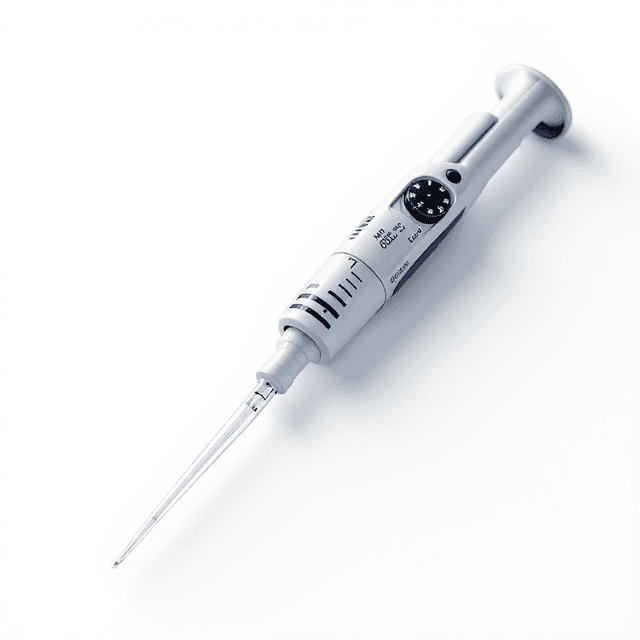
The TopPette-Mechanical 8-Channel Pipette is a precision liquid handling instrument designed for multi-channel dispensing applications in research laboratories. This mechanical pipette provides accurate volume control across the 0.1-100 μl range with systematic errors as low as 0.8% at maximum volume, making it suitable for applications requiring consistent liquid transfer across multiple channels simultaneously.
The instrument features mechanical volume adjustment with defined increment steps, enabling reproducible volume setting for repetitive multi-channel protocols. Performance specifications include maximum permissible systematic errors ranging from 1.0% to 4.0% and random errors from 1.5% to 4.0% depending on volume, providing quantified accuracy parameters for laboratory quality control documentation.
How It Works
The TopPette-Mechanical operates through a mechanical displacement system where user-controlled pressure on the plunger creates vacuum to aspirate liquid into disposable tips, followed by positive displacement for precise dispensing. The 8-channel configuration allows simultaneous processing of eight samples or wells with identical volumes, maintaining consistent spacing compatible with standard microplate formats.
Volume selection is achieved through mechanical adjustment mechanisms that control the displacement chamber volume. The increment-based volume setting provides discrete steps for reproducible volume selection, with the mechanical design ensuring consistent performance across all eight channels. Each channel operates independently for liquid uptake while sharing common volume control, enabling uniform dispensing across the channel array.
Features & Benefits
Automation Level
- manual
Cat. No.
- Volume Range
Increment
- Test Volume(μl)
Maximum Permissible Systematic Error
- Maximum Permissible Random Error
0.1μl
- 1
4.0%(0.04μl)
- 4.0%(0.04μl)
5
- 2.5%(0.125μl)
10
- 1.5%(0.15μl)
0.5μl
- 5
3%(0.15μl)
- 2.0%(0.1μl)
25
- 1.5%(0.375μl)
50
- 1.0%(0.5μl)
1μl
- 10
3.0%(0.3μl)
- 2.0%(0.2μl)
100
- 0.8%(0.8μl)
Brand
- ConductScience
Research Domain
- Analytical Chemistry
- Cell Biology
- Immunology
- Materials Science
- Microbiology
- Pharmaceutical QC
Shipping weight
- 4.41 lb
Shipping box
- L: 42.0 cm
- W: 43.6 cm
- H: 38.0 cm
| Feature | This Product | Typical Alternative | Advantage |
|---|---|---|---|
| Channel Count | 8 parallel channels | Single-channel or 12-channel configurations common in market | Balances throughput improvement with manageable channel count for precise positioning |
| Volume Range | 0.1-100 μl continuous range | Multiple models often required for this range | Single instrument covers most microvolume applications without model switching |
| Systematic Error | 0.8% at maximum volume (100 μl) | Entry-level models typically offer 1-2% accuracy | Higher precision enables use in applications requiring tight volume control |
| Error Documentation | Specified systematic and random errors across volume range | Basic models may lack detailed error specifications | Enables proper uncertainty calculations for method validation and quality control |
| Operating Mechanism | Mechanical displacement system | Electronic models offer programmable functions | Eliminates battery dependency and electronic failure modes in demanding environments |
The TopPette-Mechanical provides documented accuracy specifications with 8-channel throughput improvement over single-channel alternatives. The mechanical design offers reliability in environments where electronic components may be problematic, while maintaining precision suitable for applications requiring sub-percent volume accuracy.
Practical Tips
Verify accuracy using gravimetric method with distilled water at room temperature, testing multiple points across the volume range.
Why: Establishes baseline performance and identifies any volume-dependent accuracy deviations.
Clean external surfaces with mild detergent after each use and inspect tip attachment points for wear or damage.
Why: Prevents contamination buildup and ensures proper tip sealing for accurate volume delivery.
Pre-wet tips by aspirating and dispensing the target volume 2-3 times before actual sample transfer.
Why: Eliminates surface tension effects and vapor adsorption that can cause volume errors in initial dispensing.
If individual channels show volume variation, check tip attachment and inspect for blockages or mechanical wear.
Why: Channel-to-channel variation typically indicates tip sealing issues or mechanical problems affecting individual channels.
Document pipette performance with statistical analysis of replicate measurements during calibration verification.
Why: Provides objective evidence of precision and bias for inclusion in method validation documentation.
Use consistent plunger operation speed and avoid rapid movements that can introduce air bubbles or volume variation.
Why: Mechanical consistency directly affects volume reproducibility and minimizes random error contributions.
Always use appropriate personal protective equipment and ensure proper tip disposal when handling hazardous materials.
Why: Multiple channels increase exposure risk if proper safety protocols are not followed consistently.
Setup Guide
What’s in the Box
- TopPette-Mechanical 8-Channel Pipette (typical)
- User manual with operation instructions (typical)
- Performance specification certificate (typical)
- Calibration documentation (typical)
Warranty
ConductScience provides a standard 1-year manufacturer warranty covering mechanical components and performance specifications, with technical support for operation and maintenance guidance.
Compliance
References
Background reading relevant to this product:
What tip types are compatible with the 8-channel configuration?
Consult product datasheet for specific tip compatibility. Standard microvolume tips with proper spacing for 8-channel operation are typically required.
How do I verify accuracy across all eight channels?
Use gravimetric verification with distilled water, dispensing identical volumes from each channel onto analytical balance. Document any channel-to-channel variation.
What is the recommended calibration frequency?
Follow your laboratory's SOP for pipette calibration, typically quarterly or after intensive use. Verify performance when accuracy-critical applications are performed.
Can this pipette handle viscous solutions?
Mechanical displacement design can handle moderately viscous solutions, but accuracy may be affected. Consult specifications for viscosity limitations.
How do I minimize cross-contamination between channels?
Use appropriate tip types with sufficient length, avoid tip immersion beyond recommended depth, and change tips between different sample types.
What maintenance is required for consistent performance?
Regular cleaning of external surfaces, periodic lubrication of mechanical components, and replacement of seals when performance degrades outside specifications.
How does temperature affect volume accuracy?
Thermal expansion of both pipette components and liquids can affect accuracy. Allow temperature equilibration before critical measurements.
Have a question about this product?
Have a question? Just ask.
Send it over and we'll email you a personalized answer — no call, no scheduling.
Prefer to talk it through?
Accessories
Enhance your setup with compatible accessories
Replacement Parts & Consumables
Upgrade Options