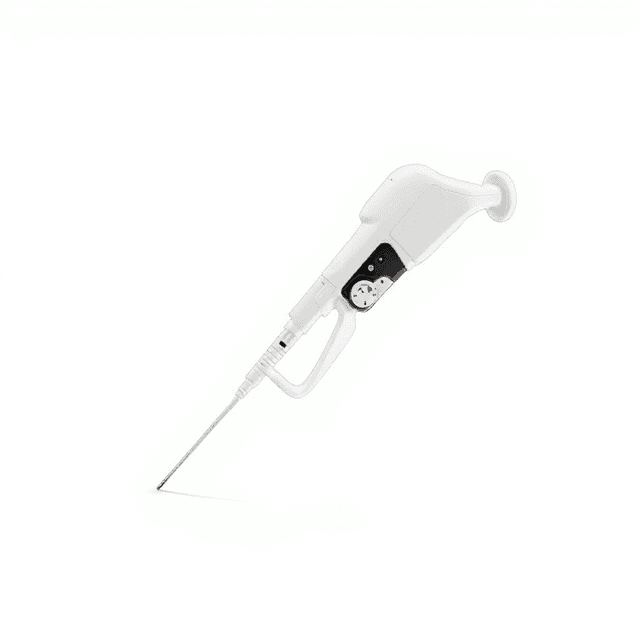
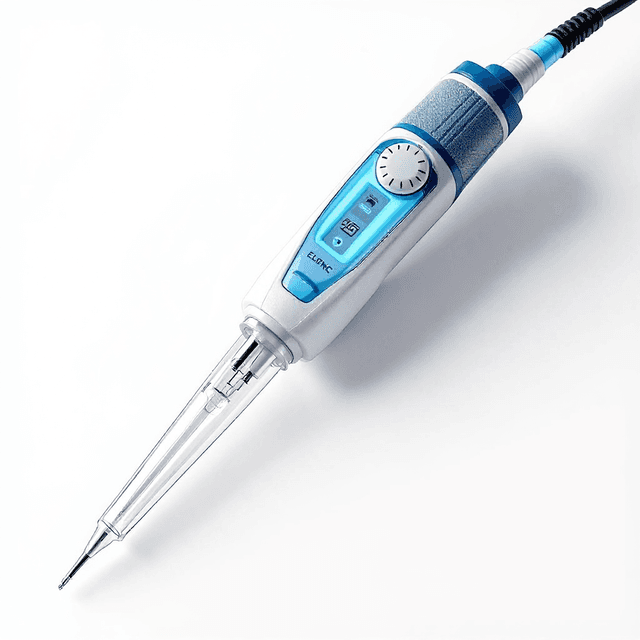
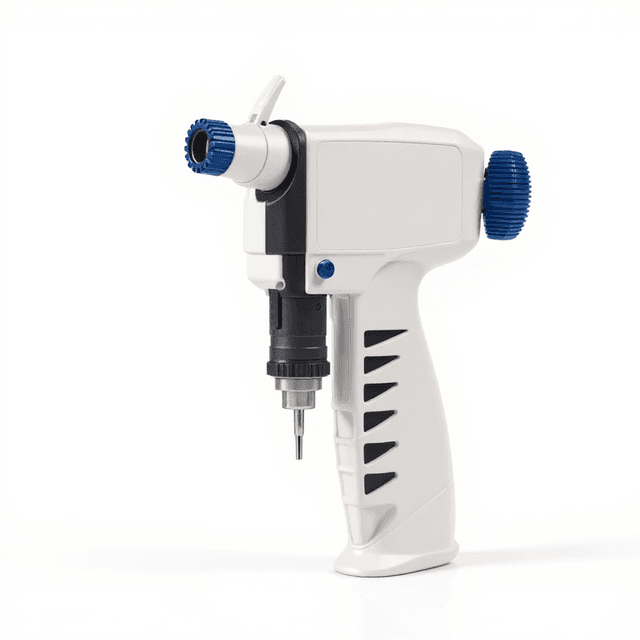
TopPette MicroPette MicroPette Plus Pipette
Precision micropipette for microliter-scale liquid handling with dual volume ranges (0.1-2.5 μL and 0.5-10 μL) and specified accuracy tolerances for quantitative analytical applications.

Louise Corscadden, PhD
Director of Science · ConductScience
Ask Louise about TopPette MicroPette MicroPette Plus Pipette fit, setup, configuration, or quote prep.
Already working with us? Sign in to connect this with My Scientist.
Key Specifications
Full details →- Model fit
- Configured during quote
- SKU family
- BIO-0635
- Shipping box
- 42.0 x 43.6 x 38.0 cm
- Ordering
- Online checkout and quote request available
- Category
- Liquid Handling
- Build notes
- Confirm accessories, station layout, and support needs before purchase
The TopPette MicroPette MicroPette Plus Pipette is a precision liquid handling instrument designed for microliter-scale volumetric transfers in analytical and research laboratories. This micropipette provides accurate and reproducible liquid dispensing across two primary volume ranges: 0.1-2.5 μL and 0.5-10 μL, with specified accuracy and precision tolerances for each measurement point.
The instrument incorporates calibrated volume settings with documented accuracy specifications ranging from 0.3% to 6.00% depending on the selected volume, enabling researchers to perform quantitative liquid transfers with known measurement uncertainty. The dual-range capability allows laboratories to consolidate liquid handling operations across commonly used microliter volumes while maintaining metrological traceability for analytical workflows.
How It Works
The micropipette operates on the positive displacement principle, utilizing a precision-machined piston and cylinder assembly to create controlled vacuum and positive pressure for liquid aspiration and dispensing. When the plunger is depressed and released, it creates a measured vacuum that draws liquid into a disposable tip through surface tension and atmospheric pressure differential.
Volume accuracy is maintained through calibrated mechanical stops that limit piston displacement to predetermined positions corresponding to specific volumes. The instrument's accuracy specifications are achieved through precision manufacturing tolerances in the piston-cylinder interface and spring-loaded volume adjustment mechanisms that provide consistent force application across the operating range.
Liquid contact is limited to the disposable tip, preventing cross-contamination between samples while maintaining the instrument's mechanical calibration. The tip ejection mechanism allows for rapid sample processing while preserving the internal components from chemical exposure and biological contamination.
Features & Benefits
Automation Level
- manual
%
- μl
0.1-2.5μl
- 0.05μl
2.5
- 2.50%
0.0625
- 2.00%
1.25
- 3.00%
0.0375
- 3.00%
0.25
- 0.3%
0.03
- 6.00%
0.5-10μl
- 0.1μl
10
- 1.50%
0.1
- 2.00%
5
- 3.00%
0.075
- 1.50%
1
- 4.00%
Brand
- ConductScience
Research Domain
- Analytical Chemistry
- Cell Biology
- Clinical Diagnostics
- Materials Science
- Microbiology
- Pharmaceutical QC
Shipping weight
- 4.41 lb
Shipping box
- L: 42.0 cm
- W: 43.6 cm
- H: 38.0 cm
| Feature | This Product | Typical Alternative | Advantage |
|---|---|---|---|
| Volume Range Coverage | Dual ranges: 0.1-2.5 μL and 0.5-10 μL with overlapping capabilities | Single-range instruments often require separate pipettes for each volume range | Reduces instrument inventory and simplifies workflow transitions between different volume scales |
| Accuracy at 1 μL | 4.00% accuracy specification at 1 μL volume setting | Entry-level micropipettes may offer 5-8% accuracy in this range | Provides documented measurement uncertainty suitable for quantitative analytical applications |
| Volume Increment Resolution | 0.05 μL increments for lower range, 0.1 μL for higher range | Basic models often provide coarser increment steps | Enables fine volume control for applications requiring precise measurement adjustment |
| Precision Specifications | 1.50% to 3.00% precision across operating ranges | Standard micropipettes typically specify 2-5% precision | Supports reproducible measurements in analytical workflows requiring low variability |
| Calibration System | Mechanical volume stops with manual adjustment capability | Electronic pipettes may offer digital displays but require battery maintenance | Provides long-term stability without electronic drift or power requirements |
The TopPette MicroPette Plus offers consolidated dual-range capability with mechanical reliability and documented accuracy specifications suitable for analytical laboratory applications. The instrument provides sub-microliter increment control across overlapping volume ranges, reducing the need for multiple specialized pipettes in routine liquid handling workflows.
Practical Tips
Perform gravimetric verification monthly using deionized water at room temperature, testing multiple volume points across each range.
Why: Regular verification ensures accuracy specifications are maintained and identifies calibration drift before it affects analytical results.
Clean the tip ejector mechanism weekly with laboratory-grade ethanol to prevent tip retention problems.
Why: Residue buildup on the ejector can cause inconsistent tip sealing and affect volume accuracy.
Pre-wet the tip 2-3 times with the working solution before critical measurements to eliminate air bubbles and equilibrate surfaces.
Why: Pre-wetting ensures consistent liquid contact and eliminates volume errors from surface tension variations.
If volume delivery appears inconsistent, check tip attachment and inspect for bent or damaged ejector components.
Why: Poor tip sealing is the most common cause of accuracy problems in micropipette operations.
Document the specific volume range and increment setting used for each analytical procedure in your laboratory notebook.
Why: Volume setting documentation enables method reproducibility and supports analytical method validation requirements.
Always use appropriate pipette tips rated for the chemical compatibility of your working solutions.
Why: Chemical incompatibility can cause tip degradation and introduce contamination into both samples and the pipette mechanism.
Store the pipette vertically in a dedicated rack to prevent mechanical stress on internal components.
Why: Proper storage positioning prevents calibration drift and extends the operational lifetime of precision mechanisms.
Allow the pipette and test liquids to equilibrate to room temperature before performing accuracy verification measurements.
Why: Temperature variations affect liquid density and surface tension, introducing systematic errors in gravimetric calibration procedures.
Setup Guide
What’s in the Box
- TopPette MicroPette Plus pipette body
- User manual with calibration certificate
- Tip compatibility guide (typical)
- Calibration adjustment tools (typical)
Warranty
ConductScience provides a standard one-year manufacturer warranty covering mechanical components and calibration accuracy, with technical support for troubleshooting and maintenance procedures.
Compliance
References
Background reading relevant to this product:
What is the accuracy specification for dispensing 1 μL volumes?
At 1 μL, the pipette provides 4.00% accuracy with 3.00% precision, making it suitable for applications requiring sub-microliter measurement control with documented uncertainty.
How should I verify the calibration accuracy of this micropipette?
Perform gravimetric verification by dispensing multiple replicates onto an analytical balance and calculating the mean volume based on liquid density. Compare results to the specified accuracy tolerances for the selected volume.
Which pipette tips are compatible with both volume ranges?
Consult the tip compatibility guide included with the instrument, as tip selection affects accuracy and may vary between the 0.1-2.5 μL and 0.5-10 μL operating ranges.
Can this pipette handle viscous solutions or organic solvents?
The positive displacement mechanism provides consistent performance across varying liquid properties, though accuracy should be verified for specific solvents as viscosity and surface tension affect liquid handling characteristics.
What maintenance procedures are required to maintain calibration accuracy?
Regular cleaning of the tip ejector mechanism and periodic gravimetric verification are recommended. Consult the user manual for specific maintenance intervals and calibration adjustment procedures.
How does the dual-range capability affect measurement uncertainty?
Each volume range has optimized accuracy specifications - the higher range (0.5-10 μL) generally provides better relative accuracy for volumes above 1 μL, while the lower range extends capability down to 0.1 μL.
What is the smallest volume increment I can adjust on this pipette?
Volume increments are 0.05 μL for the 0.1-2.5 μL range and 0.1 μL for the 0.5-10 μL range, enabling precise volume selection within each operating range.
Have a question about this product?
Have a question? Just ask.
Send it over and we'll email you a personalized answer — no call, no scheduling.
Prefer to talk it through?
Accessories
Enhance your setup with compatible accessories
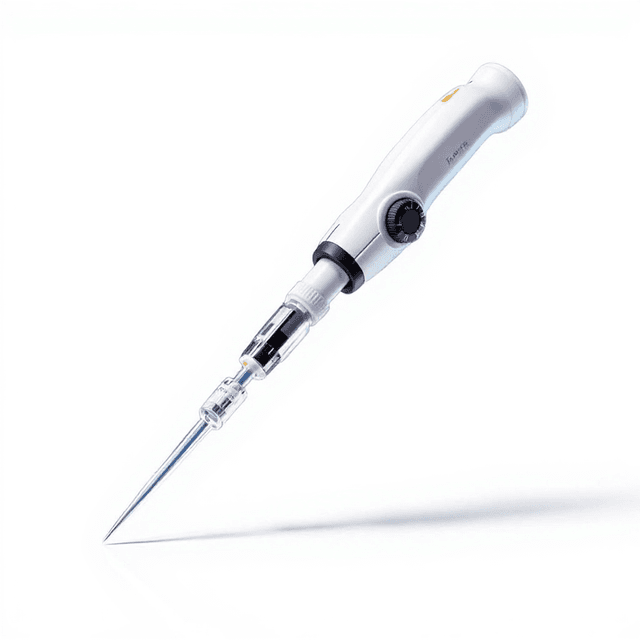
Replacement Parts & Consumables
Upgrade Options